

Feeling Sick a Week After Colonoscopy: Is It Normal?
Complete the form below to see if you qualify for a Olympus Scope Lawsuit

If you are not feeling well a week after a colonoscopy, it could be a sign that you developed a complication from your procedure. Feeling sick may be a sign of an infection, intestinal perforation, post-polypectomy syndrome, or another colonoscopy-related condition. Mild gas, bloating, stomach upset, or bowel changes are expected after the procedure, but these should improve or resolve within a couple of days. Symptoms like bleeding, fever, vomiting, dizziness, or abdominal pain that are new or worsen after the colonoscopy should be reported to your doctor to rule out or treat any complications.
About the Feeling Sick a Week After a Colonoscopy
When to Get Medical Help After a Colonoscopy
Is It Normal to Feel Sick a Week After a Colonoscopy?
What Symptoms Are Normal After a Colonoscopy?
What Symptoms May Not Be Normal a Week After a Colonoscopy?
Why Do I Feel Sick a Week After a Colonoscopy?
Can Polyp Removal Make You Sick a Week After Colonoscopy?
Can a Colonoscopy Cause a Bacterial Infection?
Can a Colonoscopy Perforation Show Up a Week Later?
Could Feeling Sick a Week Later Be Unrelated to the Colonoscopy?
When Should You Call a Doctor After a Colonoscopy?
What Will a Doctor Check If You Feel Sick a Week After a Colonoscopy?
How Long Does It Take to Fully Recover From a Colonoscopy?
King Law Is Investigating Infection Claims in Colonoscopy Patients
Contact King Law for a Free Case Review
When to Get Medical Help After a Colonoscopy
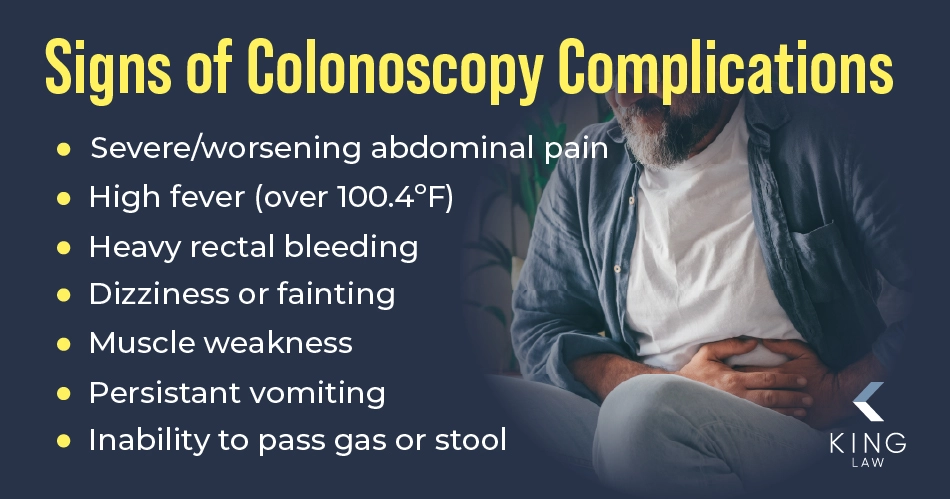
Patients should follow their doctor’s specific instructions for aftercare following a colonoscopy. People typically have minimal side effects after a colonoscopy, but it is important to watch for symptoms that could indicate a complication:
- Severe or worsening abdominal pain
- Fever over 100.4°F
- Heavy rectal bleeding or clots
- Persistent vomiting
- Dizziness, fainting, or weakness
- Inability to pass gas or stool
Please note that nothing on this page should be construed as medical advice. If you had a recent colonoscopy and are not feeling well, you should immediately contact your care team.
Is It Normal to Feel Sick a Week After a Colonoscopy?
Most patients recover from a colonoscopy within a day or two. Patients should discuss any new, worsening, or persistent symptoms with a healthcare provider. After your colonoscopy and the colonoscopy prep, you may have mild bloating, cramping, gas, tiredness, loose stools, or constipation. However, those side effects should be mild and improve or completely resolve within a day or two after the colonoscopy. Symptoms that are new, worsen, or are persistent should be addressed by your doctor.
There are several reasons you could feel unwell a week or more after a colonoscopy. Some of the more serious causes include an infection from a contaminated colonoscope, a bowel perforation, or another complication. Your feelings of malaise could also be unrelated to your colonoscopy or polypectomy.
What Symptoms Are Normal After a Colonoscopy?
As with any medical procedure, some patients experience mild side effects after a colonoscopy. Many of these side effects are expected and normal.
- Bloating
- Gas discomfort
- Mild cramping
- Temporary fatigue or grogginess from the sedative
- Mild stomach upset or nausea
- Delayed or loose bowel movements from bowel prep
- Very light spotting after a polyp removal
These symptoms should be minor, only cause mild discomfort, and rapidly continue to improve after the patient rests and follows the discharge instructions. Most mild symptoms resolve within 24 to 48 hours after a colonoscopy.
What Symptoms May Not Be Normal a Week After a Colonoscopy?
Most post-colonoscopy side effects should end within a day or two of the procedure. However, some people experience complications after a colonoscopy and should monitor themselves for signs of illness, including infection.
- Fever
- Chills
- Vomiting
- Diarrhea
- Dizziness, fainting, or weakness
- Hard or swollen abdomen
- Severe abdominal pain
- Chest pain
- Shortness of breath
- Inability to pass gas or stool
- Rectal bleeding
If these symptoms arise at any time after a patient has a colonoscopy, the patient should contact their doctor immediately. The patient may be suffering from a complication, such as an infection, bowel perforation, or spleen injury (which is rare). Sometimes, a patient may feel well shortly after a colonoscopy but then feel ill several days or weeks later and not connect their illness to their colonoscopy.
Why Do I Feel Sick a Week After a Colonoscopy?
If a patient feels ill several days after a colonoscopy, the cause could be related to their procedure, or it could be unrelated. Reasons that you may feel sick or unwell a week after a colonoscopy include:
- Dehydration
- The bowel prep disrupted your gut’s microbiome
- Delayed bleeding
- Post-polypectomy syndrome
- Infection
- Perforation
- Appendicitis
- Medication side effects
- Spleen injury (rare)
- Flare-up of inflammatory bowel disease (IBD) or irritable bowel syndrome (IBS)
- Food poisoning
- Viral gastroenteritis
Only your doctor can determine why you are feeling sick after a colonoscopy and give you the appropriate treatment. If you are experiencing worrying symptoms after a colonoscopy, you may benefit from making an appointment or visiting an urgent care center or emergency room in your area.
Can Polyp Removal Make You Sick a Week After Colonoscopy?
Sometimes, having polyps removed (a polypectomy) during a colonoscopy can cause you to have symptoms a week later. Typically, polypectomy patients may experience mild bloating, abdominal discomfort or cramps, diarrhea, and nausea that go away within 24 to 48 hours after the procedure. However, some patients may suffer from an infection, internal injury, post-polypectomy syndrome, bleeding, or perforation because of the polyp removal procedure.
Depending on the underlying medical issue, some patients may not experience symptoms of those conditions until days, weeks, or up to a month after the colonoscopy. Because of this, it is important for patients to tell their doctor if they feel sick or unwell or have signs of an infection after having polyps removed during a colonoscopy.
Can a Colonoscopy Cause a Bacterial Infection?
A colonoscopy can cause a bacterial infection, although this is relatively uncommon. Some researchers have found
- Fever and chills
- Abdominal pain
- Persistent vomiting or diarrhea
- Inability to pass stool
- Inability to pass gas
- Confusion
Some of the possible causes of a colonoscopy-related infection include a contaminated colonoscope, a medical error, and the person’s own gut bacteria entering their bloodstream. Patients should call their doctors if they think they may have an infection after a colonoscopy, as this can lead to sepsis. Depending on the cause of the infection, a patient may need to be treated with antibiotics to resolve the infection.
Can a Colonoscopy Perforation Show Up a Week Later?
In some cases, symptoms of a bowel perforation may not show up until a week or later after a colonoscopy. Some studies estimate that
Could Feeling Sick a Week Later Be Unrelated to the Colonoscopy?
You may be feeling sick a week after a colonoscopy for reasons that are unrelated to the procedure or preparation. For example, you may feel unwell because of stress over the results, an illness not related to the colonoscopy, or an underlying medical condition. However, some colonoscopy complications can mimic the symptoms of these as well. For that reason, it is a good idea to be evaluated by your physician to determine why you are feeling unwell and how it can be treated.
When Should You Call a Doctor After a Colonoscopy?
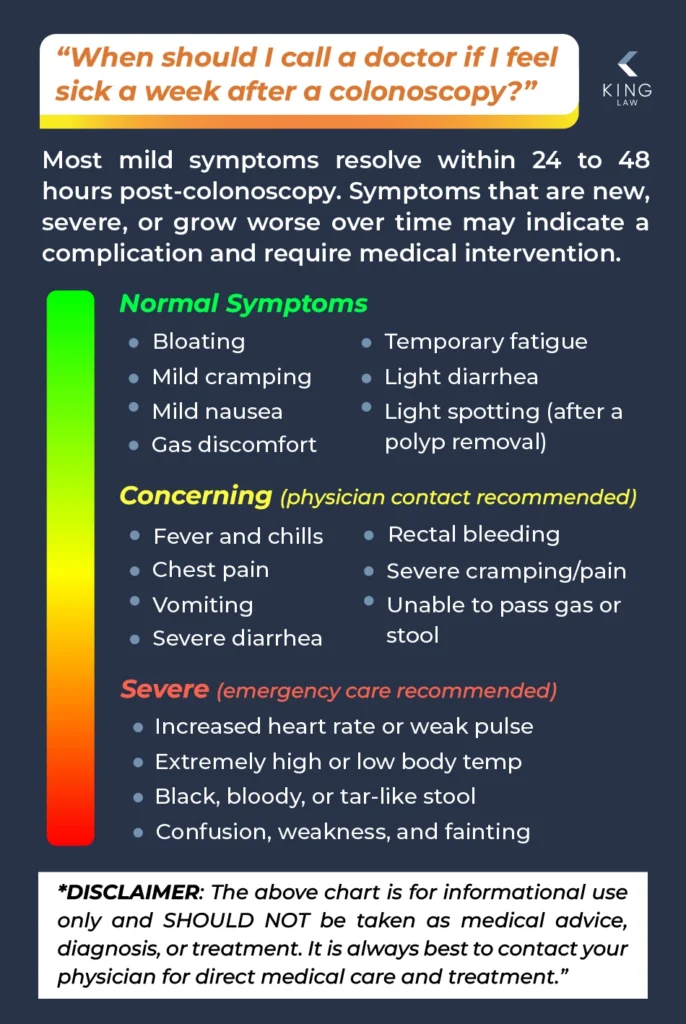
You should call a doctor if you develop new or worsening symptoms at any time after a colonoscopy. Here are examples of symptoms that prompt a call to the doctor:
- New or worsening symptoms
- Abdominal pain that gets worse or does not go away
- Nausea or vomiting
- Black, bloody, or tar-like stool
- Severe constipation
- Inability to pass gas
- Bleeding that is new, gets worse, or does not go away
- Fever
- Chills
- Dizziness
- Weakness or fainting
- Diarrhea
- Confusion
- High heart rate or weak pulse
Patients should reach out to their medical team about any post-colonoscopy symptoms that concern them, even if they think those symptoms are normal or not severe yet.
Can You Develop Sepsis After a Colonoscopy?
In rare cases, someone can develop sepsis from an untreated post-colonoscopy infection. Complications from sepsis quickly become severe or life-threatening if the patient does not get treated. Patients and their loved ones should watch for any signs of sepsis after a colonoscopy.
What Will a Doctor Check If You Feel Sick a Week After a Colonoscopy?
The doctor may use several techniques to figure out why you are feeling sick a week after a colonoscopy. The tools they use depend on your symptoms and the possible causes. Here are some of the tools your doctor may use:
- Vital signs
- CRP (C-Reactive protein)
- Basic metabolic panel
- Electrolyte levels
- Stool tests
- Blood cultures
- CT of your abdomen or pelvis
- Abdominal X-ray
- Ultrasound
- Diagnostic or therapeutic colonoscopy
Based on the results of the doctor’s tests, they may conduct more tests or create a plan to treat what is causing you to feel unwell after your colonoscopy. For example, if you are severely dehydrated or have a serious infection, they may give you fluids or antibiotics through an IV while you are in the hospital.
How Long Does It Take to Fully Recover From a Colonoscopy?
Typically, it takes one to two days to fully recover from a colonoscopy. During that time, you should experience mild symptoms that do not significantly interfere with your normal activities. Those symptoms should continuously get better with time, and no new symptoms should appear. You should be able to return to your regular diet and have normal bowel movements within two days after the colonoscopy. If you had an invasive procedure during the colonoscopy, it may take a little longer to recover. If your symptoms are getting worse, new ones are developing, or your symptoms are interfering with your ability to function, contact your doctor.
King Law Is Investigating Infection Claims in Colonoscopy Patients
King Law is accepting new cases from patients who experienced infections after colonoscopies. We can investigate your claim and explore possible causes of your infection, including defective colonoscopy equipment, improper sterilization procedures, delayed diagnosis, or ineffective infection-control protocols. We can determine if there is enough evidence to proceed with a colonoscopy infection lawsuit.
Contact King Law for a Free Case Review
Call King Law today by dialing (585) 496-2648 or contact us online to get in touch with our intake specialists. Our knowledgeable legal team has vast experience fighting for people who were harmed or taken advantage of by drug companies, medical equipment manufacturers, doctors, and hospitals. We provide free case evaluations. Contact us today to learn about your legal rights during a confidential consultation.
Frequently Asked Questions (FAQs)
Sources Used in This Article
Here is a list of sources used to write this article. King Law adheres to strict editorial standards for articles on this site.
- Kaiser Permanente. Colonoscopy: What to Expect at Home.
- Mayo Clinic Staff. Colonoscopy.
- MedlinePlus. C-Reactive Protein (CRP) Test.
- Nelson, Douglas B., et al. Infection Control During Gastrointestinal Endoscopy.
- Rutter, Matthew D., et al. Infection Control in Gastrointestinal Endoscopy: British Society of Gastroenterology Guidelines.
- Spach, David H., et al. Transmission of Infection by Gastrointestinal Endoscopy and Bronchoscopy.
- Wang, Peiqi, et al. Rates of Infection After Colonoscopy and Osophagogastroduodenoscopy in Ambulatory Surgery Centres in the USA.