

High Heart Rate After a Colonoscopy [2026 Update]
Complete the form below to see if you qualify for a Olympus Scope Lawsuit

A high heart rate after a colonoscopy may be temporary and caused by anxiety, pain, dehydration, sedatives wearing off, getting up too fast, or other factors. However, you may want to contact your doctor if your resting heart rate is over 100 beats per minute or is accompanied by fever, chills, confusion, chest pain, abdominal pain, or other symptoms. Sometimes, a high heart rate after a colonoscopy means the patient has an infection, perforation, spleen injury, or another complication.
About High Heart Rate After A Colonoscopy:
Is a High Heart Rate After Colonoscopy Normal?
What Heart Rate Is Considered Too High After a Colonoscopy?
Why Can Your Heart Rate Be High After a Colonoscopy?
Can Dehydration From Colonoscopy Prep Cause a High Heart Rate?
Can Sedation Cause a High Heart Rate After Colonoscopy?
Can Standing Up After a Colonoscopy Cause a Fast Heart Rate?
Can Anxiety or Pain Cause a High Heart Rate After Colonoscopy?
Can Colonoscopy Medications Cause Tachycardia?
Can a High Heart Rate After Colonoscopy Be a Sign of Bleeding?
Can a High Heart Rate After Colonoscopy Be a Sign of Perforation?
Can a High Heart Rate After Colonoscopy Be a Sign of Infection or Sepsis?
Can Post-Polypectomy Syndrome Cause a Fast Heart Rate?
How Long Should a Fast Heart Rate Last After Colonoscopy?
Who Is More Likely to Have a High Heart Rate After a Colonoscopy?
What Should You Tell Your Doctor Before a Colonoscopy?
Robert King King Law Firm Is Investigating Patients With High Heart Rates After Colonoscopies
Contact King Law for a Free Case Review
Is a High Heart Rate After Colonoscopy Normal?
A high heart rate after a colonoscopy may be normal, depending on the cause and symptoms. For example, a high heart rate could mean the patient is experiencing mild gas, bloating, anxiety, medication side effects, or dehydration.
However, a high heart rate after a colonoscopy may also signal an underlying infection, internal injury, post-polypectomy syndrome, or another complication. If the patient has a high resting heart rate and also experiences rectal bleeding, dizziness, fainting, a fever or chills, or breathing problems, this may be a medical emergency.
What Heart Rate Is Considered Too High After a Colonoscopy?
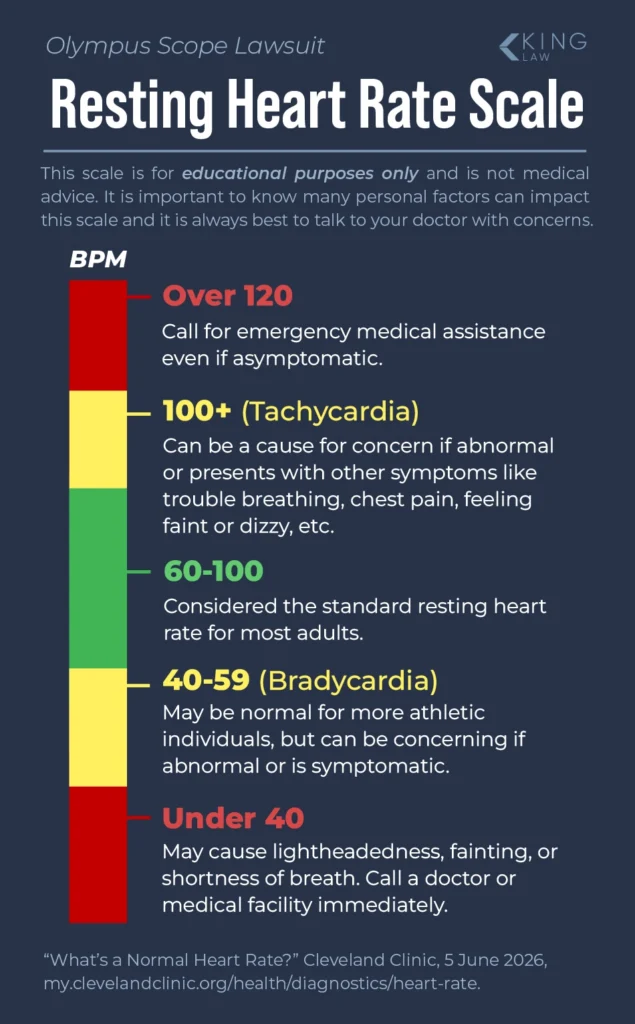
A resting heart rate of 100 beats per minute or more (tachycardia) may be considered too high after a colonoscopy. An elevated heart rate after a colonoscopy may be due to several factors, including dehydration from the procedure or the preparation, stress, or recovery from sedation.
However, if the patient has a high heart rate and other symptoms (such as a fever, fainting, or confusion), the patient should see a doctor immediately. They may have an infection, perforation, post-polypectomy syndrome, or another colonoscopy-related complication. The patient should also contact their medical team if their heart rate is 120 beats per minute or more or is irregular, even if they are not experiencing other symptoms.
Why Can Your Heart Rate Be High After a Colonoscopy?
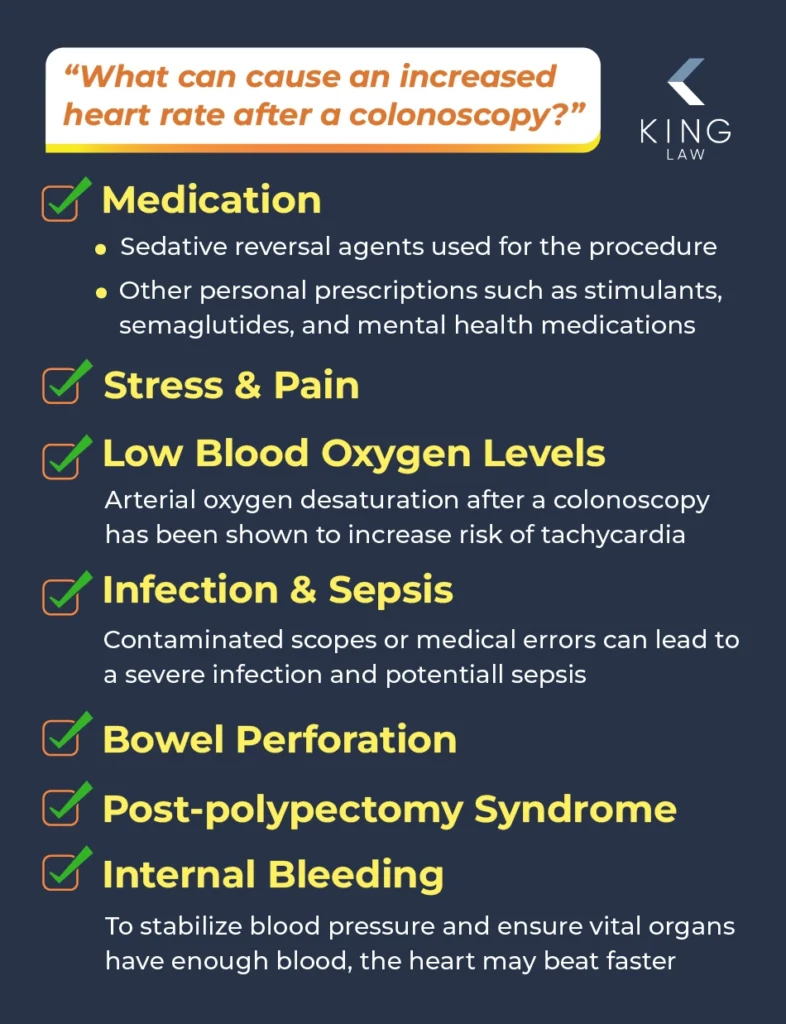
Common reasons why your heart rate may be high after a colonoscopy include:
- Stress
- Fluid loss (i.e., dehydration from the bowel preparation)
- Low blood pressure
- Oxygen level changes
- Pain
- Sedation or medication effects
- Standing after being seated or lying down for a long time
In severe cases, a high heart rate after a colonoscopy may be due to:
- Infection
- Bowel perforation
- Post-polypectomy syndrome or bleeding
- Sepsis
- Pulmonary embolism (blood clot in the lungs)
- Irregular heartbeat (arrhythmia)
- Cardiac ischemia (lack of blood fueling the heart)
Patients should talk to their care team if they have a high or irregular heart rate after a colonoscopy. Their doctors can evaluate them and determine if they need treatment.
Can Dehydration From Colonoscopy Prep Cause a High Heart Rate?
Dehydration from colonoscopy preparation can cause a high heart rate. The bowel preparation process involves drinking clear liquids and taking medications that empty your bowels, which cause severe diarrhea. Bowel preparation may lead to dehydration, which can raise your heart rate to maintain normal blood flow. Dehydration can also disrupt your sodium and electrolyte levels, which your heart muscles need to function properly.
Can Sedation Cause a High Heart Rate After Colonoscopy?
Typically, sedatives used during colonoscopies may lower a
Can Low Oxygen During Colonoscopy Raise Heart Rate?
Low blood oxygen levels (arterial oxygen desaturation) during a colonoscopy may raise someone’s heart rate. For example, one study of 79 colonoscopy patients found that low oxygen levels (arterial oxygen desaturation) during a colonoscopy were significantly correlated with an increased risk of tachycardia (a heart rate of 100 beats per minute or more). However, the study found that hypoxia (not enough oxygen in the blood to fuel the whole body’s systems) was not associated with an increased risk of tachycardia. The researchers found that patients who were obese, had chronic lung disease, were elderly, and were sedated for the colonoscopy had a higher risk of experiencing tachycardia than others.
Can Standing Up After a Colonoscopy Cause a Fast Heart Rate?
Standing up after a colonoscopy can cause the patient’s heart rate to increase rapidly. These situations are referred to as orthostatic or postural tachycardia, and they are caused by the patient standing or sitting up quickly after being in one position for a long time. The patient’s body may be more sensitive to these changes because of fasting, sedation, fluid loss, and bowel preparation. Postural tachycardia should improve after the patient drinks water, rests, and changes positions more gradually.
Can Anxiety or Pain Cause a High Heart Rate After Colonoscopy?
Being in pain and feeling anxious can also increase someone’s heart rate, because both pain and anxiety activate the patient’s sympathetic nervous system (their “fight, flight, or freeze” response). Additionally, the patient’s heart rate may increase because of anxiety, pain, or discomfort caused by abdominal cramping, gas buildup, having polyps removed, or worrying about the results of the colonoscopy.
Increased heart rate due to anxiety or mild discomfort should get better on its own after the patient relaxes. However, patients should talk to their doctor anytime they are concerned about their heart rate being too high after a colonoscopy.
Can Colonoscopy Medications Cause Tachycardia?
Some medications used before, during, or after a colonoscopy can increase someone’s heart rate. For example, hyoscine butylbromide (Buscopan) is often used during colonoscopies to help relax the patient’s muscles and reduce muscle spasms. However, studies have shown that Buscopan can cause patients to have an increased heart rate and very low blood pressure.
Additionally, the medications used to reverse the sedatives once the colonoscopy is done may increase the patient’s heart rate. For example,
Can a High Heart Rate After Colonoscopy Be a Sign of Bleeding?
An elevated heart rate after a colonoscopy may be caused by internal bleeding. The body may make the patient’s heart beat faster to draw in and move more blood to important organs (like the brain, heart, and lungs) and stabilize blood pressure. Signs that a rapid heart rate may be caused by internal bleeding from the colonoscopy include:
- Rectal bleeding
- Black or tarry stool
- Weakness
- Dizziness
- Fainting
- Pale or blue skin
- Low blood pressure
- Confusion or disorientation
If a colonoscopy patient has a rapid heart rate and any of the above symptoms, they should go to the doctor immediately.
Can a High Heart Rate After Colonoscopy Be a Sign of Perforation?
A patient may have a high heart rate if the doctor perforates their bowel during the colonoscopy. Symptoms of a perforated bowel from a colonoscopy may include:
- New or worsening abdominal pain
- Abdominal distension (swollen, rigid belly)
- Fever
- Chills
- Low blood pressure
- Rapid or irregular heart rate
- Shoulder pain
- Nausea or vomiting after colonoscopy
If someone thinks they might have a bowel perforation or is experiencing the above symptoms, they should see a doctor as soon as possible.
Can a High Heart Rate After Colonoscopy Be a Sign of Infection or Sepsis?
An infection or sepsis after a colonoscopy can cause a high heart rate. A colonoscopy patient may get an infection from a contaminated colonoscope, a medical mistake, or another cause. Sepsis is a life-threatening condition in which the body has an extreme response to an infection. If a colonoscopy patient has a high heart rate along with fever, chills, weakness, or confusion, they should be taken to the doctor immediately. They may be suffering from sepsis or an infection from the colonoscopy.
Can Post-Polypectomy Syndrome Cause a Fast Heart Rate?
Post-polypectomy syndrome (also called post-polypectomy electrocoagulation syndrome) can cause someone to have a high heart rate after a colonoscopy. Post-polypectomy syndrome occurs when the colonoscopy patient’s bowel tissue suffers from a deep burn when the doctor uses electrocautery to remove a polyp. Typically, patients with post-polypectomy syndrome may experience a high heart rate, abdominal pain, and fever within 5 days after a colonoscopy. Post-polypectomy syndrome and perforations have similar symptoms. Patients should be seen by a doctor to determine the underlying cause of their high heart rate after a colonoscopy.
How Long Should a Fast Heart Rate Last After Colonoscopy?
If it is part of the normal recovery process, a mildly raised heart rate may not last very long after the colonoscopy patient rests and rehydrates. However, a new or worsening high heart rate after a colonoscopy should be addressed with a physician to rule out complications. Moreover, a high heart rate that is accompanied by chest tightness, fever, chills, abdominal pain, or bleeding after a colonoscopy is always cause for concern. Colonoscopy patients should discuss any troubling, worsening, or new heart rate changes with their doctors.
Who Is More Likely to Have a High Heart Rate After a Colonoscopy?
Patients who are more likely to have a high heart rate after a colonoscopy include those with:
- Heart disease
- Atrial fibrillation
- Supraventricular tachycardia (SVT)
- Heart failure (congestive heart failure)
- Kidney disease
- Anemia
- Obesity
- Electrolyte disorders
Additionally, patients may be more likely to have a high heart rate after a colonoscopy if they are elderly, take blood thinners (anticoagulants), have difficulties with bowel preparation, are dehydrated, or are undergoing a long or difficult colonoscopy. Patients should ask their doctors about the potential benefits and risks of having a colonoscopy, given their unique health profile.
What Should You Tell Your Doctor Before a Colonoscopy?
Before having a colonoscopy, patients should tell their doctor about any underlying conditions they have or have had, and the medications they are taking. For example, they should tell their colonoscopy doctor if they are taking beta-blockers, blood thinners, diuretics, ACE inhibitors, stimulants, albuterol, or decongestants. They should also inform their doctor if they have a history of anemia, POTS, fainting episodes, heart problems, blood clot issues, kidney disease, or a history of reacting negatively to sedatives.
Robert King King Law Firm Is Investigating Patients With High Heart Rates & Infections After Colonoscopies
King Law is investigating claims involving patients who developed a high heart rate due to a contaminated colonoscope during a colonoscopy and reviewing lawsuits related to Olympus scopes. We can review your case and determine if the devices used in your colonoscopy may have been defective, contaminated, or not cleaned properly before your procedure. We are also accepting colonoscopy cases in which patients developed sepsis, septic shock, pneumonia, or other infections, or died because of a colonoscopy.
Contact King Law for a Free Case Review
Contact King Law today by calling (585) 496-2648 or filling out an online form to schedule your free, no-obligation consultation. We may be able to help you request compensation if a defective colonoscope may have caused an infection after your colonoscopy. We take colonoscopy patients’ lawsuits on a contingency basis, so they do not have to pay any upfront legal fees to hire us.
Frequently Asked Questions (FAQs)
A high heart rate after a colonoscopy can be normal, but it can also be a sign of an infection, perforation, post-polypectomy syndrome, or other complication.
A resting heart rate that is irregular or over 100 beats per minute may be too high after a colonoscopy. Patients should talk to their doctor to determine if their heart rate is too high after a colonoscopy.
A fast heart rate should not last long after a colonoscopy. A fast heart rate that is accompanied by other symptoms, such as a fever, chills, nausea, diarrhea, abdominal pain, breathing problems, or confusion, requires urgent medical attention.
Colonoscopy prep can cause a high heart rate if it triggers underlying heart problems, causes the patient to become dehydrated, or other complications occur.
Yes. Dehydration from the colonoscopy prep can cause tachycardia (a heart rate of 100 beats per minute or more).
Yes. An electrolyte imbalance after colonoscopy prep can cause heart palpitations and a racing heart rate.
Sometimes, sedation can cause a high heart rate after a colonoscopy. For example, the patient may not have enough oxygen in their blood, which may increase their heart rate.
Yes. In some cases, propofol can cause a racing heart after a colonoscopy. Sometimes, this increase in heart rate may be due to the stress of receiving the injection. Or, the patient may be having a bad reaction to propofol.
Yes. Anxiety can cause a fast heart rate before or after a colonoscopy. However, patients should talk to their doctor about whether their racing heart rate is due to anxiety or a complication with the bowel prep or colonoscopy.
Yes. Gas pain after a colonoscopy may make your heart rate go up. However, this should improve over time and after you pass gas. If it does not get better or you are unable to pass gas, seek urgent medical attention.
Your heart rate may be high the day after a colonoscopy because of an infection, post-polypectomy syndrome, perforation, spleen injury, or other complication.
Bleeding after a colonoscopy can cause a patient to have a high heart rate.
A perforation can cause a colonoscopy patient to have a high heart rate.
Some signs of infection after a colonoscopy include a high or irregular heart rate, fever, chills, and abdominal pain.
Yes. A high heart rate after a colonoscopy may be a sign of sepsis, especially if the patient also experiences fever, breathing problems, confusion, or abdominal pain.
Post-polypectomy syndrome can cause a high heart rate.
You may want to seek urgent medical attention if you have a high heart rate after a colonoscopy, especially if you are experiencing other symptoms.
A high heart rate after a colonoscopy may be dangerous if the patient also experiences symptoms like chest pain, shoulder pain, abdominal pain, fever, chills, nausea, vomiting, bloody or tar-like stool, confusion, or fainting.
Patients who are elderly, are overweight, have underlying health conditions, undergo deep sedation, or have a lengthy or invasive colonoscopy may be more likely to have a high heart rate (like tachycardia) after a colonoscopy.
List of Sources Used in This Article
King Law uses rigorous editorial standards when creating articles for our website. Here is a list of citations to support this article.
- Centers for Disease Control and Prevention. About Sepsis. U.S. Department of Health and Human Services.
- Acute Hyponatremia Caused by Polyethylene Glycol-Based Bowel Preparation for Colonoscopy. Clinical Endoscopy, vol. 51, no. 6, 2018.
- Acute Kidney Injury Related to Colonoscopy Preparation: Review of Current Evidence. Journal Article, 2025.
- Acute Renal Failure Following Oral Sodium Phosphate Bowel Preparation. World Journal of Gastroenterology, vol. 19, no. 43, 2013.
- Dehydration with Bowel Purgatives: A Risk for Serious Complications. American Journal of Gastroenterology, vol. 101, suppl. 1, 2006.
- Gastrointestinal Bleeding. Merck Manual Consumer Version.
- Mayo Clinic Staff. Tachycardia. Mayo Clinic.
- Hypokalemia-Induced Life-Threatening Cardiac Arrhythmia Following Colonoscopy Preparation. Case Reports in Gastroenterology, 2016.
- Optimal and Safe Bowel Preparation for Colonoscopy. Clinical Endoscopy, vol. 50, no. 3, 2017.
- MedlinePlus. Pulmonary Embolism. U.S. National Library of Medicine.
- Pulmonary Embolism Following Colonoscopy: A Case Report and Review of the Literature. Case Reports in Gastrointestinal Medicine, 2015.
- Severe Electrolyte Disturbances After Bowel Preparation: A Case Report. Turkish Journal of Gastroenterology.