

Gabapentin Lawsuit [2026 Update]
Complete the form below to see if you qualify for a Gabapentin Lawsuit

Do You Qualify for the Gabapentin and Dementia Lawsuit?
If you or a loved one took gabapentin and later developed dementia or permanent cognitive issues, you may qualify for a lawsuit against the drug’s manufacturers. Some patients could have viable claims if they took gabapentin and were later diagnosed with early-onset dementia or early cognitive decline.
On this page, we explain gabapentin dementia lawsuits, scientific studies exploring associations between the drug and brain function, and eligibility for compensation. Robert King Law Firm is investigating claims involving gabapentin use followed by dementia, cognitive decline, and permanent or ongoing memory loss.
Serious Cognitive Impairment and Dementia Risks After Gabapentin Use
Multiple scientific studies have explored how gabapentin use, especially long-term use, may have permanent impacts on the brain and cognition. Several large-scale studies have found that people who take gabapentin develop dementia (including Alzheimer’s disease) and other cognitive disorders at higher rates than people who have not taken gabapentin (read study summaries below).
Scientists are still exploring how gabapentin may affect cognition, but causation has not been established. However, gabapentin is the fifth-most-prescribed pharmaceutical medication in the United States, with more than 73 million prescriptions written in 2025. This means that millions of people taking gabapentin may be at an increased risk of developing drug-related dementia or cognitive decline.
About the Gabapentin and Dementia Lawsuit:
Serious Cognitive Impairment and Dementia Risks After Gabapentin Use
Gabapentin and Dementia | Legal, Regulatory, & Research Updates
Gabapentin Lawsuit Overview: Cognitive Impairment and Dementia Risks
What Is Gabapentin and How Is It Used to Treat Medical Conditions?
Studies Examining Gabapentin, Cognitive Impairment, and Possible Dementia Risk
Possible Signs of Cognitive Decline After Gabapentin Use
Gabapentin Safety Warnings and Regulatory Alerts
Gabapentin Products Involved in Cognitive Impairment and Dementia Lawsuits
Do You Qualify for a Gabapentin Cognitive Impairment or Dementia Lawsuit?
Potential Compensation in a Gabapentin Cognitive Impairment or Dementia Lawsuit
Robert King Law Firm: Investigating Gabapentin Lawsuit Claims
Gabapentin and Dementia | Legal, Regulatory, & Research Updates
Here, you can find updates on the gabapentin and dementia lawsuits, as well as scientific studies and regulatory action concerning gabapentin.
October 5, 2026: A new study says people taking gabapentin for chronic lower back pain have a greater risk of dementia. The study, called “Risk of dementia following gabapentin prescription in chronic low back pain patients,” was published in the journal Regional Anesthesia & Pain Medicine and analyzed data from more than 26,000 patients. The study found that those taking gabapentin for lower back pain and who had six or more gabapentin prescriptions had a 29% greater risk of developing dementia or mild cognitive decline than those not taking gabapentin. For non-elderly patients (ages 18-64) who took 6 or more gabapentin prescriptions, the risk was more than twice as great.
July 10, 2025: A study is released suggesting an increased association between gabapentin use and dementia and cognitive decline. The researchers reviewed data for over 24,000 patients. According to their dataset, patients who received 6 gabapentin prescriptions (e.g., picked up gabapentin 6 times) were 29% more likely to develop dementia and 85% more likely to experience cognitive decline than those who did not take gabapentin. Patients who were between 18 and 64 years old were more than two times more likely to develop dementia and cognitive decline.
December 2023: Researchers discover that six clinical trials of gabapentin did not disclose some important harms participants experienced after taking gabapentin. Nervous system harms were among those underreported or not reported in those clinical trials.
June 2014: In 2014, Pfizer settled a $325 million lawsuit to resolve claims that it marketed gabapentin for unapproved (off-label) purposes. Doctors may prescribe medications (like gabapentin) for purposes that are not included in the FDA’s approval notice (called off-label). However, drug companies cannot market drugs for non-FDA-approved uses.
May 2004: Pfizer (William-Lambert) pleaded guilty to criminal and civil charges for advertising and promoting the off-label use of gabapentin. Pfizer and the Department of Justice settled those charges for about $430 million. The charges stemmed from a whistleblower complaint that accused Pfizer of using “fraudulent scientific evidence” to encourage people to use gabapentin for off-label uses.
Gabapentin Lawsuit Overview: Cognitive Impairment and Dementia Risks
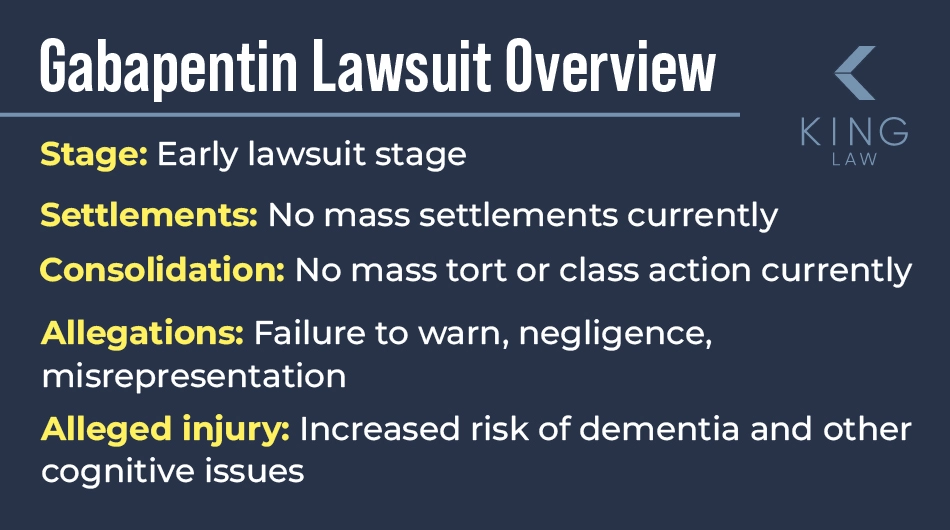
Some people who took gabapentin and later developed cognitive diseases have filed civil lawsuits against Pfizer (the maker of Neurontin®) and other gabapentin manufacturers. These lawsuits accuse companies of failing to tell patients and physicians about the possible risks of dementia and cognitive impairment from taking gabapentin.
Here are some important facts about gabapentin and the dementia lawsuits:
- Observational studies have suggested that gabapentin may be associated with an increased risk of dementia and long-term cognitive impairment, especially with long-term use.
- Gabapentin lawsuits about dementia and cognitive risks are in their early stages.
- There have not been mass settlements or jury awards for gabapentin dementia lawsuits. These lawsuits are developing.
- Lawsuits allege that gabapentin’s manufacturers knew about possible long-term cognitive risks but failed to properly warn patients.
- Accusations against gabapentin’s manufacturers include failure to warn, negligence, and misrepresentation of their drugs.
- There is currently not a class action or multidistrict litigation involving gabapentin and cognitive injuries. However, patients can file civil lawsuits in state courts.
- Insurance providers and other professionals have also sued Pfizer for misleading physicians about which conditions gabapentin is authorized to treat.
- Pfizer has also been sued for delaying the sale of generic versions of gabapentin.
What Is Gabapentin and How Is It Used to Treat Medical Conditions?
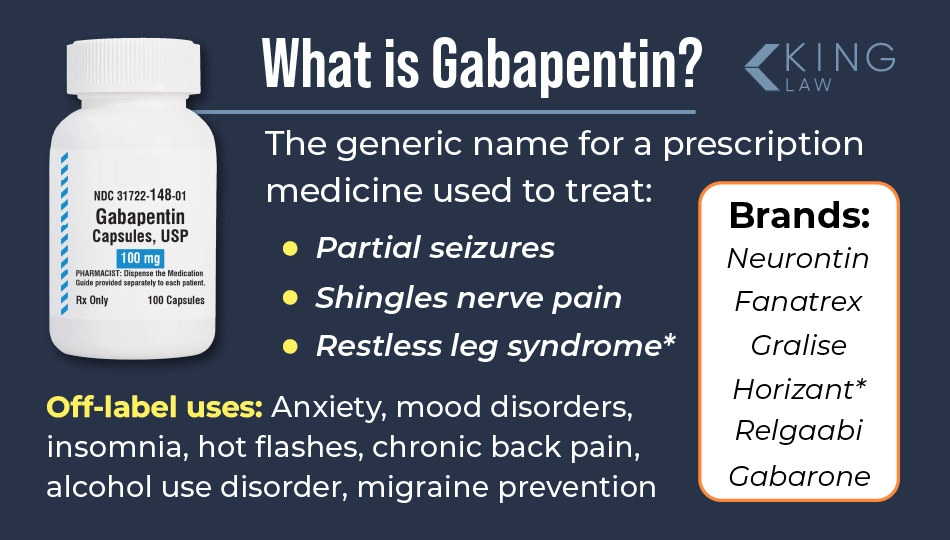
Gabapentin is a prescription anticonvulsive medication, chemically known as 2-(1-(aminomethyl)cyclohexyl)acetic acid. Scientists are not sure why gabapentin works to treat seizures, pain, and other conditions, but they hypothesize that taking gabapentin leads to an overall increase in central GABA levels.
GABA is a chemical that slows down signals in the brain and nerves. Scientists believe gabapentin may help to control partial seizures and nerve pain by affecting GABA levels. Gabapentin is available as a pill, extended-release tablet, and liquid solution.
Gabapentin is also known by brand names such as:
- Neurontin® (Pfizer)
- Fanatrex® (California Pharmaceuticals LLC)
- Gralise® (Almatica Pharma LLC)
- Horizant® (Azurity Pharmaceuticals, Inc)
What Is Gabapentin Used to Treat?
Gabapentin has been approved by the FDA for certain medical conditions. It is also prescribed off-label to treat a range of conditions.
The FDA-approved uses of gabapentin include:
- Postherpetic neuralgia in adults (a complication of shingles)
- An adjunctive therapy for the treatment of partial onset seizures in patients age 3 and older with epilepsy
Doctors have also prescribed gabapentin for off-label reasons, including the following:
- Anxiety
- Mood disorders (like bipolar disorder)
- Insomnia (trouble sleeping)
- Hot flashes
- Chronic cough
- Chronic back pain
- Alcohol use disorder
- Migraine prevention
Doctors sometimes prescribe gabapentin for other reasons, too. However, gabapentin manufacturers are not allowed to advertise the drug as a treatment for off-label conditions. Off-label prescribing of gabapentin is very common, and the drug varies in effectiveness as a treatment for off-label conditions.
Why Gabapentin May Affect Cognitive Function and Brain Health
Gabapentin increases how much of the chemical GABA is in the brain. Scientists believe that GABA slows down the nervous system and decreases brain activity. Some of the side effects of gabapentin include feeling sedated, experiencing slowed thinking, difficulty concentrating, confusion, trouble speaking, and memory problems. Some people believe this may be caused or worsened by increased GABA levels in the brain.
Studies Examining Gabapentin, Cognitive Impairment, and Possible Dementia Risk
Across published observational studies, researchers have consistently reported an association between gabapentin use and poorer cognitive outcomes. The studies listed below do not prove whether or not gabapentin causes dementia. However, they raise questions about how long-term use could contribute to dementia and other cognitive diseases.
Here are some of the findings from scientific research examining a possible association between taking gabapentin and developing cognitive issues or dementia:
- 2022 retrospective cohort study using the National Alzheimer’s Coordinating Center Uniform Data Set: The study found that patients in the dataset who started taking gabapentin were
more likely to experience cognitive decline . The researchers described this association as “significant.” - 2023 retrospective, population-based matched cohort
study : A review of medical records from 206,802 patients (34,467 of whom were taking gabapentin or a similar drug) found that those taking the drug had a 45% higher rate of dementia than the control group. - 2025 retrospective cohort
study : The study found that patients with chronic lower back pain were 29% more likely to develop dementia and 85% more likely to suffer from “mild cognitive impairment” if they received six or more gabapentin prescriptions. That same study noted that people who took gabapentin between the ages of 18 and 64 had over 2 times the dementia risk compared to people who did not take it.. - 2026 systematic
review : This review of five observational studies with a combined 325,245 participants looked to further assess the long-term cognitive safety of gabapentin. The researchers found that Gabapentinoid use was associated with modestly higher estimated odds of developing ADRD (i.e., Alzheimer’s disease and related dementias).
Why Do Researchers Think Gabapentin Could Affect Memory and Cognition?
Researchers have been investigating why gabapentin may have long-term impacts on memory and cognition. Some of the short-term side effects of gabapentin include confusion, memory problems, drowsiness or feeling sleepy (sedation), balance problems, and “Strange or unusual thoughts.”
Researchers are studying whether these effects could help explain why some observational studies have found an association between long-term gabapentin use and cognitive decline. Scientists are studying if long-term gabapentin use could contribute to lasting cognitive changes in some patients, even if they stop taking the drug.
Possible Signs of Cognitive Decline After Gabapentin Use
People who are taking gabapentin or their loved ones may wonder if someone is experiencing cognitive decline after taking gabapentin. Signs of cognitive decline and dementia should always be taken seriously and brought to the attention of a doctor, no matter the underlying cause.
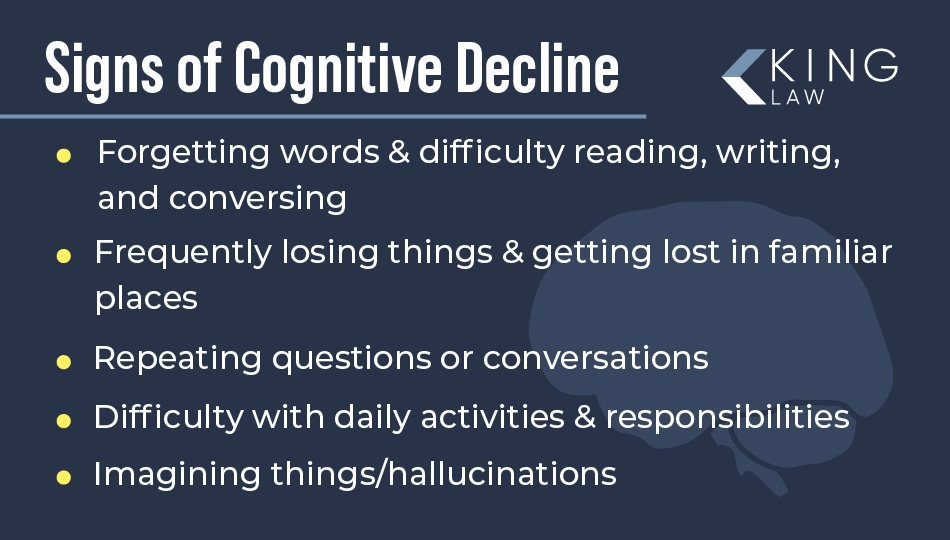
If you or a loved one started taking Gabapentin and experiences any of the following signs of cognitive decline, you should talk to a doctor:
- Forgetting to go to important events
- Frequently losing things
- Frequently forgetting words
- Troubles with reading, writing, and conversations
- Asking the same questions or telling the same stories repeatedly
- Difficulties with daily activities
- Problems paying bills or with finances
- Becoming lost in familiar places
- Imagining things or experiencing hallucinations
Whether or not gabapentin use is related to any of the above issues, it is important to work with medical professionals to understand the cause and treatment.
Gabapentin Safety Warnings and Regulatory Alerts
The FDA has issued several warnings about gabapentin. However, these warnings have not been related to dementia or cognitive risks. Instead, these warnings have been related to the following:
- Possible increase in suicidal thoughts or behaviors (label updated in 2008)
- Empty pill capsules in some lots (2014 recall)
- Breathing problems (FDA Safety communication)
Additionally, one group of researchers found that six clinical trials of gabapentin did not report some of the “important harms” discovered during those trials. Some of the harms mentioned by the researchers included those involving the nervous system.
Several state legislators and the Drug Enforcement Agency have also voiced concern about people using Gabapentin as an illicit drug. Several states have re-classified gabapentin as a Schedule V substance.
Gabapentin Products Involved in Cognitive Impairment and Dementia Lawsuits
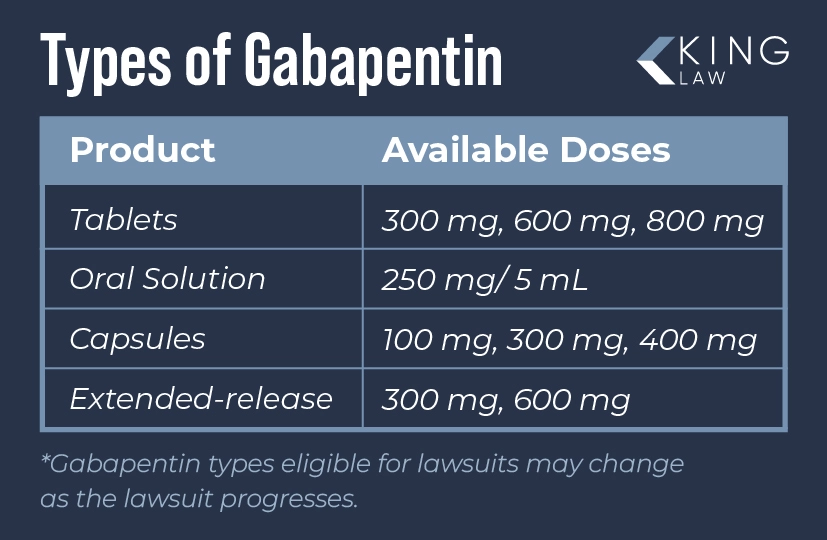
Gabapentin dementia lawsuits are in their early stages. Some of the gabapentin drugs that are on the market include:
- Neurontin®
- Generic immediate-release gabapentin
- Extended-release products (like Gralise or Horizant)
- Gabapentin oral solution
- Several strengths of gabapentin (such as 100 mg, 300 mg, 400 mg, 600 mg, and 800 mg)
Gabapentin products are manufactured by Pfizer, Warner-Lambert, Parke-Davis, and generic pharmaceutical companies. Not every formulation of gabapentin may be involved in lawsuits or be associated with an increased risk of dementia.
Do You Qualify for a Gabapentin Cognitive Impairment or Dementia Lawsuit?
If you took gabapentin and later experienced cognitive decline or dementia, you can speak with one of our attorneys to better understand lawsuit eligibility. Our law firm is investigating gabapentin claims involving the following:
- Patients under 65 who were diagnosed with early-onset dementia (including Alzheimer’s disease and Lewy body, frontotemporal, and vascular dementia) or cognitive decline after taking Gabapentin
- Family members of patients who are filing a lawsuit on behalf of an incapacitated or deceased loved one
Complications not listed above can still qualify someone for a gabapentin lawsuit. Contact our office to learn what the updated eligibility criteria are for a gabapentin lawsuit. Interested plaintiffs can read more information about how to join the gabapentin lawsuit here.
Evidence Needed in Gabapentin Cognitive Impairment and Dementia Cases
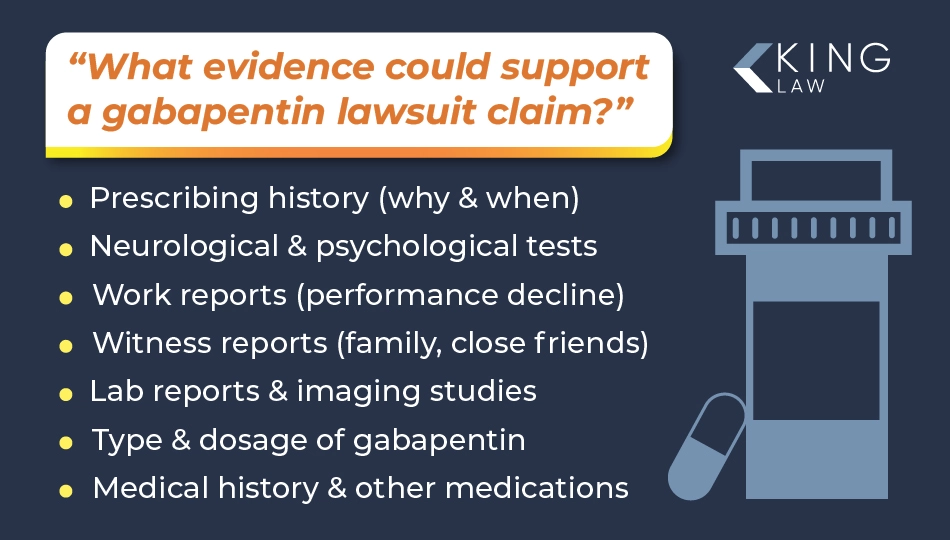
Evidence that you might be able to use to support your gabapentin lawsuit includes:
- Prescribing history (e.g., why and when you were prescribed gabapentin)
- Prescription pickup records
- The type and dosage of gabapentin you took
- After-visit summaries or other documentation showing your cognitive symptoms
- Medical history
- Neurological and psychological tests (including memory evaluations)
- Imaging studies
- Laboratory tests
- List of medications you currently take or have taken in the past
- Testimony from loved ones about how you have changed since starting gabapentin
- Medical expert testimony
- Medical bills
- Work reports (such as poor performance reviews due to gabapentin use)
Attorneys will also locate other sources of proof that could help strengthen your gabapentin dementia lawsuit.
Potential Compensation in a Gabapentin Cognitive Impairment or Dementia Lawsuit
Types of compensation that may be available to plaintiffs in gabapentin lawsuits include:
- Lost wages
- Past and future medical expenses
- Neurological or rehabilitative treatment
- Lost earning capacity
- Home health care
- Pain and suffering
- Memory care or assisted living expenses
- Loss of enjoyment of life
- Prescription costs
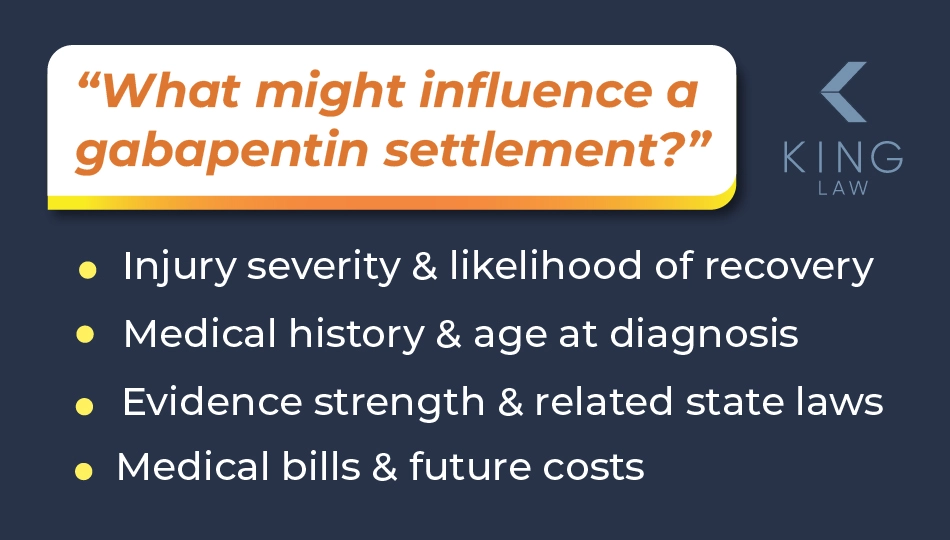
The compensation that someone can receive in a gabapentin cognitive impairment or dementia lawsuit depends on factors, such as:
- Medical history
- Severity of their cognitive decline or dementia
- Cost of future care
- Likelihood of recovery after stopping gabapentin
- Strength of their case
- Age at diagnosis
- The applicable state liability laws
Because the gabapentin dementia lawsuits are in their early stages, it is unknown how much these types of cases may settle for. However, a seasoned attorney can review your case and estimate how much you could receive for your gabapentin-related cognitive decline or dementia.
Robert King Law Firm: Investigating Gabapentin Lawsuit Claims
Contact us today by dialing (585) 496-2648 or filling out this online contact form to schedule a confidential and free consultation with a lawyer on our team.
Robert King Law Firm is investigating patients’ claims of cognitive decline and dementia after taking gabapentin. We are closely tracking gabapentin lawsuits and are actively involved in the progress of the gabapentin litigation. Our law firm has extensive experience reviewing medical history, diagnosis and treatment records, neurological tests, and other evidence. We can use our legal knowledge to determine if your case meets our firm’s criteria to file a gabapentin lawsuit. Our attorneys work on a contingency-fee basis, meaning you only pay us if we secure you compensation, and there are no up-front fees to file your lawsuit.
Frequently Asked Questions (FAQs)
Depending on your unique circumstances, you can qualify to file a lawsuit if you or a loved one developed dementia after taking gabapentin.
Your doctor and lawyer can help you determine if your memory problems may be associated with your gabapentin use.
It depends on your situation. Some studies have shown that patients who received at least 6 gabapentin prescriptions experienced cognitive decline and dementia at higher rates.
It depends on your situation, though taking the drug for six or more months can help your case. An attorney can help you understand if you qualify to file a lawsuit based on your gabapentin use and cognitive decline.
You may still qualify to file a lawsuit if you experienced mild cognitive impairment instead of dementia after taking gabapentin.
Yes. You may file a lawsuit if you took gabapentin and were diagnosed with dementia before age 65.
You may still be able to file a lawsuit regardless of the reason your doctor prescribed gabapentin.
You may still file a claim if you took generic gabapentin instead of Neurontin.
You may still be able to file a lawsuit if you do not know which company made your gabapentin. You or your attorney can find this information in your medical records.
Medical records you may need for a gabapentin dementia lawsuit include documents showing when you started taking it, why, what dosage you were on, how long you took it, and what your cognitive symptoms were after.
You may still be able to qualify for a lawsuit even if gabapentin was not the only factor in your dementia diagnosis.
You may still be eligible to file a gabapentin lawsuit even if you have other health conditions that may affect your memory.
It depends. Sometimes a family member may file a gabapentin lawsuit for someone with dementia if they are their family member’s guardian or filing a wrongful death lawsuit after their family member passed away. Talk to an attorney about your options.
You may be able to file a wrongful death lawsuit if your loved one died after developing dementia.
At this time, there is no gabapentin dementia class action or MDL.
There have not been any publicly reported gabapentin dementia settlements or verdicts.
How much money you could receive from a gabapentin dementia lawsuit depends on your unique situation.
A gabapentin dementia lawsuit can take up to a year or longer to resolve.
It depends on the applicable laws. Talk to a lawyer about your filing deadlines for your gabapentin dementia lawsuit.
It depends. Many lawyers take gabapentin dementia claims on contingency, which means the client does not pay upfront legal fees to hire the attorney.