

Off-Label Uses for Gabapentin: Conditions, Evidence, & FAQs
Complete the form below to see if you qualify for a Gabapentin Lawsuit

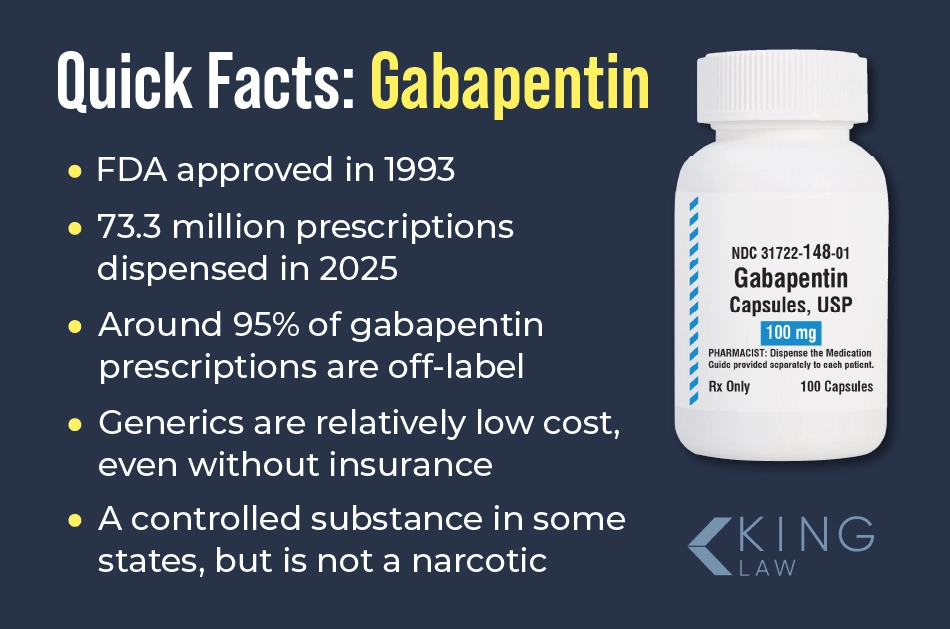
Gabapentin, also sold under the brand name Neurontin, is FDA-approved as a treatment for seizures and shingles pain. However, the vast majority of prescriptions are written off-label, meaning the FDA did not approve gabapentin as a treatment for that condition. Prescribing medication off-label is a legal, common practice in medicine and can have benefits to patients. Off-label uses of gabapentin range from treatments for psychiatric conditions to pain management to sleep disorders.
Although gabapentin is frequently prescribed off-label to treat a range of conditions, the quality of evidence supporting its effectiveness in treating these conditions varies. This article will discuss how gabapentin is being used off-label, which off-label uses have the best supporting science, and the potential risks of taking gabapentin off-label. It will also discuss the practice of off-label prescription more broadly and answer common questions patients have about using gabapentin off-label.
About the Gabapentin Off-Label Uses
What Is Off-Label Use of Gabapentin?
Why Do Doctors Prescribe Gabapentin Off-Label So Often?
What Are the FDA-Approved Uses of Gabapentin?
What Are Common Off-Label Uses of Gabapentin?
Is It Legal For Doctors to Prescribe Gabapentin Off-Label?
Is It Legal for Drug Makers to Promote Gabapentin Off-Label?
Is It Safe to Take Gabapentin Off-Label?
Are There Injury Lawsuits Related to Off-Label Gabapentin Use?
What Is Off-Label Use of Gabapentin?
Off-label use of gabapentin, or any other FDA-approved drug, means prescribing a pharmaceutical drug for a purpose not included in its approved labeling. According to the FDA, off-label use may include:
- Using the drug to treat a disease or medical condition other than those explicitly approved by the FDA.
- Administering the drug in a different form factor or vector than was FDA-approved.
- Prescribing the drug at a different dose than is approved by the FDA.
- Prescribing the drug to a different population (such as an age group) than was approved by the FDA.
An off-label use may be supported by any combination of clinical trials, medical guidelines, limited studies, or the prescribing physician’s anecdotal experience. In some cases, including that of gabapentin, off-label prescription may even be more common than on-label usage.
How Common is Off-Label Prescribing of Gabapentin?
Gabapentin is among the most commonly prescribed off-label medications in the United States. According to a
Why Do Doctors Prescribe Gabapentin Off-Label So Often?
Doctors commonly prescribe gabapentin off-label because the drug can be an effective treatment for a number of medical conditions. Gabapentin is prescribed off-label for a number of medical and socioeconomic reasons, making it a common fallback option when standard treatments fail to provide adequate symptom relief. Gabapentin is commonly prescribed off-label because some of the qualities of the drug make it useful in treating off-label disorders.
Here are some of the reasons why doctors commonly prescribe gabapentin off-label:
- Gabapentin reduces abnormal nerve signaling without completely blocking normal nerve function. This means it can provide a broad spectrum of relief for overlapping nervous system symptoms ranging from muscle tension, pain, anxiety, and insomnia.
- Gabapentin has been around since 1993 and is available as a low-cost generic. This is also why there is little incentive for drug manufacturers to seek FDA approvals for additional uses.
- Gabapentin’s pain-relieving properties are attractive as an alternative to opioids.
- Research supports some off-label uses to varying degrees.
- The drug is widely perceived to be safe, although there are some concerns about side effects of the drug.
While off-label prescriptions can occasionally complicate insurance authorizations, the drug is often affordable out-of-pocket.
What Are the FDA-Approved Uses of Gabapentin?
FDA-approved uses of gabapentin fall into three categories: postherpetic neuralgia (PHN), epilepsy, and restless leg syndrome (RLS). However, each of these applies to specific formulations and dosages of the drug.
- Postherpetic neuralgia (PHN) is nerve pain that lingers after a shingles infection. FDA-approved gabapentin medications for adults to treat PHN include Neurontin (immediate release), Relgaabi (immediate release), Gralise (extended-release), and Horizant (gabapentin enacarbil).
- Types of Gabapentin that are FDA-approved as adjunctive therapy for epilepsy include generic gabapentin, Neurontin, and Relgaabi.
- RLS is a neurological disorder characterized by an irresistible urge to move one’s legs. The FDA has approved gabapentin enacarbil (Horizant) as a treatment for RLS. Standard gabapentin is not approved as an RLS treatment.
Note that FDA approval for one type of nerve pain or neurological condition does not mean gabapentin is approved for every condition involving pain or nerve symptoms, nor that related formulations like gabapentin enacarbil are interchangeable with immediate-release gabapentin.
What Are Common Off-Label Uses of Gabapentin?
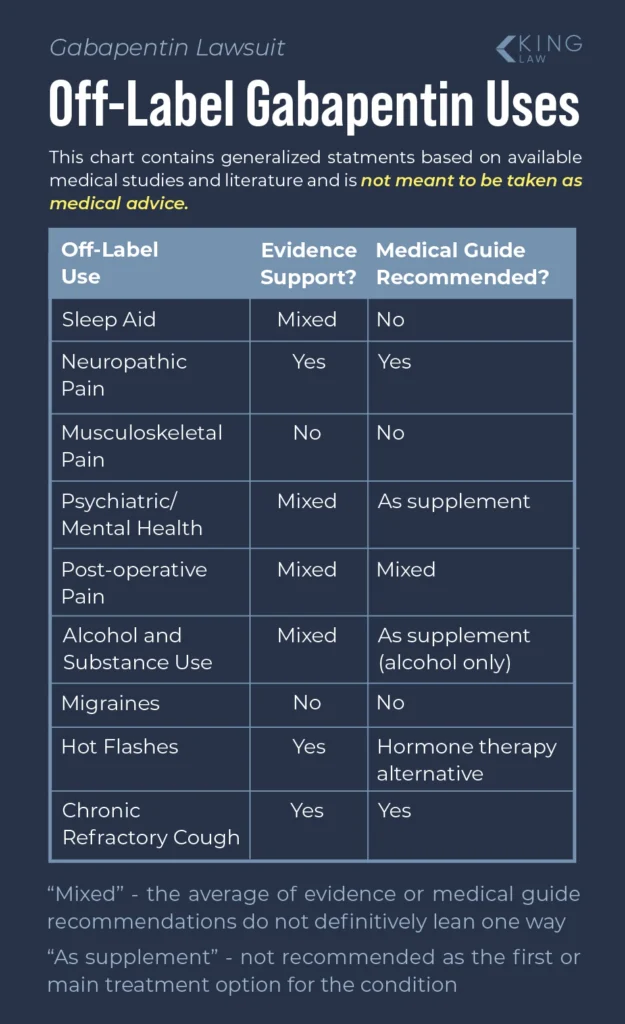
Gabapentin is prescribed off-label for a wide range of symptoms and conditions, ranging from pain to hot flashes. However, the quality and quantity of evidence supporting these uses vary greatly. Similarly, the mechanisms of how gabapentin acts upon these symptoms and conditions are not always well understood. Below are some common off-label uses for gabapentin.
Sleep Aid
Why do doctors prescribe gabapentin as a sleep aid?
Gabapentin may be prescribed as a sleep aid to reduce nighttime awakenings and promote deeper sleep without disrupting natural sleep stages, unlike hypnotics like Ambien or benzodiazepines like Xanax.
What does the evidence say?
A 2010 polysomnographic study found that gabapentin improved slow-wave sleep and sleep efficiency. A 2015 randomized trial found an increase in self-reported sleep duration without next-day impairment. However, a 2025 meta-analysis of four randomized controlled trials found that gabapentinoids showed no clinically significant difference in sleep interference compared to a placebo at 2 to 4 months after treatment for patients with peripheral nerve injuries. A 2017 randomized study found that gabapentin increased the sleep apnea hypoxia index in older male patients during non-REM sleep while in a supine position (on their back).
Do medical guidelines generally recommend it?
Medical guidelines do not generally recommend gabapentin as a sleep aid, but recommendations against this off-label usage also tend to be weak. For instance, the American Academy of Sleep Medicine (AASM) has not endorsed anticonvulsants (the category of drug gabapentin belongs to) for standard insomnia. However, older AASM guidance has suggested that these medications may be suitable for patients with comorbid insomnia, who may benefit from the sedative effects of the drugs along with their primary action.
Neuropathic Pain
Why do doctors prescribe gabapentin for neuropathic pain?
Doctors may prescribe gabapentin for neuropathic (nerve) pain due to the poor efficacy of over-the-counter drugs like NSAIDs and acetaminophen on these symptoms. Gabapentin may also be an attractive alternative to opioids for pain management.
What does the evidence say?
A 2025 comparative study found that gabapentinoids demonstrated comparable efficacy to opioids for pain suppression among cancer survivors. A Cochrane review published in 2014 and updated in 2014 found second-tier evidence that gabapentin performed significantly better than a placebo at reducing diabetic neuropathy by 50% or more. It should also be noted that PHN, for which gabapentin is FDA-approved, is a form of neuropathic pain. However, gabapentin may be less effective at treating other forms of neuropathic pain, like sciatica.
Do medical guidelines generally recommend it?
Gabapentin is among the first-line treatments recommended for chronic nerve pain by the National Institute for Health and Care Excellence (NICE). There is strong evidence supporting gabapentin’s use for diabetic neuropathy and PHN, but weaker evidence for peripheral neuropathy and neuropathic cancer pain. Although there is moderate evidence that it is effective for pain relief for spinal cord injuries, drugs like Lyrica may be preferred by some physicians.
Musculoskeletal Pain
Why do doctors prescribe gabapentin for musculoskeletal pain?
The majority of gabapentin prescriptions are written for general pain management. Over-the-counter drugs may be ineffective at managing severe musculoskeletal pain, and opioids, in addition to their addictive properties, are more effective for managing acute pain than chronic pain. The broad nervous system effects of gabapentin may make it a common second drug of choice for musculoskeletal pain.
What does the evidence say?
A 2017 meta-analysis of randomized controlled trials found gabapentin offered little improvement in chronic back pain symptoms, especially relative to its side effects, and recommended caution in prescribing it for this purpose. A Cochrane review of gabapentin prescriptions for fibromyalgia, which is often treated as a musculoskeletal pain disorder, found there was insufficient evidence to support or refute the claim that gabapentin reduces fibromyalgia pain.
Do medical guidelines generally recommend it?
The American College of Physicians does not recommend gabapentin as a treatment for chronic lower back pain, and gabapentin is not considered an analgesic for structural tissue injuries.
Psychiatric and Mental Health Disorders
Why do doctors prescribe gabapentin for mental health disorders?
Physicians may prescribe gabapentin for psychiatric disorders ranging from anxiety, to mood disturbances, and substance addictions (discussed separately below). This is due to the drug’s ability to reduce some types of neurotransmission. It is uncommon that gabapentin is prescribed as the primary drug for these conditions, but it is often co-prescribed.
What does the evidence say?
Evidence for psychiatric gabapentin prescriptions is mixed and varies by condition. A 2015 systematic review of psychiatric gabapentin therapy found that the drug may benefit specific anxiety disorders like social anxiety, anxiety in breast cancer patients, and perioperative anxiety. But, the study noted a lack of studies on its efficacy against generalized anxiety disorder. The review did not find clear evidence that gabapentin was effective against depression, PTSD, or OCD, and found limited evidence of its efficacy against bipolar disorder.
Do medical guidelines generally recommend it?
The American Psychiatric Association does not recommend gabapentin as a first-line medication for psychiatric issues, noting side effect risks like respiratory depression and withdrawal symptoms. It recommends screening patients carefully and trying other therapies before prescribing gabapentin, but does not explicitly recommend against it.
Post-Operative Pain
Why do doctors prescribe gabapentin for post-operative pain?
Physicians may prescribe gabapentin for post-operative pain as an alternative to opioids. The practice became common after a small clinical trial and meta-analyses in the mid-2000s found that prescribing gabapentin for post-operative pain led to a substantial reduction in opioid use.
What does the evidence say?
More recent and comprehensive meta-analyses of perioperative gabapentinoid prescriptions have largely walked back the enthusiasm seen in earlier research, observing “no clinically significant analgesic effect” or effect on the prevention of postoperative chronic pain. It did find a lower risk of postoperative nausea, but with higher incidences of dizziness and visual disturbances. An earlier Cochrane review found that gabapentin performed better than a placebo at reducing post-operative pain, but it offered little clinical value compared to commonly used analgesics.
Do medical guidelines generally recommend it?
Some hospitals and surgical protocols continue to prescribe gabapentin for post-operative pain. It is also sometimes prescribed as a preoperative drug for numerous surgeries in many hospital protocols, though not universally. This represents a discrepancy between the latest research and common medical practices.
Alcohol and Substance Use Disorders
Why do doctors prescribe gabapentin for alcohol and substance abuse disorders?
Doctors may prescribe gabapentin to reduce the cravings and withdrawal symptoms associated with substance abuse disorders and alcohol use disorder (AUD) in particular.
What does the evidence say?
There is strong evidence that gabapentin reduces the number of heavy drinking days in outpatient AUD patients by around 18%. The effects appear to be strongest in patients with more severe alcohol withdrawal symptoms, with 41% of such patients achieving abstinence in a randomized clinical trial compared to 1% in the placebo group. However, another meta-analysis found there was insufficient evidence to support the use of gabapentin to treat inpatients suffering from acute alcohol withdrawal syndrome (AWS). High-quality trials showed no statistical benefit for treating opioid withdrawal or stimulant addiction with gabapentin. Although there is some limited evidence that the drug could help with cannabis use disorder, more studies will likely need to be conducted. Gabapentin dependency can, itself, become a substance abuse concern.
Do medical guidelines generally recommend it?
The American Psychiatric Association endorses the use of gabapentin as a secondary therapy to help maintain abstinence and reduce drinking in AUD. It is not recommended for other substance use disorders.
Migraines
Why do doctors prescribe gabapentin for migraines?
As is the case with the other types of pain coverage so far, doctors may prescribe gabapentin for migraines due to its broad effects on the nervous system, particularly if a patient’s migraines present with other symptoms like insomnia or occipital nerve pain.
What does the evidence say?
A 2013 Cochrane review of pooled evidence found insufficient evidence that gabapentin and gabapentin enacarbil were effective prophylactics against episodic migraines in adults. The review suggested that gabapentin not be prescribed in routine clinical practice as a treatment for migraines.
Do medical guidelines generally recommend it?
No, gabapentin is generally not recommended for migraines. The American Academy of Neurology and the American Headache Society give gabapentin a Level U rating, meaning there is insufficient evidence to support or refute its use. The American Academy of Family Physicians makes a moderately serious recommendation (strength B) against prescribing gabapentin for migraines.
Hot Flashes
Why do doctors prescribe gabapentin for hot flashes?
Doctors may prescribe gabapentin for hot flashes due to its ability to calm hyper-excited nerve pathways in the hypothalamus, thereby preventing the brain from triggering an inappropriate “overheating” signal. It may be prescribed in instances where hormone therapy is not an option or is undesired.
What does the evidence say?
A 2020 systematic review of 19 randomized controlled trials and 2 randomized crossover trials found that gabapentin significantly reduced the frequency of hot flashes in menopausal women and breast cancer survivors, with 2.77 fewer episodes per week after 12 weeks of therapy, though no difference in the severity of episodes was observed. However, this therapy was found to be less effective than estrogen supplementation.
Do medical guidelines generally recommend it?
Though estrogen remains the gold standard for treating hot flashes, gabapentin is recommended as a top-tier alternative when hormonal therapy is not an option by the American College of Obstetricians and Gynecologists.
Chronic Refractory Cough
Why do doctors prescribe gabapentin for chronic refractory cough?
Doctors may prescribe gabapentin for chronic refractory coughs (cough hypersensitivity syndrome), which is a persistent cough lasting over 8 weeks that fails to resolve through other medical treatments. Due to chronic, unexplained coughs having similar mechanisms to neuropathic pain, gabapentin is often seen as an appropriate drug for this syndrome.
What does the evidence say?
A 2012 double-blind, randomized controlled trial found gabapentin significantly reduced cough frequency and severity in CHS patients. There was also a subsequent systematic review finding that 68% of patients treated with the drug saw significant improvements in their symptoms. However, gabapentin notably did not permanently cure the condition; symptoms returned when therapy ended.
Do medical guidelines generally recommend it?
The American College of Chest Physicians recommends gabapentin as a therapeutic trial in adults with unexplained, chronic, refractory cough.
Is It Legal For Doctors to Prescribe Gabapentin Off-Label?
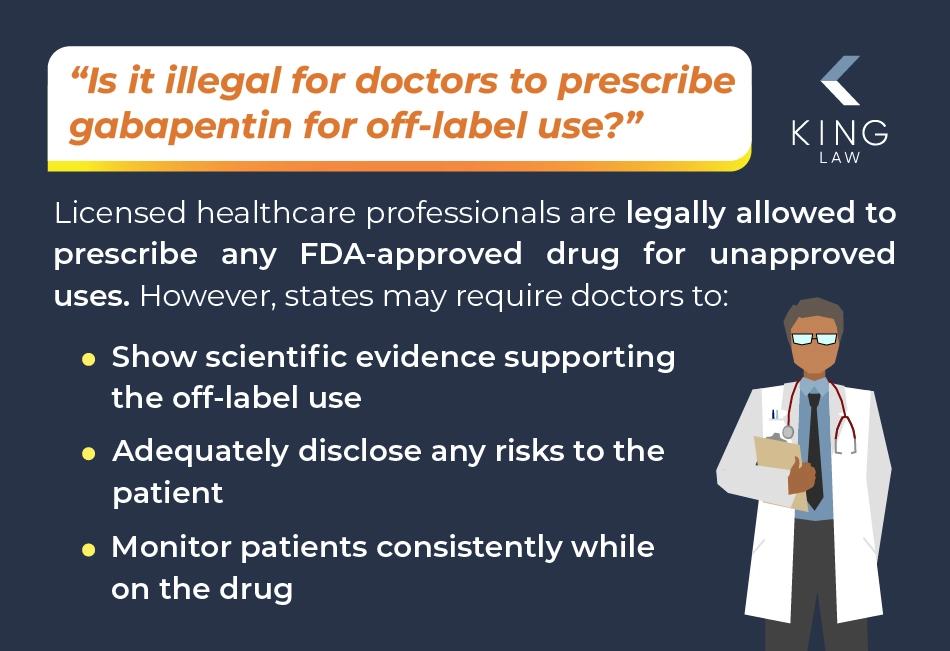
It is legal for licensed healthcare professionals to prescribe gabapentin or other FDA-approved medications for unapproved uses, if the provider determines it is medically appropriate to do so. The FDA regulates approval and post-approval processes for drugs, but “traditionally has not regulated the practice of medicine.” State-level medical boards and courts, however, may enforce standards of care. For example, some states may require physicians to fully disclose the risks of an off-label treatment and justify their prescription with scientific evidence should they be the subject of a malpractice lawsuit. Physicians are expected to use reasonable medical judgment, consider available evidence, evaluate risks and benefits, and monitor the patient when prescribing any drug. If you are concerned about an off-label prescription your doctor is recommending, consider asking the following questions:
- Is this an FDA-approved use?
- Why do you think it may help me?
- How strong is the evidence?
- What alternatives are available?
- What side effects should I watch for?
- How long should I try it before deciding whether it works?
- How should it be stopped safely?
Note that both on- and off-label drug prescriptions can be medically inappropriate.
Is It Legal for Drug Makers to Promote Gabapentin Off-Label?
While physicians may prescribe medications off-label, drug makers may not legally advertise or promote the off-label use of a drug or medical device. Manufacturers may be prosecuted under laws governing false advertising or deceptive trade practices. However, drug makers do have some leeway to engage in scientific communication regarding off-label uses of their drugs, such as responding to unsolicited physician inquiries or distributing scientific information on unapproved uses. The rules governing these processes are complex.
Warner-Lambert (Pfizer) Pleaded Guilty to Illegally Promoting Neurontin
In May 2004, Pfizer, which acquired drug manufacturer Warner-Lambert in 2000, pleaded guilty to criminal and civil charges that it paid doctors to prescribe Neurontin (gabapentin) for off-label uses. Pfizer agreed to pay $430 million in penalties, with later civil litigation filed by health insurance providers and antitrust settlements bringing the total to around $1 billion. The initial $430 million figure included:
- A $240 million criminal fine, the second largest of its time.
- $190 million in civil penalties brought under the federal False Claims Act (FCA). $83.6 million went to the federal government and $106.4 million to state Medicaid programs. Whistleblower David Franklin was awarded $24.6 million out of the federal penalty.
Neurontin was developed by Parke-Davis, a division of Warner-Lambert. The government estimated that this illegal gabapentin promotion brought in around $150 million in profits.
Is It Safe to Take Gabapentin Off-Label?
The safety profile of gabapentin is not solely determined by whether it is prescribed on- or off-label. Drug safety factors depend on:
- The condition being treated
- The strength of evidence that the benefits of the drug outweigh the side effects and risks
- The patient’s age
- Drug interactions
- The patient’s kidney and liver function
- Patient co-morbidities
- Patient monitoring
Using gabapentin for an FDA-approved indication has benefits. For example, using the drug on-label means that it went through a regulatory process that forced drug companies to run extensive trials to evaluate risk factors and safety of gabapentin in treating that condition. Those trials examined very specific dosages and formulations as a treatment for very specific conditions.
This does not mean that an on-label prescription is without risks, however. In contrast, off-label prescription safety profiles vary depending on the quality of evidence supporting that particular off-label usage. It is possible, for instance, for the off-label use of a drug to be supported by stronger evidence than its on-label use.
Are There Any Dangers In Using Gabapentin Off-Label?
Gabapentin has well-studied side effects that may be dangerous for some patients. Although most of these side effects are common to on- and off-label prescriptions, the cost-benefit ratio of an off-label prescription should be assessed. In some cases, taking gabapentin off-label could mean a patient is subjecting themself to gabapentin side effects with little therapeutic benefit.
Common gabapentin side effects include:
- Fatigue
- Dizziness
- Headache
- Nausea
- Problems with coordination or balance.
- Traumas due to loss of coordination or balance
- Blurred or double vision.
- Difficulty concentrating or slowed thinking.
- Breathing difficulties, especially when combined with opioids
- Withdrawal symptoms
- Accumulation in patients with impaired kidney function
- Allergic reactions
- Memory or cognitive issues
Patients should seek urgent medical attention for symptoms such as severe difficulty breathing, extreme sedation, swelling of the face or throat, or suicidal thoughts.
Are There Injury Lawsuits Related to Off-Label Gabapentin Use?
Although an off-label gabapentin prescription is not sufficient evidence to establish that it caused a patient’s injury, specific gabapentin injuries may be grounds for a lawsuit. For example, people are filing gabapentin lawsuits, alleging the drug led them to develop dementia or severe cognitive decline. Our lawyers are investigating gabapentin dementia lawsuits and pooling scientific research about whether or not gabapentin can cause dementia or other types of drug-induced cognitive decline or whether memory loss from gabapentin is permanent.
These lawsuits often rest on claims that gabapentin’s manufacturers failed to provide adequate warnings of these side effects, promoted the drug improperly, or otherwise violated the law.
King Law is currently monitoring developments in gabapentin research and litigation. If you are experiencing dementia or cognitive decline after taking gabapentin, King Law can evaluate your case for free with no obligation to continue. Here is more information about how to join the gabapentin lawsuit.
Frequently Asked Questions (FAQs)
Neurontin is a form of gabapentin, but not all gabapentin is the same as Neurontin. Neurontin is a brand name for an immediate-release
Gabapentin is not FDA-approved for anxiety, but the drug is often prescribed off-label for anxiety. Evidence of the efficacy of gabapentin for anxiety varies depending on the specific anxiety condition.
Gabapentin is not FDA approved as a general insomnia treatment. While physicians may prescribe gabapentin to help with sleep in patients with comorbidities, recent studies have flagged the drug’s tendency to worsen sleep apnea.
Gabapentin is not FDA-approved for diabetic neuropathy. However, there is very strong evidence supporting its off-label usage for treating diabetic neuropathy.
Gabapentin is not approved for sciatica, and research found little to no supporting evidence for its off-label use for sciatica.
Insurance coverage for off-label gabapentin prescriptions varies by insurer and the evidence supporting its use for the condition in question.
Physicians should discuss the potential benefits, risks, and alternatives of an off-label gabapentin prescription under the concept of informed consent, but revealing the off-label designation of a prescription is usually not required.
Patients should seek medical guidance before discontinuing their gabapentin prescription, as abruptly quitting it may cause withdrawal symptoms.
List of Sources Used In This Article
King Law used the following sources when writing this article about gabapentin lawsuits. We apply rigorous editorial standards to create content for our visitors.
American Academy of Neurology. Evidence-Based Guideline Update: Pharmacologic Treatment for Episodic Migraine Prevention in Adults. Neurology, 2012.
American Academy of Sleep Medicine. Clinical Guideline for the Evaluation and Management of Chronic Insomnia in Adults. Journal of Clinical Sleep Medicine, 2008.
American Academy of Sleep Medicine. Clinical Practice Guideline for the Pharmacologic Treatment of Chronic Insomnia in Adults. Journal of Clinical Sleep Medicine, 2017.
American College of Physicians. “Noninvasive Treatments for Acute, Subacute, and Chronic Low Back Pain: A Clinical Practice Guideline from the American College of Physicians.” Annals of Internal Medicine, 2017.
American College of Obstetricians and Gynecologists. “Treatment of Menopausal Vasomotor Symptoms.” American Journal of Obstetrics and Gynecology, 2007.
American College of Chest Physicians. “Treatment of Unexplained Chronic Cough: CHEST Guideline and Expert Panel Report.” CHEST, 2016.
American Psychiatric Association. “APA Releases New Practice Guideline on Treatment of Alcohol Use Disorder.” Psychiatric News, 2018.
American Psychiatric Association. “Gabapentin for Psychiatric Disorders: Is It Evidence-Based?” Psychiatric News, 2023.
Addiction Center. “Gabapentin Addiction and Abuse.” Addiction Center.
Adhikari, S., et al. “Prescribing Patterns and Off-Label Use of Gabapentinoid Drugs in a Large Health System.” Journal of Pain Research, 2024.
Atención Primaria. “A Systematic Review and Meta-Analysis of the Effectiveness of Gabapentin for the Treatment of Chronic Low Back Pain.” Atención Primaria, 2022.
Bonnet, U., and R. Scherbaum. “How Addictive Are Gabapentin and Pregabalin? A Systematic Review.” European Neuropsychopharmacology, 2017.
Cleveland Clinic. “Gabapentin Capsules or Tablets.” Cleveland Clinic.
Cochrane. “Gabapentin for Acute Postoperative Pain in Adults.” Cochrane.
Cochrane. “Gabapentin or Pregabalin for Preventing Migraine Attacks in Adults.” Cochrane, 2013.
Congressional Research Service. Off-Label Drug Use and Promotion: Balancing Public Health Goals and Commercial Speech. Congressional Research Service, 2019.
Cooper, T. E., et al. “Gabapentin for Fibromyalgia Pain in Adults.” Cochrane Database of Systematic Reviews, 2017.
Drug Enforcement Administration. Gabapentin (Trade Name: Neurontin). U.S. Department of Justice, Apr. 2026.
Finnerup, Nanna B., et al. “Algorithm for Neuropathic Pain Treatment: An Evidence-Based Proposal.” Pain, 2005.
Food and Drug Administration. Communications from Firms to Health Care Providers Regarding Scientific Information on Unapproved Uses of Approved/Cleared Medical Products: Questions and Answers. U.S. Department of Health and Human Services, 2025.
Food and Drug Administration. Gralise Prescribing Information. U.S. Department of Health and Human Services, 2020.
Food and Drug Administration. Horizant Prescribing Information. U.S. Department of Health and Human Services, 2020.
Food and Drug Administration. Neurontin Prescribing Information. U.S. Department of Health and Human Services, 2017.
Food and Drug Administration. “Understanding Unapproved Use of Approved Drugs ‘Off Label.’” U.S. Department of Health and Human Services, 5 Feb. 2018.
Freedom Center. “Gabapentin vs. Lyrica: What Is the Difference?” Freedom Center.
Guideline Central. “Management of Alcohol Withdrawal Syndrome.” Guideline Central.
Hägg, S., et al. “Comparative Effectiveness and Safety of Gabapentin and Pregabalin.” PubMed, 2025.
Iatrox. “Neuropathic Pain in Adults: Pharmacological Management in Non-Specialist Settings.” Iatrox.
Industry Documents Library. “Neurontin Litigation Documents.” University of California, San Francisco.
Kamal, M., et al. “Efficacy and Safety of Gabapentin for Sleep Disorders: A Systematic Review and Meta-Analysis of Randomized Controlled Trials.” PubMed, 2025.
Karam-Hage, M., et al. “A Randomized, Double-Blind, Placebo-Controlled Trial of Gabapentin for Alcohol Use Disorder.” Alcoholism: Clinical and Experimental Research, 2019.
Koski, R. R., et al. “Gabapentinoid Prescribing Patterns among Hospitalized Adults.” Journal of Hospital Medicine.
Leung, J. G., et al. “Gabapentin to Treat Acute Alcohol Withdrawal in Hospitalized Patients: A Systematic Review and Meta-Analysis.” Drug and Alcohol Dependence, 2022.
Lunn, Michael P. T., et al. “Gabapentin for Chronic Neuropathic Pain and Fibromyalgia in Adults.” Cochrane Database of Systematic Reviews, 2014.
Mason, Barbara J., et al. “Effect of Gabapentin vs. Placebo on Alcohol Use and Withdrawal Symptoms among Individuals with Alcohol Use Disorder.” JAMA Internal Medicine, 2020.
Mayo Clinic. “Postherpetic Neuralgia: Symptoms and Causes.” Mayo Clinic.
Mayo Clinic. “Restless Legs Syndrome: Symptoms and Causes.” Mayo Clinic.
NeurologyLive. “FDA Warns about Respiratory Depression with Gabapentinoids.” NeurologyLive.
New York Times. “Pfizer to Pay $430 Million over Promoting Drug to Doctors.” The New York Times, 14 May 2004.
Pharmacy Times. “Gabapentin Use Linked to Increased Dementia Risk in Chronic Back Pain Patients.” Pharmacy Times.
ResearchGate. “Gabapentin Acutely Increases the Apnea-Hypopnea Index in Older Men: Data from a Randomized, Double-Blind, Placebo-Controlled Study.” 2017.
Rosenberg, R. P., et al. “A Randomized, Double-Blind, Placebo-Controlled, Polysomnographic Study of Gabapentin in Transient Insomnia Induced by Sleep Phase Advance.” Journal of Clinical Sleep Medicine, 2010.
Shanthanna, Harsha, et al. “Benefits and Safety of Gabapentinoids in Chronic Low Back Pain: A Systematic Review and Meta-Analysis of Randomized Controlled Trials.” PLOS Medicine, 2017.
SingleCare. “How Much Is Gabapentin without Insurance?” SingleCare.
Smith, R. V., et al. “Gabapentin Misuse, Abuse, and Diversion: A Systematic Review.” Addiction, 2016.
Spence, J., et al. “Perioperative Gabapentinoids: Deflating the Bubble.” Anesthesiology, 2020.
The Lancet. “Gabapentin for Refractory Chronic Cough: A Randomised, Double-Blind, Placebo-Controlled Trial.” The Lancet, 2012.
U.S. Department of Justice. “Warner-Lambert to Pay $430 Million to Resolve Criminal and Civil Health Care Liability Relating to Off-Label Promotion.” 13 May 2004.
U.S. National Library of Medicine. “Gabapentin.” StatPearls, National Center for Biotechnology Information.
Vedula, S. Swaroop, et al. “Gabapentin for Chronic Cough: A Systematic Review.” Journal of Thoracic Disease, 2018.
Vinik, A. I., et al. “A Randomized, Double-Blind, Placebo-Controlled Trial of Gabapentin Enacarbil in Patients with Restless Legs Syndrome.” 2015.
Wallenstein, E. J., et al. “Gabapentin for the Treatment of Menopausal Hot Flashes: A Systematic Review and Meta-Analysis.” American Journal of Obstetrics and Gynecology, 2020.
Wilkes, M. S., et al. “The Regulation of Off-Label Drug Promotion and the First Amendment.” Journal of Law, Medicine & Ethics, 2023.
FirstWord Pharma. “Pfizer Agrees to Settle Neurontin Antitrust Litigation.” FirstWord Pharma.