

Does Gabapentin Cause Dementia?
Complete the form below to see if you qualify for a Gabapentin Lawsuit

Some observational studies have found an increased risk of dementia and cognitive decline among people who take gabapentin compared to those who do not. However, research has not proven that gabapentin causes dementia, though some studies have found associations. Gabapentin can cause cognitive side effects, including memory loss, sleepiness, slowed thinking, confusion, and problems speaking. The FDA and other organizations have also issued warnings about prescribing gabapentin to elderly patients or those who are taking opioids or other central nervous system depressants.
Scientists are continuing to study this highly prescribed drug to understand if there is an association between taking Gabapentin and developing dementia, especially early-onset dementia.
About the Gabapentin and Dementia
What Is Gabapentin and Why Is It Prescribed?
Why Are People Concerned About Gabapentin and Dementia?
Cognitive Side Effects Reported With Gabapentin
What Do Studies Say About Gabapentin and Dementia Risk?
Can Gabapentin Cause Memory Loss or Brain Fog?
Who May Face a Higher Risk of Cognitive Problems From Gabapentin?
What Dementia Symptoms Should Gabapentin Users Watch For?
What Should You Do If You or a Loved One Develop Dementia After Taking Gabapentin?
Is There a Gabapentin Dementia Lawsuit?
Do Not Stop Taking Gabapentin Without Medical Advice
King Law Is Investigating Dementia Claims From Gabapentin Use
Contact Robert King Law Firm For a Free Case Review
What Is Gabapentin and Why Is It Prescribed?
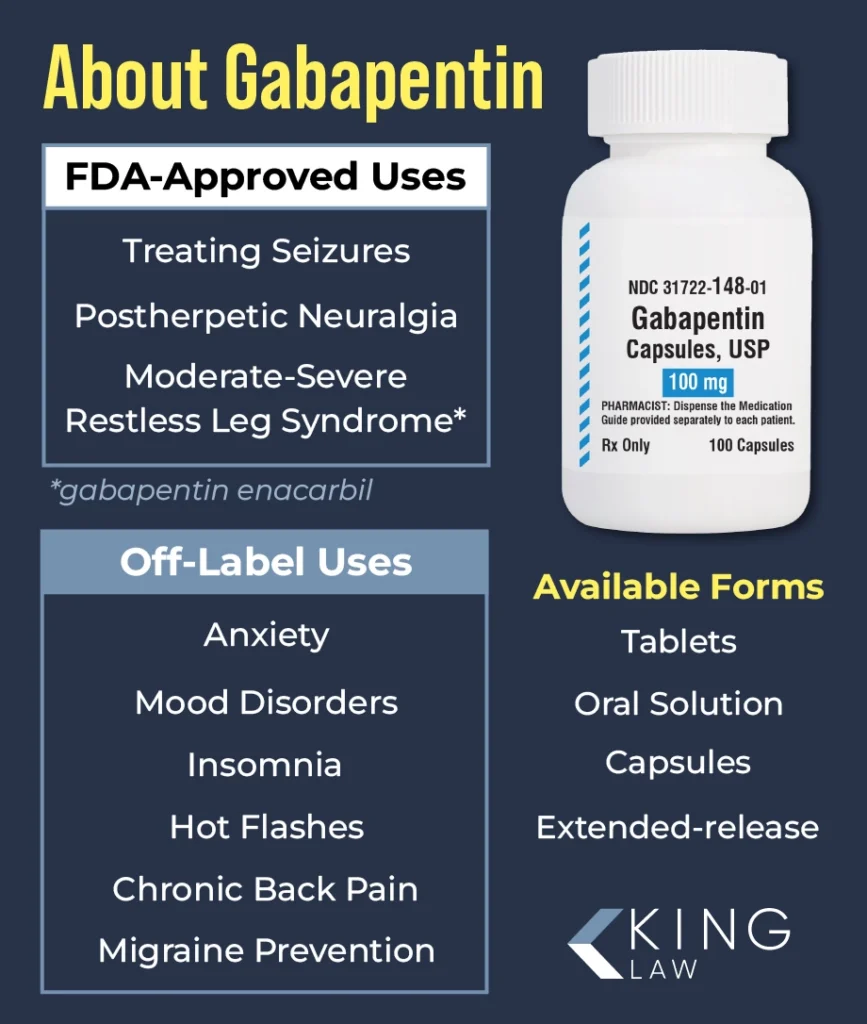
Depending on the formulation, gabapentin is FDA-approved to treat seizures, restless leg syndrome, and some types of nerve pain (postherpetic neuralgia). Doctors also prescribe gabapentin for off-label purposes, such as chronic back pain, diabetic neuropathy, hot flashes, fibromyalgia, anxiety, sleep disorders, mood disorders, and other conditions. Scientists believe gabapentin works by affecting GABA in the brain, which is a neurotransmitter that can slow down some types of brain activities.
Common Brand Names and Forms of Gabapentin
Gabapentin comes in the following forms:
- Tablet
- Capsule
- Oral solution
- Extended-release tablet
Brand names for Gabapentin include the following:
- Neurontin
- Gralise
- Horizant (gabapentin enacarbil)
- Gabapentin (generic name)
Why Are People Concerned About Gabapentin and Dementia?
People are concerned about gabapentin and dementia because some of the listed side effects of gabapentin include drowsiness and lack of alertness, confusion, difficulty talking, and cognitive changes. People who take this drug long-term are concerned these side effects could continue, whether or not they continue taking gabapentin.
Moreover, recent studies have suggested that people who take gabapentin may have a higher chance of developing dementia or cognitive impairment. Some studies have also found that older adults who take gabapentin may have a higher chance of falling, dying, or experiencing respiratory failure. Some researchers believe that gabapentin may be prescribed more often than is warranted or safe. It is the fifth-most prescribed medication in the United States, with over
Cognitive Side Effects Reported With Gabapentin
Gabapentin changes the way the brain works, which is why it is effective in treating many conditions. However, Gabapentin has known cognitive side effects. According to the National Institutes of Health, some of the cognitive side effects of gabapentin include:
- Somnolence (excessive drowsiness)
- Sedation
- Dizziness
- Suicidal behavior and ideation
- Neuropsychiatric adverse reactions (in pediatric patients 3 to 12 years of age)
- Ataxia (problems with balance or speech)
Gabapentin’s side effects may also be worse if the person takes other medications, drinks alcohol, has kidney problems, or other factors are present.
Dementia vs. Temporary Cognitive Impairment
Some of the cognitive side effects of gabapentin may be temporary and improve after the person stops taking the drug. For example, someone may feel less tired, remember things more easily, or think more clearly after stopping gabapentin. These cognitive effects may be temporary and related to the sedation from gabapentin use.
However, some studies have found that some patients who take gabapentin developed dementia at higher rates than those who do not take the drug. Dementia and significant cognitive impairment may be long-term and continue even after the person stops taking gabapentin.
This type of cognitive decline may interfere with someone’s daily life and their ability to care for themselves and others. Someone with dementia may struggle with memory, talking, thinking, and doing things that are part of daily life (such as walking, showering, preparing food, dressing themselves, and picking up items). However, researchers are still studying the possible association between dementia and gabapentin and the possible underlying causes.
What Do Studies Say About Gabapentin and Dementia Risk?
Some studies that used historical patient datasets have suggested that gabapentin may be associated with a higher risk of dementia. Many of these studies used insurance records, medical records, and other large datasets to understand trends about people who take gabapentin. However, no long-term, randomized trials have been performed to understand how gabapentin may impact someone’s cognitive abilities.
Studies Reporting a Higher Risk of Dementia or Cognitive Impairment
Several studies have found a higher risk of dementia or cognitive impairment among gabapentin patients in their datasets. Here is information about some of those studies.
Gabapentin Study #1
Study Name: Risk of dementia following gabapentin prescription in chronic low back pain patients
Number of Patients in Study: 26,416
Published in: Regional Anesthesia & Pain Medicine
Study Summary: Researchers followed patients taking gabapentin for chronic lower back pain. They found that patients who took six or more prescriptions of gabapentin had a 29% greater risk of developing dementia and an 85% greater risk of developing mild cognitive decline than those not taking gabapentin. For non-elderly patients (those 18-64), the risk was more than twice as great. The risk also increased the longer someone took gabapentin.
Gabapentin Study #2
Study Name: The association between Gabapentin or Pregabalin use and the risk of dementia: an analysis of the National Health Insurance Research Database in Taiwan
Number of Patients in Study: 206,802
Published in: Frontiers in Pharmacology
Study Summary: In 2023, a large cohort study found that the patients in the dataset who took gabapentin or pregabalin (another gabapentinoid) were 45% more likely to develop dementia than those who did not. Gabapentin patients who were 50 or less had over 3 times the dementia risk as older patients in that same study.
Gabapentin Study #3
Study Name: Risk of dementia following gabapentin prescription in chronic low back pain patients
Number of Patients in Study: 26,416
Published in: 2026 in the BMJ
Study Summary: This retrospective study found that patients with chronic lower back pain who received six or more gabapentin prescriptions were 29% more likely to develop dementia and 85% more likely to develop cognitive impairment than those in the control group. Younger patients who took gabapentin had more than 2 times the risk of developing dementia or cognitive impairment than older patients who took gabapentin.
Gabapentin Study #4
Study Name: Gabapentinoid Use and Risk of Alzheimer’s Disease-Related Dementias: A Systematic Review and Meta-analysis of Observational Studies
Number of Patients in Study: 325,245
Published in: 2026 in Drugs & Aging
Study Summary: This review of five observational studies found “modestly higher estimated odds” of Alzheimer’s disease and related dementias in gabapentin patients in its pooled dataset. The researchers said their findings should encourage doctors to be cautious about how and when they prescribe gabapentin and warn about risks. However, they noted that their study had limitations and could not establish a direct correlation or causation.
Can Gabapentin Cause Memory Loss or Brain Fog?
Gabapentin use may lead to brain fog, memory loss, slowed thinking, trouble speaking clearly, confusion, sleepiness, and similar side effects. Researchers are still exploring how gabapentin may lead to ongoing issues with memory. Having these symptoms does not mean someone has dementia. However, if the symptoms get worse, interfere with their daily life, or do not improve, the patient should talk to their doctor. Gabapentin may not be right for them, or the dose may be too high.
Patients should never start, stop, or change how much gabapentin they take without talking to their doctor first. Patients should also talk to their doctor before taking another sedating medication, even if it is over-the-counter. Changing how much gabapentin you take or when can trigger withdrawal symptoms or cause other unwanted side effects. The patient’s doctor can help them make needed changes in a safe and gradual manner.
Who May Face a Higher Risk of Cognitive Problems From Gabapentin?
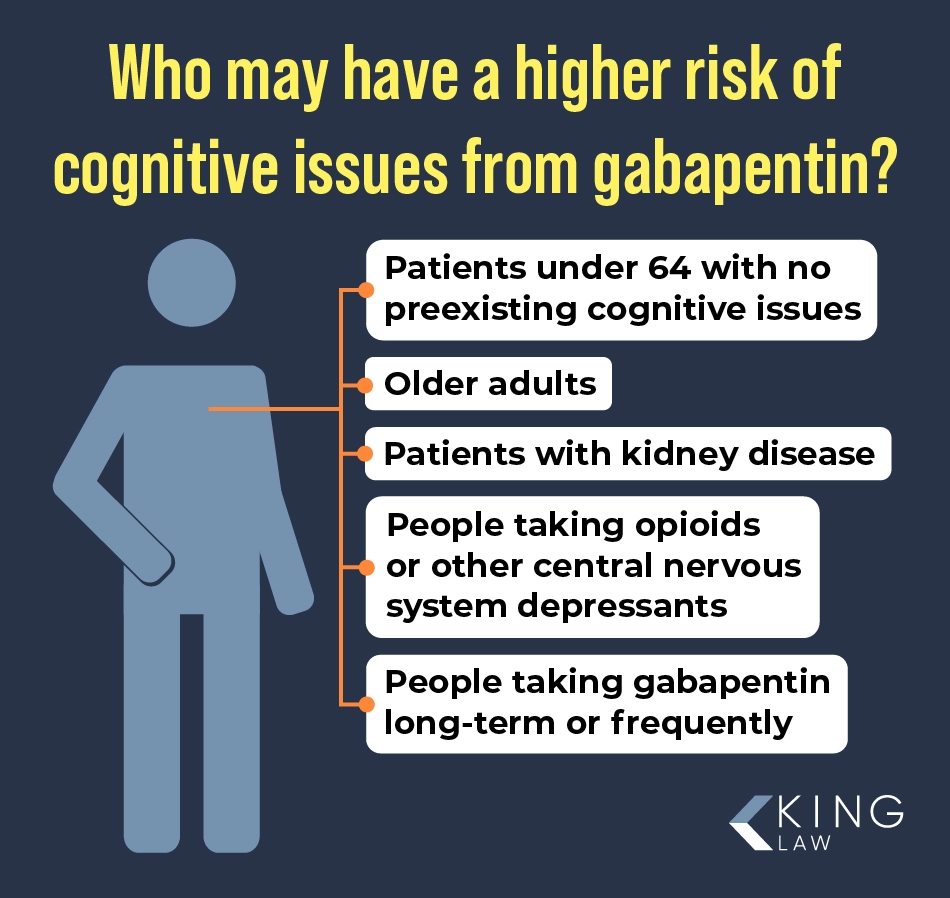
Some studies have suggested that younger patients, older adults, people with kidney problems, and those who take gabapentin long-term may have a higher chance of cognitive problems than others.
Many groups of people may have a higher risk of cognitive problems or other severe side effects from taking gabapentin. Some patient populations who might be at a greater risk of gabapentin side effects include:
- Patients under 64 without preexisting cognitive challenges
- Older adults
- People with kidney disease
- Patients taking opioids or other central nervous system depressants
- Patients taking the drug long-term or frequently
Patients Under 64 or Who Do Not Have Preexisting Cognitive Challenges
Studies have suggested that people who are young may be at a higher risk of developing dementia and experiencing cognitive decline after starting gabapentin than their older peers. For example, one study found that gabapentin patients between 35 and 49 years old who took gabapentin were more than 2 times more likely to develop dementia and over 3 times more likely to experience cognitive decline than those in the dataset who did not take gabapentin.
Of note, other studies have found that taking gabapentin did not make people’s cognitive functioning worse if they already had symptoms of cognitive decline when they started gabapentin. However, people who did not have symptoms of cognitive decline when they started taking gabapentin tended to have worsening cognitive abilities a year later, according to at least one study.
Older Adults
Elderly adults who take gabapentin may be more likely to fall, be confused, go into respiratory distress, die, or experience other sedation-related effects. The FDA warned that older patients taking gabapentin may have a higher chance of severe breathing problems. The American Geriatrics Society has also warned that doctors should use caution when prescribing gabapentin to elderly patients.
People With Kidney Disease
People who have kidney disease may have problems eliminating gabapentin from their bodies. Gabapentin levels can build up over time, leading the person to have increased levels of gabapentin in their system. Because of this, they may have a higher chance of suffering from gabapentin toxicity or severe side effects.
Patients Taking Opioids or Other CNS Depressants
Combining gabapentin with other substances that slow down your nervous system (e.g., alcohol, opioids, and sleeping aids) can also increase the risk of confusion, breathing problems, or other side effects. The FDA has warned that people may experience serious breathing problems if they take gabapentin and central nervous system depressants.
Long-Term or Frequent Gabapentin Users
Someone may also be more likely to develop cognitive impairment or dementia if they take gabapentin for a long time or at a high dose. At least one study has found that patients who took gabapentin to treat their lower back pain had a higher rate of dementia and cognitive impairment if they received six or more gabapentin prescriptions.
What Dementia Symptoms Should Gabapentin Users Watch For?
People taking gabapentin and their loved ones should watch for cognitive side effects of the drug. Any problematic side effects or changes in behavior should be discussed with a doctor.
People who are taking Gabapentin and their loved ones should monitor for these and other side effects:
- New or worsening memory loss
- Confusion
- Disorientation
- Brain fog
- Difficulty concentrating
- Excessive sleepiness
- Poor balance
- Falls or problems walking
- Personality changes
- Hallucinating
- Cognitive problems that start or get worse
- Trouble completing daily tasks
- Trouble talking (e.g., forming words or speaking)
Patients should call 911 if they have trouble breathing, have blue or purple lips or skin, or experience any worrying or severe side effects.
What Should You Do If You or a Loved One Develop Dementia After Taking Gabapentin?
Patients who take gabapentin and experience symptoms of dementia or cognitive decline should talk to their doctor about their situation. Their doctor may review their prescription history, kidney levels, and other factors to determine if taking gabapentin is causing or worsening their symptoms. Gabapentin patients may also want to talk to an attorney about whether they qualify for compensation for their losses.
Is There a Gabapentin Dementia Lawsuit?
Attorneys are reviewing potential claims involving people who took gabapentin and developed dementia, Alzheimer’s disease, or other types of cognitive impairment. These gabapentin lawsuits accuse drug manufacturers of not warning people about the possible cognitive risks of taking gabapentin. We are closely tracking the gabapentin litigation and future developments for our clients and assessing their best legal options. King Law has also outlined the steps for filing a gabapentin claim.
Do Not Stop Taking Gabapentin Without Medical Advice
It is important for you to talk to your doctor before you stop taking gabapentin or change how much gabapentin you take. Starting, stopping, or changing how you take gabapentin can cause negative side effects or withdrawal symptoms. Your doctor can help you determine whether you should change your gabapentin prescription and, if so, how to do so safely.
King Law Is Investigating Dementia Claims From Gabapentin Use
King Law is investigating potential claims from patients who took gabapentin and developed cognitive issues, like dementia, cognitive impairment, or Alzheimer’s disease. We have the tools to determine if a patient’s gabapentin use may have caused or worsened their cognitive decline, dementia, or related symptoms. We can also help patients learn if they qualify to hold the manufacturer accountable for not warning them about the potential risks of taking gabapentin.
Contact Robert King Law Firm For a Free Case Review
Contact the Robert King Law Firm by calling (585) 496-2648 or filling out an online contact form to schedule a free consultation to discuss your gabapentin use and how it may have affected your cognitive abilities. Our attorneys work on a contingency-fee basis, meaning we only take payment if we are able to secure compensation on our client’s behalf. We can review your circumstances and discuss the best path forward for your case.
Frequently Asked Questions (FAQs)
Studies have suggested that some patients who took gabapentin had a higher rate of developing dementia than those who did not take gabapentin. However, studies have not proven a direct link between gabapentin use and dementia.
Some possible side effects of gabapentin are memory loss, balance issues, drowsiness, and confusion.
Yes. Some of the side effects of gabapentin are confusion or brain fog, due to drowsiness and sedation.
One study showed a modest association between gabapentin use and an increased rate of Alzheimer’s disease, dementia, or other cognitive disorders.
It depends. One study found that patients who received six or more gabapentin prescriptions had a higher rate of dementia and cognitive impairment.
It depends. One study considered receiving six or more gabapentin prescriptions for lower back pain to be long-term use.
Some studies have shown an association between gabapentin use and cognitive impairment.
It depends. For some people, the brain fog from gabapentin use may go away after they stop taking the medication.
Sometimes, the memory loss from gabapentin is temporary. However, someone who develops dementia may have long-term memory loss. Some studies have found an association between gabapentin use and dementia. Research is still underway to understand if gabapentin can cause long-term memory loss (including dementia).
Scientists are still learning about how gabapentin affects the brain. Some scientists believe that gabapentin affects how neurons operate. Higher amounts of GABA may lower some types of brain activity.
Some studies found that elderly patients who took gabapentin had higher rates of falling, sedation-related side effects, and breathing problems. However, according to some studies, younger patients who took gabapentin had a significantly higher rate of dementia and cognitive decline than older patients who did not take gabapentin.
Some of the warning signs of cognitive decline after taking gabapentin include memory loss, confusion, disorientation, personality changes, and problems completing daily tasks.
Your doctor can help you determine if taking gabapentin caused or worsened your dementia.
You should talk to your doctor if you take gabapentin and have memory problems.
You should talk to your loved one, their doctor, or an attorney if your loved one developed dementia after taking gabapentin.
Sources Used in This Article
King Law adheres to strict editorial and fact-checking standards when creating articles for this site. Here is a list of sources we used to write this article.
American Geriatrics Society Beers Criteria Update Expert Panel. “American Geriatrics Society 2019 Updated AGS Beers Criteria® for Potentially Inappropriate Medication Use in Older Adults.” Journal of the American Geriatrics Society, vol. 67, no. 4, 2019, pp. 674–694.
Cleveland Clinic. “Gabapentin.” Cleveland Clinic. Accessed 15 July 2026.
Food and Drug Administration. “Neurontin, Gralise, Horizant (Gabapentin) and Lyrica, Lyrica CR (Pregabalin): Drug Safety Communication—Serious Breathing Problems.” U.S. Food and Drug Administration. Accessed 15 July 2026.
MedlinePlus. “Gabapentin.” MedlinePlus, U.S. National Library of Medicine. Accessed 15 July 2026.
National Center for Biotechnology Information. “Article PMC10266423.” PubMed Central. Accessed 15 July 2026.
National Center for Biotechnology Information. “Article PMC12353996.” PubMed Central. Accessed 15 July 2026.
National Center for Biotechnology Information. “Article PMC3499716.” PubMed Central. Accessed 15 July 2026.
National Center for Biotechnology Information. “Article PMC6153543.” PubMed Central. Accessed 15 July 2026.
National Library of Medicine. “PubMed Record 20362757.” PubMed. Accessed 15 July 2026.
National Library of Medicine. “PubMed Record 42329333.” PubMed. Accessed 15 July 2026.
“Early View Article.” Regional Anesthesia & Pain Medicine, 2 July 2025.
“Article DOI: 10.1007/s40266-024-01130-z.” Drugs & Aging, Springer Nature. Accessed 15 July 2026.
United States Drug Enforcement Administration. “Gabapentin.” Drug & Chemical Evaluation Section. Accessed 15 July 2026.