

Is Vomiting After a Colonoscopy Normal?
Complete the form below to see if you qualify for a Olympus Scope Lawsuit

Vomiting after a colonoscopy may not be normal. Patients may have mild nausea, stomach upset, or vomiting after the colonoscopy or the bowel preparation. However, new, frequent, severe, or worsening vomiting after a colonoscopy may be a sign of a complication, such as an infection or a medical error. Patients who experience vomiting after a colonoscopy are encouraged to talk to their doctors.
About Vomiting After a Colonoscopy
How Common Is Vomiting After a Colonoscopy?
Why Might I Be Vomiting After My Colonoscopy?
Can Colonoscopy Sedation Make You Throw Up?
Can Colonoscopy Prep Make You Vomit?
Is Throwing Up Right After a Colonoscopy a Bad Sign?
What If I Start Vomiting Days After a Colonoscopy?
When Should I Worry About Vomiting After a Colonoscopy?
Could Vomiting After a Colonoscopy Mean a Perforation?
Could Vomiting Be Related to a Polyp Removed During Colonoscopy?
How Long Should Vomiting Last After a Colonoscopy?
Should I Call My Doctor After Vomiting From a Colonoscopy?
Summary: So, Is It Normal to Vomit After a Colonoscopy?
King Law Is Investigating Bacterial Infection Claims in Colonoscopy Patients
Contact King Law for a Free Case Review
How Common Is Vomiting After a Colonoscopy?
Most patients do not experience serious or persistent vomiting because of a colonoscopy unless there was a complication. Patients may feel bloated, have a mildly upset stomach, have gas, or have minor nausea before or after a colonoscopy. However, these symptoms should be very mild and go away quickly.
Why Might I Be Vomiting After My Colonoscopy?
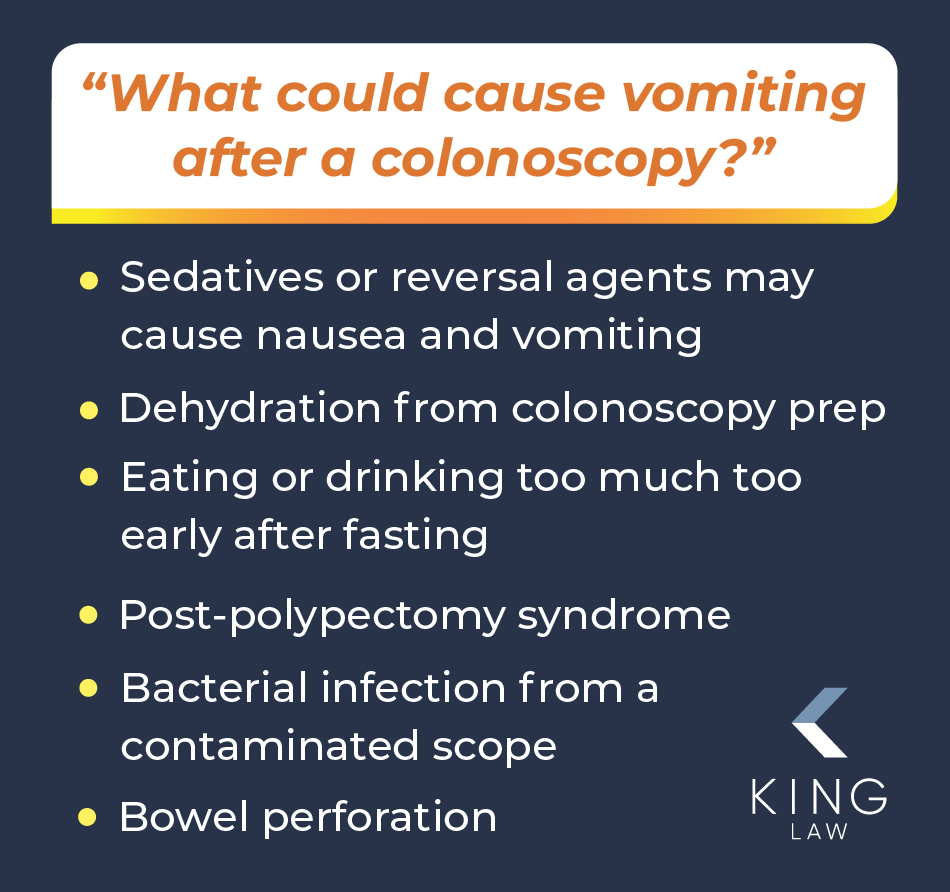
Reasons why someone might vomit right after a colonoscopy include:
- Dehydration from bowel prep
- Grogginess and stomach upset from sedation
- Eating or drinking too much or too early after fasting for the colonoscopy
- Gas pain
- Intestinal or stomach upset from the colonoscopy
- Bacterial infection from a contaminated colonoscope
- Post-polypectomy syndrome (if polyps were removed during the colonoscopy)
- Colonic intussusception (when part of the intestines falls into another part)
- Spleen injury
- Bowel perforation
- An adverse reaction to colonoscopy sedatives or sedative reversal drugs
Call your doctor right away if you are vomiting after a colonoscopy. Some colonoscopy complications can become serious or life-threatening very quickly without treatment, so early intervention is best to help preserve your health.
Can Colonoscopy Sedation Make You Throw Up?
Sedatives used during a colonoscopy
Can Colonoscopy Prep Make You Vomit?
The colonoscopy preparation process can cause vomiting and nausea. Before the procedure, the colonoscopy patient may be asked to drink large amounts of cleansing fluid, such as
Sometimes, patients can become severely dehydrated and vomit excessively due to the bowel prep’s strain on the intestines and a drop in electrolytes and blood sugar levels. In rare cases, severe vomiting during the bowel preparation process can tear the esophagus. Patients should talk to their doctor to make sure the nausea, vomiting, or other symptoms are expected and safe to monitor during the colonoscopy preparation process.
Is Throwing Up Right After a Colonoscopy a Bad Sign?
Throwing up immediately after a colonoscopy may be caused by:
- Sedation
- Recovering from anesthesia
- Sedative reversal medications
- Fasting
- Bowel prep
- Eating or drinking too soon
However, other factors may also cause vomiting after the colonoscopy. Your doctor will keep you at the office for observation shortly after the procedure until you are ready to go home. During that observation period, you may vomit, feel nauseous, feel groggy, or experience other mild symptoms. Your doctor may give you medications to help control your nausea or vomiting during that time. If your vomiting is severe or comes on suddenly after you get home from the colonoscopy, tell your doctor immediately.
What If I Start Vomiting Days After a Colonoscopy?
Vomiting days after a colonoscopy is not normal and may be a sign of a complication, such as:
- Infection
- Post-polypectomy syndrome (deep burn from having a polyp removed)
- Bowel perforation
- Appendicitis
- Dehydration
- Gastrointestinal irritation
- Spleen injury
- Colonic intussusception
Contact your doctor if you start vomiting days after you had a colonoscopy. You may be experiencing a complication, such as an infection, that requires treatment.
When Should I Worry About Vomiting After a Colonoscopy?
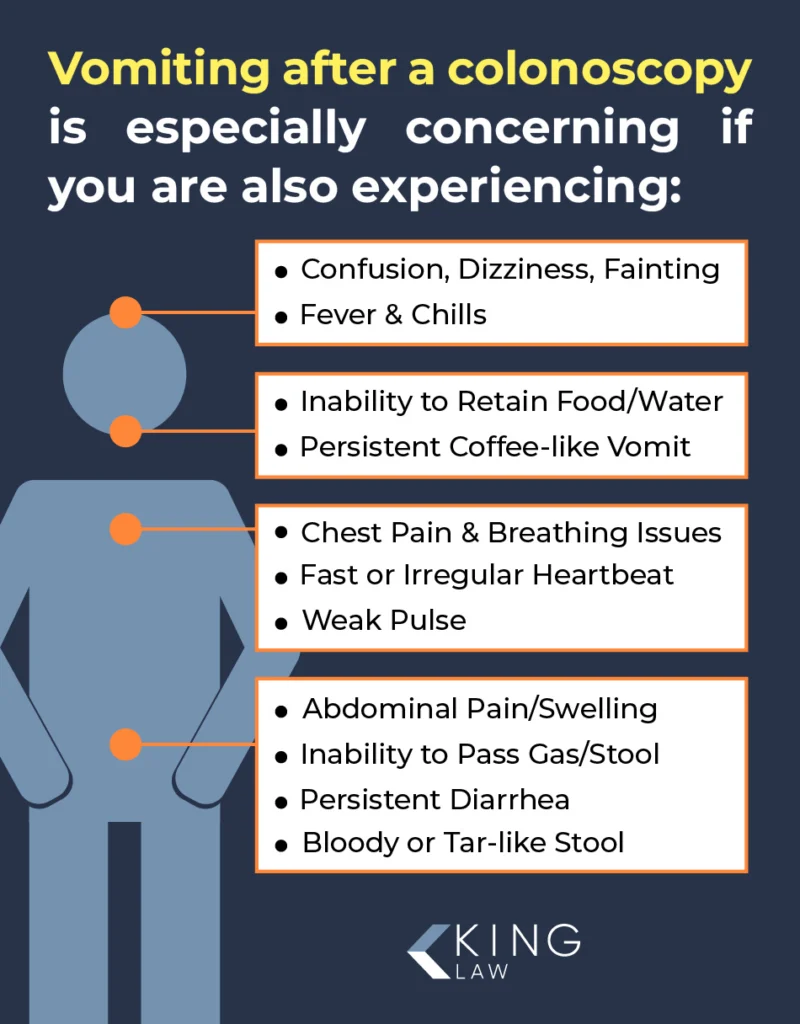
Any episode of vomiting after a colonoscopy should be discussed with your doctor to rule out complications. Vomiting is particularly concerning if you are also experiencing symptoms such as:
- Fever
- Chills
- Abdominal pain
- Inability to pass gas or stool
- Persistent, bloody, or coffee grounds-like vomit
- Inability to keep food or water down
- Persistent diarrhea
- Bloody, black, or tar-like stool
- Chest pain or breathing problems
- Confusion
- Dizziness or fainting
- A rigid or swollen belly
- Rapid, weak, or irregular heart rate
If you are experiencing any of the above symptoms, you should see a doctor right away. Your doctor can evaluate your symptoms and recommend the appropriate treatment.
Could Vomiting After a Colonoscopy Mean a Perforation?
A bowel perforation can cause vomiting after a colonoscopy. Other possible signs of a bowel perforation include:
- Sharp, persistent, or sudden pain in the abdomen, shoulder, or elsewhere
- Abdominal pain, swelling, and stiffness
- Fever
- Rapid heart rate
According to some estimates, a bowel perforation may occur in up to 0.8% of routine and up to 3% of therapeutic colonoscopies. A bowel perforation is always a medical emergency that requires proper treatment. Call your doctor or go to the ER if you think you have a bowel perforation.
Could Vomiting Be Related to a Polyp Removed During Colonoscopy?
Having polyps removed during a colonoscopy (a polypectomy) may cause vomiting, fever, or abdominal pain. If these symptoms arise after a polypectomy, the patient may have developed an infection, have a perforated bowel, or have post-polypectomy syndrome.
Post-polypectomy syndrome is a rare complication where the patient’s tissue was harmed or burned deeply when the doctor removed the polyp. The symptoms of post-polypectomy syndrome are similar to those of a bowel perforation. Patients who experience vomiting, abdominal pain, fever, or other worrying signs after having polyps removed should go to the doctor for evaluation and treatment.
How Long Should Vomiting Last After a Colonoscopy?
Colonoscopy patients should not have more than one or two very mild and short episodes of vomiting after the procedure. However, patients should still tell their doctor about any vomiting or worrying symptoms they experience after a colonoscopy, even if they think those are normal or not severe yet.
Vomiting can cause dehydration, blood sugar drops, electrolyte imbalances, and other problems if left unchecked. Vomiting may also be an early warning sign for an underlying condition, like an infection or perforation. The patient’s doctor can tell them if what they are experiencing warrants a trip to the hospital or not and help them avoid further complications.
Should I Call My Doctor After Vomiting From a Colonoscopy?
You should tell your doctor right away if you are vomiting, feeling nauseous, or experiencing symptoms that are concerning you after a colonoscopy. If you have a complex colonoscopy, have a difficult bowel prep, have an underlying condition, are elderly, or take medications, you may be more likely to experience complications that can cause vomiting. However, anyone can experience colonoscopy complications, even if they are young and healthy. You know your body best and what is normal for you. If you are worried about your symptoms, tell your doctor so they can help you diagnose and treat the cause of the vomiting.
Summary: So, Is It Normal to Vomit After a Colonoscopy?
Sometimes, minor or temporary vomiting or nausea after a colonoscopy may be normal or expected. For example, you may have had a reaction to the sedative or sedative reversal medication, or your stomach and intestines may still be “waking up” after the procedure and preparation.
However, vomiting or nausea may also be a sign that something is wrong. Talk to your doctor about any vomiting, nausea, or other concerning changes you experience after the colonoscopy. If you develop a fever, chills, a fast or irregular heartbeat, breathing problems, bloody vomit or stool, or severe abdominal pain, seek urgent medical treatment.
King Law Is Investigating Bacterial Infection Claims in Colonoscopy Patients
King Law is actively reviewing claims for people who vomit because they developed serious infections from colonoscopies. Sometimes, post-colonoscopy infections can be related to a contaminated, defective, or improperly sterilized colonoscope. Some of the colonoscopy-related infections we are investigating include sepsis, pneumonia, septic shock, C. diff, E. coli, and Klebsiella. Our team can help you determine whether your vomiting was caused by bacteria or a virus on a contaminated colonoscope. Learn more about colonoscopy infection lawsuits and Olympus scope lawsuits on our respective pages.
Contact King Law for a Free Case Review
Get in touch with King Law today by dialing (585) 496-2648 or filling out an online form. Our intake specialists are ready to schedule your free consultation with a knowledgeable attorney on our team. We may be able to help you pursue compensation if your vomiting after a colonoscopy was caused by an infection from defective equipment.
Frequently Asked Questions (FAQs)
List of Sources Used in This Article
King Law uses rigorous editorial standards when creating articles for our website. Here is a list of citations to support this article.
- “Colonoscopy.” National Institute of Diabetes and Digestive and Kidney Diseases, U.S. Department of Health and Human Services.
- “Colonoscopy Recovery Tips: Feel Better Faster.” Gastroenterology Associates.
- “Colonoscopy Side Effects: Alarming Signs to Know.” Liv Hospital.
- Gibelli, Filippo, et al. “Splenic rupture as a rare colonoscopy complication: a case report with clinical and medico-legal insights.” Translational Gastroenterology and Hepatology.
- Jehangir, Asad, et al. “Post-polypectomy electrocoagulation syndrome: a rare cause of acute abdominal pain.” Journal ofCommunity Hospital Internal Medicine Perspectives. October 2015.
- Latos, et al. “Colonoscopy: Preparation and Potential Complications.” Diagnostics. March 2022.
- Lee, Sang Hoon, et al. “Recognition and Management of Colonic Perforation Following Colonoscopy.” Clinical Endoscopy.
- Mehmood, Faisal. “Colonic Intussusception Following Colonoscopy: A Case Report and Literature Review.” Gastro Hep Advances. January 2025.
- Nivatvongs, Santhat, et al. “Complications of Colonoscopy.” Translational Gastroenterology and Hepatology.
- Rai, Vinay and Mishra, Nitin. “Colonoscopic Perforations.” Clinics in Colon and Rectal Surgery. December 2017.