

Colonoscopy Risks and Complications
Complete the form below to see if you qualify for a Olympus Scope Lawsuit

Mild bloating, cramping, spotting, and abdominal upset are common symptoms after a colonoscopy. However, some patients may experience rare but serious complications, such as bleeding, bowel perforation, infection, abdominal pain, dehydration, sedation-related heart or lung problems, post-polypectomy electrocoagulation syndrome, and injuries to the spleen. Patients who are elderly, have colon cancer or inflammatory bowel disease, have polyps removed, or have other risk factors may be more likely to experience severe complications.
Colonoscopies are an essential tool for screening for, diagnosing, and treating diseases. However, patients need to understand the difference between normal colonoscopy recovery signs and signs of severe complications.
[key_takeways header=”Key Takeaways”]- Colonoscopies are generally safe.
- People who are older, have inflammatory bowel disease, take blood thinners, or have underlying conditions have a higher risk of complications from a colonoscopy.
- Removing polyps during a colonoscopy poses the highest risk for complications.
- Heavy bleeding, severe abdominal pain, fever, or breathing problems after a colonoscopy require urgent medical attention.
About the Colonoscopy Risks and Complications
What Are the Risks and Complications of a Colonoscopy?
What Increases Your Risk of Colonoscopy Complications?
How Common Are Serious Colonoscopy Complications?
Why Do Colonoscopy Risks Increase When Polyps Are Removed?
Can a Colonoscopy Cause Bleeding?
Can a Colonoscopy Cause a Bowel Perforation?
Can a Colonoscopy Cause Infection?
Can a Colonoscopy Cause Sepsis?
Can Sedation or Anesthesia Cause Colonoscopy Complications?
Why Do Some People Have Abdominal Pain After a Colonoscopy?
What Is Post-Polypectomy Electrocoagulation Syndrome?
Can a Colonoscopy Cause Heart or Lung Problems?
Who Is at Higher Risk for Colonoscopy Complications?
When Do Colonoscopy Complications Usually Happen?
What Symptoms Are Normal After a Colonoscopy?
What Symptoms Are Not Normal After a Colonoscopy?
Summary: What Should Patients Know About Colonoscopy Risks and Complications?
Contact King Law for a Free Case Review
What Are the Risks and Complications of a Colonoscopy?
Mild cramping, bloating, and gas are expected after a colonoscopy, and some patients may also experience light bleeding (i.e., spotting) after the procedure. Some of the uncommon but serious complications of colonoscopies include:
- Bleeding
- Perforation (i.e., a tear in the wall of the colon)
- Sedation-related reactions (such as heart or breathing problems)
- Abdominal pain
- Dehydration from the colonoscopy preparation
- Infection
- Injury to the spleen (a splenic injury)
- Post-polypectomy electrocoagulation syndrome
- Fever and chills
- Nausea, vomiting, and diarrhea
Serious symptoms may signal a perforation, an infection, or an injury from the colonoscopy or another cause.
Most patients experience mild symptoms after a colonoscopy, such as bloating, light spotting, and mild cramping. However, some patients experience rare but serious complications from a colonoscopy.
| Common Side Effects After a Colonoscopy | Light spotting, Mild bloating, Mild cramping, Stomach upset Grogginess (when you wake up after the procedure), Mild loose stools |
| Serious Complications After Colonoscopy (Rare) | Heavy, delayed, or painful bleeding, Perforation, Abdominal pain, Dehydration, Infection, Fever or chills, Spleen injury, Post-polypectomy, electrocoagulation syndrome, Nausea, vomiting, or diarrhea, Reaction to the anesthesia, Sepsis, Fainting, Breathing problems |
What Increases Your Risk of Colonoscopy Complications?
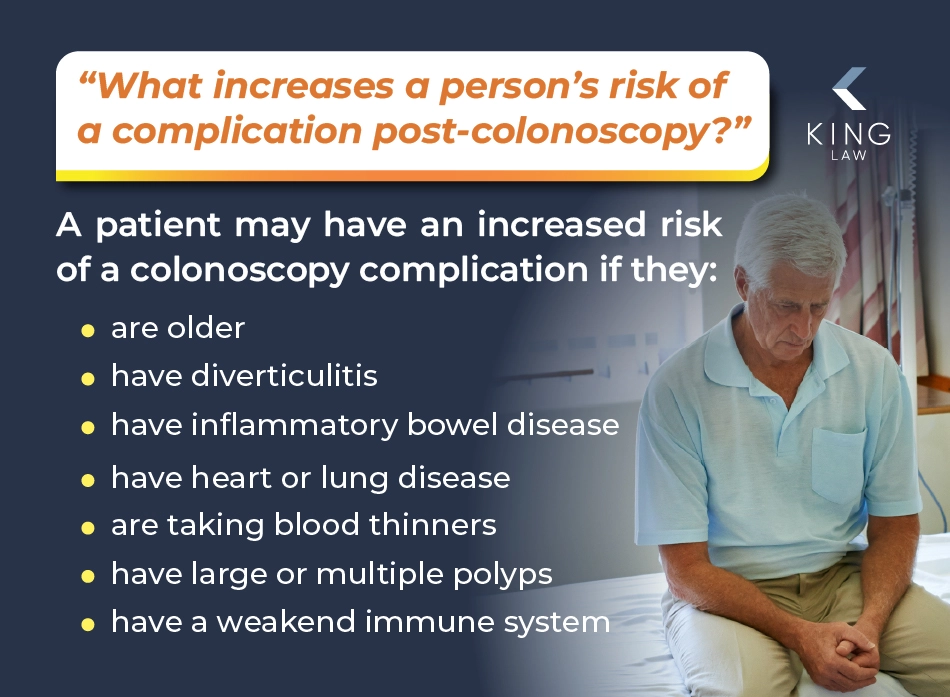
Factors that can increase your chance of complications from a colonoscopy include:
- Age
- A therapeutic colonoscopy (e.g., to remove polyps)
- Having diverticulitis
- Inflammatory bowel disease
- Heart or lung disease
- Blood thinner use
- Large or multiple polyps
Your doctor can help you understand what your personal risk profile is for a colonoscopy.
How Safe Are Colonoscopies?
Overall, doctors consider colonoscopies to be safe and unlikely to cause complications that outweigh the risks of not having one for most patients. However, some patients are more likely to experience serious or life-threatening complications from a colonoscopy. For example, being elderly or having polyps removed during a colonoscopy can increase the chance of complications. Patients should talk to their doctor about the risks and benefits of having a colonoscopy in their situation.
When Should I Go To The Emergency Room After A Colonoscopy?
If you experience any of the following symptoms, you should speak with your doctor or seek emergency medical treatment right away:
- Fever or chills
- Abdominal pain that gets worse or is new
- Bloody or black stools
- Diarrhea that persists or gets worse
- Chest pain
- Breathing problems
- Heavy bleeding
- Abdominal swelling
These may be signs of a serious injury, a complication from the colonoscopy, or another cause.
How Common Are Serious Colonoscopy Complications?
Serious complications after a colonoscopy are uncommon. However, they do occur. For example, in one study,
Why Do Colonoscopy Risks Increase When Polyps Are Removed?
The risks of complications may be higher when polyps are removed during a colonoscopy because polyp removal increases the invasiveness of the procedure. Sometimes, a doctor uses electrocautery to cut, seal (burn), and remove polyps. This process exposes blood vessels and delicate tissue, which may allow bacteria to enter the bloodstream, abscesses to form, or cause deep burns of the colon tissue.
According to a study published in 2014, polyp removal during a colonoscopy may increase the risk of “bleeding, perforation, and post-polypectomy syndrome.” The risk may be higher if the patient has large polyps or if their doctor is removing many polyps at once. One study reported that bleeding and perforation occurred in fewer than 1% of colonoscopies in their dataset.
Can a Colonoscopy Cause Bleeding?
Mild spotting may be expected after an invasive colonoscopy, but (if normal) it should resolve quickly. However, bleeding that is heavy, is delayed, has clots, gets worse, or occurs with other symptoms (like pain, fever, dizziness, or fainting) is a complication that should be reported to your doctor.
Some researchers suggest that heavy bleeding occurs in up to 1% of colonoscopies and can arise hours or days after the procedure. The risk of bleeding may be higher if the colonoscopy patient is on blood thinners, has polyps removed, is older, or has other pre-existing conditions.
What Are the Warning Signs of Bleeding After a Colonoscopy?
Bleeding after a colonoscopy may require urgent medical attention if the following is true:
- The bleeding is heavy or contains clots.
- The bleeding persists or worsens.
- The patient has black or tarry stools.
- The patient faints, feels weak, or is dizzy.
- The patient has problems breathing.
- The patient shows signs of anemia.
Colonoscopy patients who experience bleeding should ask their doctors if it is normal. Addressing bleeding early may reduce the risk of it worsening or causing additional problems.
Can a Colonoscopy Cause a Bowel Perforation?
A colonoscopy can cause a bowel perforation, in which the wall of the colon is torn or punctured. Situations when a bowel perforation is more likely to occur from a colonoscopy include:
- The doctor tears the person’s bowel when they put the scope in or move it around during the colonoscopy.
- The doctor’s electrocautery tool burns the person’s healthy bowel tissue during a polyp removal.
- Pressure from air or carbon dioxide may cause the bowel tissue to tear.
- The doctor accidentally cuts healthy tissue while treating a lesion (such as an ulcer, polyp, or growth).
Studies have suggested that routine screening colonoscopies have a lower risk of perforation than invasive or therapeutic colonoscopies. Risk factors for perforation during a colonoscopy include the patient’s age, an invasive colonoscopic procedure (such as polyp removal), inflammatory bowel disease, diverticulitis, and large or multiple polyps.
What Are the Symptoms of a Perforated Colon After Colonoscopy?
Symptoms of perforation after a colonoscopy include:
- Persistent abdominal pain
- Abdominal distension (a swollen belly)
- Fever
- Chills
- Nausea
- Vomiting
- Breathing problems or chest pain
- Inability to pass gas or stool
Patients are encouraged to call their doctors immediately if they suspect a bowel perforation after a colonoscopy. Bowel perforations can worsen very quickly and will not improve without medical treatment.
Can a Colonoscopy Cause Infection?
Someone can develop an infection because of a colonoscopy if bacteria enter the bloodstream during the procedure. In one study of 12,714 patients,
Another study suggested that 1.1 to 1.6 colonoscopy patients out of 1,000 may develop an infection, based on the authors’ dataset. The risk of infection was higher for patients who had a non-screening colonoscopy (e.g., a colonoscopy with a polypectomy). Types of bacteria that can cause an infection from a colonoscopy include C. diff, Escherichia coli (E. coli), Klebsiella, and Enterobacter.
What Are the Signs of Infection After a Colonoscopy?
Signs of an infection after a colonoscopy include the following:
- Fever
- Chills
- New or worsening abdominal pain
- New or worsening rectal bleeding
- Vomiting or nausea
- Diarrhea
- Bloody, black, or tar-like stool
Patients should see a doctor if they experience any of these symptoms and have had a colonoscopy within the past month. These symptoms may be signs of an infection, perforation, post-polypectomy syndrome, or another condition that requires medical treatment to get better. Read more about signs of a bacterial infection after a colonoscopy and signs of infection after a polyp removal.
Can a Colonoscopy Cause Sepsis?
In rare cases, a colonoscopy can cause sepsis. In one study of nearly 877,000 patients with colon cancer, about 1% developed sepsis after having a colonoscopy. However, this does not mean that 1% of all colonoscopy patients will develop sepsis.
As the CDC explains, sepsis is when the body has an “extreme reaction to an infection.” Sepsis is always life-threatening and needs to be treated immediately. Symptoms of sepsis include:
- Fever or chills
- Confusion
- Clammy skin
- Breathing problems
- Rapid, irregular, or weak heart rate
- Severe pain
Anyone who is experiencing these symptoms should seek urgent medical attention. Read more about sepsis after a colonoscopy.
Can Sedation or Anesthesia Cause Colonoscopy Complications?
Studies suggest that colonoscopies performed with anesthesia may be associated with a higher rate of complications. For example, one study of over 3 million colonoscopy patients found that patients in the dataset who had a colonoscopy with anesthesia had a 13% higher relative risk of any complication within 30 days. Some of the complications that patients in that study experienced were:
- Perforation
- Hemorrhage (heavy bleeding)
- Abdominal pain
- Stroke and other central nervous system problems
- Pneumonia
- Infection
However, the study did not establish that anesthesia was directly related to the complications the patients experienced.
Other complications that patients may experience if their colonoscopy was done under anesthesia include aspiration, low blood pressure, an irregular heartbeat, nausea, dizziness, and low oxygen levels.
Is Deep Sedation Riskier Than Moderate Sedation?
Some researchers believe that deep sedation may increase the risks of complications because the patient cannot feel pain, their breathing is slowed, and they cannot tell the doctor when something feels wrong. Deep sedation may also worsen underlying conditions, like heart or lung disorders.
The risk of aspiration pneumonia may also be higher if a patient has a colonoscopy while under deep sedation. Patients should talk to their doctor about whether deep sedation is appropriate in their specific situation based on their age and health.
Why Do Some People Have Abdominal Pain After a Colonoscopy?
Mild abdominal pain after a colonoscopy may be due to the body recovering from the procedure and releasing the air, water, or carbon dioxide that the doctors added during the procedure. Some of the other reasons that patients may experience abdominal pain after a colonoscopy are:
- Splenic capsule avulsion
- Infection
- Perforation
- Sepsis
- Abscess
- Post-polypectomy syndrome
- Bleeding
Patients should consult their doctors if they experience new, worsening, or concerning abdominal pain after a colonoscopy.
What Is Post-Polypectomy Electrocoagulation Syndrome?
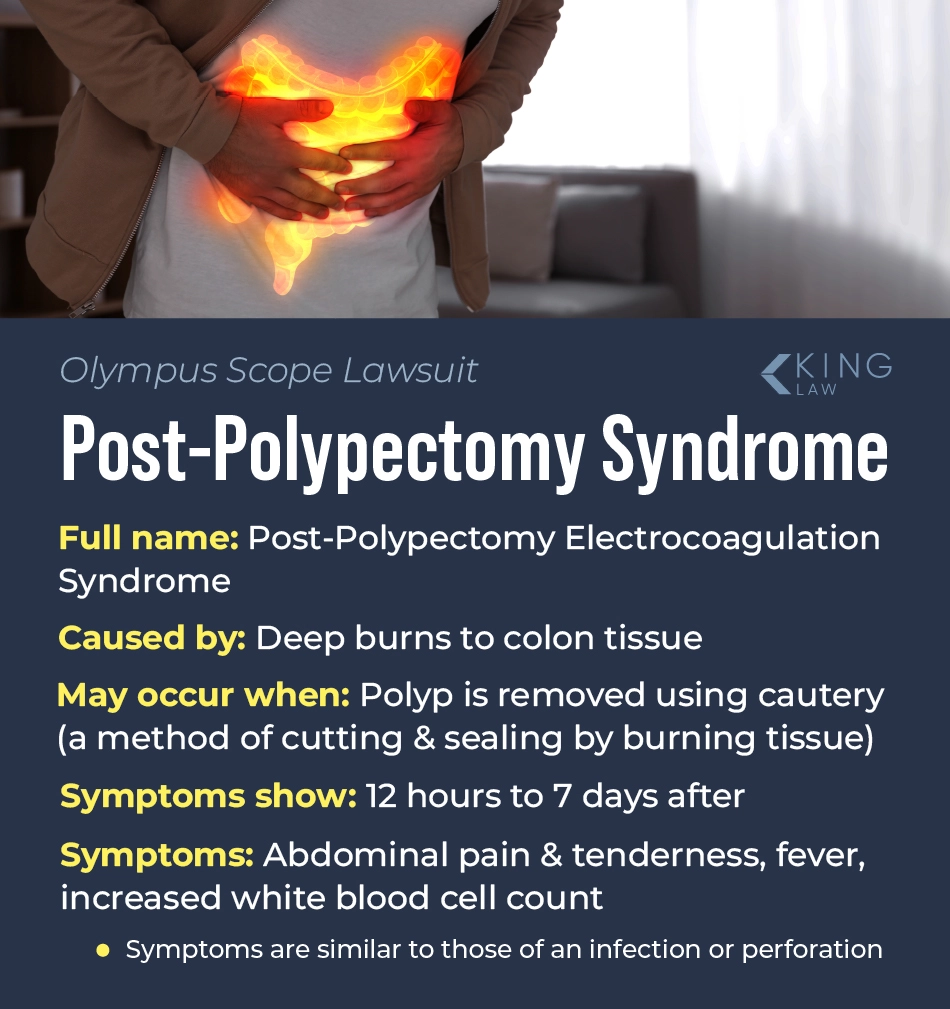
Post-polypectomy electrocoagulation syndrome (also called post-polypectomy syndrome) occurs when the colon tissue suffers a deep burn during a colonoscopy. Post-polypectomy syndrome may occur after a polyp is removed using cautery (a method of cutting and sealing tissue) during a colonoscopy.
Symptoms of post-polypectomy syndrome include abdominal pain, fever, abdominal tenderness, and a high white blood cell count after a colonoscopy with a polypectomy. These symptoms mimic those of an infection or perforation, so patients should seek medical attention to determine the underlying cause and get treatment.
Can a Colonoscopy Cause Heart or Lung Problems?
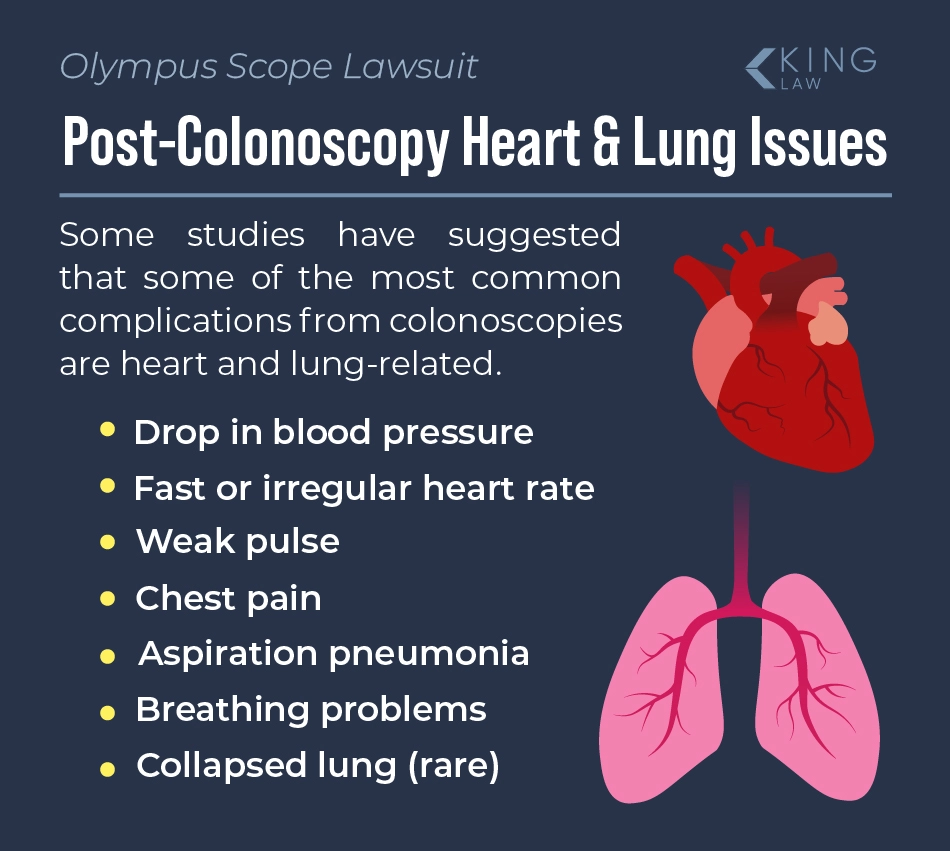
Several studies suggest that heart and lung-related complications are some of the most common complications from colonoscopies. The risk of heart or lung problems may be higher in patients with an underlying condition. Some of the heart and lung problems that can arise due to a colonoscopy include:
- Drop in blood pressure
- Fast or irregular heart rate
- Weak pulse
- Collapsed lung (pneumothorax)
- Aspiration pneumonia
- Chest pain
- Breathing problems
These symptoms may arise during or immediately after the colonoscopy, or several days later. Colonoscopy patients should report concerning changes in their heart, chest, or breathing to their doctors.
Who Is at Higher Risk for Colonoscopy Complications?
The risk of colonoscopy complications may be higher for people who:
- Are 75 or older
- Have underlying medical conditions
- Take anticoagulant or antiplatelet medications
- Have inflammatory bowel disease
- Have diverticular disease
- Have a polypectomy during the colonoscopy
- Are put under deep sedation
- Have a non-screening (i.e., therapeutic) colonoscopy done (e.g., to remove polyps)
The risk of complications may also be higher if the doctor is less experienced or if the colonoscope is defective or contaminated.
Why Are Older Adults at Higher Risk During Colonoscopy?
Older adults may be more likely to experience complications during a colonoscopy. For example, colon tissue thins as people age, which may make tears or bleeding more likely during the colonoscopy. People who are elderly may also have a harder time fighting off infections or recovering from the physical trauma of a colonoscopy. Elderly patients are also more likely to have other health conditions, such as polyps or diverticulitis, which may be associated with higher colonoscopy complication rates.
Are Patients With Inflammatory Bowel Disease at Higher Risk?
Several studies suggest that colonoscopy patients with inflammatory bowel disease may be at a higher risk of complications than others. One study found that colonoscopy patients in the study who had inflammatory bowel disease had a “significantly higher” risk of perforation than those in the control group. The participants in this study were people who had a colonoscopy while hospitalized. However, a study of Swedish patients with inflammatory bowel disease who had an outpatient colonoscopy suggested that there was no higher risk of a perforation in the IBD group versus the controls.
Are Blood Thinners a Risk Factor for Colonoscopy Bleeding?
Taking blood thinners (e.g., anticoagulants and antiplatelet drugs) may increase someone’s risk of bleeding after a colonoscopy. Blood thinners make it harder for the body to form clots, which can reduce someone’s risk of a stroke or blood clot. However, blood thinners may also make it harder for patients’ bodies to stop or control bleeding due to a colonoscopy. Because of this, patients on blood thinners should talk to their doctor about the risks and benefits of interrupting their blood thinner treatment to have a colonoscopy. If appropriate, their doctor will give them specific instructions about how to change their blood thinner regimen before the colonoscopy.
When Do Colonoscopy Complications Usually Happen?
Some studies have reported that colonoscopy complications may occur during the procedure or within 30 days after. Here are some examples of complications and when they might arise:
- Infections: One study found that colonoscopy patients in their dataset experienced infections up to 30 days after the procedure.
- Post-Polypectomy Syndrome: Symptoms may appear within 12 hours to 7 days after a colonoscopy.
- Bleeding: Some studies found that post-colonoscopy bleeding arose immediately after the colonoscopy or within 30 days afterward.
- Perforations: In some studies, patients had symptoms of a perforation within 5 days after the colonoscopy.
Please note that these are general estimates. Some complications may arise sooner or later than these, and not every symptom that arises after a colonoscopy is related to the colonoscopy. Patients should call their doctor to discuss their symptoms and how those should be treated.
What Symptoms Are Normal After a Colonoscopy?
The following symptoms are most likely normal after a colonoscopy:
- Mild abdominal cramping
- Mild bloating
- Mild gas
- Light rectal spotting
If normal, these symptoms may be mild and improve with time. If these symptoms are new or get worse with time, then they are not normal, and you need to see a doctor.
What Symptoms Are Not Normal After a Colonoscopy?
Post-colonoscopy symptoms that are not typical or uncommon include:
- Fever or chills
- Severe or worsening abdominal pain
- Heavy, worsening, delayed, or painful rectal bleeding
- Dizziness
- Weakness
- Blood in your stool
- Breathing problems
- Confusion
- Vomiting
The above should be reported to your doctor immediately so they can evaluate the underlying cause. These symptoms may signal an infection, perforation, post-polypectomy syndrome, or another complication of a colonoscopy.
Summary: What Should Patients Know About Colonoscopy Risks and Complications?
Colonoscopies are considered safe and essential for screening, removing, and diagnosing colon cancer, polyps, and other colon-related diseases. However, serious complications may occur, including the possibility of bleeding, perforation, infection, post-polypectomy syndrome, and injury to the spleen. Studies have shown that diagnostic colonoscopies performed on young, healthy patients may be less likely to result in complications.
Patients should discuss their individual risk factors with their doctor before having a colonoscopy. Colonoscopy patients should also call their doctor if they develop any concerning symptoms, such as fever, chills, or severe abdominal pain.
Contact King Law for a Free Case Review
King Law is reviewing cases from patients who developed infections after a colonoscopy. If you experienced complications after a colonoscopy, contact us today by dialing (585) 496-2648 or filling out an online form. You may be entitled to compensation if the complications you experienced were due to a defective colonoscope or a medical error. We provide free case reviews, and we take colonoscopy cases on contingency.
Frequently Asked Questions (FAQs)
Source List
Ahmed, Monjur. “Blood Thinners and Gastrointestinal Endoscopy.” World Journal of Gastrointestinal Endoscopy, vol. 8, no. 17, 2016, pp. 584–590.
Alexandersson, Bjarki T., et al. “Inflammatory Bowel Disease Is Not Linked to a Higher Rate of Adverse Events in Colonoscopy—a Nationwide Population-Based Study in Sweden.” Journal of Crohn’s and Colitis, vol. 17, no. 12, 2023, pp. 1962–1967.
Anderloni, Andrea, et al. “Advances, Problems, and Complications of Polypectomy.” Clinical and Experimental Gastroenterology, vol. 7, 2014, pp. 285–296.
Araújo, Ana Virgínia, et al. “Air Everywhere: Colon Perforation after Colonoscopy.” BMJ Case Reports, 2017.
Benson, Brian C., Jonathan J. Myers, and Jeffrey T. Laczek. “Postpolypectomy Electrocoagulation Syndrome: A Mimicker of Colonic Perforation.” Case Reports in Emergency Medicine, 2013.
Castro, Georgina, et al. “Outpatient Colonoscopy Complications in CDC’s Colorectal Cancer Screening Demonstration Program: A Prospective Analysis.” Cancer, vol. 119, suppl. 15, 2013, pp. 2849–2854.
Causada-Calo, Natalia, et al. “Association Between Age and Complications After Outpatient Colonoscopy.” JAMA Network Open, vol. 3, no. 6, 2020, e208958.
Centers for Disease Control and Prevention. “About Sepsis.” Centers for Disease Control and Prevention.
George, A. T., et al. “Cardiac Ischaemia and Rhythm Disturbances During Elective Colonoscopy.” Frontline Gastroenterology, vol. 1, no. 3, 2010, pp. 131–137.
Gupta, Ajay, Hammad Zaidi, and Khalid Habib. “Pneumothorax after Colonoscopy – A Review of Literature.” Clinical Endoscopy, vol. 50, no. 5, 2017, pp. 446–450.
Hong, Sung Pil. “How Do I Manage Post-Polypectomy Bleeding?” Clinical Endoscopy, vol. 45, no. 3, 2012, pp. 282–284.
Iqbal, Rabia, et al. “Prevalence and Outcomes of Sepsis in Patients With Colon Carcinoma: Organism-Specific Analysis.” Cureus, vol. 16, no. 11, 2024, e74175.
Janes, Simon E. J., Ian A. Cowan, and Birgit Dijkstra. “A Life Threatening Complication after Colonoscopy.” BMJ, vol. 330, no. 7496, 2005, pp. 889–890.
Jones, Mark W., et al. “Bowel Perforation.” StatPearls, StatPearls Publishing, 2026.
Kavic, Stephen M., and Marc D. Basson. “Management of Complications of Colonoscopy.” Surgical Treatment: Evidence-Based and Problem-Oriented, edited by René G. Holzheimer and John A. Mannick, Zuckschwerdt, 2001.
Kim, Su Young, Hyun-Soo Kim, and Hong Jun Park. “Adverse Events Related to Colonoscopy: Global Trends and Future Challenges.” World Journal of Gastroenterology, vol. 25, no. 2, 2019, pp. 190–204.
Lin, Otto S. “Performing Colonoscopy in Elderly and Very Elderly Patients: Risks, Costs and Benefits.” World Journal of Gastrointestinal Endoscopy, vol. 6, no. 6, 2014, pp. 220–226.
Lohsiriwat, Varut. “Colonoscopic Perforation: Incidence, Risk Factors, Management and Outcome.” World Journal of Gastroenterology, vol. 16, no. 4, 2010, pp. 425–430.
Makkar, Rohit, and Shen Bo. “Colonoscopic Perforation in Inflammatory Bowel Disease.” Gastroenterology & Hepatology, vol. 9, no. 9, 2013, pp. 573–583.
Mayo Clinic. “Colonoscopy.” Mayo Clinic.
MedlinePlus. “Peritonitis.” MedlinePlus Medical Encyclopedia, U.S. National Library of Medicine.
Muscarella, Lawrence F. “Risk of Transmission of Carbapenem-Resistant Enterobacteriaceae and Related ‘Superbugs’ During Gastrointestinal Endoscopy.” World Journal of Gastrointestinal Endoscopy, vol. 6, no. 10, 2014, pp. 457–474.
National Institute of Diabetes and Digestive and Kidney Diseases. “Colonoscopy.” National Institute of Diabetes and Digestive and Kidney Diseases.
Pennsylvania Patient Safety Authority. “Complications of Colonoscopy.” PA-PSRS Patient Safety Advisory.
Rai, Vinay, and Nitin Mishra. “Colonoscopic Perforations.” Clinics in Colon and Rectal Surgery, vol. 31, no. 1, 2018, pp. 41–46.
Song, Jiao-Jiao, et al. “Unexplained Septic Shock after Colonoscopy with Polyethylene Glycol Preparation in a Young Adult: A Case Report.” World Journal of Clinical Cases, vol. 10, no. 31, 2022, pp. 11652–11657.
Thirumurthi, Selvi, and Gottumukkala S. Raju. “Management of Polypectomy Complications.” Gastrointestinal Endoscopy Clinics of North America, vol. 25, no. 2, 2015, pp. 335–357.
Waddingham, William, et al. “Complications of Colonoscopy: Common and Rare—Recognition, Assessment and Management.” BMJ Open Gastroenterology, vol. 10, no. 1, 2023, e001193.
Wang, Peiqi, et al. “Rates of Infection after Colonoscopy and Oesophagogastroduodenoscopy in Ambulatory Surgery Centres in the USA.” Gut, vol. 67, no. 9, 2018, pp. 1626–1636.
Wernli, Karen J., et al. “Risks Associated With Anesthesia Services During Colonoscopy.” Gastroenterology, vol. 150, no. 4, 2016, pp. 888–894.
Yom-Tov, Elad, and Benjamin Lebwohl. “Adverse Events Associated with Colonoscopy; an Examination of Online Concerns.” BMC Gastroenterology, vol. 19, 2019, article 207.