

Symptoms of Bacterial Infection After Colonoscopy (What to Watch For)
Complete the form below to see if you qualify for a Olympus Scope Lawsuit

Whenever a medical instrument or device enters the body, there is a risk of infection, and colonoscopies are no exception. So, it is important for patients to watch for symptoms of infection after undergoing a colonoscopy.
Symptoms of a bacterial infection after a colonoscopy include fever, chills, diarrhea, vomiting, and fatigue. Bacterial infections after a colonoscopy are rare, but can be severe or life-threatening. Types of bacterial infections that may occur after a colonoscopy include sepsis, Escherichia coli (E. coli), Clostridioides difficile (C. diff), and bacteremia.
Colonoscopies may be more likely to lead to infections if the person has underlying medical conditions, medical mistakes occur, or a contaminated colonoscope or equipment is used. In some cases, patients who develop an infection after a colonoscopy may be entitled to compensation from the hospital or the manufacturer of the colonoscope used in their procedure.
About the Symptoms of Infection After Colonoscopy
What Are the Symptoms of Bacterial Infection and Complications After a Colonoscopy?
When Do Symptoms of Infection Appear After a Colonoscopy?
What Symptoms Are Normal After a Colonoscopy vs. Signs of Infection?
What Are the Signs of a Serious Infection or Sepsis After Colonoscopy?
What Causes Bacterial Infection After a Colonoscopy?
Who Is at Higher Risk for Infection After Colonoscopy?
When Should You Call a Doctor After a Colonoscopy?
How Are Infections After Colonoscopy Diagnosed and Treated?
Key Takeaways About Symptoms of Infection After Colonoscopy
King Law Is Investigating Infection Claims Following Colonoscopy Procedures
Contact Our Legal Team For a Free Case Review
What Are the Symptoms of Bacterial Infection and Complications After a Colonoscopy?
Although infections after a colonoscopy are relatively rare, the incidence of infection is higher than previously thought. According to Johns Hopkins, the likely rates of infection after a colonoscopy are 1 in 1,000 for screening colonoscopies and about 1.6 per 1,000 for non-screening colonoscopies. However, some circumstances can increase that risk to as many as 115 infections per 1,000 colonoscopies performed.
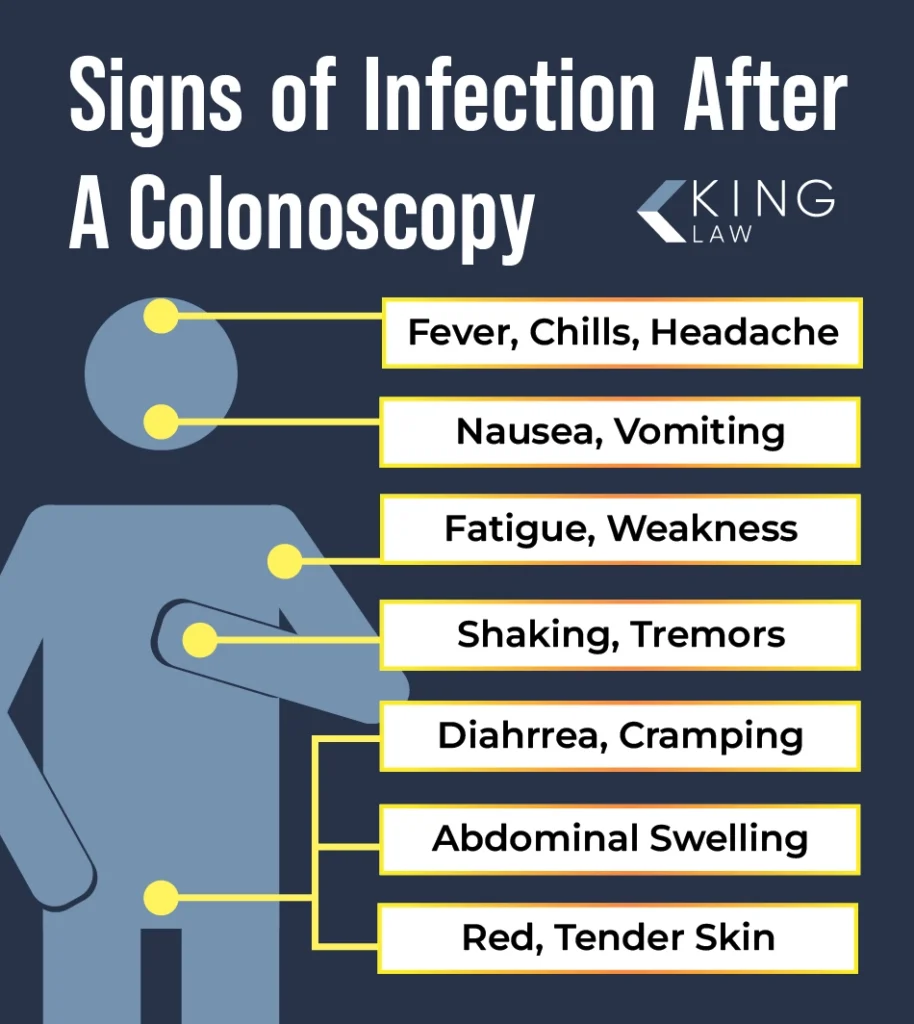
Recognizing the symptoms of an infection is important for all patients. Symptoms of an infection after a colonoscopy include the following:
- Fever and chills
- Stomach pains
- Diarrhea
- Nausea
- Vomiting
- Fatigue
- Swelling or tenderness
Note: Not all of these symptoms mean a patient has an infection. Patients should speak to their medical team if they have any concerning symptoms after a colonoscopy.
These or other symptoms of an infection may show up within 7 to 30 days after the colonoscopy is performed. Some of these symptoms may be similar to the normal recovery process after a colonoscopy. However, others (like fever, chills, bleeding, and swelling) are not. Patients should monitor themselves for signs of infection after a polyp removal, as diagnostic colonoscopies can have a higher infection risk.
Someone who experiences any of these symptoms should consider talking to their doctor right away, even if they do not think the symptoms are severe or urgent at that time. An infection can become an emergency very quickly if not addressed early on.
Fever and Chills After Colonoscopy
Fever and chills after a colonoscopy may be a warning sign that you have an infection. A temperature above 100.6°F is considered a moderate or high fever. After a colonoscopy, it is a sign that your body could be battling an infection. Colonoscopy patients should tell their doctors immediately if they have a fever or are experiencing chills or shaking. Fever and chills may be a sign that you have an infection and are at risk of sepsis, which, according to the CDC, is always a medical emergency.
Persistent or Worsening Abdominal Pain
Steady or worsening pains in the stomach or abdomen may also be a sign of an infection. Mild cramping or abdominal discomfort may be expected after a colonoscopy. However, abdominal or stomach pains that stay the same or get worse over time can indicate a medical issue. Patients who have stomach pains after a colonoscopy should discuss their symptoms with their medical care team to rule out complications like an infection, postpolypectomy syndrome, or a perforated (torn) bowel.
Diarrhea or Changes in Bowel Habits
Diarrhea or bowel changes after a colonoscopy may signal an infection as well, especially if the patient also has a fever. For example, bacteria such as Clostridioides difficile (C. diff) can cause watery stools. Patients who have had a colonoscopy and have persistent diarrhea or bowel changes should talk to their doctor, as these symptoms could indicate a serious condition.
Nausea and Vomiting
Persistent nausea or vomiting is not normal after a colonoscopy. The sedation that they give patients for the colonoscopy procedure can cause some mild nausea or stomach upset. However, this should resolve shortly after the colonoscopy and improve over time. If the nausea or vomiting is new or worsens after the colonoscopy, then it might be a sign of an intestinal perforation or infection.
Rectal Bleeding or Bloody Stools
Small amounts of blood after the doctor performs a biopsy or other procedure during a colonoscopy may occur, but this should be very mild and go away soon after. Heavy rectal bleeding, blood clots, or black stool (melena) are warning signs that medical attention is needed.
Fatigue, Weakness, or Feeling Unwell
Persistently feeling fatigued, weak, or unwell after a colonoscopy can also be a sign of an infection. Patients should likely tell their care team if they experience new, unusual, or worsening fatigue, weakness, or feelings of being unwell or run down after a colonoscopy.
When Do Symptoms of Infection Appear After a Colonoscopy?
Symptoms of an infection can show up within a few days or up to a month after a colonoscopy. For example, one study suggested that an infection due to post-polypectomy syndrome can
A liver abscess (which can be caused or worsened by an infection) may show symptoms up to a week or more after a colonoscopy, according to another study.
Infections may occur even if the colonoscopy is normal (without complications) or part of a routine colorectal screening process. One 2018 study found that significantly more patients visited the hospital or urgent care for an infection within 30 days of a colonoscopy than previously thought.
What Symptoms Are Normal After a Colonoscopy vs. Signs of Infection?
Normal post-colonoscopy recovery symptoms include mild discomfort, cramping, bleeding/spotting, or gas, which improve over time. Signs of an infection after a colonoscopy include rectal bleeding, bloody or black stool, fever, chills, weakness, fatigue, vomiting, diarrhea, and nausea.
Normal Post-Colonoscopy Symptoms
Some of the normal post-colonoscopy symptoms include the following:
- Mild bloating
- Gas
- Light cramping or discomfort
- Minor bleeding
- Mild tiredness
If these symptoms are part of the normal recovery process after a colonoscopy, these symptoms should be mild and resolve within a day after the procedure.
Warning Signs of Infection
Warning signs of an infection after a colonoscopy include:
- Fever
- New or worsening pain
- Persistent vomiting
- Diarrhea
- Fatigue
- Weakness
- Chills
- Shaking or tremors
The above signs may mean that the colonoscopy patient has an infection that requires urgent medical attention. They could also indicate other post-colonoscopy complications or a complication unrelated to the procedure. The patient is encouraged to seek medical advice immediately to avoid further complications.
What Are the Signs of a Serious Infection or Sepsis After Colonoscopy?
According to the Cleveland Clinic,
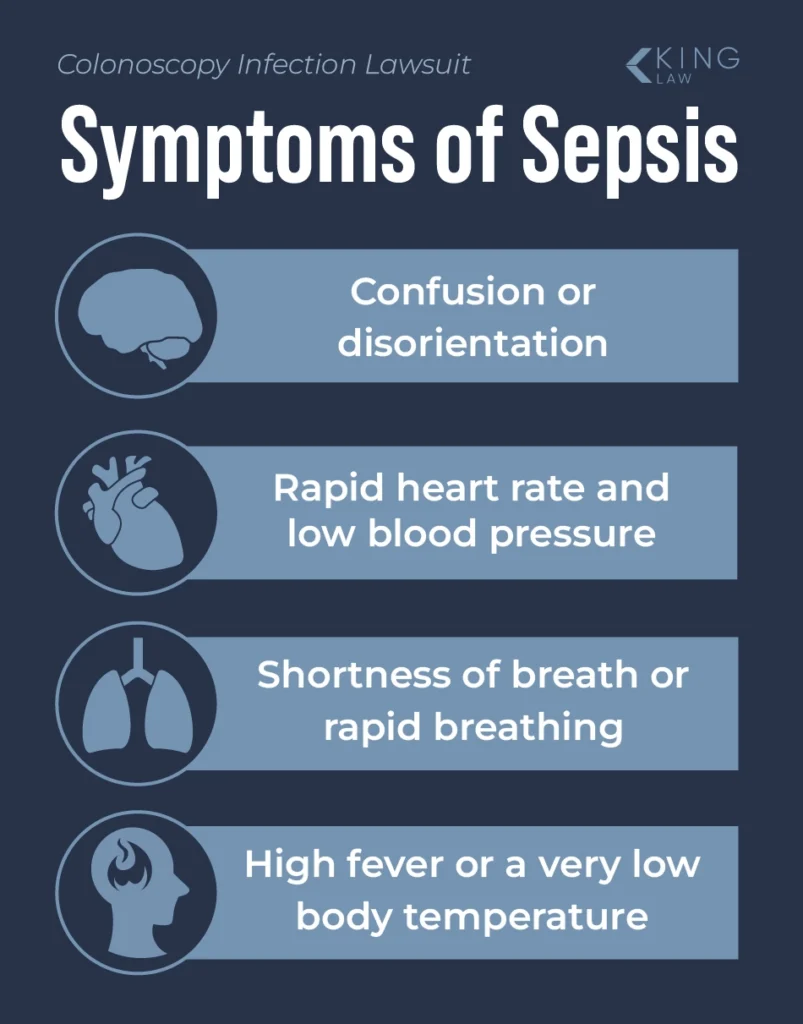
High Fever, Very Low Body Temperature, and Rapid Heart Rate
When some types of bacteria enter the bloodstream, it may cause the person’s body temperature to suddenly spike or drop to dangerously low levels. The patient may also have a rapid or irregular heart rate. If these occur after a colonoscopy, it may signal that an infection has spread to the bloodstream, and the person may need to be treated for sepsis.
Shortness of Breath or Rapid Breathing
Sepsis or a severe infection can cause shortness of breath, rapid breathing, or dangerously low, shallow breathing. If the person experiences sudden or rapid changes in their breathing, they should be taken to the emergency room for an evaluation.
Confusion or Altered Mental Status
Sometimes, bacteria can affect the brain, leading to confusion, an altered mental state, or sepsis-associated delirium. A patient should immediately be taken to the doctor if they are showing signs of an infection, especially if they have concerning or sudden changes in how they think, express themselves, or behave.
What Causes Bacterial Infection After a Colonoscopy?
A bacterial infection after a colonoscopy may be caused by bacteria entering the bloodstream, colon, or abdomen during or after the procedure. Bacteria may enter the body in several ways as a result of a colonoscopy, including through colon injury or a contaminated endoscope/colonoscope.
Bacteria Entering the Bloodstream (Bacteremia)
One way an infection or sepsis may occur after a colonoscopy is through bacteria entering the bloodstream. The body has bacteria in it, some of which are good or beneficial, and others that are not. During the colonoscopy, potentially hazardous bacteria may enter the bloodstream because the scope disrupts or breaks tissue as it is moved through the colon.
Contaminated Endoscopes, Colonoscopes, or Equipment
Contaminated endoscopes, colonoscopes, or other equipment can also lead to infection after a colonoscopy. According to findings published by the CDC and other researchers, higher-than-expected levels of bacteria and patient debris may remain on some gastrointestinal devices even when rigorous cleaning methods are used. These findings have prompted several recalls of endoscopes and accessories.
Perforation or Injury to the Colon
An infection may also be caused by bacteria entering the bloodstream or the abdominal cavity due to a perforation (tear) or injury to the colon. The injury may be pre-existing, such as an ulcer. Or it may be caused by the colonoscopy, such as a biopsy or polyp removal.
Who Is at Higher Risk for Infection After Colonoscopy?
Some patients have a higher risk of getting an infection after a colonoscopy than others. These include people who have weakened immune systems, have underlying health conditions, or are having polyps removed or a biopsy performed.
Patients Over 75
Patients over 75 may be at a higher risk of complications after a colonoscopy. This is due to underlying health issues and dehydration caused by the preparation for the procedure.
Patients Undergoing Polyp Removal or Biopsy
Patients undergoing a biopsy or having polyps removed may also have a higher chance of getting an infection after a colonoscopy. During a biopsy or polyp removal, the doctors intentionally cut tissue, which can allow bacteria to enter the bloodstream or abdominal cavity.
Underlying Health Conditions
Having an underlying condition may also make someone more vulnerable to getting an infection after a colonoscopy. Conditions that may make someone at higher risk of an infection include diabetes, kidney disease, Crohn’s disease, ulcerative colitis, or cirrhosis (scarring of the liver).
When Should You Call a Doctor After a Colonoscopy?
You should consider calling a doctor after a colonoscopy if you experience any new or worsening symptoms, including a fever, abdominal pain, chills, weakness, vomiting, or diarrhea.
Symptoms That May Require Immediate Medical Attention
You should consider seeking immediate medical care if you experience any of the following after a colonoscopy:
- Fever
- Chills
- Severe abdominal pain
- Persistent vomiting or nausea
- Heavy bleeding
- Shortness of breath
- Rapid or very shallow breathing
These may signal an infection and require urgent medical treatment to prevent it from worsening or becoming fatal.
How Are Infections After Colonoscopy Diagnosed and Treated?
Colonoscopy-related infections may be diagnosed through several different tests, including blood tests, scans, an additional colonoscopy, or stool tests. Treatment typically involves antibiotics, but may also require other interventions, such as draining an abscess.
Diagnostic Tests
Here are some of the diagnostic tests that your doctor may use to determine if you have an infection after a colonoscopy:
- Blood tests: These can tell your doctor whether your white blood cell count is high, whether bacteria are in your blood, and, if so, what kind.
- CT Scan: A CT scan can help your medical team identify any swollen or torn areas in your abdomen, brain, or other parts of your body.
- Stool Tests: A stool test is another way your doctor can see what types of bacteria or bacterial imbalances may be causing your symptoms.
Your doctor may also order other tests to help track or identify the infection after a colonoscopy.
Treatment Options
Treatment for a colonoscopy-related infection may include the following:
- Oral antibiotics
- IV fluids
- IV-administered antibiotics
- Hospitalization
- Drainage of abscesses or infected tissue
The treatment for a colonoscopy-related infection depends on the types of bacteria in your system, the extent of the infection, and other factors. Infections may not go away on their own, so it is important to be treated by a practicing physician if you have or think you have an infection after a colonoscopy.
Key Takeaways About Symptoms of Infection After Colonoscopy
Here are some important takeaways about infections after colonoscopies:
- Infection rates are low, but any infection that does arise could become severe or life-threatening.
- Fever or chills are important early signs of a possible infection.
- Symptoms of an infection can appear hours, days, or a week or more after a colonoscopy.
- Treating an infection after a colonoscopy early on can help prevent it from becoming fatal or severe.
- Infections may not resolve on their own, so it is critical to seek medical treatment right away.
If something seems off or concerning after you get a colonoscopy, consider talking to your doctor immediately.
Who Is Responsible for Post-Colonoscopy Infections?
There are a number of factors that can increase a patient’s chance of experiencing an infection after a colonoscopy. However, determining what circumstances caused the infection can be complicated.
Here are some of the possible responsible parties if someone experiences a post-colonoscopy infection:
- Doctors
- Medical facilities
- Medical device manufacturers
Some colonoscopes can be difficult to sterilize between procedures. These reusable devices can harbor bacteria and transmit infectious bacteria into a patient. Some patients have pursued lawsuits against Olympus, which is a major manufacturer of endoscopes and accessories used in colonoscopies in the U.S.
King Law Is Investigating Infection Claims Following Colonoscopy Procedures
King Law is actively investigating cases where patients developed infections (including sepsis) after a colonoscopy. In many cases, colonoscopies are safe, but medical errors, a defective or improperly sanitized colonoscope, or delayed diagnosis may increase the risk of infection.
Colonoscopy-related infections may require extensive medical treatment, cause permanent injuries, or result in death. Our legal team is prepared to investigate colonoscopy-related infections and determine if patients or their surviving loved ones may be entitled to compensation.
Contact Our Legal Team For a Free Case Review
Call us today by dialing (585) 496-2648 to schedule your free, no-obligation case evaluation if you or your loved one experienced an infection after a colonoscopy. You can also reach us by filling out an online contact form. You can also read more about this topic on our colonoscopy infection lawsuit page.
Frequently Asked Questions (FAQs)
List of Sources Used In This Article
King Law used the following sources when writing this article about the signs and symptoms of infections after a colonoscopy. We apply rigorous editorial standards to create content for our visitors.
“About Sepsis.” Centers for Disease Control and Prevention, 23 Mar. 2026.
“Are Colonoscopies Dangerous?.” Colorectal Cancer Alliance, n.d.
“Clostridium difficile (C. diff) Infections (CDI).” Hawaii State Department of Health, n.d.
“Colonoscopy: What to Expect at Home.” Kaiser Permanente, n.d.
“Infection Rates After Colonoscopy and Endoscopy at U.S. Specialty Centers Are Far Higher Than Previously Thought.” Johns Hopkins Medicine, May 2018.
Kim, Hee Won. “What Is Different between Postpolypectomy Fever and Postpolypectomy Coagulation Syndrome?.” Clinical Endoscopy, 2014.
Rauwers, A. W., et al. “Rates of Infection After Colonoscopy and Esophagogastroduodenoscopy in Ambulatory Surgery Centres in the USA.” Gut, vol. 67, no. 9, 2018, pp. 1626–1636.
“Sepsis.” Cleveland Clinic, n.d.
“Treating Fever in Adults.” Harvard Health Publishing, n.d.
“Adverse Events After Colonoscopy: Analysis of Complications.” PubMed Central (PMC), n.d.
“Complications of Colonoscopy and Their Management.” PubMed Central (PMC), n.d.
“Post-Colonoscopy Complications and Risk Factors.” PubMed Central (PMC), n.d.
“Risk of Infection Following Endoscopic Procedures.” PubMed Central (PMC), n.d.