

Sports Gambling Addiction Lawsuit & Loss Claims [2026 Update]
Complete the form below to see if you qualify for a Sport Gambling Addiction Lawsuit

Sports betting apps are accused of using deceptive, unlawful, or unfair tactics to encourage people to use their betting platforms. People who have used sports gambling apps have lost money, experienced mental health challenges, and suffered other setbacks. Some people who say that online gambling has hurt their finances or health are filing lawsuits against online gambling outlets. These lawsuits seek damages and accountability from the sports gambling sites that people have become addicted to.
This page explains what an online sports gambling addiction is, why sports betting apps are so popular, the signs of a sports betting addiction, and who is at risk of developing a gambling addiction. It also discusses how features like VIP host messaging, deposit-limit changes, “risk-free” language, and personalization/targeting may encourage people to gamble more and result in civil liabilities for sports betting companies.
You can also find information about past lawsuits and enforcement actions against online sports betting apps. This webpage also discusses who may qualify to file a sports gambling addiction lawsuit, what compensation is available, and how to file a lawsuit if a sports gambling addiction has severely impacted your life.
Sports Betting Lawsuits – News and Updates
August 13, 2026: Baltimore Accuses Kalshi and Polymarket of Operating Illegal Sportsbetting Operations
The City of Baltimore has filed a lawsuit against Kalshi and Polymarket, two prediction market companies that allow people to trade contracts based on the predicted outcome of future sports events. According to Baltimore’s lawsuit, Kalshi and Polymarket are allegedly offering sportsbetting opportunities without having the proper license to do so from Maryland. Maryland allows some forms of online sportsbetting. However, the state requires companies to obtain a license and meet other requirements first, and no one under 21 may participate in sportsbetting.
July 28, 2026: Class Action Lawsuit Filed Against Popular Sportsbetting Company
A California man has filed a class action lawsuit against a popular online sports betting company. According to his complaint, the company is allegedly offering illegal sports betting in California. The man’s lawsuit accuses the company of misleading consumers about which sports-related event contracts may be legal in California and which may not be. The man’s lawsuit claims he would not have placed bets with the company if he had known that the sports betting contracts it offered him may not have been legal in California.
July 27, 2026: Federal Judge Pauses Minnesota Law that Banned Prediction Markets Pending Lawsuit Outcome
A federal judge has paused a new Minnesota law that would have banned prediction markets, such as Kalshi and Polymarket, from operating within the state. Minnesota passed the law in an effort to prevent companies from offering what the state believes to be illegal sports betting. Kalshi and Polymarket claim their offerings are federally-regulated “swaps” rather than gambling, and asked a judge to stop the law from taking effect. The judge agreed to pause the law, but also noted that she has not decided if Minnesota can ban bets or “swaps” on some types of contracts (like those about sporting events).
June 26, 2026: Rates of Gambling Disorder Diagnosis Much Higher in States Where Sportsbetting Is Legal
According to a recent study (Gambling Disorder Diagnoses Have Risen More Than 60% in States That Legalized Sports Betting), over 60% more people have been diagnosed with a gambling disorder each quarter in 2026 compared to 2018. The researchers wanted to understand how gambling rates may have changed after the U.S. Supreme Court’s decision to allow states to legalize sports betting. They used a dataset for over 197 million adult patients in the United States. The researchers suggested their results show people who live in states where sports gambling is allowed may be more likely to be diagnosed with a gambling-related disorder.
July 14, 2026: Man Sues Sports Betting Company, Claims Sports Gambling Addiction Fueled His Suicidal Ideation
A man has filed a legal complaint against a sports betting company (i.e., DraftKings), claiming the company designed its app in a way that misled him and drove him to bet more than he intended. According to his legal complaint, the man bet over $2 million on the sport betting app and was encouraged to place bets through the VIP system on the platform. The man says his addiction to the app disrupted his mental health and led him to become suicidal.
June 10, 2026: Class Action Lawsuit Filed Against Robinhood, Claims Company Operates Illegal Sportsbetting Operation
A man from Georgia has filed a class action legal complaint against Robinhood. In his lawsuit, he accuses Robinhood of operating an unlicensed sportsbook app that is structured as an investment platform. According to his legal filings, the man believes that some of Robinhood’s sports-related prediction market offerings qualify as sports gambling, which may be illegal under Georgia’s gambling laws.
May 18, 2026: Sportradar Accused of Using Black Market Contacts, Illegal Activity to Increase Profits
Sportradar supplies live sports data and other services to sportsbook operators that use those services to, among other things, advertise to clients and offer them betting opportunities. Sportradar partners with companies like DraftKings and FanDuel, as well as reputable sports organizations such as the MLB, NFL, NBA, and NHL. Based on a legal complaint (Case No. 1:26-cv-04112) filed on May 18, 2026, two investigative firms allege that Sportradar used illegal activities and “black and grey markets” to source and use live betting data.
May 14, 2026: Minnesota Legislature Passes Bill Restricting Prediction Markets, Awaiting Governor’s Approval
Minnesota’s Senate and House of Representatives have approved a bill that restricts people from participating in prediction markets in the state. If signed into law by the governor, the bill could make it illegal for some people to place some types of bets on sports games. Sports betting companies are being sued by some consumers and state governments who allege some companies may mislead bettors about the terms of their promotions or apps. Some people believe they were led to gamble more than they intended because of how the sports betting apps were designed or and engaged with players.
April 27, 2026: Texas Tech Quarterback Announces Sports Gambling Addiction, Checks Into Rehab
A Texas Tech quarterback has revealed that he struggles with a gambling addiction and has placed thousands of bets on sports events, according to recent reports. The man is 22 years old and plays football at the college level. At this time, reports suggest he has checked himself into a rehabilitation facility to help him recover from his gambling addiction. It is not known whether the Texas Tech quarterback will face criminal charges or if he attempted to use his position to influence or benefit from the outcome of games. Lawyers are helping consumers file lawsuits against sports betting companies, and some of those lawsuits accuse the companies designing the apps to encourage people to gamble more than they intended.
April 24, 2026: Federal Government Files Suit Against New York, Saying State Cannot Regulate Some Sports Betting Companies
The Commodity Futures Trading Commission (CFTC) has filed a lawsuit against New York State, arguing that the state cannot use state-level gambling laws to regulate some federally registered prediction companies. New York’s attorney general had sued several prediction market providers, arguing that they were not authorized to offer sports betting in New York. Public reports indicate that New York says some of the companies are offering illegal sports betting, but they are disguising it as financial contracts. Some people are filing lawsuits against sports betting companies because they believe they were misled about the terms of the promotions and whether the services offered by the app were legal in their state.
March 24, 2026: Two Men File Sports betting Lawsuit Against DraftKings, FanDuel, Genius Sports, and the NFL
Two men have filed a lawsuit against several sports betting companies and “VIP hosts” that work for those platforms. The legal complaint was filed in Pennsylvania state court and accuses the named sports betting companies of “intentionally” designing their online sports betting platforms so that they are more addictive than traditional gambling. The complaint alleges that the sportsbook companies used behavioral data to market bets to customers and encourage them to bet more than they intended, particularly through micro-betting. According to the legal filings, the men who filed the lawsuit believe the sports betting companies being sued took advantage of them and violated consumer protection laws.
March 16, 2026: Arizona Attorney General Sues Kalshi, Alleges Kalshi Is Operating an Illegal Sportsbetting Company in the State
Arizona’s Attorney General, Kristin Mayes, has filed a lawsuit against Kalshi, accusing the company of offering and accepting money for sports betting. Arizona law makes many types of sports gambling illegal and requires companies to register with the Arizona authorities. According to the complaint, Kalshi allegedly accepted sports bets placed by Arizona customers on the possible outcomes of sporting events. Arizona’s Attorney General also accuses Kalshi (a Delaware company) of failing to register with the Arizona Corporate Commission. Individuals, attorneys general, and others are filing lawsuits against other sportsbetting companies, accusing them of misleading consumers or violating consumer protection or gambling laws.
March 5, 2026: Class Action Lawsuit Filed Against Sports Betting Companies
Online-based sports betting companies are facing a lawsuit brought by multiple New York consumers who say the companies are operating an illegal gambling operation. The companies operate several web-based sports betting games, including “betonline.ag.” Some types of gambling are legal in New York. However, companies need to register for and obtain a license from the New York government. According to the legal complaint, the sports betting companies being sued may not have gotten the proper authorizations or licenses from New York. The complaint accuses the companies of misleading New York consumers about whether their sports betting contests were legal in New York. This litigation is separate from sportsbook lawsuits filed by consumers. King Law is still reviewing cases filed by consumers.
February 26, 2026: Prominent Sports Betting Site Ordered to File Response to Sports Betting Class Action Lawsuit in Illinois
A group of Illinois consumers sued DraftKings in 2025, claiming that its promotions (such as the “No Sweat First Bet”) are misleading and deceptive. DraftKings had filed a motion to dismiss the lawsuit, arguing that the claims could not proceed because its sportsbook platform is not a ‘product’ under Illinois law. DraftKings hoped the judge would agree and say that, because the platform is not a product, DraftKings cannot be held accountable under product liability law. However, on February 26, 2026, DraftKings’ effort to obtain appellate review was denied, and the Judge ordered Draftkings to answer the complaint. The judge has ordered DraftKings to file an answer to the class-action sports betting lawsuit by March 18, 2026.
February 2026: People in Missouri Bet $543M in First Month of Legal Online Sports Betting
In December of 2025, Missourians wagered $543 million dollars on sports betting, with 99% of those bets placed online ($538 million), according to the Missouri Gaming Commission. December was the first month when state residents could place bets with online sportsbooks. The state collected $521,000 in tax revenue from these bets. Some of that revenue goes into a state fund to help problem gamblers. Missouri adds to a growing list of states that allow residents to place bets online with apps like DraftKings, BetMGM, Caesars Sportsbook, and FanDuel.
January 2026: Man Files Lawsuit Against Sports Betting App for Allegedly Violating State and Federal Gambling Laws
A Michigan man has filed a lawsuit against the sport-betting company DraftKings for allegedly breaking federal gambling rules. In his December 2025 complaint, Michael Koester says the sports betting app allowed him to instantly increase his betting limit without observing a 24-hour cooling-off period. Koester says that he lost more than $25,000 between 2022 and 2023.
October 2025: Pew Research Says 10% of Americans Have Used a Sports Betting App and 40% of Americans Think Sports Betting is “Bad”
According to data released by the Pew Research Center, as of 2025, 10% of Americans have ever placed a bet on an online sports betting app. Similarly, a growing number of Americans sees sports betting as bad for society or bad for sports. 43% of Americans say legal sports betting is “a bad thing” for society, and 40% say it’s “a bad thing” for sports.
March 2021: Online Sports Gambling Company Reaches Settlement Agreement In Class Action Lawsuit
On March 3, 2021, the fantasy sports team company behind DraftKings reached a settlement in a class action lawsuit against the company, regarding daily fantasy sports contest/advertising claims. Many people who lost money on the platform from a specified time period may qualify for a settlement. DraftKings asserts no wrongdoing.
May 2018: U.S. Supreme Court Overturns Federal Law Barring Sports Betting
The Supreme Court struck down a federal statute regarding commercial sports betting. With the statute overturned, some of the $150 billion in illegal betting may now be redirected into legal sports gambling. The The Professional and Amateur Sports Protection Act, which prohibited states from authorizing sports gambling.
About the Sports Gambling Addiction Lawsuit:
Sports Betting Lawsuits – News and Updates
What Is the Sports Betting App Addiction Lawsuit?
What Is a Sports Gambling Addiction?
How Legalized Sports Betting Led to an Increase in Addiction to Betting Apps
Why Are Sports Betting Apps So Addictive?
What Are the Common Signs of Sports Gambling Addiction?
Mental Health and Financial Consequences of Gambling Addiction
Who Is Most at Risk for Sports Betting Addiction?
Major Sports Gambling Addiction Lawsuits in the U.S.
Common Allegations in Sports Gambling Addiction Lawsuits
Legal Theories Used in These Lawsuits
Arbitration Clauses and Legal Challenges in Sports Gambling Addiction Lawsuits
Who Qualifies to File a Sports Gambling Addiction Lawsuit?
How Can I File a Sports Gambling Addiction Lawsuit?
What Is the Deadline to File a Sports Gambling Addiction Lawsuit?
Estimated Sports Gambling Addiction Lawsuit Settlement Amounts
King Law Is Investigating Sports Gambling Addiction Claims
What Is the Sports Betting App Addiction Lawsuit?
The sports betting app lawsuit is about allegations of misconduct by sportsbook apps that resulted in people gambling more frequently and losing more money than they intended. People who are filing lawsuits against the companies (e.g. BetMGM, Caesars, DraftKings, Fanatics, ESPN Bet, and FanDuel) that own sports betting apps allege that deceptive promotions, VIP targeting, and misleading “risk-free” bets put users at risk and fuel gambling addiction. Plaintiffs seek compensation for financial losses and mental health issues related to sports gambling.
What Is a Sports Gambling Addiction?
Sports gambling addiction is a gambling addiction that is centered around sportsbooks and bets. For example, a person may bet on the outcomes of professional or college games, the likelihood of a player being traded, or other sports-related events. That said, sports betting addiction is not a standalone diagnosis. Instead, it is a type of gambling disorder.
According to the Fifth Edition of the Diagnostic and Statistical Manual of Mental Disorders (DSM-5), someone may have a gambling addiction if they engage in betting and wagering even though it causes problems in multiple areas of their life. Someone with a clinical gambling disorder should also have experienced a minimum of four specific symptoms within a single year.
However, some people with a gambling addiction go through periods of remission where problem gambling does not occur, only to have gambling disorder symptoms resurface later.
Sources show that sports betting addiction rates have gone up in recent years, as it has become easier to access sports betting opportunities online. For example, the Pew Research Center found that 10% of Americans had placed a bet in a sports betting app, up from 6% of Americans in 2022.
Many people believe some of the apps used to bet on sports-related activities are purposefully designed to be addictive. Lawsuits filed against betting apps accuse these companies of creating a purposefully addictive product and not taking proper precautions to protect consumers.
If I Lost a Lot of Money on Sports Betting, Does That Mean I Am Addicted?
Not everyone who loses a lot of money on online sports betting has issues with addiction. Gambling addiction is a recognized disorder that can only be diagnosed by a qualified medical professional. Sports betting lawsuits allege that sportsbook apps used deceptive tactics to drive overbetting, even in people who are not problem gamblers.
How Legalized Sports Betting Led to an Increase in Addiction to and Overuse of Betting Apps
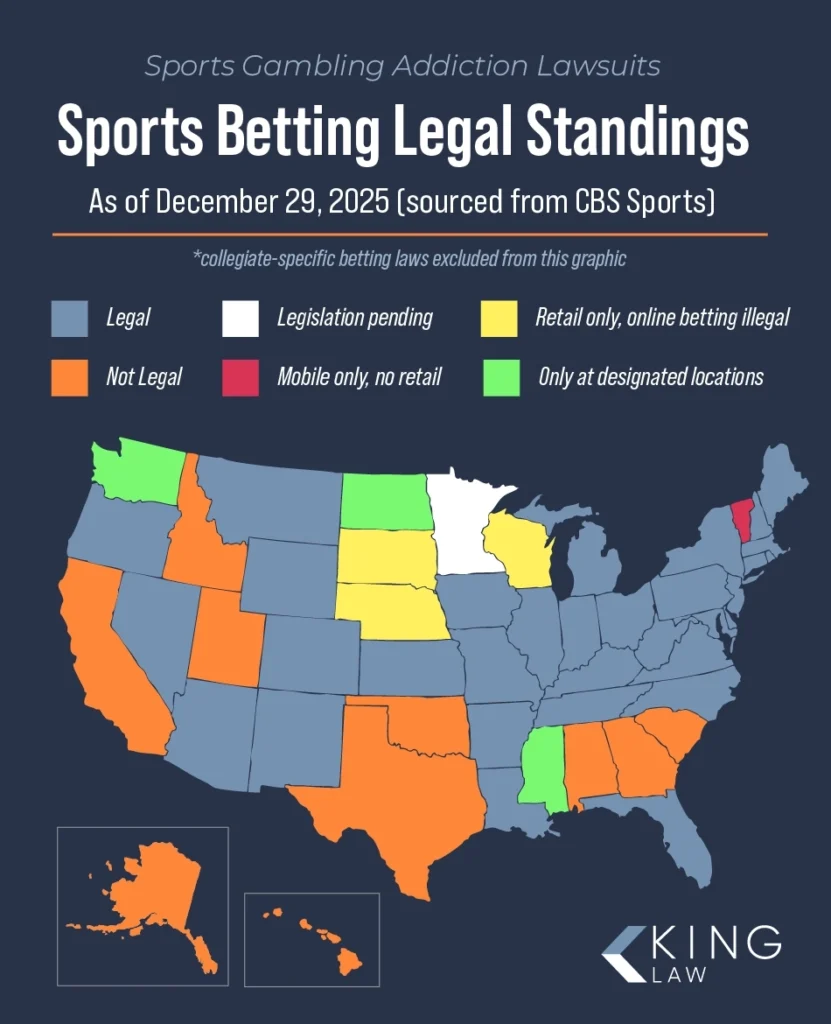
In 2018, the United States Supreme Court removed the federal bar on state authorizations for sports gambling. Since then, the number of sports betting opportunities has increased, particularly through online and mobile apps. Some reports suggest that this increase in the number of sports betting apps has led to a rise in the rates of sports betting addictions. Some people believe that the increase in access to sports betting on apps and online has made it easier for people to develop problematic gaming habits that lead to addictions and personal and financial losses.
Moreover, some claim that many of these online sports betting apps engaged in targeted, aggressive, and misleading advertising. They believe these strategies have led people to think these sports betting apps are risk-free and safe. Some people believe that this has led to a surge in problematic gambling behaviors on these online platforms, which have caused real-world harm.
Why Are Sports Betting Apps So Addictive and Alluring?
Modern sportsbooks can be addictive to some individuals because of their ease of access, the dopamine rushes involved in chasing a potential play, and the allure of “risk-free” bets. Tactics used by developers may drive overuse, even in people who do not have issues with addiction.
Some of the things that can make sports betting apps addictive include:
- 24/7 online access to betting platforms
- Apps highlighting near-misses
- Instant loss-chasing
- Variable rewards (e.g., instant payouts, bonus bets, access to exclusive bets)
- So-called “risk-free” betting
- In-app bonuses
Online sports betting applications also use bonus bet features. Many times, a bonus bet encourages someone to buy or stay in for the chance to win a premium reward. Lawsuits allege that the way the games are designed encourages continuous, disordered engagement with sports betting.
24/7 Mobile Access and In-Game Betting
Sports betting apps give people 24/7 access to the betting platforms and betting opportunities, which some researchers have suggested may raise the likelihood of problematic gambling behaviors. The increased access to gambling opportunities may remove natural barriers to traditional gambling behaviors, like going to a casino, calling in a bet, or getting a scratch-off lottery ticket.
Moreover, players may have access to more betting opportunities on the sports betting platforms than they would for in-person betting. These online opportunities include micro-bets, live betting, and in-game wagers. Some studies have shown that increased access to legal gambling opportunities has increased the rates of gambling.
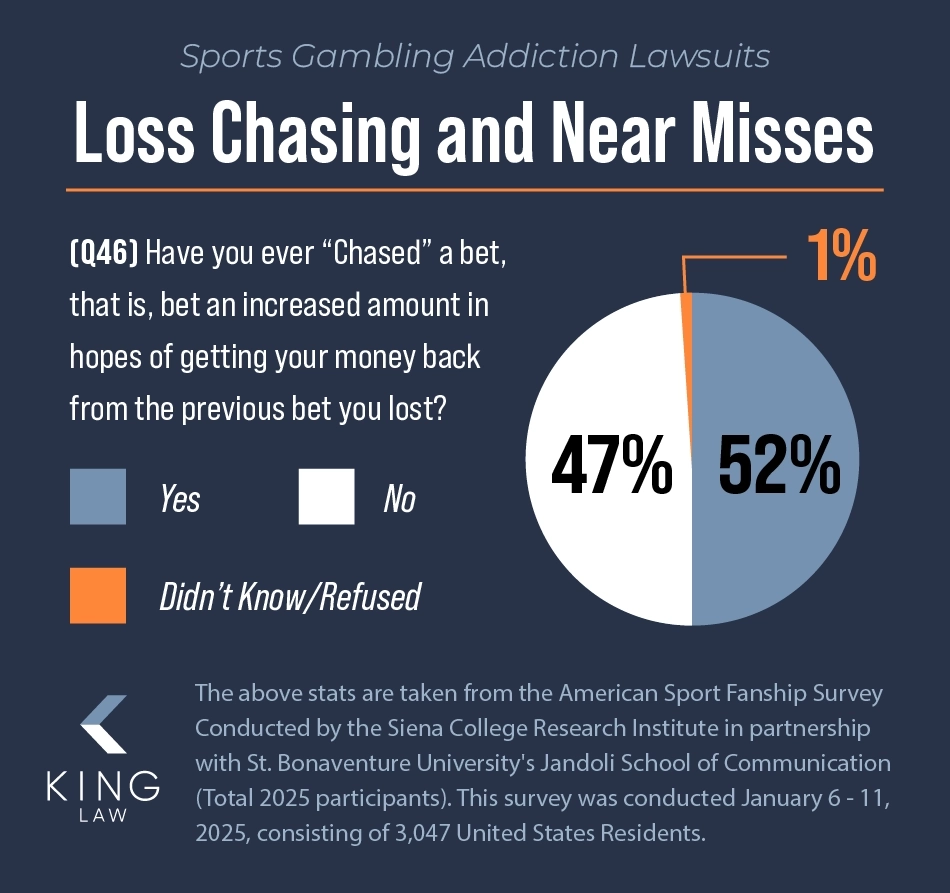
Dopamine, Near-Misses, and Loss Chasing
According to research published in the journal of Molecular Psychiatry, the design and mechanics of online
For example, in-app displays may make the person think they have a higher chance of winning a bet than they actually do. One study has shown that this
Sports betting also offers variable rewards, including small and large payouts, cash prizes, bonus bets, and additional access to betting opportunities. Variable reward cycles have been shown to be a likely driver of addictive tendencies, including problem gambling behaviors.
“Risk-Free” Bets and Bonus Traps
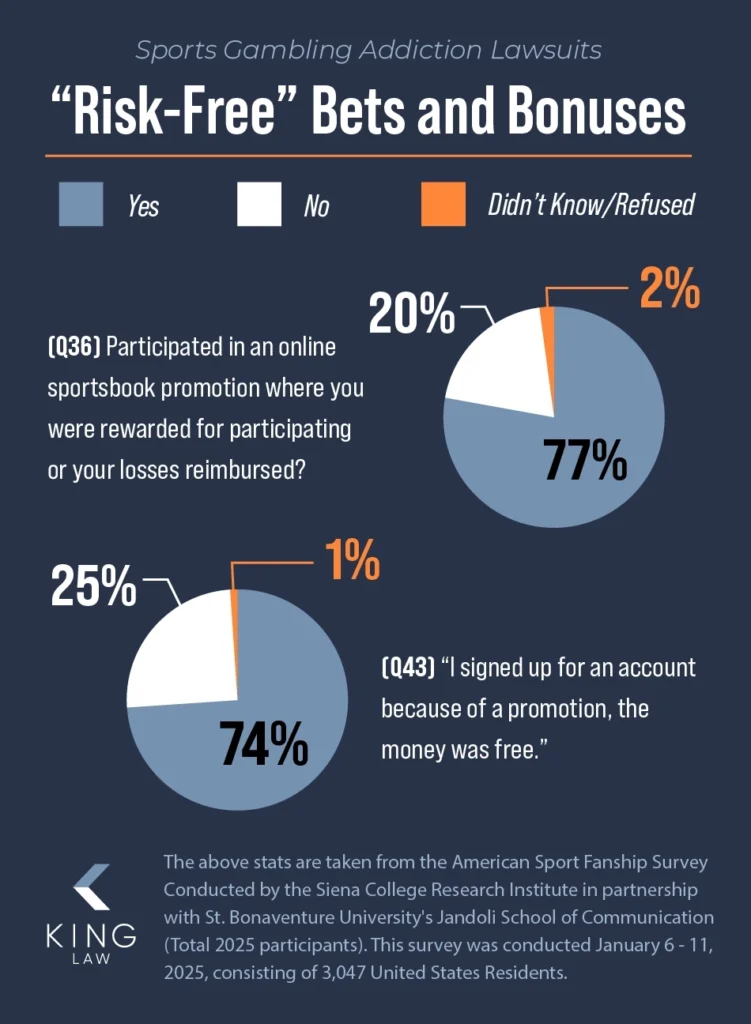
Another way that sports betting apps draw people in is by offering “risk-free bets,” bonus traps, and other perks. These in-app schemes offer the chance to win a payout, earn credits, or get other rewards if the person completes an action.
For example, the app may ask the person to pay a small amount of money for the chance to win a large amount in bonus bets. However, the person may have a small chance to win bonus bets, and these bets may not be exchangeable for real-world cash. Instead, the “bonus bets” they win give them access to participate in more bets, which may require them to spend more money.
In some players, bonus bets can make them feel like they have to keep playing the sports betting app in order to get a true payout. Some sports gambling players are filing lawsuits against apps and online platforms, claiming they were misled about the true nature of the in-app betting schemes.
What Are the Common Signs of Sports Gambling Addiction & App Overuse?
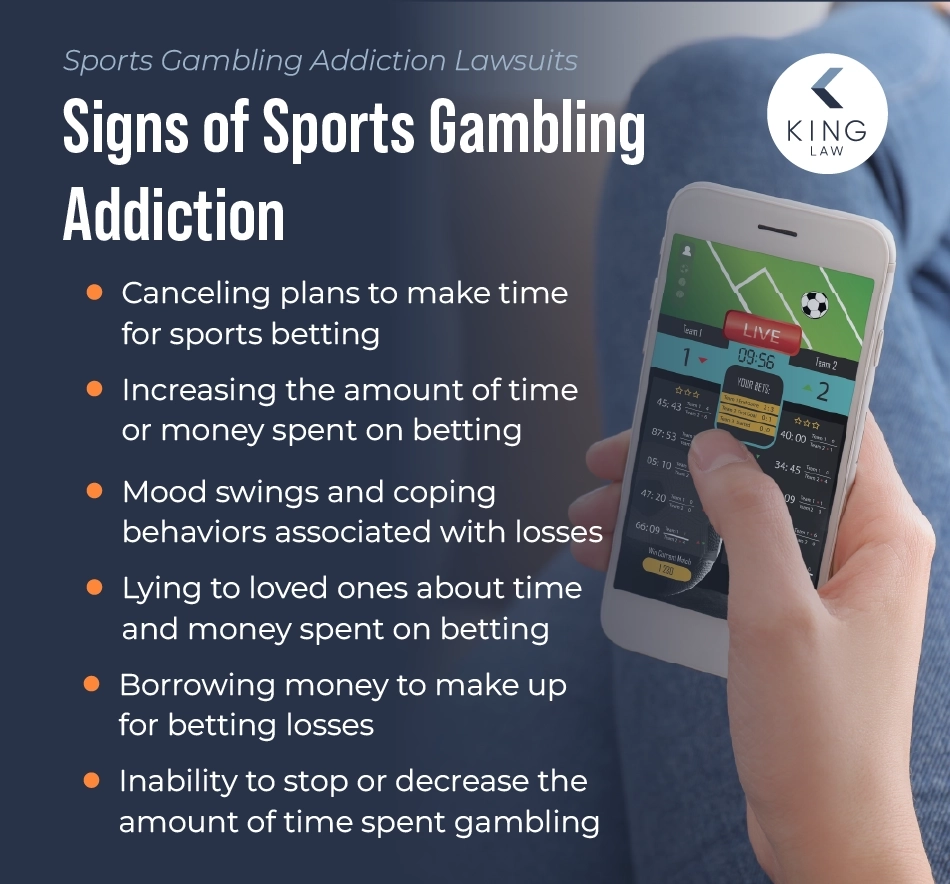
People with a sports gambling problem display the same symptoms as someone with
- Canceling plans to make more time for sports betting opportunities
- Increasing the amount of money and time spent engaging in sports betting
- Frequently removing or raising daily betting limits on their sportsbook apps or accounts
- Mood swings and adverse coping behaviors (like drinking, angry outbursts, panic attacks, etc.), which are tied to their losses
- Lying to friends, families, and loved ones about how much time and money the person spends on sports betting
- Borrowing money from institutions, friends, family, coworkers, and others to make up for sports betting losses or participate in more plays
- Not being able to stop or slow down the person’s sports gambling activities, even though it has negative consequences on their life or well-being
People with a sports gambling addiction may go through periods where they have little to no urge to engage in problematic gambling habits. During this time, they may incorrectly think they no longer have a gambling problem. However, they may engage with problematic gambling behaviors when their addiction is triggered again (e.g., by stress, upcoming sports seasons, or a chance to win big).
Some people may engage in illegal activities (e.g., stealing money or property) to accommodate their sports betting addiction. Under the DSM-IV, someone committing an illegal act was one of the criteria used to meet the definition of a gambling disorder. However, the DSM-5 removed this requirement. Under the new criteria, someone can have a sports gambling addiction even if they do not commit illegal acts.
Mental Health and Financial Consequences of Gambling Addiction & Gambling Losses
Sports gambling addictions can have serious consequences on a person’s mental health, financial situation, and other areas of their life. Some of the real-world harms that someone with a sports gambling addiction may experience include:
- Anxiety
- Depression
- Suicidal thoughts or attempts
- Substance abuse (alcohol, drugs, etc.)
- Overwhelming debt
- Job loss
- Loss of relationships
- Increased problems managing anger or stress
Oftentimes, the real-world harms that a sports gambler experiences because of their addiction also affect their loved ones.
Who Is Most at Risk for Sports Betting Addiction & Overbetting?
Potentially, anyone who participates in sports betting activities could develop a gambling addiction. However, some populations may be at a higher risk than others.
Some studies have shown that the following groups may be at a higher risk of developing a sports gambling addiction:
- Being a minor
- Being a young adult
- Being in college
- Being male
- Having a mental health condition
It is important to note that people who do not have these characteristics can still be at risk for developing an addiction to sports betting.
Young Adults, Men, and College Students
Some research suggests that people who are young (20s and under) or male are developing gambling problems at a higher rate than others, according to the American Psychological Association (APA). The APA also notes that newer forms of gambling (like sports betting and video game-based gambling) appear to be most attractive to this group. Increased availability of gambling opportunities has also been associated with a higher risk of increased gambling activity and problem gambling behaviors.
One of the reasons that younger populations may be particularly vulnerable to sports betting is that they may have a harder time controlling their impulses and self-regulating their emotions.
Additionally, as online gambling has become more accessible, people may be exposed to sports betting platforms and advertisements at an earlier age. This increased exposure at an early age may also raise the chances of the person engaging in sports betting and developing gambling problems.
People With Underlying Mental Health Challenges
Having an underlying mental health condition (such as depression or OCD) may also increase someone’s chances of having a sports betting addiction. For example, a study that looked at gambling rates among college students found that having a psychiatric condition was “significantly associated with disordered gambling.” Another study found that having ADHD was one of the risk factors associated with having a gambling disorder, based on a survey of study participants.
Major Sports Gambling Addiction Lawsuits in the U.S.
Lawsuits are being filed against sports betting platforms. Sportsbook providers facing lawsuits filed by consumers and government entities include:
Sports betting addiction lawsuits are being filed by affected consumers as well as cities, tribes, and government entities. These lawsuits accuse sports betting companies of engaging in practices that lead to addiction, financial, and personal losses while not putting proper safety practices in place.
Lawsuits Against DraftKings
DraftKings is an online sports betting platform that also has a companion app users can access to place and track bets. Users can also create their own fantasy teams.
Legal complaints (civil lawsuits) have been filed against DraftKings and its partners, Crown PA Gaming and Golden Nugget Online Gaming. One of the allegations in the complaints against DraftKings is that the company knowingly targets consumers who have gambling problems.
DraftKings is also under fire by consumers for not closing their accounts when requested, which can make it difficult for people to control their gambling. Legal complaints allege that DraftKings uses misleading advertising and promotions (including the “Risk-Free Bet” or “No Sweat First Bet”) to get people to spend more money than they intend to under the assumption that they can recoup their losses or win big.
DraftKings also entered into an $8 million settlement to resolve claims filed by consumers who say they wrongfully lost money in unfair “contests” run by DraftKings. Another multistate class action accuses DraftKings of violating state laws requiring companies to impose a 24-hour cooling-off period before granting a consumer’s attempt to increase their daily betting limit.
Lawsuits Against FanDuel
FanDuel is an online sportsbook company that lets consumers place bets on sports-related activities and create their own fantasy sports teams. People are filing lawsuits against FanDuel, alleging misconduct by the company.
Like DraftKings, FanDuel is the subject of a lawsuit that accuses the platform of knowingly targeting a man with current gambling problems.
According to another lawsuit, FanDuel also uses bonus bet schemes, alluring but misleading incentives, and other improper tactics to get and keep people to place bets on the platform. Similar lawsuits also accuse FanDuel of actively fostering problematic gambling activities, including by reaching out to users to remind them to place bets if they have been inactive for a time. Lawsuits also describe how FanDuel uses a VIP scheme to promote users to VIP status and assign them a VIP host who then fosters and nurtures an increased interest in gambling on the platform. For example, one such legal complaint indicates that a VIP host and a VIP consumer sent up to 100 messages a day.
City and Government-Led Lawsuits
Cities, governments, and tribes are filing lawsuits against sports betting companies, accusing the platforms of violating state, federal, and tribal laws. For example, the Ho-Chunk Nation alleges that online betting platform Kalshi is illegally operating a sports gambling company in Wisconsin. The Ho-Chunk Nation says that tribal casinos are the only place where gambling is legal in Wisconsin, so Kalshi is breaking the law by allowing people to bet on its online platform in the state.
Likewise, the City of Baltimore is suing DraftKings and FanDuel, accusing the companies of breaking the city’s Consumer Protection Ordinance. The lawsuits accuse FanDuel and DraftKings of a number of unfair and illegal practices. One such accusation is that the companies gather usage data to determine which consumers on the app are most likely to place large and frequent bets. Then, the companies ramp up outreach to those vulnerable consumers, according to the legal complaint.
Similar lawsuits are being filed in other states, tribes, and municipalities across the United States. Enforcement actions have also been filed against DraftKings for allegedly unlawful sports betting activities in New Jersey, Massachusetts, and Connecticut.
Common Allegations in Sports Gambling Addiction Lawsuits
Some allegations being made against FanDuel, DraftKings, and other sports gambling providers include the use of unlawful or deceptive practices. For example, lawsuits say that sports betting apps knowingly used deceptive promotions and VIP targeting to encourage excessive gambling and encourage additional bets.
Consumers, municipalities, and others have accused these organizations of being misleading about whether the wagers and contests offered by the sportsbook company are legal in the consumer’s state and about the nature or potential payout of advertised sports bets.
Here are some of the allegations against sports betting apps, according to lawsuits:
- Deceptive and misleading advertising
- Failure to protect people with known gambling addictions
- Engaging in predatory VIP programs
- Violating state and municipal gambling laws
Additionally, a small group of current and former coaches, players, and others who worked for the NBA have been criminally charged with engaging in illegal betting activities, money laundering, and other insider schemes to fix games and entice people to place illegal or fraudulent bets. Similar charges have been brought against people connected with Major League Baseball.
Deceptive and Misleading Advertising
Plaintiffs in sports gambling addiction lawsuits accuse the platforms of using deceptive and misleading advertising to get customers to join and stay on the platforms.
For example, DraftKings advertises Risk-Free Bets, which require the consumer to pay cash in exchange for a chance to win a payout or “bonus bet.” However, according to legal documents, the consumer usually does not win these “Risk-Free Bets,” and they receive a bonus bet if they lose. The bonus bet cannot be exchanged for cash. Instead, it can only be used to make more bets, which may lead to more bonus bet credits instead of actual cash.
Affected consumers have said that calling this type of play “Risk-Free” is misleading to consumers. FanDuel uses similar schemes on its platform, which some allege is also deceptive and misleading.
Failure to Protect Known Problem Gamblers
Plaintiffs are also accusing sports gambling companies of targeting and failing to protect known problem gamblers. For instance, a plaintiff with concerns about their gambling habits contacted a sportsbook platform to close their account and prevent them from engaging in more bets. According to the plaintiff, the sportsbook company ignored their requests and continued to ask the plaintiff to participate in gambling plays.
Another legal complaint accused a sportsbook company of targeting people who are on public lists of those with current or past gambling addictions. In some cases, plaintiffs have accused the companies of violating their own internal policies to protect people from problem gambling.
Predatory VIP Programs
Another practice being discussed in sports betting lawsuits is predatory VIP programs. In these VIP schemes, the consumer is upgraded to VIP status and assigned a VIP host. The VIP host works directly with that consumer, encouraging them to place bets and reminding them of upcoming betting opportunities. According to legal complaints, these targeted interactions draw people in and encourage them to wager more, particularly high-stakes sports bets.
Violating State and Municipal Gambling Laws
Gambling is not legal in all states or territories in the United States. Instead, each state has its own rules about whether wagers and contests are allowed and, if so, what forms are permissible. However, some lawsuits have accused DraftKings, FanDuel, and other gambling outlets offered wagers, contests, or products that plaintiffs or regulators say were unlawful in particular state. For example, according to one complaint, a sportsbook app allegedly misled a California consumer into placing illegal wagers on the site, which could have led to that consumer being criminally charged. DraftKings is also accused of violating gambling laws in its consumers’ states, as are several “social casino” apps.
What Is This Lawsuit Not About?
Lawsuits filed against DraftKings, FanDuel, MGM, and other sports betting apps are not claims that say sports betting should be illegal or that it is always harmful. These lawsuits are not targeted at casual gambling. Instead, these lawsuits allege that these companies use questionable practices that encourage some people to over-gamble and lead some people to become addicted. People who file lawsuits are not guaranteed financial recovery.
Legal Theories Used in Sports Betting Lawsuits
Some of the legal theories being used in the sports gambling addiction lawsuits include violations of consumer protection laws, false advertising, and negligence. Additionally, some legal complaints accuse the sportsbook companies of running an unlawful gambling operation or enabling unlawful gambling in that state or municipality.
Allegation: Consumer Protection and False Advertising Laws
Sportsbook companies are accused of violating consumer protection and advertising laws. The allegations include claims that the companies are not being honest in their advertisements about their services, including the potential payouts. People are also accusing sports betting providers of knowingly engaging in targeted, predatory advertising towards people with a gambling addiction.
Allegation: Negligence and Duty of Care Arguments
Plaintiffs in some lawsuits are arguing that some sports betting companies are negligent and have violated their duty to protect addicted consumers. They may accuse companies of being careless in how they market their sports betting apps to consumers and of using misleading perks and incentives to keep them on the platform, including known problem gamblers. Some plaintiffs also claim the companies were dishonest about the terms, chances, and potential outcomes of bets.
Allegation: Illegal Gambling and Unlawful Operations
Some plaintiffs say sports betting platforms have been untruthful about what types of gambling are and are not legal in the plaintiff’s state. Gambling is not legal in every state. Moreover, states where some forms of gambling are legal have rules about what forms are permitted and when. However, some sports betting companies have allegedly been unclear or dishonest about the rules in the consumers’ state. For instance, at least one plaintiff from California said they unknowingly participated in illegal sports betting on a gambling platform because it led them to believe it was legal in California.
Arbitration Clauses and Legal Challenges in Sports Gambling Lawsuits
Sports betting platforms may require users to sign a mandatory arbitration clause or a class-action waiver when they create an account. These requests may be part of the app’s Terms of Service. Arbitration clauses may prevent the consumer from filing a lawsuit unless the consumer meets certain conditions. Class action waivers may bar consumers from participating in a group lawsuit brought by other consumers who were allegedly harmed by the sports betting company. However, consumers may still be able to file a lawsuit if their sports betting addiction attorney can prove the agreement is unenforceable.
Who Qualifies to File a Sports Gambling Addiction Lawsuit or a Lawsuit Related to Financial Losses?
Some of the eligibility criteria to file a sports gambling addiction lawsuit with the King Law firm include the following:
- The person lost thousands of dollars in bets on the sports gambling app when they were a young adult.
- The person is under 18, and the sports betting app allowed them to place bets.
- The person used DraftKings or FanDuel sports betting platforms and was later diagnosed with a gambling-related mental health condition (like a gambling disorder, depression, or anxiety).
- The person believes the sports gambling app allowed them to place bets that are actually illegal in the person’s state, but the app did not tell them this.
This list does not include all possible eligibility criteria. Talking to an attorney about how you were impacted by sports betting is the most effective way to know if you qualify. They can help you understand the updated requirements for sports gambling addiction lawsuits and whether you qualify to file for compensation.
How Can I File a Sports Gambling Addiction or a Lawsuit for Sportsbook Losses Lawsuit?
You can file a sports gambling addiction lawsuit with King Law by taking the following steps:
- Talk to a sports betting lawyer about your experience with sports betting platforms.
- Work with your attorney to gather evidence to show that the sports betting app used unlawful, dishonest, or predatory practices against you.
- Your lawyer writes up a legal complaint and uses it to open a lawsuit against the sports betting app.
- Your attorney prepares and negotiates a settlement to compensate you for your sports gambling-related losses.
- If your lawyer cannot get the sports gambling company to agree to a fair payout, they take your case to trial.
An attorney can help people understand and navigate sports gambling lawsuits, including knowing when, where, and how to file a case. King Law has extensive experience advocating for people who allege harm by large corporations.
What Evidence Helps a Sports Betting Lawsuit?
In order to file a lawsuit related to sports betting addiction, you will need to provide evidence to your lawyer. Your lawyer will use this information to build your case and file a complaint.
Here are examples of proof your lawyer may need to file a lawsuit related to your losses from sports betting apps:
- Information on how many bets you placed in a day, week, etc.
- Information on how much money you bet, won, and lost
- Information on what in-app promos encouraged you to bet and where you placed most of your bets
- Financial or banking statements showing withdrawals for gambling
- Medical records related to medical conditions associated with gambling addiction, such as anxiety, depression, or clinical gambling addiction
What Is the Deadline to File a Sports Gambling Addiction Lawsuit or a Lawsuit for Large Losses?
State law determines the deadline to file a sports gambling addiction lawsuit. Unless an exception applies, the person must file before these statutes of limitations expire. If a person misses one of these filing deadlines, their case may be dismissed, unless they or their attorney can prove that an exception grants them more time to take legal action. For this reason, it is extremely important for people to talk to a knowledgeable, trusted lawyer early on.
Estimated Sports Gambling Addiction Lawsuit Settlement Amounts
The amounts secured in sportsbetting app settlements are confidential, so the amount someone receives is not typically made public. Sports gambling addiction lawsuits are in their early stages. Potential settlements for sports betting losses can vary widely based on factors such as a person’s gambling activities, the strength of their case against the companies, and the state’s court compensation laws.
Some class action settlements have resulted in multimillion-dollar payouts split among a group. However, the result may be different for someone filing an individual lawsuit. There is no guaranteed or average amount someone will receive for their lawsuit. An attorney focusing on sports betting cases can help you determine what your potential sports betting addiction settlement could be based on your situation.
King Law Is Investigating Online Sports Gambling Claims
King Law is accepting and reviewing sports gambling addiction claims. Our firm is also closely following emerging trends for lawsuits against DraftKings, FanDuel, and other platforms. We have a history of championing hard-won litigation on behalf of clients who were lied to, taken advantage of, or harmed by large companies. We are prepared to help you, too.
Contact a Sports Gambling Addiction Lawyer Today
If you were harmed by a sports gambling company, contact our team today to schedule a no-obligation case evaluation. You can call us at (585) 496-2648 or fill out an online contact form. We take sports gambling addiction cases on contingency, meaning you do not pay us upfront legal fees for our services if you hire us. Instead, we would receive a set percentage of your settlement or jury award if we win your case for you.