

What Are the Signs of Infection After Polyp Removal? [2026 Update]
Complete the form below to see if you qualify for a Olympus Scope Lawsuit

Signs of an infection after polyp removal (polypectomy) include a fever above 100.4°F, chills, new or worsening abdominal pain or swelling, nausea, vomiting, fatigue, dizziness, rectal bleeding, and difficulty passing gas or stool. These symptoms may be the sign of an infection, post-polypectomy syndrome, bowel perforation, or other complications. Symptoms could appear within hours or up to 30 days after the polyp removal procedure.
Someone who has had polyps removed within the past month and experiences any of these symptoms should seek care or advice from a medical professional immediately.
In some cases, infections can be traced back to a contaminated medical device. Patients who experienced infections after a polypectomy during a colonoscopy can speak with a lawyer about eligibility for a claim.
About the Signs of Infection After Polyp Removal
Common Signs of an Infection After Polyp Removal
What Symptoms Are Normal After Polyp Removal?
What Causes Infection After Polyp Removal?
When Do Signs of Infection After Polyp Removal Start?
Who Is Most at Risk for Infection After Polyp Removal?
When Should You Call a Doctor After Polyp Removal?
Can Infection After Polyp Removal Lead to Sepsis?
How Do Doctors Diagnose Infection After Polyp Removal?
How Long Does Recovery Take After Polyp Removal?
King Law Is Investigating Serious Complications After Colon Polyp Removal
Contact King Law for a Free Consultation
Common Signs of an Infection After Polyp Removal
Patients who have a polyp removed could develop an infection. Although the risk of infection after a polypectomy is rare, patients should monitor themselves for symptoms of infection immediately after and in the weeks following a colonoscopy.
Signs of an infection or other complications after polyp removal include:
- Fever and chills
- Abnormally low temperature
- Swelling
- Abdominal pain that is new or gets worse
- Fatigue
- Confusion
- Vomiting
- Diarrhea
- Bloody, black, maroon, or tar-like stools
- Rectal bleeding
These symptoms may appear or worsen right after the polyp removal procedure, or they may not develop for days afterward. If the patient experiences any of the above symptoms or feels as though something is off after a polypectomy, they should talk to their doctor.
Fever After Polyp Removal
A fever of 100.4°F or higher is one of the warning signs of an infection or post-polypectomy fever, as well as other conditions. Some studies have suggested that patients may
Chills and Flu-Like Symptoms After Colonoscopy
Patients who experience chills, sweating, body aches, weakness, fatigue, and other flu-like symptoms after a colonoscopy may have an underlying infection. These symptoms may be caused by
Abdominal Pain That Gets Worse Instead of Better
Abdominal pain or cramping that gets worse or is severe may also mean an infection has developed. Minor cramping and stomach discomfort after a colonoscopy are expected, especially if a polypectomy is performed. However, these symptoms should get better or be mild if they are part of the normal colonoscopy recovery process.
Stomach pains that are severe or worsen after the procedure could indicate that a complication (like post-polypectomy syndrome) may have occurred. If left untreated, the underlying infection or complication may become severe and, in some cases, fatal.
Swollen or Hard Abdomen After Polyp Removal
Some patients experience gas buildup after a colonoscopy. Many people experience gas pains and pass air after a colonoscopy. However, a swollen, bloated (distended), rigid, or hard belly (abdomen) that does not go away within a day or two after a polyp removal is not part of typical recovery, and it may mean that the patient has a bowel perforation, obstruction, or inflammation.
Severe bloating, swelling, or pain in the abdomen may also be caused by polypectomy-related tearing, an obstruction, or a perforation of the bowel, which can lead to an infection or sepsis. If the patient has a swollen belly and is not passing gas or stool, this could indicate a serious complication. Patients with these symptoms should talk to a doctor right away.
Nausea and Vomiting After Colonoscopy
Some nausea or stomach upset may be normal after a colonoscopy. However, polypectomy patients should contact their doctor if these symptoms are severe, persistent, or get worse. Nausea, vomiting, and stomach problems may be a sign of a colonoscopy-related infection, bowel injury, obstruction, or other complication. If the colonoscopy patient has severe nausea or vomiting after a colonoscopy, they should consult with their doctor immediately.
Rectal Bleeding After Polyp Removal
Minor rectal bleeding is common after having polyps removed, and some researchers have suggested that
Colonoscopy patients who are experiencing bleeding after having polyps removed would benefit from talking to their doctor about these symptoms to rule out or treat an underlying infection or complication.
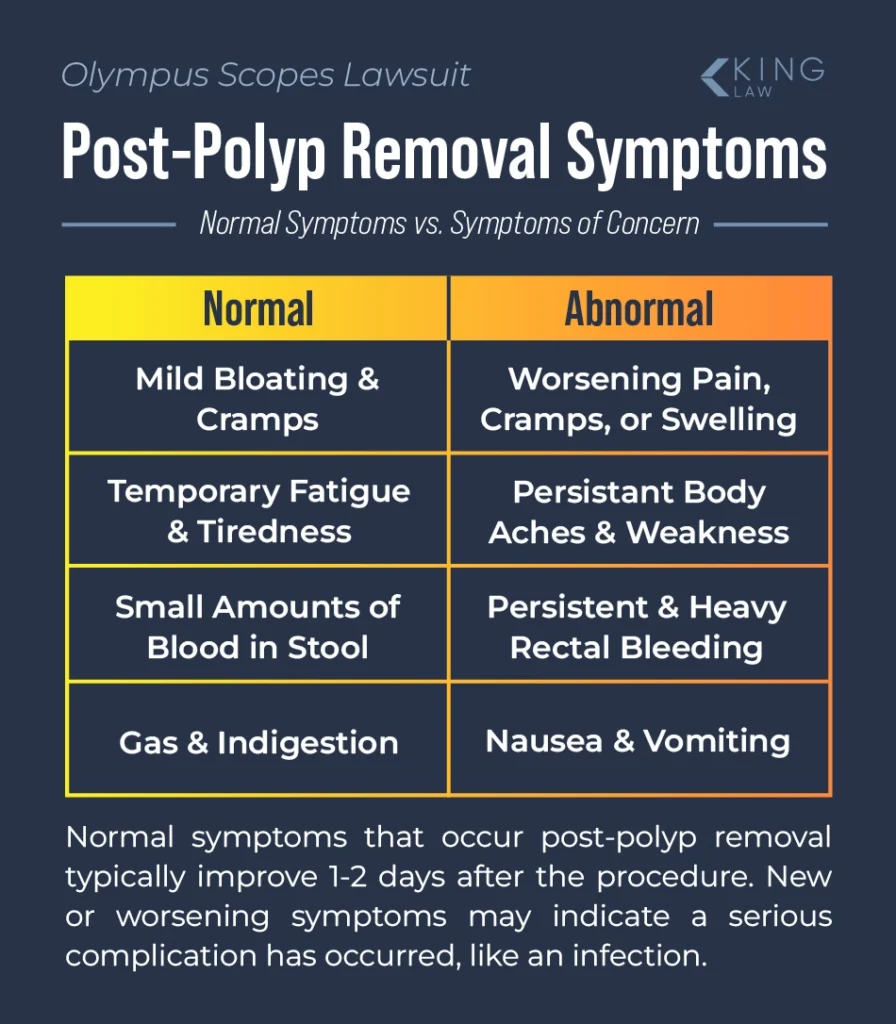
What Symptoms Are Normal After Polyp Removal?
Every colonoscopy carries the risk of complications, some minor and some severe. Some of the normal recovery symptoms after having polyps removed include the following:
- Mild bloating
- Gas
- Cramps
- Minor fatigue, grogginess, or tiredness
- Small amounts of blood in stool
If part of a normal polyp removal recovery, these symptoms may be minor and improve within 24 to 48 hours after the procedure. Symptoms that are new or worsen after the procedure may mean an infection or complication occurred. Patients are encouraged to talk to their doctors about their symptoms, even if those symptoms are not severe at that time. Infections can become severe very quickly if left untreated.
Mild Gas and Bloating
Mild gas and bloating are common after a colonoscopy, which is often caused by air that entered the patient’s body during the procedure. Patients should feel better and have less cramping or pain after passing gas after having polyps removed during a colonoscopy. If the patient cannot pass gas or feels worse after passing gas, they should speak to their doctor right away.
Small Amounts of Blood
Colonoscopy patients may also have a small amount of blood in their stool after having polyps removed. However, this should be minor and get better within days after the surgery. If the bleeding increases or is accompanied by pain, fever, or chills, the colonoscopy patient should be seen by a medical provider.
Temporary Fatigue After Sedation
Colonoscopy patients may also feel mildly fatigued, groggy, dizzy, or tired after the procedure, especially if they had polyps removed. However, severe tiredness, new or worsening confusion, fever, or other symptoms may not be normal. Patients should contact their doctor to find out if the fatigue they are experiencing is due to an infection or complication.
What Causes Infection After Polyp Removal?
Having polyps removed may lead to
Bacteria Introduced During Colonoscopy
Sometimes a colonoscopy can cause an infection due to a contaminated or defective endoscope or accessories. For example, Olympus has recalled several types of scopes and issued an Adverse Event Report due to colonoscope contamination and subsequent infections in some patients.
The polyp-removal process may also allow bacteria from the patient’s body to enter the bloodstream, leading to bacteremia or sepsis. Patients should monitor themselves for symptoms of infection after a colonoscopy. In some infection cases, hospitals may be to blame for failing to properly sterilize or reprocess (clean) reusable colonoscopes between procedures.
Post-Polypectomy Coagulation Syndrome (PPCS)
Post-polypectomy coagulation syndrome (PPCS) occurs when the patient’s bowel is burned during a polypectomy. It is also called post-polypectomy syndrome or post-polypectomy electrocoagulation syndrome. The symptoms are similar to symptoms of a bowel perforation, including fever, a racing or irregular heart rate, severe abdominal pain, and inflammation. Symptoms of post-polypectomy syndrome may appear within several days after a colonoscopy.
Post-Polypectomy Fever (PPF)
Some patients may get a fever after a polypectomy (post-polypectomy fever). Patients with PPF may develop a fever within hours of the procedure, and the fever may be due to an underlying infection. Sometimes, the fever is mild and goes away after treatment. However, other PPF cases are severe and require intensive treatment or hospitalization. Patients who have recently had a polypectomy and are experiencing a fever should see a doctor to rule out an abscess, infection, perforation, or sepsis.
When Do Signs of Infection After Polyp Removal Start?
Signs of an infection after a polyp removal may appear within hours, days, or weeks after a colonoscopy. One study (i.e., Gastrointestinal Endoscope-Associated Bacteremia: A 3-Year Single-Center Review) found that about 62% of patients in that study who developed an infection after an endoscopic procedure (like a colonoscopy) showed symptoms between 7 and 30 days after the procedure.
Another 2018 study suggested that post-colonoscopy infections occurred within 7 days after the procedure in about 1 to 1.6 per 1,000 cases, based on the data used in that study. Patients are encouraged to talk to their doctors about any concerning or severe symptoms they develop after a colonoscopy that involves a polyp removal.
Who Is Most at Risk for Infection After Polyp Removal?
Any patient may develop an infection after a polyp removal. However, patients may be more likely to develop an infection after a polypectomy if they have large polyps, their polyps are on the right side of their colon, they have multiple polyps, or they have underlying illnesses.
Large Polyps and Right-Sided Polyps
People who have larger polyps may have a higher risk of infection because removing them may require more invasive treatments (e.g., electrocautery). The right side of the colon is also thinner, so polypectomies on the right side may increase the likelihood of a bowel injury or PPCS or a subsequent infection.
Multiple Polyps or Complex Procedures
Complications (like an infection) may also be more likely if doctors remove multiple polyps at once or if the patient has a complex procedure done during the colonoscopy. For example, in one case study, a man developed sepsis after having two polypectomies to remove multiple polyps.
Hypertension and Chronic Illness
Patients may also have a higher risk of complications (such as an infection) after a polypectomy if they have an underlying condition, such as:
- Hypertension (high blood pressure)
- Diabetes
- Liver disease
- Cardiovascular disease
- A compromised or weakened immune system
Patients should talk to their doctor about their individual risk of infection if they have polyps removed during a colonoscopy.
When Should You Call a Doctor After Polyp Removal?
Patients should talk to their doctor if they have a polypectomy and develop symptoms such as a fever, new or worsening stomach pains, vomiting, rectal bleeding, breathing problems, or are unable to pass gas or stool. Other urgent symptoms after having polyps removed include weakness, fainting, dizziness, confusion, and chills.
Symptoms That Require Same-Day Medical Evaluation
Someone should talk to their doctor that day if they develop the following symptoms after having a polyp removed:
- Fever above 100.4°F
- Worsening abdominal pain
- Nausea
- Chills
- Rectal bleeding (in some cases)
These symptoms may indicate that the patient has an infection or has suffered another polypectomy-related complication.
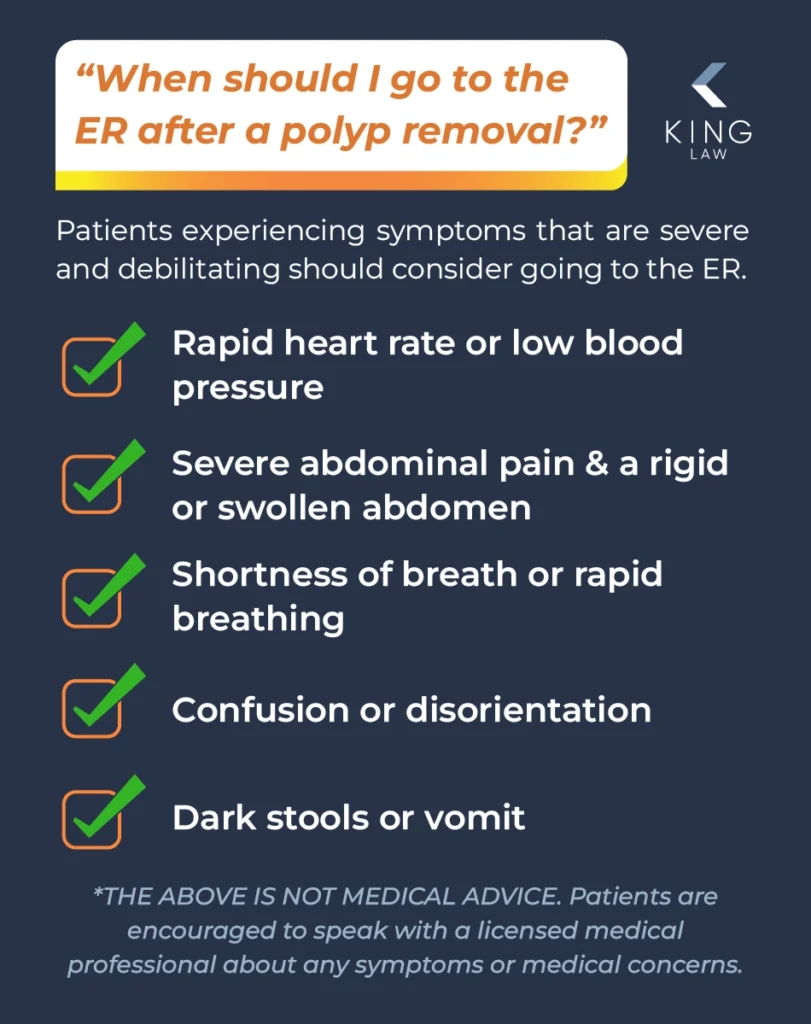
Symptoms That May Require Emergency Room Care
The colonoscopy patient should consider going to the emergency room if they develop the following symptoms after having polyps removed:
- Severe abdominal pain
- A rigid or swollen abdomen
- Confusion
- Bloody or black stools
- Vomiting
- Breathing changes or problems
- Rapid heart rate
- Shortness of breath or irregular breathing
- Shaking
Polypectomy patients who are experiencing these symptoms may have sepsis, septicemia, or another severe infection that requires immediate treatment. These symptoms may not go away on their own and may become life-threatening if not treated.
Can Infection After Polyp Removal Lead to Sepsis?
Some infections that develop because of a polyp removal procedure can lead to sepsis after a colonoscopy. When a patient suffers from sepsis, it means their body is having a severe reaction to an infection. According to the CDC, some of the symptoms of sepsis include:
- Confusion
- Disorientation
- Fever of 100.4 or higher or dangerously low body temperature
- Clammy skin
- High heart rate
- Weak pulse
- Breathing problems
As the CDC explains, sepsis is always a medical emergency, and it can be fatal if left untreated. Sepsis can result in organ failure, cognitive problems, and death.
How Do Doctors Diagnose Infection After Polyp Removal?
Doctors may use several methods to diagnose an infection after a polyp removal procedure. For example, doctors may use blood tests and CT scans to locate and identify an infection. The tool they use to diagnose the infection depends on the patient’s health, the symptoms they are experiencing, and other factors.
Blood Tests and Leukocytosis
Doctors may use the following blood tests to identify an infection after a polyp removal procedure:
- Complete blood count (CBC) testing
- Inflammatory markers (like lactate, CRP, and MDW)
- Blood cultures
- Stool samples
- Pathology
These tests allow a patient’s medical team to check for an increase in white blood cells and other inflammatory markers that may suggest an infection. These tests can also help doctors learn what bacteria may be responsible for the infection.
CT Scans After Colonoscopy
A medical team may also order a CT scan or other imaging studies to see if a patient has a perforated (torn) bowel, an abscess, inflammation, or other signs of an injury, infection, or complications. If necessary, a doctor may also perform another diagnostic colonoscopy to, for example, evaluate the source of symptoms, stop the bleeding, take a biopsy, or drain an abscess.
How Long Does Recovery Take After Polyp Removal?
A patient who has a normal polyp removal procedure may recover within a few days. However, patients who experience an infection, post-polypectomy syndrome, bleeding, or other complications may take longer to recover. The length of their recovery depends on factors like how quickly they are treated, the type of infection or complication they have, and whether they have an underlying medical condition.
King Law Is Investigating Serious Complications After Colon Polyp Removal
King Law is investigating lawsuits about severe infections after colonoscopies, including procedures with polypectomies. Types of polypectomy cases our firm is evaluating include:
- Infections
- Sepsis
- Bowel perforation
- Delayed bleeding
- Injuries involving defective or contaminated scopes
We have vast experience fighting for people who have been harmed by defective medical devices and are experienced product liability litigators. We are prepared to help qualifying polypectomy patients seek compensation for their losses.
Contact King Law for a Free Consultation
Contact King Law today by dialing (585) 496-2648 or by filling out an online form to schedule a no-obligation consultation. Our personal injury attorneys provide free case evaluations for people who have developed an infection after a polyp removal procedure, as part of our larger investigation into Olympus scope infection lawsuits. If we take on your case, you only pay us if we secure you compensation.
Frequently Asked Questions (FAQs)
Some of the first signs of infection after a polyp removal include fever, chills, abdominal pain, breathing problems, and feeling unwell.
Having a fever may not be normal after a colonoscopy that involves a polyp removal, especially if that fever lasts more than 1-2 days or is above 100.4.
An infection can appear within days or weeks after a polypectomy.
Post-polypectomy fever may indicate an infection, a perforation, or another complication.
Post-polypectomy coagulation syndrome may occur when the patient’s bowel tissue is burned during a polypectomy.
Minor, light bleeding may be normal after the doctor removes a polyp from the colon.
Yes. Symptoms of an infection or other complication may appear several days or more after a polyp removal.
Yes. Delayed bleeding may happen after a polyp removal.
List of Sources Used in This Article
King Law uses stringent editorial standards when creating articles for this site. Here is a list of sources used to generate this article on the signs of infection after polyp removal.
- Agrawal, Deepak, et al. “Gastrointestinal Endoscope Associated Bacteremia: A Rare Case of Infective Endocarditis Following Routine Colonoscopy.” The American Journal of Gastroenterology, vol. 113, Oct. 2018, p. S1597.
- Almario, Christopher V., et al. “Risk of Bacterial Infection After Colonoscopy and Endoscopy in Ambulatory Surgery Centres in the USA.” Gut, vol. 67, no. 9, Sept. 2018, pp. 1626–1636.
- Bharucha, Adil E., et al. “American Gastroenterological Association Technical Review on Constipation.” Gastroenterology, vol. 144, no. 1, Jan. 2013, pp. 218–238.
- “Coffee Ground Vomitus (Vomiting Blood): Causes, What It Is & Treatment.” Cleveland Clinic, reviewed by Dr. Juan Carlos Bucobo, 13 Oct. 2022.
- “Colonoscopy.” Mayo Clinic, Mayo Foundation for Medical Education and Research, 9 Mar. 2024.
- de Jonge, Vincent, et al. “Timing of Early Colonoscopy Influences the Outcome in Patients with Acute Lower Gastrointestinal Bleeding.” Gastroenterology, vol. 140, no. 2, Feb. 2011, pp. 433–439.e2.
- Goyal, Hemant, et al. “Post-Colonoscopy Complications.” Clinical Endoscopy, vol. 48, no. 6, Nov. 2015, pp. 493–496.
- Haque, Muhammad, et al. “Healthcare-Associated Infections – An Overview.” Infection and Drug Resistance, vol. 15, 2022, pp. 2321–2333.
- “Infection Rates After Colonoscopy, Endoscopy at US Specialty Centers Are Far Higher Than Previously Thought.” Johns Hopkins Medicine, 1 June 2018.
- Khan, Muhammad A., et al. “Adverse Events Related to Colonoscopy: Global Trends and Future Challenges.” World Journal of Gastrointestinal Endoscopy, vol. 14, no. 12, Dec. 2022, pp. 689–702.
- Levin, Theodore R., et al. “Complications of Colonoscopy in an Integrated Health Care Delivery System.” Annals of Internal Medicine, vol. 145, no. 12, 19 Dec. 2006, pp. 880–886.
- “MAUDE Adverse Event Report: Olympus Medical Systems Corp. Colonovideoscope.” U.S. Food and Drug Administration, 29 Apr. 2020.
- Park, Sun Hyung, et al. “Risk Factors and Prevention Strategies for Post-Endoscopic Infections.” Clinical Endoscopy, vol. 56, no. 6, Nov. 2023, pp. 648–658.
- “Sepsis Diagnosis and Testing.” Sepsis Alliance, updated 2024.
- Shaukat, Aasma, et al. “Colonoscopy-Related Adverse Events and Their Management.” World Journal of Gastrointestinal Endoscopy, vol. 16, no. 10, 2024, pp. 563–578.
- Wadhwa, Vivek, et al. “Complications of Colonoscopy: Common and Rare—Recognition, Assessment and Management.” Annals of Palliative Medicine, vol. 8, no. 5, Sept. 2019, pp. 644–652.
:contentReference[oaicite:0]{index=0}