

Nevro Spinal Cord Stimulator Lawsuits
Complete the form below to see if you qualify for a Spinal Cord Stimulator Lawsuit

Nevro spinal cord stimulator lawsuits claim that some patients who had Senza, Senza Omnia, or Senza HFX iQ spinal cord stimulators implanted experienced serious complications. Problems listed in Nevro spinal cord stimulator lawsuits include device failures, infections, lead migration, lead malfunction, nerve damage, failed pain relief, and improper device programming. Some lawsuits also claim that Nevro developed new spinal cord stimulator devices by changing the originally FDA-approved device more than 60 times. According to the complaints, those changes effectively created new versions of the device and may have compromised patient safety.
About the Nevro Spinal Cord Stimulator Lawsuits
Fast Facts About Nevro Spinal Cord Stimulators & Lawsuits
Which Nevro Spinal Cord Stimulator Devices Are Involved in Lawsuits?
How Are Nevro’s Spinal Cord Stimulators Different From Other Manufacturers’ Devices?
Nevro Spinal Cord Stimulator Side Effects
What Problems Have Been Reported for Nevro Spinal Cord Stimulators?
Have Nevro Spinal Cord Stimulators Been Recalled?
What Are the Allegations Against Nevro?
Examples of Lawsuits Against Nevro
What Should You Do If You Are Experiencing Problems With a Nevro SCS?
Who Is Eligible to File an SCS Lawsuit Against Nevro?
Nevro Spinal Cord Stimulator Settlements
King Law Is Actively Investigating Nevro Spinal Cord Stimulator Claims
Contact Robert King Law Firm to Start Your Free Case Review
Fast Facts About Nevro Spinal Cord Stimulators & Lawsuits
| Manufacturer Name: | Nevro Corp. |
| Device Names: | HFX iQ, Senza Omnia, Senza, and HFX Trial |
| Common Device Name: | Stimulator, Spinal-cord, Totally implanted for pain relief |
| FDA Approval Date: | May 8, 2015 (Senza SCS System) |
| Premarket Approval Application (PMA) Number: | P130022 |
| Number of PMA Modifications: | 69 |
| Recalls or Safety Notices? | No. Individual adverse event reports submitted. No global recall or safety notices. |
| Type of Lawsuits: | Individual |
| MDL or Class Action? | JPML hearing set for September 24, 2026, where it will consider centralizing Nevro SCS lawsuits |
Which Nevro Spinal Cord Stimulator Devices Are Involved in Lawsuits?
Nevro spinal cord stimulators that have been named in lawsuits include the following:
- Senza
- HFX iQ
- HFX Trial
- Omnia
- Senza II
As more cases are filed, patients may include different Nevro spinal cord stimulators in their legal complaints. Not every Nevro device is defective just because it has been part of a lawsuit.
Is There an MDL for Patients Claiming Injuries From Nevro SCS?
On September 24, 2026, the Judicial Panel on Multidistrict Litigation (JPML) heard arguments for and against centralizing Nevro SCS lawsuits. If the JPML moves forward with centralization, multiple existing lawsuits would be centralized before the same federal judge, and a multidistrict litigation (MDL) would be created. At this time, the JPML has not issued a decision on whether or not a Nevro MDL will be created.
However, several developments were discussed at the September 24 hearing. Lawyers representing a number of plaintiffs requested that the cases be consolidated in either the Central District of California or the Northern District of California. The JPML discussed possible centralization in Illinois or California federal court. Nevro and its lawyers are opposing centralization, claiming many of the cases in the centralization request involve SCS devices made by multiple manufacturers or cases that are already centralized in California state court.
Even if the JPML does not move to create a Nevro SCS MDL, individual plaintiffs can still file cases, and centralization could happen in the future. King Law is still accepting claims from patients alleging injuries from Nevro’s neuromodulation/SCS devices.
How Are Nevro’s Spinal Cord Stimulators Different From Other Manufacturers’ Devices?
Nevro’s spinal cord stimulators rely on a technology called HF10™ therapy. Some patients choose Nevro’s SCS devices because they are different from many of the other SCS devices on the market. Using HF10™, patients may be able to avoid paresthesias, which are stimulation-induced sensations that include tingling or pins-and-needles. According to Nevro, its SCS technology has been
How HF10™ Therapy May Be Relevant in Nevro SCS Lawsuits
Because of the claims made around the HF10™ technology, some patients may have felt that Nevro’s devices would provide a higher level of care with fewer side effects. However, even if patients experienced fewer paresthesias, they may still have experienced other severe side effects, similar to those patients with other brands of spinal cord stimulators.
Nevro Spinal Cord Stimulator Side Effects
Spinal cord stimulators made by Nevro have known risks and side effects, just like any medical device. The patient manual for the Senza, Senza II, and Omnia spinal cord stimulator warns about the following potential side effects:
- Battery overheating during charging
- Interference with MRIs, CT scans, and other imaging
- Lead overheating during some medical procedures
- Tingling sensations from certain settings
- Lead migration due to the patient moving suddenly or sharply
- Infection
- Device failure
- Tenderness at the site of implantation
- Paralysis
- Death
- Loss of pain relief or increase in pain
- Jolting or shocking sensations
- Weakness
- Numbness
- Allergic reaction to what the device is made of
- Lead fracture
- Pressure sores
The manual lists other types of side effects (adverse events) that some patients could experience with these Nevro SCS devices.
The
- Infections
- Paralysis
- Death
- Lead migration (read more about signs of SCS lead migration)
- Loss of pain relief
- Electrocution
- Undesirable sensations
- Worsening pain
- Allergic reaction to device materials
- Lead fracture
Some patients who had the Nevro spinal cord stimulator implanted say they were not properly warned about these potential side effects or that Nevro representatives made them believe these events were much less common than they are.
What Problems Have Been Reported for Nevro Spinal Cord Stimulators?
People with Nevro SCS devices have reported multiple injuries to their doctors and the FDA. Some of the problems reported by people with Nevro spinal cord stimulators include:
- Infection or pain at the incision site
- Burns
- SCS lead migration or fracture
- New or worsening pain
- Inconsistent or inadequate pain relief
- New mobility issues
Some of these issues necessitate an SCS removal (explant) or replacement (revision) surgery, which comes with risks. Some patients’ injuries were not fully remedied by device removal.
The FDA tracks medical device adverse event reports in the Manufacturer and User Facility Device Experience (MAUDE) Database (MAUDE). MAUDE reports about Nevro SCS devices are relatively common. For example, according to a MAUDE database search, there were 48 adverse event reports submitted for Nevro’s Senza SCS devices between June 1, 2026, and June 30, 2026.
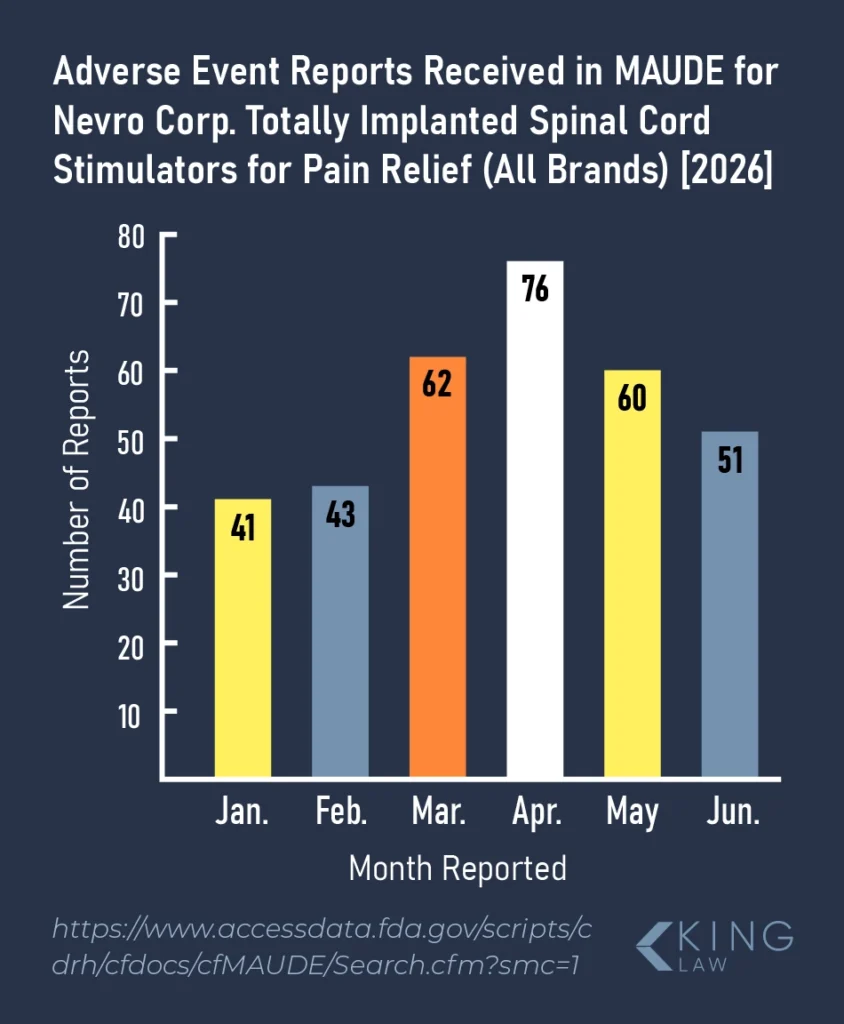
Injuries Listed in Adverse Event Reports for Nevro SCS Devices
According to the MAUDE database, injuries that have been reported with the Nevro SCS systems on MAUDE include infections, device malfunction, worsening pain, numbness, tingling, lead migration, and burning sensations.
Here are some of the reports and associated injuries for Nevro SCSs reported via MedWatch and recorded in the MAUDE database.
| Nevro Device | Summary of Injuries |
| NEVRO CORP. HF 10 SENZA (MAUDE Report Number MW5093655) |
|
| NEVRO CORP. SPINAL CORD STIMULATOR (MAUDE Report Number MW5176315) |
|
| NEVRO CORP. SENZA OMNIA IPG KIT (MAUDE Report Number MW5153687) |
|
| Nevro Corp. Spinal Cord Stimulator Lead (MAUDE Report Number MW5133869) |
|
| Nevro Corp. Spinal Cord Stimulator (MAUDE Report Number MW5163867) |
|
| Nevro Corp. Senza (MAUDE Report Number 3008514029-2026-00306) |
|
| Nevro Corp. Senza (MAUDE Report Number 3008514029-2026-00301) |
|
| Nevro Corp. Senza (MAUDE Report Number 3008514029-2026-00304) |
|
*It is important to note that reported injuries have many causes, including patient error, doctor error, device malfunctions, or other causes. The MAUDE database may include reports that have not been investigated or verified. So, not all issues reported to MAUDE are due to how the Nevro spinal cord stimulator device was implanted, designed, or reprogrammed.
How Can Nevro Patients Find Medical Device Safety Reports About Their SCS Device?
If a patient experienced a severe side effect after having a Nevro SCS implanted, they can submit an FDA safety report through MedWatch. Patients can also search for MAUDE reports about their Nevro spinal cord stimulator devices by entering “Nevro” in the manufacturer field and the model of their SCS in the “Brand Name” field.
Have Nevro Spinal Cord Stimulators Been Recalled?
Nevro spinal cord stimulator devices have not been recalled. Nevro has not issued broad safety notices about its spinal cord stimulators, either. However, patients and medical providers have submitted numerous adverse event reports in the MAUDE database. Nevro may issue recalls or safety notices in the future.
What Are the Allegations Against Nevro?
Here are some of the allegations against Nevro because of its spinal cord stimulator devices or the conduct of its representatives:
- Legal complaints say that Nevro allegedly used the FDA’s PMA supplement process to update the firmware, batteries, leads, and other features of its original Senza spinal cord stimulator device, and then used those updates to create new models (such as the Senza, which was rebranded as the Omnia model) without going through the pre-market approval process for those models.
- Legal complaints claim that the Nevro spinal cord stimulator devices have a high rate of lead failure and malfunction, which may cause stimulation to be too high or to reach unintended areas of the body.
- Patients have also accused Nevro representatives of misleading patients about the risks and potential benefits of the spinal cord stimulator device.
- Nevro spinal cord stimulator patients have also alleged that Nevro representatives engaged in the unauthorized practice of medicine by attending or assisting in patient surgeries, reprogramming devices, giving patients medical advice, and other misconduct.
- Nevro SCS patients have also said they should have been told that the external trial version of the Nevro spinal cord stimulator does not work as well or the same way as the fully implantable version. Many patients say they experienced pain relief and minimal symptoms from the trial version of the Nevro device, but they had a much different experience when they had the permanent spinal cord stimulator device implanted.
Examples of Lawsuits Against Nevro
Here are examples of lawsuits that have been filed against Nevro:
- One patient claimed the Nevro spinal cord stimulator device caused overstimulation and nerve damage.
- A Nevro spinal cord stimulator patient alleged that they experienced numbness, worsening pain, weakness, blood clots, and an inability to control their bladder after having the device implanted.
- A patient says they suffered from weakness, pain, shocking sensations, and the death of bone tissue in their thigh bones because of the Nevro spinal cord stimulator device.
- Another Nevro patient alleges that they suffered from unexpected blood blots, new and worsening pain, weakness in extremities, pressure ulcers, and trouble swallowing after having the device implanted.
- A patient claims they had a Nevro spinal cord stimulator device implanted and sustained nerve damage, weakness, and other complications due to the device and lead malfunctioning.
Nevro’s Response to Lawsuits and Allegations
According to court records, Nevro has denied wrongdoing and filed documents to dismiss some of the legal complaints against it. Nevro has also claimed that it gave patients proper warnings about the potential side effects of spinal cord stimulator devices. It also contends that it has followed all FDA requirements for PMA supplements, use of non-physician representatives, and medical device labeling.
What Should You Do If You Are Experiencing Problems With a Nevro SCS?
If you are currently experiencing problems with your Nevro spinal cord stimulator, you should speak with your physician right away. If you think you are in an emergency situation, you should contact emergency services.
Once you are stable, here are steps you can take to protect your health and legal rights:
- Follow your doctor’s recommendations.
- If you are interested in pursuing legal action, talk to a lawyer about whether you qualify for a lawsuit because of your injuries from the Nevro spinal cord stimulator.
- Gather records about when you had the Nevro spinal cord stimulator implanted, why, and what happened afterward.
- Keep all manuals, notices, charging cables, and other components for your Nevro spinal cord stimulator.
- If recommended by your SCS lawyer, report your complication to the FDA (your attorney can help you with this).
- Save copies or logs of emails, letters, messages, and phone calls between you and Nevro about your Nevro spinal cord stimulator device.
If you and your lawyer think that Nevro or a company representative is at fault for the losses you experienced, you may qualify to request compensation.
Who Is Eligible to File an SCS Lawsuit Against Nevro?
Nevro spinal cord stimulator patients may be eligible to file a lawsuit if they had the Senza, Senza II, Omnia, HFX iQ, or other Nevro SCS devices implanted and suffered from unexpected complications. Losses that qualifying Nevro spinal cord stimulator patients may sue for include nerve damage, worsening pain, lead fracture, lead migration, infection, and burns.
What Evidence Do You Need to File a Lawsuit Against Nevro?
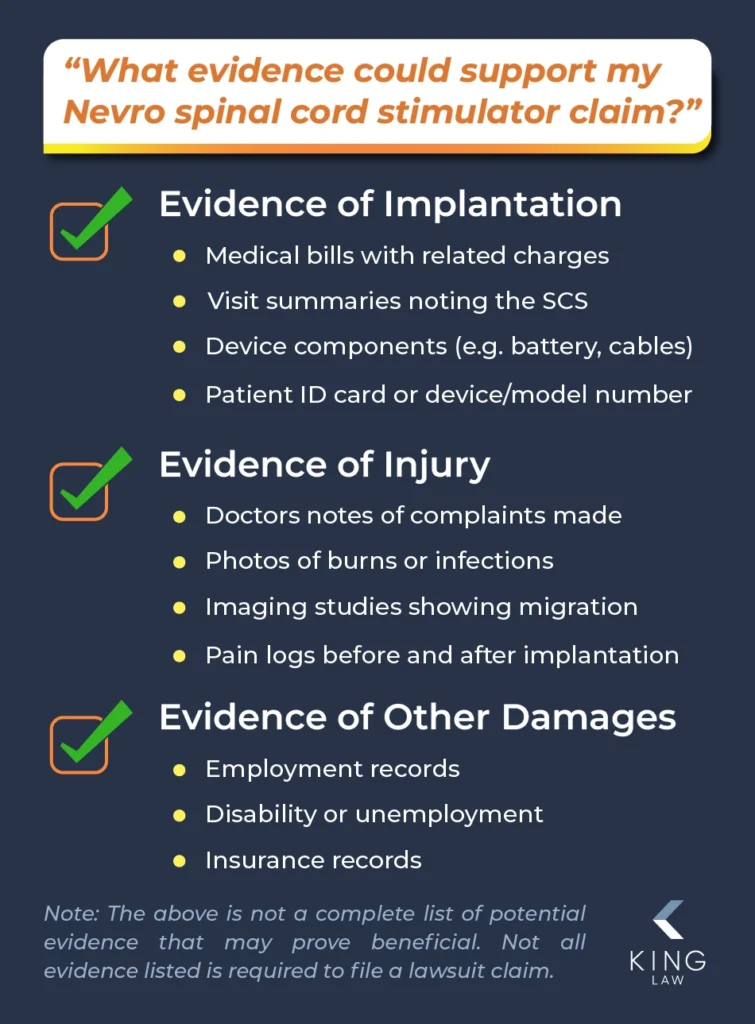
Evidence that you can use to support your lawsuit against Nevro includes:
- Medical bills
- After-visit summaries
- Imaging studies
- Device and model number
- Patient ID card
- Nevro charging cables, battery pack, explanted device, and other components
- Pain log to show what your symptoms were before and after the surgery
Your attorney can help you find and use other records to strengthen your spinal cord stimulator claim against Nevro.
Nevro Spinal Cord Stimulator Settlements
There are no public reports of Nevro paying settlements to spinal cord stimulator patients because of alleged defects or other design defects. There are no public discussions about potential global settlements yet. However, settlements may be publicized in the future as more Nevro patients file claims because their spinal cord stimulator devices allegedly malfunctioned.
King Law Is Actively Investigating Nevro Spinal Cord Stimulator Claims
Robert King Law Firm is accepting potential claims from people who had a Nevro spinal cord stimulator device implanted and experienced complications they believe they were not warned about. We have the resources to investigate Nevro patients’ cases and take appropriate action to protect their legal rights. Our firm has early involvement in the spinal cord stimulator litigation, and we can advise you on how to protect your legal rights and pursue compensation.
Contact Robert King Law Firm to Start Your Free Case Review
Call Robert King Law Firm today by dialing (585) 496-2648 to schedule a free consultation for a spinal cord stimulator lawsuit. We can also be reached by filling out this online form. We can help you determine whether your Nevro spinal cord stimulator device may have been defective or if Nevro engaged in conduct that contributed to your injuries. Our firm works on a contingency-fee basis, meaning you do not pay us unless we help you secure compensation.
Frequently Asked Questions (FAQs)
People are suing Nevro because they believe the company’s spinal cord stimulator devices were defective, they were misled by Nevro representatives, and for other reasons.
Some of the Nevro spinal cord stimulator devices that have allegedly caused injuries include Senza, Senza II, Omnia, and HFX iQ.
Nevro spinal cord stimulator devices have not been recalled. However, there have been dozens of MAUDE adverse event reports submitted to the FDA by patients, medical providers, and others.
At this time, there is no Nevro spinal cord stimulator class action lawsuit. However, an MDL or class action may be formed for Nevro spinal cord stimulator lawsuits in the future.
Patients who had a Nevro spinal cord stimulator implanted and experienced complications that they do not believe they were warned about may qualify to file a lawsuit.
Patients have not been paid any Nevro spinal cord stimulator lawsuit settlements that have been publicized at this time.
To file a Nevro spinal cord stimulator lawsuit, evidence you may need includes proof that you had a Nevro spinal cord stimulator implanted and suffered from complications that you were not warned about or are related to how the device is designed.
You may benefit from working with an attorney to file a spinal cord stimulator lawsuit against Nevro. However, you do not have to hire an attorney to file a lawsuit.
It depends. Some spinal cord stimulator patients have alleged that Nevro representatives adjusted, reprogrammed, or helped implant devices without having a medical license.
It depends. You may still qualify to file a spinal cord stimulator lawsuit against Nevro even if you still have the device in your body.
Sources Used in This Article
King Law uses rigorous editorial standards when writing articles for our site. Here is a list of sources used to write this article.
- U.S. Food and Drug Administration. “MAUDE Adverse Event Report MDR Report Key 23110265.” Manufacturer and User Facility Device Experience (MAUDE), U.S. Department of Health and Human Services. Accessed 14 July 2026.
- U.S. Food and Drug Administration. “MAUDE Adverse Event Report MDR Report Key 25634295.” Manufacturer and User Facility Device Experience (MAUDE), U.S. Department of Health and Human Services. Accessed 14 July 2026.
- U.S. Food and Drug Administration. “MAUDE Adverse Event Report MDR Report Key 25634379.” Manufacturer and User Facility Device Experience (MAUDE), U.S. Department of Health and Human Services. Accessed 14 July 2026.
- U.S. Food and Drug Administration. “MAUDE Adverse Event Report MDR Report Key 25664268.” Manufacturer and User Facility Device Experience (MAUDE), U.S. Department of Health and Human Services. Accessed 14 July 2026.
- Nevro Corp. “Information for Prescribers.” Rev. D, Feb. 2025.
- Nevro Corp. “Patient Manual.” Rev. O, Feb. 2025.
- Nevro Corp. “Patient Manual: HFX iQ IPG System.” Rev. D, July 2024.
- Nevro Corp. “Safety Information for Spinal Cord Stimulation.” Accessed 14 July 2026.
- Nevro Corp. “HF10 Therapy Fact Sheet.” Rev. A.