

What Causes Fever and Chills After a Colonoscopy? [2026 Update]
Complete the form below to see if you qualify for a Olympus Scope Lawsuit

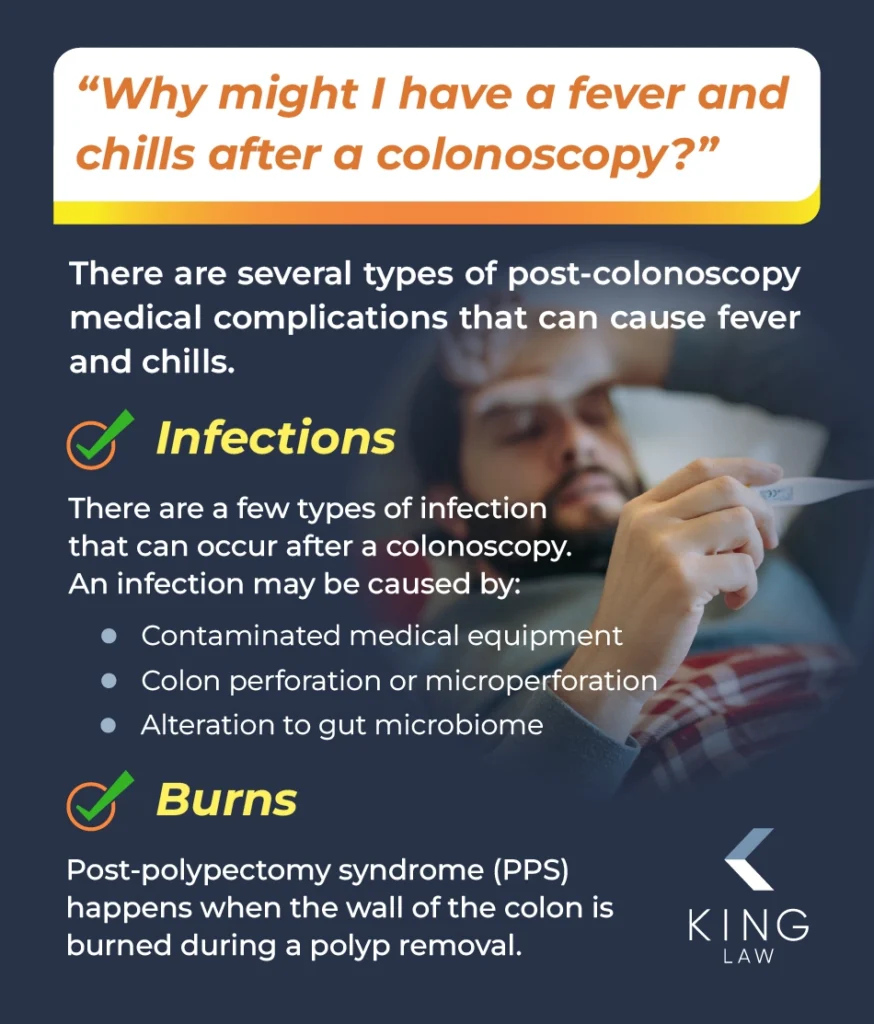
Fever and chills after a colonoscopy may be signs of an infection, post-polypectomy syndrome, sepsis, or other complications. It is normal for colonoscopy patients to have mild discomfort, cramping, and tiredness after the procedure. However, fevers, chills, shaking, and new or worsening symptoms may be signs that a patient requires immediate medical attention.
If someone experiences fever and chills due to a colonoscopy-related infection, finding the source of that infection is important for treatment. Additionally, if the infection can be traced to a contaminated endoscope or defective colonoscope, the patient may be entitled to compensation.
About the Fever and Chills After a Colonoscopy
Are Fever and Chills Normal After a Colonoscopy?
What Causes Fever and Chills After a Colonoscopy?
Infection from Contaminated Colonoscopy Equipment
Bacteremia and Bloodstream Infections
Post-Polypectomy Syndrome (PPES)
Colon Perforation or Microperforation
Diverticulitis After Colonoscopy
Clostridioides difficile (C. diff) Infection
What Are the Symptoms of a Serious Colonoscopy Complication?
When Should You Go to the Emergency Room for Fever After a Colonoscopy?
How Do Doctors Diagnose the Cause of Fever and Chills After a Colonoscopy?
How Are Fever and Chills After a Colonoscopy Treated?
Can Fever and Chills After a Colonoscopy Be Fatal?
King Law Is Investigating Colonoscopy Infection Claims Involving Fever and Chills
Contact King Law for a Free Consultation
Are Fever and Chills Normal After a Colonoscopy?
Fever and chills are not typical during a normal colonoscopy recovery and may be signs of an infection or a colonoscopy-related complication. Typically, someone who is
- Mild bloating
- Gas
- Tiredness
- Mild stomach upset
- Cramping
These symptoms are part of the normal colonoscopy recovery process and should be mild and get better within 24 hours after the procedure. While colonoscopy-related infections are uncommon, patients should seek medical evaluation if they develop concerning symptoms.
However, symptoms like fever, shaking, chills, body aches, abdominal pain, and nausea are not typical with colonoscopy recovery. These symptoms may signal that the patient has a post-colonoscopy infection, internal injury, or another complication.
Patients should talk to their doctors if they develop fever, chills, or other concerning signs within hours, days, or even a week or more after colonoscopy. Colonoscopies involving polyp removal, cauterization, endoscopic mucosal resection (EMR), and other interventions may be more likely to result in complications or infections.
What Causes Fever and Chills After a Colonoscopy?
Several medical complications can cause fever and chills after a colonoscopy. These include bacterial infections from contaminated equipment, bacteremia, sepsis, post-polypectomy syndrome, colon perforation, diverticulitis, and Clostridioides difficile. In one study,
Infection from Contaminated Colonoscopy Equipment
Improperly reprocessed (cleaned) colonoscopes and colonoscopy equipment can spread bacteria between patients. Additionally, some studies and FDA investigations have suggested that
- Escherichia coli (E. coli)
- Enterococcus faecalis
- Pseudomonas aeruginosa
- Klebsiella spp.
- Staphylococcus aureus
Some reports have suggested that the way some colonoscopes are designed makes them harder to sterilize, as bacteria can get trapped in small parts, channels, and accessories. For example, the FDA issued several warning letters to Olympus, which manufactures endoscopes, accusing the company of not having proper systems in place to identify and report reprocessing issues, including outbreaks of infection. Olympus has recalled multiple endoscopes, duodenoscopes, and accessories due to infection outbreaks.
Bacteremia and Bloodstream Infections
Bacteremia may occur when bacteria from the patient’s gastrointestinal tract enter the bloodstream, leading to fever and chills from infection. These bacteria may enter the blood from someone’s own gastrointestinal tract or be introduced by a medical device, like an endoscope.
For example, one case report described a man who got a colonoscopy and developed bacteremia when Streptococcus bovis entered his bloodstream. The man also had a polyp removed (a polypectomy) during his colonoscopy, which may have allowed bacteria from his intestines to enter his bloodstream.
One study found that transient bacteremia may occur in approximately 4% of colonoscopy patients, although patients may not always show symptoms. That same study suggested that patients with a weakened immune system may be at higher risk of developing septicemia (a severe bloodstream infection) from a colonoscopy.
Post-Polypectomy Syndrome (PPES)
Post-polypectomy syndrome (also called post-polypectomy electrocoagulation syndrome) occurs when the wall of the colon is burned when polyps are removed. This type of burn is called a transmural burn, which means the burn goes through some layers of the intestinal wall.
Symptoms of post-polypectomy syndrome can include fever, chills, abdominal pain, swelling, and other signs that are similar to those of a bowel perforation. Post-polypectomy syndrome may resolve with treatment. However, in rare cases, post-polypectomy may require hospitalization, be severe, or be fatal. Doctors may use imaging studies to look at the person’s bowels and see if there is a tear or a place where there is thickening of the tissue to help diagnose or treat the syndrome.
Colon Perforation or Microperforation
Colon perforations (tearing or puncturing of the bowel tissue) can also lead to fever and chills after a colonoscopy, if an infection develops.
When the colon is perforated (torn or punctured), it can allow bacteria and fecal matter to enter the bloodstream and abdominal cavity. Treatment and diagnosis for a colon perforation can involve antibiotics, CT imaging, hospitalization, or surgery. All patients should watch for signs of infection, especially patients who had polyps removed.
Diverticulitis After Colonoscopy
Diverticulitis is an uncommon but possible complication from a colonoscopy, and it can lead to fever, bowel changes, abdominal pain, and other symptoms. Diverticulitis occurs when diverticula (bulges in weak intestinal or bowel tissue) become swollen or infected. Some studies suggest that patients may develop diverticulitis within hours to 30 days after a colonoscopy. Diverticulitis must be diagnosed and treated by a doctor, who may perform diagnostic tests or prescribe antibiotics to help resolve the symptoms.
Clostridioides difficile (C. diff) Infection
Colonoscopy patients may also develop fever and chills because of a Clostridioides difficile (C. diff) infection. C. diff can cause symptoms like severe diarrhea, fever, chills, and abdominal pain. Most symptomatic cases are treated with antibiotics. Colonoscopy patients may develop C. diff infections for several reasons, such as a contaminated colonoscope or the colonoscopy preparation disrupting their normal gut bacteria.
Sepsis After a Colonoscopy
Fever and chills after a colonoscopy may also be a sign that the patient has developed sepsis. According to the CDC, sepsis is when the body has an extreme reaction to an infection, and it is always life-threatening. Anyone who has or thinks they have sepsis should go to the emergency room right away.
Symptoms of sepsis include:
- Fever
- Breathing changes or difficulty breathing
- Confusion
- Chills
- Very low or very high body temperature
Sepsis may occur after a colonoscopy if an infection has spread to the bloodstream or abdominal cavity. Sepsis may be caused by the doctor using contaminated colonoscopy equipment, a bowel perforation, an abscess forming, or another procedure-related cause. Someone who suffers from sepsis may be at risk of organ failure or death.
What Are the Symptoms of a Serious Colonoscopy Complication?
Some of the post-colonoscopy signs that a serious complication may have occurred include:
- Fever
- Abnormally low body temperature
- Chills
- Shaking or tremors
- New, worsening, or severe abdominal pain
- Swelling or hardness of the abdomen
- Vomiting
- Diarrhea
- Nausea
- Bloody, black, or tar-like stools
- Bloody vomit or vomit that is like coffee grounds
- Weakness
- Confusion
- Dizziness or fainting
- Rectal bleeding
- Irregular or rapid heart rate
- Breathing problems or severe breathing changes
These symptoms may indicate a post-procedural complication or another condition related to the colonoscopy. If any of these symptoms appear, the patient should seek medical attention immediately. Infections and post-colonoscopy complications may be fatal if left untreated. Early medical intervention may be the most effective way to prevent the infection from becoming worse.
When Should You Go to the Emergency Room for Fever After a Colonoscopy?
Colonoscopy patients should consider going to the emergency room if they experience fever, chills, abdominal pain, rectal bleeding, vomiting, breathing problems, confusion, fainting, or other concerning symptoms. These symptoms may signal that an infection or severe complication has occurred and requires treatment. Such symptoms are not part of the normal colonoscopy recovery process, and they may not get better on their own. A doctor can perform the tests necessary to diagnose the source of the fever and chills after a colonoscopy and begin to treat it.
How Do Doctors Diagnose the Cause of Fever and Chills After a Colonoscopy?
Doctors have tests they may use to diagnose the cause of fever and chills after a colonoscopy, including:
- CT of the patient’s abdominal or pelvic region
- Blood cultures
- CBC testing
- Stool testing
- Blood tests for inflammatory markers
- Physical exam to look for an abscess or perforation
Doctors may also use other methods to identify and treat what is causing the colonoscopy patient to experience fever and chills. The pattern and timing of the symptoms may give doctors a clue about the underlying cause. For example, a fever that is accompanied by diarrhea may be a sign of a C. diff infection. If the patient had polyps removed during the procedure, the doctor may suspect post-polypectomy syndrome.
How Are Fever and Chills After a Colonoscopy Treated?
The treatment for fever and chills after a colonoscopy will depend on the cause of those symptoms. Doctors will likely order blood or diagnostic tests to understand what pathogen or condition is causing the fever and chills. Once a patient’s medical team determines the cause, they can design a treatment plan.
Here are some of the ways doctors may treat fever and chills after a colonoscopy:
- IV fluids and antibiotics
- Hospitalization for severe infections or complications
- Surgery (i.e., to repair a perforation or drain an abscess)
- Fluids and oral medications on an outpatient basis
Other measures may be necessary to address severe or persistent infections that do not improve after initial treatments. For example, patients with severe or persistent C. diff infections may need a fecal transplant or be quarantined in the hospital until they recover.
Can Fever and Chills After a Colonoscopy Be Fatal?
Sometimes, the underlying cause of the fever and chills after a colonoscopy can be or become life-threatening. For example, an infection that worsens or enters the bloodstream may develop into sepsis, which is life-threatening.
Additionally, fever and chills that are due to a severe abscess, infective endocarditis (an infection that reaches the heart tissue), or bowel perforation may also be or become fatal. Seeking medical attention when symptoms (like fever and chills) arise can help colonoscopy patients limit the chance of the complication becoming fatal.
King Law Is Investigating Colonoscopy Infection Claims Involving Fever and Chills
King Law is actively evaluating cases in which colonoscopy patients developed a fever and chills due to severe infections. If the infection was caused by medical errors or a defective or contaminated colonoscope, the patient may qualify for compensation for their losses. We have the tools necessary to investigate your colonoscopy infection claim and develop a strong legal strategy to protect your rights.
Contact King Law for a Free Consultation
If you had a colonoscopy and developed fever and chills due to an infection afterward, call us today at (585) 496-2648 or submit a contact form. King Law is currently investigating lawsuits related to Olympus scopes and contamination.
We offer free, confidential consultations and case evaluations. We take colonoscopy infection cases on contingency, meaning you do not have to pay us upfront legal fees for us to represent you. We keep our cases in-house and only take claims that we think will be viable and helpful to our client.
Frequently Asked Questions (FAQs)
Are fever and chills normal after a colonoscopy?
No. Fever and chills are not normal after a colonoscopy.
What causes fever and chills after a colonoscopy?
Fever and chills after a colonoscopy may be caused by infections, a bowel perforation, post-polypectomy syndrome, or other complications.
How long after a colonoscopy can fever and chills start?
Fever and chills can start within hours, days, or a week or more after a colonoscopy.
When should I go to the emergency room for a fever after a colonoscopy?
You should seek emergency medical assistance if you develop a high fever or your temperature drops suddenly, and you have had a colonoscopy recently.
Is fever after a colonoscopy a sign of perforation?
A fever after a colonoscopy may be a sign that your bowel was perforated during the procedure and resulted in an infection.
Can removing polyps during a colonoscopy cause fever?
Yes, it can happen in limited cases. Removing polyps during a colonoscopy can cause fever if the patient develops an infection, post-polypectomy syndrome, or experiences another complication.
What does abdominal pain and fever after a colonoscopy mean?
Abdominal pain and fever after a colonoscopy may mean that the patient has an infection, bowel perforation, or a related complication.
Can contaminated colonoscopy equipment cause fever and chills?
Yes. Contaminated colonoscopy equipment may cause a bacterial infection that can lead to fever and chills.
How long do fever and chills last after a colonoscopy complication?
Fever and chills after a colonoscopy may not go away on their own. How long they last depends on what is causing them and how soon the colonoscopy patient gets treatment for them.
List of Sources Used in This Article
King Law uses stringent editorial standards when creating articles for this site. Here is a list of sources used to create this article on the possible causes of fever and chills after a colonoscopy.
- Centers for Disease Control and Prevention. “About C. diff.” CDC, 17 May 2024.
- Centers for Disease Control and Prevention. “About Sepsis.” CDC, 16 Aug. 2024.
- Chopra, T., et al. “Risk of Infection Associated With Endoscopy and Its Reprocessing.” Infection Control & Hospital Epidemiology, vol. 36, no. 11, 2015, pp. 1308–1314.
- García Rodríguez, Luis A., et al. “Risk of Bacteremia With Colonoscopy and Polypectomy.” Gastrointestinal Endoscopy, vol. 82, no. 4, 2015, pp. 702–708.
- Gweon, Tae Gyu, et al. “Post-Colonoscopy Complications and Their Management.” Clinical Endoscopy, vol. 57, no. 2, 2024, pp. 147–158.
- Jain, Deepak, et al. “S3522 Clostridioides difficile Colitis After Colonoscopy.” The American Journal of Gastroenterology, vol. 116, Oct. 2021, p. S1468.
- Kavic, Stephen M., and Jeffrey Basson. “Complications of Endoscopy.” The American Journal of Surgery, vol. 168, no. 4, 1994, pp. 319–332.
- Khashab, Mouen A., et al. “Infectious Adverse Events Related to Gastrointestinal Endoscopy.” Gastrointestinal Endoscopy Clinics of North America, vol. 28, no. 3, 2018, pp. 339–354.
- “Colonoscopy.” Mayo Clinic, 13 July 2024.
- Morris, A. M., et al. “Bacteremia and Infective Endocarditis Associated With Gastrointestinal Endoscopic Procedures.” Canadian Journal of Gastroenterology, vol. 23, no. 12, 2009, pp. 851–855.
- National Center for Biotechnology Information. “Bacteremia.” StatPearls, updated 8 Aug. 2023.
- O’Donovan, Michael, et al. “Post-Endoscopy Infection Rates and Risk Factors.” JGH Open, vol. 6, no. 4, 2022, pp. 251–257.
- “Gastrointestinal Endoscope Associated Bacteremia and Sepsis.” The American Journal of Gastroenterology, vol. 113, Oct. 2018, p. S1548.
- “Streptococcus bovis Bacteremia as a Complication of Colonoscopy.” The American Journal of Gastroenterology, vol. 105, Oct. 2010, p. S318.
- U.S. Food and Drug Administration. “FDA Issues Two Warning Letters to Leading Manufacturer of Endoscopes.” FDA, 26 March 2024.
- Vyas, Ankur, et al. “Infective Endocarditis Following Gastrointestinal Procedures: A Review.” Cureus, vol. 15, no. 12, 2023, e50778.
- “Endocarditis.” Cleveland Clinic, reviewed 11 Jan. 2024.