

Kidney Cancer Water Contamination Lawsuit [2026 Update]
See if You Qualify

People are filing lawsuits alleging per- and polyfluoroalkyl substances (called PFAS or forever chemicals) caused them to develop kidney cancer. A growing body of research has linked forever chemicals to various cancers, especially kidney cancers. PFAS have been released into drinking water supplies across the country, particularly on or near military bases, manufacturing plants, and areas where industrial fertilizers were used.
Reports have revealed that companies knew they were contaminating water with PFAS and were aware of the dangers, but these companies did not warn the public. Individuals who believe they were injured by PFAS water contamination are filing lawsuits against these companies to demand compensation and acknowledgement of the harm they have caused. This article explores how PFAS gets into drinking water, how forever chemicals impact your kidneys, and the types of kidney cancer they can cause. It also discusses the grounds for the kidney cancer lawsuit, who can file one, and how someone can start this process.
About the Kidney Cancer Water Contamination Lawsuit
Legal Grounds in the Kidney Cancer Water Contamination Lawsuit
How High Levels of PFAS Can Affect the Kidneys
What Kind of Kidney Cancer Does PFAS Cause?
Who Can File a Kidney Cancer Water Contamination Lawsuit?
How You Can File a Kidney Cancer Water Contamination Lawsuit Claim
What Are Potential Kidney Cancer Lawsuit Compensation Amounts?
Legal Grounds in the Kidney Cancer Water Contamination Lawsuit
The water contamination lawsuits accuse companies, such as 3M, DuPont, and W.L. Gore, of putting forever chemicals into water supplies across the country. PFAS increase the risk of kidney cancer and other diseases. The legal grounds for these lawsuits include negligence, failure to warn of the dangers of their products, personal injury, violation of federal laws, and product liability. EPA rules, as of May 18, 2026, set enforceable limits on PFOA–the PFAS most closely linked to kidney cancer–at 4 parts per trillion (ppt).
For example, there is evidence that companies like DuPont knew as early as 1970 that PFAS could harm human health. However, the company continued to use PFAS in many consumer goods, like fabric treatments and Teflon non-stick cookware.
The lawsuits allege that businesses were unlawful and unethical in how they used, transported, and disposed of PFAS-containing waste. They also allege these companies sold dangerous consumer products. The cases are being filed by people who drank contaminated water, including military members, those who live around military bases, and those who work in or live near manufacturing facilities. Over 30 states have also filed cases against companies that may have polluted the environment with PFAS.
How Do PFAS Get Into Water?
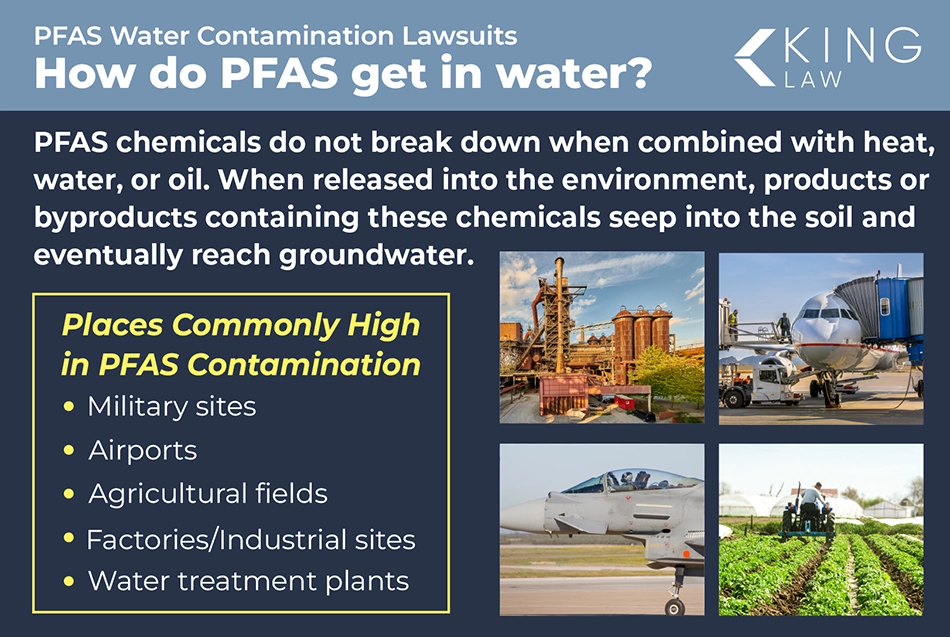
PFAS can get into water supplies through activities like military operations, industrial spill-off from manufacturing plants, agricultural work, and consumer goods. The military used aqueous film-forming foam (AFFF) to fight fires involving liquid fuel for decades. Years later, the public learned that AFFF contains PFAS and has been contaminating the water, soil, and air since the 1970s.
Other ways PFAS can get into water supplies include waste from industrial plants and heavy fertilizer use. Likewise, forever chemicals can seep into the ground and water supply through landfill leachate, which is when water pulls out contaminants from solid waste (such as nonstick cookware) in landfills and pollutes the environment. Once PFAS enter the ground and water, they tend to stay indefinitely because of how long they take to break down. This is why chemicals in the PFAS family are commonly referred to as “forever chemicals.”
Drinking water can be contaminated with PFAS through the following mechanisms:
- Runoff from military operations where AFFF fire-fighting foams were used
- Runoff from airports where AFFF products were used
- Runoff from agricultural fields where biosolids were used as fertilizer
- Runoff and discharges from industrial activities that used PFAS
- Effluent discharge from residential sewage contaminated with PFAS from clothing and non-stick cookware
Once PFAS enter the air, soil, groundwater, and waterbodies, they can travel great distances from the original source of the pollution. This chemical disbursement can result in contamination of public drinking water supplies and private wells.
PFAS contamination of public drinking water supplies is incredibly common. According to data from the U.S. Geological Survey, 45% of American tap water contains PFAS, although not all of these detections were above EPA or state-specific limits.
How High Levels of PFAS Can Affect the Kidneys
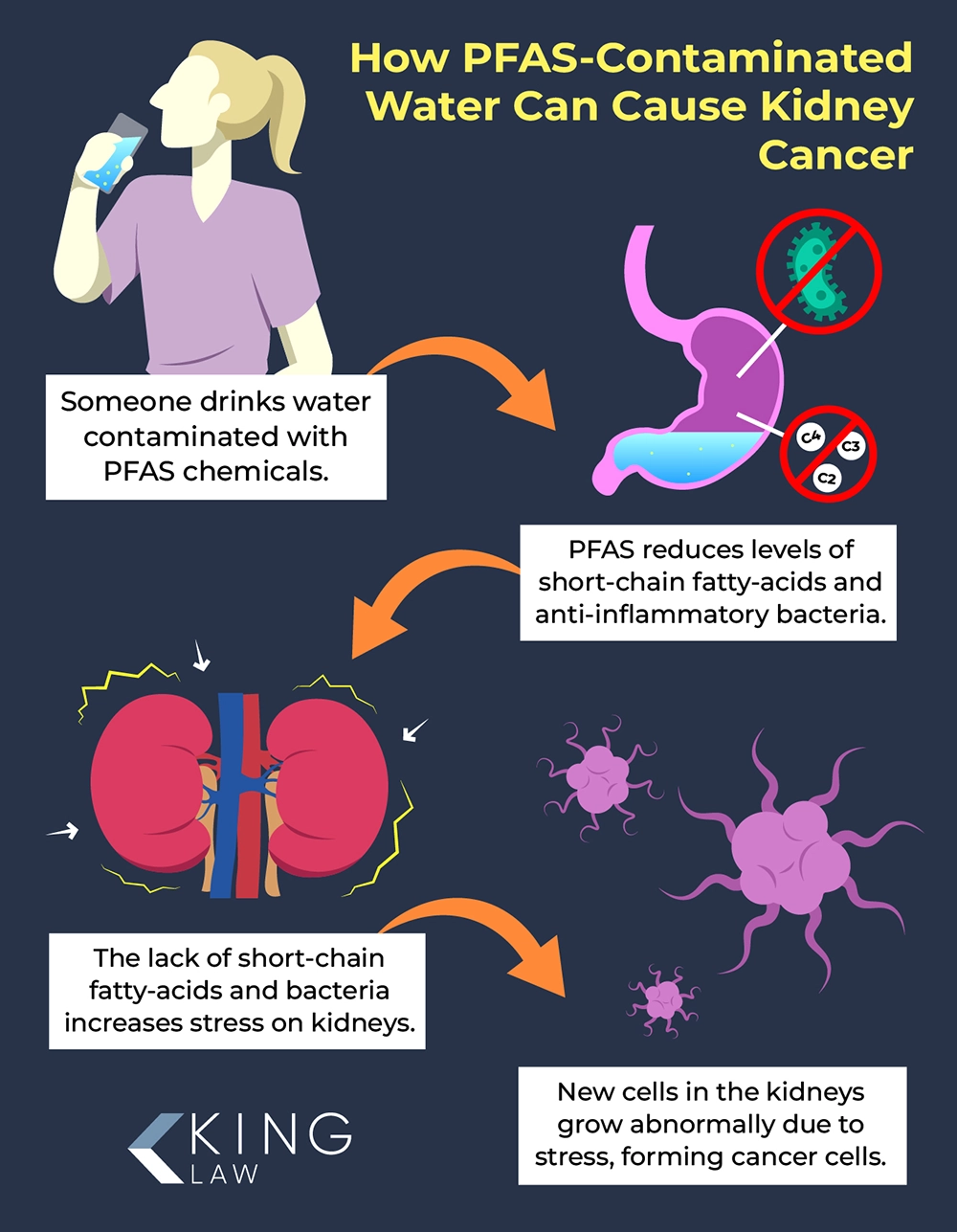
PFAS can have devastating impacts on the human body, especially the kidneys, which are responsible for filtering out waste and extra water from the body. Studies have shown that forever chemicals can gather in the body and disrupt the bacterial microbiome in the person’s gut.
PFAS are resistant to metabolic breakdown within the body, although they are slowly excreted over time. Higher levels of exposure can build up in the person’s system and make it harder for their kidneys to work. Researchers have discovered that PFAS in a person’s organs and blood can increase their risk of chronic kidney disease and kidney cancer.
PFOA and Kidney Function
One type of PFAS, perfluorooctanoic acid (PFOA), has been shown to greatly raise the risk of kidney disease in humans. PFOA has been classified as carcinogenic to humans, meaning that it can cause cancer in people. People who have high levels of PFOA in their blood may be two times as likely to develop kidney cancer. PFOA was used primarily as a processing agent to create non-stick coatings like Teflon and generally removed from finished products, with individuals more likely to be exposed to significant quantities through drinking water or food wrappers.
What Kind of Kidney Cancer Does PFAS Cause?
Studies have also shown that PFAS exposure can increase someone’s overall risk of cancer, including kidney cancers. For example, researchers have found associations between PFAS exposure and renal cell carcinoma, which is a common form of kidney cancer.
PFOS, one of the most common types of PFAS, has been shown to increase the risk of renal cell carcinoma. This type of kidney cancer develops in the tubes inside the kidneys, and it accounts for about 85 percent of all kidney cancers. Because this type of cancer may not cause noticeable symptoms in its early stages, many people are not diagnosed until their cancer progresses.
If you know you have consumed water contaminated with PFAS, it may be helpful to talk to your physicians about your concerns and possible options for monitoring your kidney function.
Who Can File a Kidney Cancer Water Contamination Lawsuit?
Many people could qualify to file a kidney cancer lawsuit due to PFAS. For example, many veterans have developed kidney cancer after consuming contaminated water at military bases. Civilians who have been exposed to PFAS in their well water or public water may also be able to file a lawsuit if they developed an eligible condition.
Someone may qualify to file a lawsuit if they were exposed to water with PFAS in it for at least one year, and they developed kidney cancer. If that person lived on a military base, they need to prove six months of exposure. For example, the person could present proof that they worked at or lived within a mile of a manufacturing plant or military base. Or, they may show that they served in the military or worked in other places where AFFF foam was used.
If someone developed kidney cancer and is not sure if PFAS is what caused it, they may still benefit from talking to an attorney to see if they have a legal claim. The attorney can help them discover if there is a link between their diagnosis and PFAS exposure through contaminated drinking water.
Wrongful Death Lawsuit Related to Kidney Cancer from PFAS
Unfortunately, about 25% of people diagnosed with renal cell carcinoma do not live for more than 5 years past their diagnosis. Many families have lost loved ones to kidney cancer. If you think your loved one’s kidney cancer may have been the result of PFAS exposure, you may still be able to file a lawsuit on their behalf. This type of lawsuit is called a wrongful death lawsuit. PFAS manufacturers are facing many of these types of lawsuits, which allege that the companies are liable for these deaths.
How You Can File a Kidney Cancer Water Contamination Lawsuit Claim
For many people, requesting a free case review is the first step in filing a kidney cancer lawsuit due to water contamination. Doing so can connect them with an attorney who can explain what their rights are and if they are eligible for a settlement. Teaming up with a lawyer early on in the process can help the person meet their filing deadlines before they expire.
Then, the person would work with their lawyer to locate evidence to prove what drove the kidney cancer to develop. Their legal team would then put the facts and legal arguments together in a complaint and file it with the appropriate court. From there, those involved in the lawsuit would exchange evidence and attempt to settle out of court.
What Are Potential Kidney Cancer Lawsuit Compensation Amounts?
The outcome of a particular case depends on the person’s individual circumstances, including the strength of their legal arguments, how their kidney cancer impacted their life, and whether they filed their lawsuit before the statute of limitations was up. However, some successful claimants might receive up to $175,000 to $350,000 or more. These are general estimates, and claimants would benefit from talking to a lawyer who can provide personalized recommendations and insights.
Contact King Law’s PFAS Attorneys Today
If you developed kidney cancer after being exposed to forever chemicals in your drinking water, consider connecting with our legal team today. You may be entitled to a settlement to cover your medical bills, lost earnings, reduction in your quality of life, and other damages. Reach out to us by calling (585) 496-2648 to schedule a free consultation. King Law’s team of seasoned attorneys is available to provide a case evaluation based on your unique circumstances.