

Bronchoscopy Bacterial Infection Lawsuit & Complications [2026 Update]
Complete the form below to see if you qualify for a Olympus Scope Lawsuit

Patients diagnosed with bacterial infections after undergoing a bronchoscopy are filing lawsuits to cover their medical bills, lost wages, and compensate them for their pain and suffering.
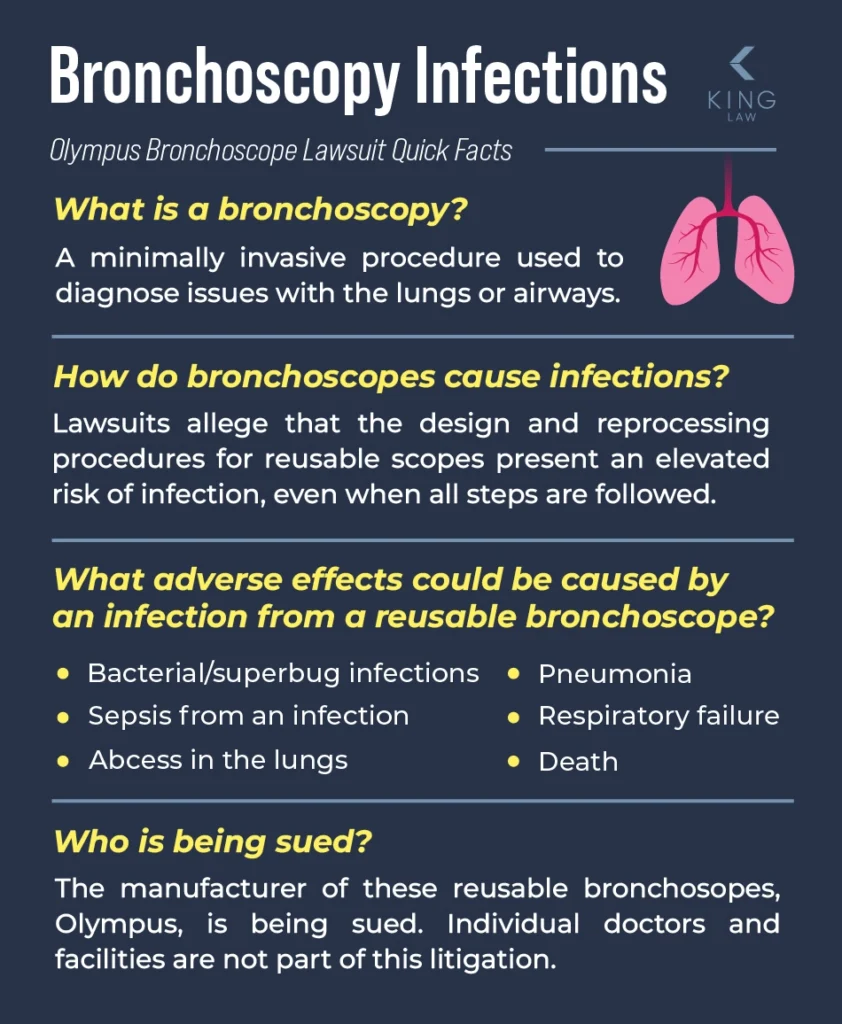
Bronchoscopy infection lawsuits allege that endoscopic devices manufactured by companies like Olympus have design flaws that present an elevated risk of contamination, even when used and reprocessed properly by providers. Bronchoscopes are used to inspect the respiratory tract, perform biopsies, diagnose lung conditions, and perform procedures like bronchoalveolar lavage.
If a contaminated bronchoscope is used on a patient, they could develop conditions such as pneumonia, sepsis, or lung abscesses. In their lawsuits, patients allege that some bronchoscopes have design flaws that put patients at an increased risk of infection. Further, lawsuits allege that companies knew this and did not do enough to protect patients.
About the Bronchoscopy Infection Lawsuit:
What Is a Bronchoscopy Infection Lawsuit?
Can You Sue for an Infection After a Bronchoscopy?
Who Would Be the Defendant in a Bronchoscopy Infection Lawsuit?
Have Olympus Bronchoscopes Been Recalled?
What Reprocessing Failures Can Cause Bronchoscope Contamination and Lead to Lawsuits?
Who May Qualify to File a Bronchoscopy Infection Lawsuit?
How Can I File a Bronchoscopy Infection Lawsuit?
What Damages Can Be Recovered in a Bronchoscopy Infection Lawsuit?
How Long Do You Have to File a Bronchoscopy Infection Lawsuit?
King Law Is Investigating Bronchoscopy Infection Lawsuits
Contact King Law for a Free Bronchoscopy Infection Lawsuit Consultation
What Is a Bronchoscopy Infection Lawsuit?
A bronchoscopy infection lawsuit is a subset of broader litigation against endoscope companies like Olympus. These lawsuits are filed by individuals who develop serious infections after undergoing a bronchoscopy. Allegations in these cases say that issues with the device’s design and reprocessing protocols present an elevated risk of infection, even when the bronchoscopes are reprocessed according to manufacturer specifications.
Many of the lawsuits also allege that bronchoscope manufacturers failed to warn patients and providers of these design flaws, or provide adequate reprocessing protocols to clean them. Plaintiffs are attempting to recoup damages related to the physical, economic, and psychological injuries suffered as a result of their infections. These lawsuits are distinct from medical malpractice lawsuits, which focus on wrongdoing on the part of providers.
What Injuries Have Been Linked to Infections After Bronchoscopy?
Any time a medical device enters the body, there is a risk of infection. That means that having a bronchoscopy performed can cause an infection, though these infection are relatively uncommon. If there are pathogens (e.g., bacteria) on a bronchoscope, those organisms may be introduced into a patient’s respiratory system and contribute to bronchoscopy infection.
Types of illnesses or medical events someone could experience after a bronchoscopy include:
- Pneumonia
- Bacterial infections, including superbug infections
- Sepsis resulting from bacterial infection
- Lung abscess
- Respiratory failure
- ICU care
- Death
Can You Sue for an Infection After a Bronchoscopy?
You may be able to sue for an infection after a bronchoscopy if you can produce evidence showing that your infection was caused by a contaminated bronchoscope. Some infections originate outside of a patient’s body and are introduced by a medical device. A successful bronchoscope lawsuit will need to prove this occurred. Your attorney will work to understand the likely cause of your infection and gather evidence to support your case. For example, a patient may be able to sue a manufacturer depending on the type of bacteria involved in their post-bronchoscopy infection.
How Can a Lawyer Prove That a Bronchoscope Manufacturer May Be Responsible for a Patient’s Infection?
A lawyer in a bronchoscope infection lawsuit will need to prove that the manufacturer is at fault and not a physician, a facility, or another cause. Since many infections can be endogenous (i.e., they are caused by the patient’s own airway bacteria or lung disease), an attorney will need to determine if a manufacturer can actually be held liable in court. They will need to examine the specifics of each case and only move forward with the cases that have a chance of success for the patient.
One thing a lawyer can do to build a case against a bronchoscope manufacturer is to examine the type of bacteria that sickened a patient and the properties of those bacteria. Some types of bacteria are known to create biofilms. Biofilm is a protective barrier that can make bacteria resistant to chemicals and manual cleaning, making them harder to remove from a surface. Bacteria that utilize biofilm to resist chemical sterilization may be able to flourish in the small channels present in bronchoscopes.
How Are Bronchoscopy Infection Lawsuits Different From Medical Malpractice Claims?
Sometimes, after procedures, patients get infections due to a mistake or negligence on behalf of the doctor or medical staff. In these cases, some patients choose to file a medical malpractice claim.
If a patient’s infection might be due to the way a bronchoscope was designed, that may result in a product liability lawsuit. When medical device manufacturers make a product, they have a certain duty of care to patients. If the company did or did not do something that resulted in harm to a patient, that company may be legally liable.
In the case of a bronchoscope infection lawsuit, if there is evidence that a patient’s infection stemmed from antibiotic-resistant bacteria or one that creates biofilm to protect itself, the lawyer can investigate whether contamination of a reusable medical device played a role in the illness.
Who Would Be the Defendant in a Bronchoscopy Infection Lawsuit?
Currently, King Law is reviewing potential lawsuits related to endoscopes made by Olympus Corporation, a medical device manufacturer based in Japan. Olympus has held the largest share of the U.S. endoscope market for years, so many patients have had bronchoscopies performed with an Olympus-brand bronchoscope. Olympus’ various types of endoscopes and accessories have been the subject of multiple FDA recalls and warning letters. Attorneys filing lawsuits against Olympus may use recalls and warnings as evidence that Olympus knew about potential safety concerns and associated risks with its bronchoscopy and endoscopy devices.
Have Olympus Bronchoscopes Been Recalled?
Yes, an Olympus bronchoscope has been recalled. The
-From FDA Recall of an Olympus bronchoscope
Olympus’ bronchoscopes have also been the subject of other recalls. For example, Olympus bronchofiberscopes and bronchovideoscopes were involved in a Class I recall in 2023. However, that recall was not due to concerns about infection. The scopes were recalled due to the risk of burns and fires. An Olympus single use bronchoscope biopsy valve was subject to a class 1 recall because of a risk of breakage.
What Reprocessing Failures Can Cause Bronchoscope Contamination and Lead to Lawsuits?
Bronchoscope contamination may occur when a reusable scope is not effectively reprocessed. Bronchoscope reprocessing is a complex, seven-step process with many potential points of failure that can lead to infection outbreaks. The
- Pre-cleaning
- Leak testing
- Manual cleaning
- Visual inspection under magnification
- Disinfection/sterilization
- Storage
- Documentation
Below are some common points of failure in bronchoscope reprocessing.
Failure to Properly Clean Internal Channels
Reusable bronchoscopes have small internal channels that are both difficult to mechanically clean and can serve as ideal breeding environments for bacteria like Klebsiella. These bacteria form biofilm, a protective organic barrier that anchors them to surfaces and can resist many chemical disinfectants.
Biofilm is, however, vulnerable to mechanical interventions like scrubbing with brushes, especially when performed shortly after the procedure. Skipping, rushing, or inadequately performing this step can allow biofilm to build up on reusable bronchoscopes. Visual inspection under magnification is also a critical step to ensure that organic matter has been cleaned off.
Failure to Properly Use an Automated Endoscope Reprocessor
Automated endoscope reprocessors (AERs) are often used to perform leak-testing and high-level disinfection, which includes heat and chemical disinfection, as well as purified water rinsing. For AERs to be effective, the bronchoscope needs to have undergone meticulous manual cleaning beforehand. AER reprocessing can fail due to human error, such as using the wrong connectors or failing to follow documentation, or mechanical malfunction. Reprocessor documentation and cycle logs may be important evidence in a bronchoscope lawsuit.
Failure to Dry and Store the Bronchoscope Correctly
Not all exogenous infections involve bacteria pulled from another patient’s body; opportunistic environmental pathogens can colonize moist bronchoscope channels if the devices aren’t properly dried and stored after sterilization. Here as well, documentation and processing logs can serve as important evidence in these cases.
Who May Qualify to File a Bronchoscopy Infection Lawsuit?
Individuals who developed a serious infection not long after undergoing a bronchoscopy may be eligible to file a bronchoscopy infection lawsuit. People who experienced any of the following may be eligible to file a bronchoscope infection lawsuit:
- Hospitalization after bronchoscopy
- IV antibiotic treatment
- Positive bacterial cultures
- Pneumonia diagnosis
- Sepsis diagnosis
- ICU admission
- Death of a loved one following bronchoscopy-related infection
Note: This is not a full list of possible complications that may qualify someone for a lawsuit. Criteria change as litigation evolves.
An experienced attorney can evaluate your case and help you determine if your medical records and symptoms suggest your infection may have been due to a device defect or reprocessing error. King Law is closely tracking lawsuits against Olympus involving its reusable scopes.
How Can I File a Bronchoscopy Infection Lawsuit?
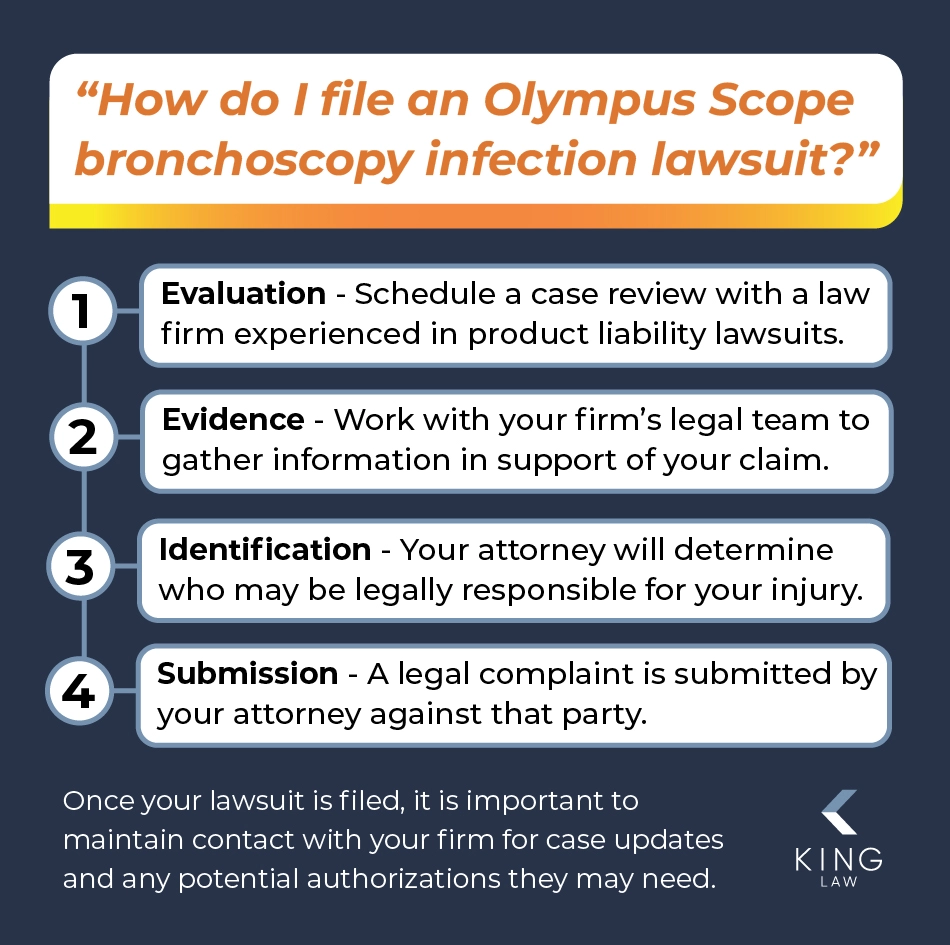
- Schedule a free case evaluation with an experienced attorney.
- Retain legal counsel that fits your situation and goals.
- Work with your attorney to gather evidence, including determining which bronchoscope device model was used during the procedure.
- Conduct an investigation with the help of your attorney and gather supporting evidence, including medical records, recall information, infection timelines, and witness testimony.
- Identify the responsible parties and formally file the lawsuit.
- Seek compensation through settlement negotiations or, if necessary, litigation.
What Damages Can Be Recovered in a Bronchoscopy Infection Lawsuit?
- Economic damages compensate victims for financial hardships endured as a result of their injury.
- Non-economic damages include harms that are not financial in nature, like pain and suffering and emotional distress.
- Punitive damages are sometimes awarded in cases where the defendant acted in a particularly negligent, reckless, or malicious manner.
How Long Do You Have to File a Bronchoscopy Infection Lawsuit?
Bronchoscopy infection lawsuits, like most personal injury lawsuits, need to be filed within a period of time called the statute of limitations. Statutes of limitations vary from state to state, but typically range between 1 and 3 years after the injury is sustained or discovered or, in wrongful death cases, from the time of the victim’s death.
King Law Is Investigating Bronchoscopy Infection Lawsuits
King Law is actively investigating bronchoscopy infection claims, as well as infection claims involving other endoscopic devices. We have evaluated hundreds of claims involving contaminated endoscopes, improper reprocessing, delayed diagnoses, and infections leading to serious outcomes like pneumonia, sepsis, ICU admission, and death. Our experienced attorneys have decades of experience holding medical device manufacturers accountable for design and manufacturing defects that put patients at risk.
Contact King Law for a Free Bronchoscopy Infection Lawsuit Consultation
If you recently suffered from a serious infection after a bronchoscopy or lost a loved one to a bronchoscopy infection, contact King Law today at (585) 496-2648 or complete the form on this page for a free consultation with no obligations. Our partners work on a contingency basis, so there are no upfront costs to pursuing your case; we get paid only if you do. We keep our cases in-house and will work directly on your scope case. Talk to our team about your possible legal options.
Frequently Asked Questions (FAQs)
List of Sources Used In This Article
King Law uses rigorous editorial standards when creating articles for our site. Here is a list of sources we used to create this article.
- “Biofilms.” ScienceDirect Topics, Elsevier, n.d., Biofilms.
- “Bronchoscopy: What to Expect at Home.” Kaiser Permanente Health Encyclopedia, Kaiser Permanente, n.d., Bronchoscopy: What to Expect at Home.
- Centers for Disease Control and Prevention. “About Sepsis.” CDC, 17 Apr. 2025.
- Centers for Disease Control and Prevention. “Essential Elements of a Reprocessing Program for Flexible Endoscopes.” Healthcare Infection Control Practices Advisory Committee (HICPAC), 2016.
- “Endoscopy and Infection Risk.” EOSCU Health.Care Blog, by Erica Mitchell, 17 July 2024, Endoscopy and Infection Risk.
- Food and Drug Administration. “Olympus Corporation of the Americas Recalls Bronchofiberscopes and Bronchovideoscopes Because They Can Lead to Infection, Including Pneumonia.” FDA, 13 May 2021.
- Food and Drug Administration. “Olympus Corporation of the Americas Bronchofiberscopes and Bronchovideoscopes Recall.” Medical Device Recall Database, FDA, 2021.
- Food and Drug Administration. “Medical Device Recall: Olympus Bronchoscope Components.” Medical Device Recall Database, FDA, 2025.
- Papavasileiou, Vasileios, et al. “The Risk Factors for Post-Bronchoscopy Respiratory Infection in Lung Cancer Patients: A Retrospective Case-Control Study from a Center in Greece.” Journal of Clinical Medicine, vol. 14, no. 8, 2025.
- Röder, Michael, et al. “Bronchoscopic Diagnosis of Severe Respiratory Infections.” Journal of Clinical Medicine, vol. 13, no. 19, 2024.
- Sato, Yuta, et al. “Risk Factors for Post-Bronchoscopy Pneumonia: A Case-Control Study.” Respiratory Investigation, 2022.
- Shimizu, Takahiro, et al. “Risk Factors for Pulmonary Infection After Diagnostic Bronchoscopy in Patients with Lung Cancer.” Nagoya Journal of Medical Science, vol. 82, no. 1, 2020, pp. 69–77.
- Tyan, Katherine, et al. “Infections Associated with Flexible Endoscopes: Epidemiology, Prevention, and Management.” Clinical Endoscopy, 2023.
- “Utility of Flexible Bronchoscopy in the Evaluation of Pulmonary Infection.” Chest, American College of Chest Physicians, 2016.
- “Sepsis.” Mayo Clinic, Mayo Foundation for Medical Education and Research, 18 Jan. 2025.