

What Are the Symptoms of Infection After an Endoscopy?
Complete the form below to see if you qualify for a Olympus Scope Lawsuit

Symptoms of an infection after an endoscopy include fever, chills, shortness of breath, new or worsening pain, and feeling tired or unwell. These symptoms may appear within a few days after the endoscopy but may take longer to present. Infection rates after endoscopies are relatively low. However, infections do occur and can become serious or potentially life-threatening if not addressed promptly by medical professionals.
Patients who experience any signs of an infection after an endoscopy should contact their medical provider right away. Some post-endoscopic infections could be caused by bacteria or other pathogens remaining on reusable endoscopic devices, some of which have been the subject of recalls and FDA safety notices.
This page presents information on the signs and symptoms of an infection after an endoscopy, possible causes, what to watch for, and possible legal options for patients who experienced an infection after an endoscopy.
About the Symptoms of Infection After an Endoscopy
What Are the Symptoms of Infection After an Endoscopy?
When Do Symptoms of Infection Start After an Endoscopy?
What Symptoms Are Not Normal After an Endoscopy?
What Are the Red Flag Symptoms of a Serious Infection or Sepsis?
What Causes Infections After an Endoscopy?
Which Endoscopy Procedures Have the Highest Infection Risk?
Who Is Most at Risk for Infection After Endoscopy?
How Common Are Infections After Endoscopy?
When Should You Call a Doctor After an Endoscopy?
Can I File a Lawsuit for an Infection After an Endoscopy?
King Law Is Investigating Endoscopy Infection Cases
Contact an Endoscopy Infection Lawyer Today
What Are the Symptoms of Infection After an Endoscopy?
Feeling slightly unwell or tired after an endoscopy is typically normal, as the body recovers from sedation. However, some symptoms may be cause for concern, especially if those symptoms might indicate an infection. There are multiple types of infections that people can experience after an endoscopic procedure. So, the symptoms vary slightly depending on the underlying cause of the infection and whether or not someone has developed sepsis.
Some of the symptoms of an infection after an endoscopy include:
- Fever (temperature at or above 100.4°F)
- Chills
- Breathing problems (e.g., chest tightness or shortness of breath)
- Body pain
- Fast heart rate
- Fatigue
These symptoms may appear within a day or so after the endoscopy, or they could take much longer. Anyone who experiences these symptoms and has had an endoscopy recently should seek medical attention.
When Do Symptoms of Infection Start After an Endoscopy?
Signs of an infection may appear within 24 to 72 hours after an endoscopy. It is normal to feel mild discomfort after having an endoscopy, but this discomfort should get better with time. However, an endoscopy-related infection may cause new or worsening symptoms as the bacteria multiply and spread. Some sources suggest that
What Symptoms Are Not Normal After an Endoscopy?
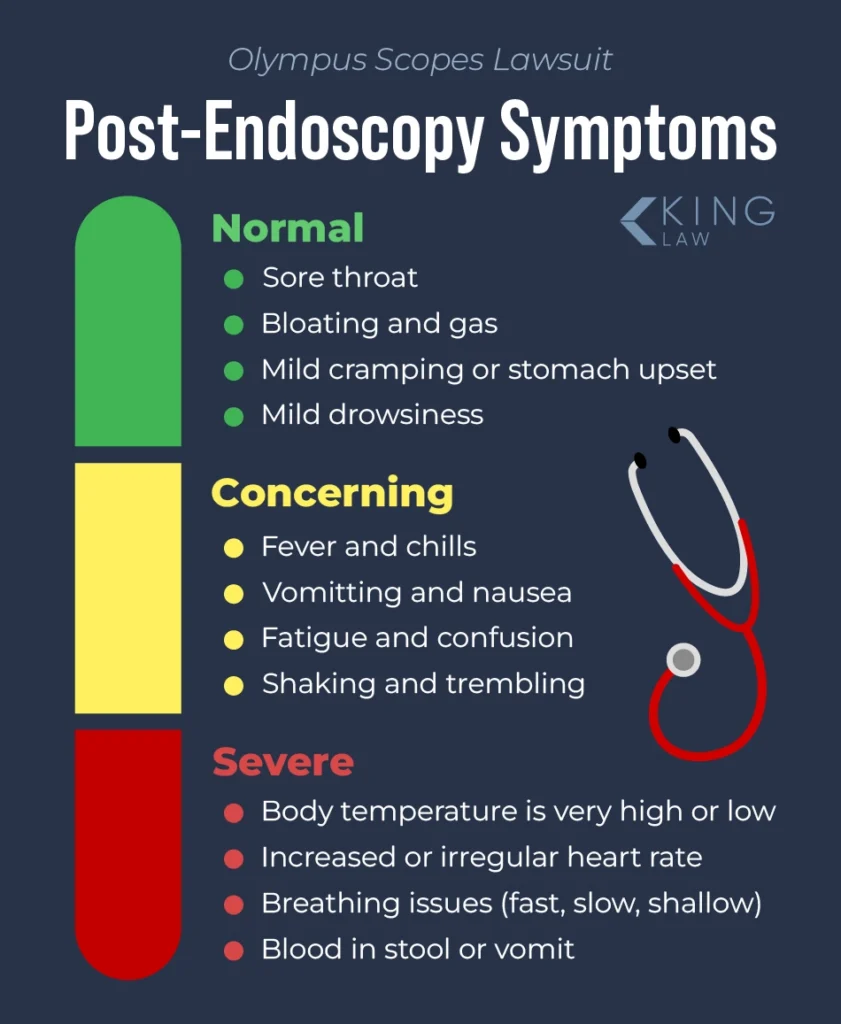
Symptoms that are not expected after an endoscopy include fever, chills, chest tightness, diarrhea, vomiting, and severe or worsening abdominal pain. Normal post-endoscopy symptoms include mild stomach cramps, hoarse voice, throat soreness, and bloating.
Normal Post-Endoscopy Symptoms
The following are some of the normal symptoms that can arise after an endoscopy:
- Sore throat
- Bloating
- Mild cramping or stomach upset
- Mild drowsiness
If they are part of the normal endoscopy recovery process, the symptoms will typically improve shortly after the procedure. For example, typical side effects after an ERCP done with an endoscope should subside after 48 hours.
Symptoms That Should Raise Concern
Post-endoscopy symptoms that should raise concern include:
- Fever
- Chills
- Severe or persistent stomach/abdominal pain
- Chest tightness
- Difficulty breathing
- Bloody, black, or dark stools
- Vomiting
- Vomit that contains blood or is like coffee grounds
- Nausea
- Fatigue
- Confusion
- Shaking or trembling
These symptoms may be a sign that an infection is developing, a sign of internal bleeding, or indicative of another post-endoscopy complication. Endoscopy patients who experience any of these signs should talk to a doctor right away. Some of these symptoms may be caused by sepsis, which can be fatal.
What Are the Red Flag Symptoms of a Serious Infection or Sepsis?
Symptoms that are “red flags” that the person may have a serious infection or sepsis include a fever of 100.4 or higher, a dangerously low temperature, blood pressure changes, confusion, rapid heart rate, and difficulty breathing.
Signs of Sepsis After Endoscopy
Sepsis is a serious medical condition where the body has an abnormal reaction to an infection. Sepsis can cause organ damage and death. Patients should monitor themselves for signs of serious infection or sepsis.
Signs of sepsis after an endoscopy include the following:
- Body temperature above 100.4°F
- Low body temperature (below 96.8°F)
- Increased or irregular heart rate
- Fast heart rate
- Shortness of breath
- Clammy skin
Sepsis can also cause confusion, disorientation, blood pressure fluctuations, and changes in how someone thinks or behaves. Sepsis is always a medical emergency and can lead to death if not treated early.
Symptoms That May Require Emergency Care
Some post-endoscopy symptoms that require emergency care are:
- Breathing problems (abnormally fast, slow, or shallow breaths)
- Chest pains
- Blood in someone’s vomit
- Severe abdominal pain
- Bloody stools
- Fever
- Unusually low body temperature
- Confusion
If any of these symptoms arise, the endoscopy patient should contact their doctor or consider going to an emergency department.
What Causes Infections After an Endoscopy?
Infections after endoscopies can be caused by bacteria from external sources getting into the person’s body (exogenous infections). Bacteria that are already in the person’s body can also enter their blood or cavities during an endoscopy, leading to an endogenous infection.
Endoscope-Related (Exogenous) Infections
Improperly sterilized endoscopes may be contaminated with bacteria from another patient, which can result in a pathogen being introduced that leads to an infection. Some lawsuits and public investigations have suggested that reusable endoscopes (such as those made by Olympus) may pose a higher risk of infection than others. These sources claim that the way some endoscopes are designed makes it harder for people to clean the small parts and channels.
Internal (Endogenous) Infections
Endoscopes may also cause endogenous infections, which are when bacteria from one part of the body infect another part. The gut is filled with bacteria, and an endoscope can transfer these bacteria to another part of the body during the procedure. Some of the body’s bacteria may also enter the bloodstream if tissue is cut (i.e., during a biopsy) or shifted during the endoscopy.
Which Endoscopy Procedures Have the Highest Infection Risk?
Endoscopy procedures that may carry a risk of infections include endoscopic retrograde cholangiopancreatographies (ERCP), colonoscopies, and esophagogastroduodenoscopies (also called EGD or upper endoscopies). ERCPs typically have higher rates of infection than colonoscopies or upper endoscopies. These procedures may be performed as part of routine cancer screening or be performed to diagnose or treat an existing illness.
ERCP Infection Risk
One study suggested that ERCP procedures may be associated with a
Colonoscopy and Upper Endoscopy Risk
In one study, about 55 out of 12,714 patients developed an infection after an endoscopic procedure. Of those 55 patients, over 90% had undergone a colonoscopy or an upper endoscopy. Overall, colonoscopies and upper endoscopies are considered safe. However, there are risks of infections that patients should be aware of.
Who Is Most at Risk for Infection After Endoscopy?
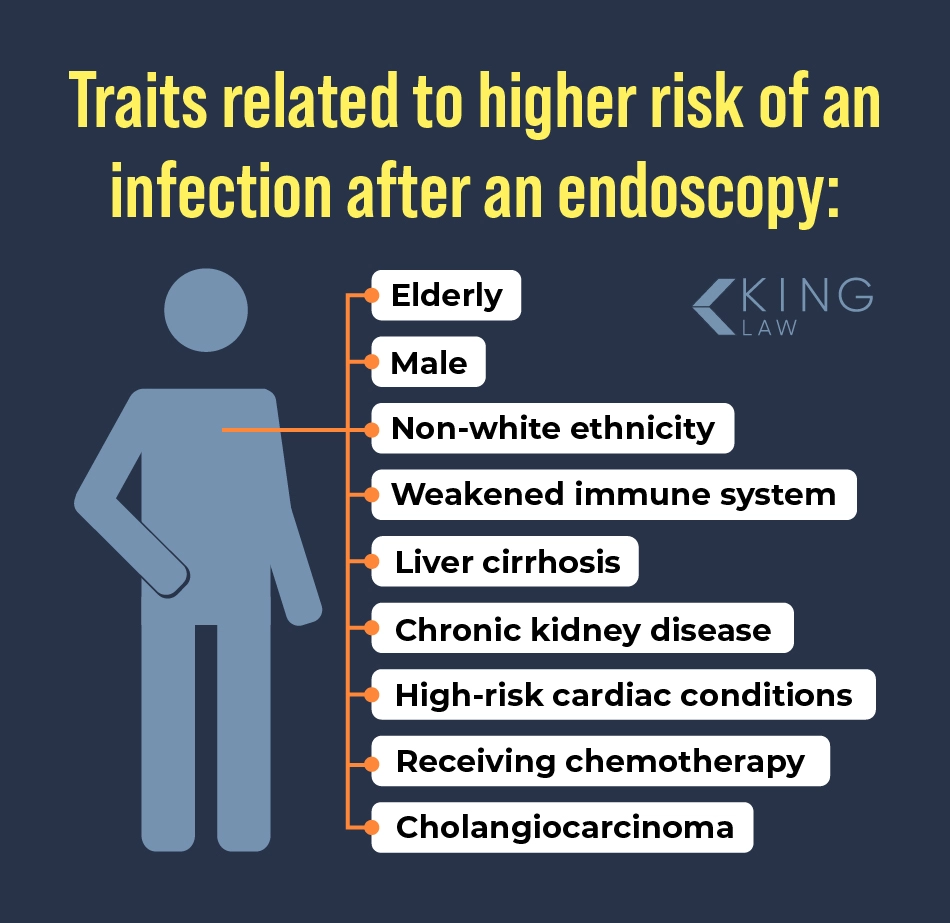
Patients who may have a
- People who are elderly
- Males
- People of non-white ethnicity
- People with weakened or compromised immune system (autoimmune diseases or immunosuppression)
- People with cholangiocarcinoma (i.e., cancer of the bile ducts)
- People with liver cirrhosis
- People with chronic kidney disease
- People with high-risk cardiac conditions
- People receiving chemotherapy
Some of the above risk factors may reflect differences in health status, access, facility factors, or other variables. Patients should consider talking to their doctors about the potential benefits and risks of an endoscopic procedure, including the likelihood of infection.
How Common Are Infections After Endoscopy?
Some medical scholars estimate that post-endoscopy infections occur in between 1 and 3 patients out of 1,000. This number is low overall. However, it is much higher than what some medical professionals believed the rate was at the time. Some believe that the designs of duodenoscopes and endoscopes may partly be to blame for the high infection rate, because the reusable scopes can be harder to sterilize.
When Should You Call a Doctor After an Endoscopy?
Contact a doctor if you experience the following signs after an endoscopy:
- Fever
- Chills
- Bloody or black stools
- Vomiting
- Bloody vomit
- Abdominal pain
You should call a doctor anytime you experience concerning symptoms or develop infection-related signs after an endoscopy. If you are unsure about the severity or cause of your symptoms, a medical professional can answer your questions and assess your situation.
Can I File a Lawsuit for an Infection After an Endoscopy?
You may qualify to file a lawsuit through our law firm if you developed an infection after an endoscopy, and you believe the infection may have been caused by a contaminated endoscope made by Olympus. Additionally, our law firm may also be able to file a claim on your behalf if your loved one died because of an infection caused by a defective or unsterile endoscope.
King Law Is Investigating Endoscopy Infection Cases
King Law is accepting potential lawsuits involving infections that may have been caused by defective or contaminated endoscopes, including potential lawsuits against Olympus Medical. We have demonstrated experience with complex cases involving medical malpractice, product liability, and defective devices.
Contact an Endoscopy Infection Lawyer Today
Contact King Law by calling (585) 496-2648 or filling out this online form if you believe you developed an infection from a contaminated endoscope. We do not charge any upfront attorney’s fees for people to meet with or hire us. We can investigate your potential endoscopy infection lawsuit and take steps to help you pursue compensation. Our team can help you understand your legal options and what is needed to build a case.
Frequently Asked Questions (FAQs)
List of Sources Used in This Article
King Law uses stringent editorial standards when creating articles for this site. Here is a list of sources used to write this article about endoscope infection symptoms.
BNS Institute. “Human Infection Sources: Endogenous & Exogenous.” BNS Institute, n.d. Accessed 11 May 2026.
de Jonge, N., et al. “Infection Control in Gastrointestinal Endoscopy: A Review of Current Issues and Challenges.” Gut, vol. 67, no. 9, 2018, pp. 1626–1633.
EOSCU. “Endogenous vs. Exogenous Infections: It’s All About Crowd Control.” EOSCU Blog, n.d. Accessed 11 May 2026.
Goyal, H., et al. “Gastrointestinal Endoscope Associated Bacteremia and Sepsis: Analysis of the FAERS Database.” The American Journal of Gastroenterology, vol. 113, Oct. 2018, p. S1598.
Mayo Clinic Staff. “Endoscopy.” Mayo Clinic, 13 Feb. 2024.
Minalyan, Arsen, et al. “Role of Gastrointestinal Endoscopy in the Spread of Multi-Resistant Organisms.” Cureus, vol. 14, no. 1, 2022, e21425.
Rahman, Md. Mizanur, et al. “Microbial Contamination and Infection Risks Associated with Gastrointestinal Endoscopy.” Microorganisms, vol. 13, no. 9, 2025, p. 2128.
Shah, R., et al. “Post-Endoscopic Infection Risks and Prevention Strategies.” Journal of Hospital Infection, 2024.
van den Broek, M. A. J., et al. “Endoscopy-Associated Infections and Emerging Prevention Measures.” World Journal of Gastrointestinal Endoscopy, vol. 16, no. 10, 2024, pp. 537–551.
World Health Organization. “Sepsis.” World Health Organization, 10 Jan. 2025.