

B. Braun Ethylene Oxide Lawsuit – EtO Facility in Allentown, PA [2026 Update]
Complete the form below to see if you qualify for a Ethylene Oxide Lawsuit

People in Allentown, Pennsylvania, are filing lawsuits against B. Braun Medical, Inc.. Area residents claim that ethylene oxide (EtO) emissions from the factory caused their cancer.
The Braun facility in Allentown, PA, extensively uses ethylene oxide (EtO) gas to sterilize medical equipment. EtO is a known human carcinogen and recognized as such by the U.S. EPA and other agencies. Many residents have significant concerns about B. Braun Medical’s use of the chemical and its impact on residents and the environment.
Allentown residents affected by cancer have begun to seek compensation for their losses. This page explains the details behind B. Braun Medical’s use of EtO as part of its sterilization process. It also covers more about who may be eligible to sue for compensation, as well as details about potential settlements and required documentation for a lawsuit.
About the B. Braun Ethylene Oxide Lawsuit:
B. Braun Ethylene Oxide Lawsuit Updates
B. Braun Medical, Inc. Business Operations and EtO Sterilization Procedures
B. Braun Medical, Inc. EtO Usage and Emissions in Allentown, PA
Pennsylvania Legislative Activities Linked to EtO Exposure
EtO Exposure Linked to Cancer in the Allentown Community
Who Can File a B. Braun Ethylene Oxide Lawsuit
How to File a B. Braun Ethylene Oxide Lawsuit
Deadline to File a B. Braun Ethylene Oxide Lawsuit
Estimated B. Braun Ethylene Oxide Lawsuit Settlement Amounts
B. Braun Ethylene Oxide (EtO) Lawsuit Updates
May 2026: The EPA is considering rolling back EtO emissions standards that were enacted in 2024. The new proposal would roll back emissions standards. The public comment period about this proposal closed on May 15, 2026. Meanwhile, 16 state attorneys general have formed a coalition and submitted commentary to the EPA about their proposal. They are encouraging the EPA to not roll back emissions standards, as doing so could increase the health risks of community members living near EtO plants, including those near the Allentown B. Braun plant.
March 2026: The EPA has announced a proposal that would change the ethylene oxide emission requirements released by the EPA during the prior administration. In 2024, the EPA unveiled new ethylene oxide regulations that would have required many commercial ethylene oxide facilities (like B. Braun) to substantially lower their EtO emissions within a certain time period. However, due to alleged supply constraints, a January 2025 memorandum was published that encouraged agencies to evaluate whether it may be appropriate to grant Presidential exemptions to facilities on a case-by-case basis. In July 2025, the next administration granted regulatory relief to several qualifying ethylene oxide facilities. Now, the EPA says its 2026 proposal modifies parts of the 2024 regulations to give the industry more time to develop ways to use suitable alternatives to ethylene oxide at scale. However, affected communities and advocates are concerned that relaxing ethylene oxide emissions standards for B. Braun and other facilities may put people at risk.
January 2026: On January 13, 2026, a Lehigh County Court has declined to create a class action for people who live near B Braun’s EtO plant in Allentown, PA. The complaint, filed by a resident living near the plant, would have created a class for residents living near the plant and provided medical monitoring for them. Extended exposure to EtO emissions has been shown to increase the risk of some cancers, and the lawsuit sought to have B Braun cover medical monitoring costs. People who developed certain types of cancer after living in proximity to a B Braun facility can still speak to a lawyer about eligibility for filing a lawsuit.
December 2025: B. Braun Medical, located in Pennsylvania, has been labeled as a significant cause of ethylene oxide pollution in the air in Allentown. Some sickened residents and workers have sued the facility for not warning them about the dangers of ethylene oxide and doing more to limit EtO emissions. Some of these legal claims have resulted in settlements in individual and class action lawsuits. Meanwhile, organizations are calling for updated OSHA regulations to protect people from ethylene oxide exposure while working for facilities like B. Braun. People who live or work near B. Braun and develop cancer may qualify for compensation. They are encouraged to talk to a lawyer about their concerns and possible next steps.
September 2025: Data from 2024 shows that B. Braun Medical released approximately 447 pounds of ethylene oxide (EtO) gas in the previous year. This is down from a high of approximately 9,000 pounds in 2009.
August 2025: A study found that having elevated levels of EtO in the blood is “significantly” associated with trouble sleeping. This issue joins a list of other potential challenges that may arise from exposure to ethylene oxide. Many people have already filed EtO lawsuits after living near factories and developing cancer.
July 2025: The Trump Administration extends EtO emissions-reduction compliance exemptions B. Braun for 2 years. The initial rules were set in 2024, and aimed to further reduce EtO emissions from medical device sterilization facilities. B. Braun Medical Inc. is just one of the facilities that received an extension. This extension allows the Allentown facility to pump more EtO into the atmosphere, putting residents at additional risk.
March 2025: As part of a push toward further deregulation, the EPA announced that it plans to reconsider emissions standards rules, like those finalized in 2024, surrounding medical device sterilization facilities that emit EtO (like B. Braun Medical).
February 2025: B. Braun Medical, Inc. settles a lawsuit regarding claims that EtO emissions caused cancer and other illnesses in those exposed to it. According to Lehigh Valley Business, “Braun said that the settlement is not the admission of any wrongdoing, and that it will continue to vigorously defend any remaining litigation.”
March 2024: The EPA announced finalized amendments to further reduce the amounts of EtO emissions from various medical sterilization plants, including emissions from B. Braun Medical. However, in 2025, the Trump administration would subsequently extend the requirement to comply with these rules by two years.
December 2022: The EPA holds a community meeting to discuss Ethylene Oxide in the Allentown, PA community.
May 2021: Residents of Hanover Township near Allentown sue B. Braun Medical over their cancer diagnoses. The lawsuit alleges exposure to EtO caused the cancers and includes 16 plaintiffs.
2020: B. Braun Medical installs new filtration technology, which it claims will further reduce EtO emissions in the Allentown area by up to 90%.
About B. Braun Medical, Inc.
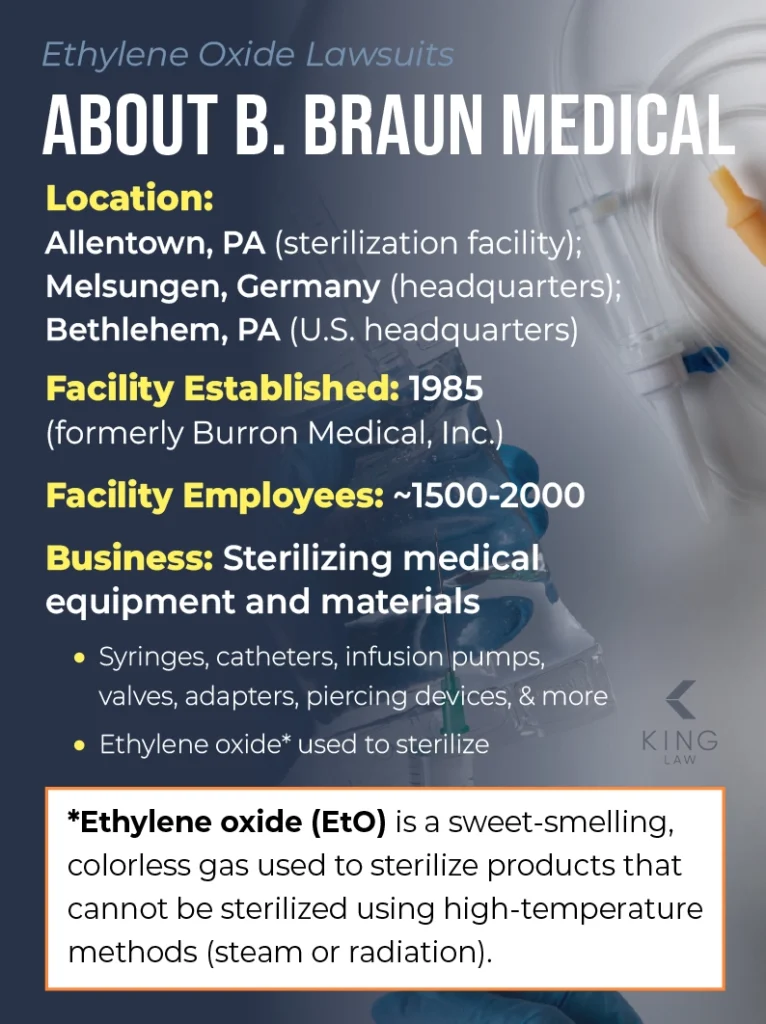
Braun Medical is headquartered in Melsungen, Germany, where it began as a pharmacy in the late 1830s. One of its American facilities is located in Lehigh County in Allentown, PA. The company is a global provider of medical supplies and devices. It is still owned by the Braun family. The company’s services include the sterilization of its medical products, using ethylene oxide gas.
According to the U.S. Food and Drug Administration (FDA), medical device providers use a range of sterilization processes to prepare items for safe use. These include heat, radiation, and gas sterilization. When it comes to gas sterilization, one of several chemicals used is ethylene oxide (EtO).
Ethylene oxide gas is one of several approved sterilization methods for medical equipment. In fact, it’s an effective sanitization method for items that cannot be sterilized through other solutions, such as heat. However, EtO increases an individuals’ risks of cancer, if they are exposed for more than 1 year or in high doses.
EtO remains a safe sterilization method because microscopic residual amounts of the chemical on medical devices pose virtually no safety risks. The threat comes from gas emissions that enter the air supply during sterilization. As a result, public health concerns have arisen for those who live and work in areas surrounding EtO sterilization facilities. B. Braun Medical’s Allentown, PA, plant is one of those facilities.
The History of B. Braun Medical, Inc. and Its EtO Sterilization Facility
- Braun Medical’s history in Allentown dates back more than 40 years, to when Braun acquired the existing Burron Medical Inc. facility. Since then, Braun has continued to maintain a presence in the area. As of 2022, B. Braun supports approximately 1,500 – 2,000 jobs throughout the greater Allentown area. The facility remains an important economic presence in the community. However, the plant’s history as an EtO sterilization facility has drawn controversy because of EtO emissions’ link to cancer.
What Are the Health Risks Associated with Emissions from B. Braun Medical in Allentown?
EtO is a colorless, flammable gas that occurs naturally in the body at very low levels. However, it does not occur naturally in nature. Rather, it enters the air and the surrounding environment through artificial means, such as medical device sterilization.
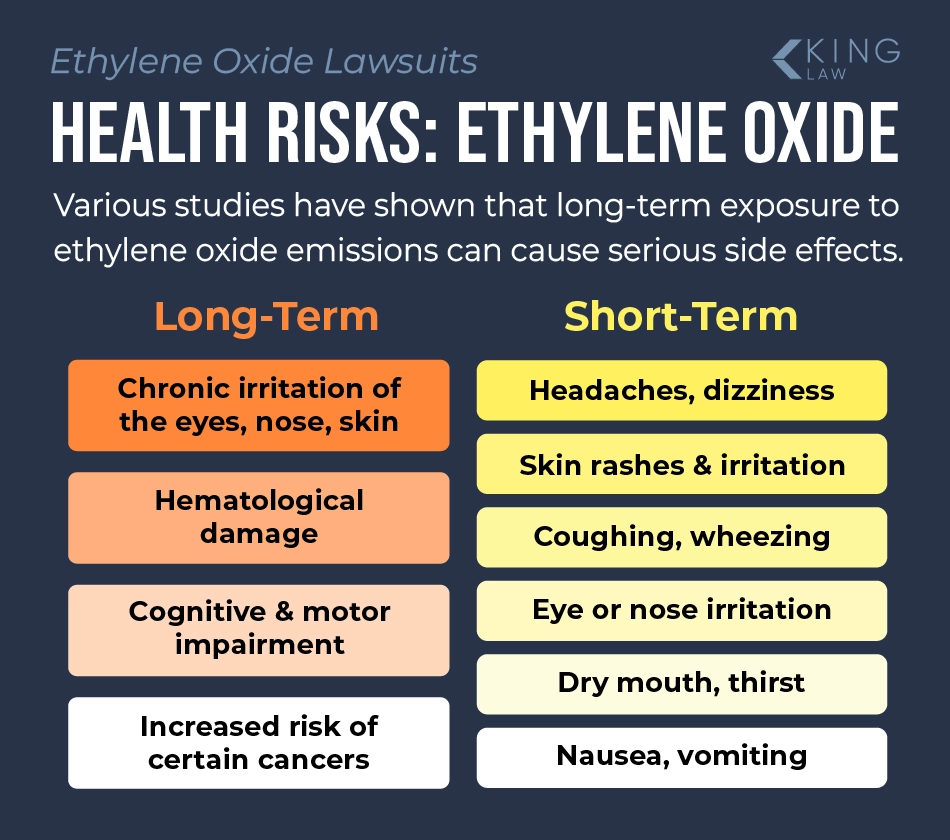
Low exposure to EtO gas is not inherently dangerous. However, various studies have shown that short- and long-term exposure to non-natural sources of EtO emissions may adversely affect individuals’ health. People who are exposed to EtO may experience short- or long-term side effects.
Some of the short-term EtO exposure side effects include:
- Skin rashes
- Neurological effects (headache, dizziness, lethargy, muscle weakness, memory loss)
- Respiratory effects (coughing, wheezing, shortness of breath)
- Eye irritation
- Excessive thirst and dry mouth
- Gastrointestinal issues (nausea, vomiting, diarrhea)
Some of the long-term EtO exposure side effects include:
- Chronic Irritation of the eyes, skin, and respiratory passages.
- Hematological damage (e.g., decreases in hematocrit and hemoglobin)
- Cognitive and motor impairment
- Increased risk of certain cancers
Notably, a prominent side effect of long-term EtO exposure is an increased risk of cancer. Studies have linked the chemical to higher instances of lymphohematopoietic cancers, including non-Hodgkin’s lymphoma, myeloma, and lymphocytic leukemia. There is also evidence of increased risks of breast cancer in women. Therefore, bodies such as the U.S. EPA and FDA both classify EtO as a known human carcinogen. Those who work with EtO as part of their occupations and those who live near EtO facilities (usually within 4 miles) may face elevated cancer risks if they inhale the substance over many years.
Where Is B. Braun Medical, Inc. Located in Allentown?
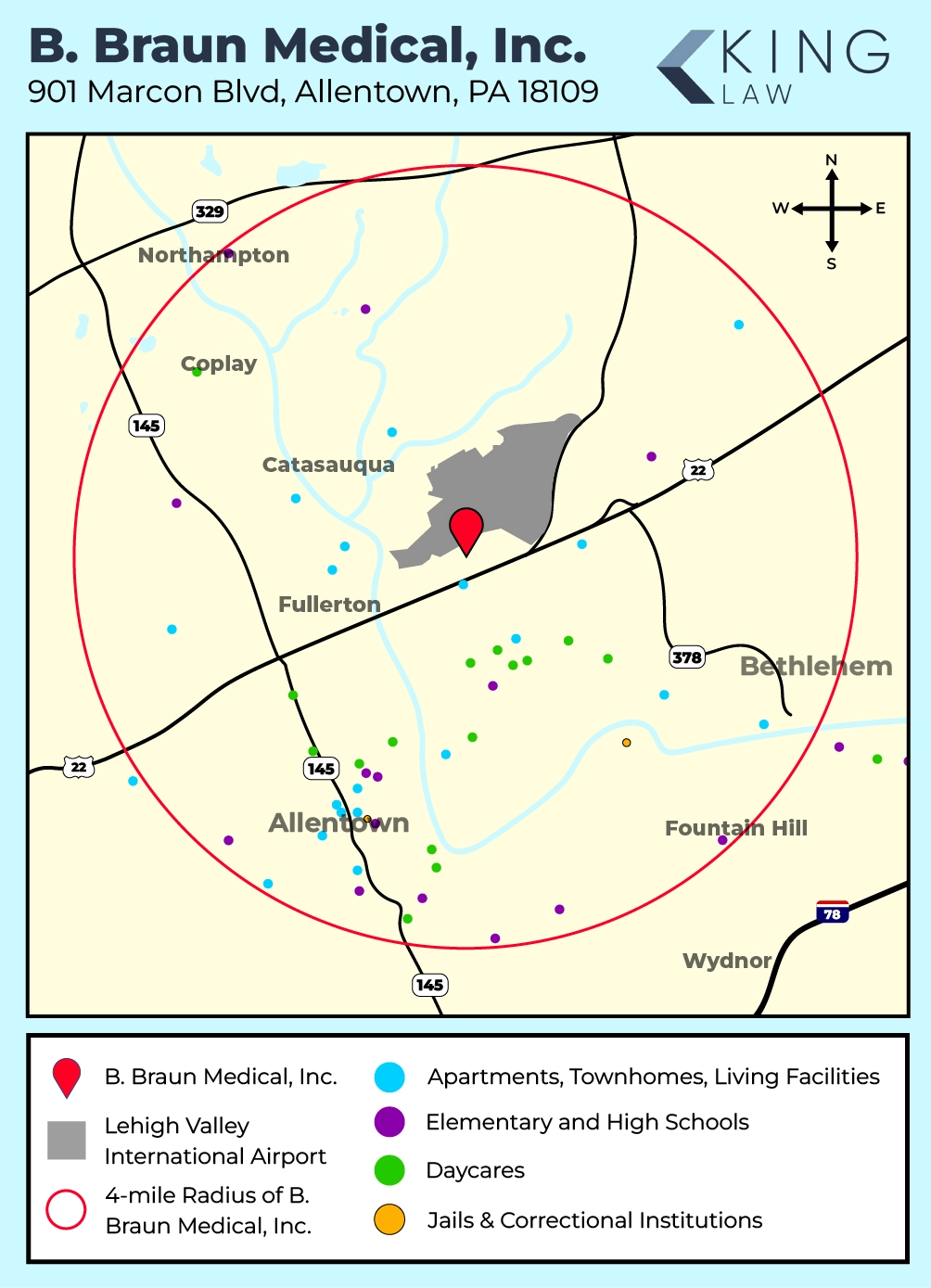
Braun Medical, Inc. is located at 901 Marcon Boulevard in Allentown, PA. The facility is very close to central Allentown and surrounding communities like Bethlehem, Fullerton and Catasauqua. Besides multiple schools, businesses, retail facilities and family neighborhoods in the area, the facility is also close to several major interstate corridors and the Lehigh Valley International Airport.
Ethylene Oxide Allentown, PA Map
List of Neighborhoods, Businesses, and Schools in the Exposure Area
The B. Braun Medical, Inc. facility is near many Allentown points of interest. Below is just a sampling of locales situated near the business.
Schools:
- Executive Education Academy Charter School
- Lincoln Leadership Academy Charter School
- Louis E. Dieruff High School
- Roberto Clemente Charter School
- Allentown Central Catholic High School
- Lehigh Valley Academy Regional Charter School
- Hanover Elementary School
- Catasauqua Middle School
- Whitehall High School
- St. Elizabeth Regional School
- Berks Technical Institute
- Central Elementary STREAM Academy
- Sheridan Elementary School
- Mosser Elementary School
- Ritter Elementary School
- Mosser Elementary School
- Harrison-Morton Middle School
- Trexler Middle School
- Whitehall-Coplay Middle School
Businesses:
- Lehigh Valley International Airport
- Amazon
- PPL Corporation
- Allentown School District
- Sam’s Club
- Marine Corps Reserve Center
- Lehigh Valley Mall
Neighborhoods & Parks:
- West End
- West Park Historic District
- Lehigh Parkway
- Coca Cola Park
- Lehigh Mountain Park
- 6th Ward
- South Poplar
- Westgate Hills
As a result of emissions from the facility, those who have lived or worked in the Allentown area may face heightened illness and cancer risks after EtO inhalation.
B. Braun Medical, Inc. Business Operations and EtO Sterilization Procedures
Braun Medical, Inc. provides medical supplies and technology for health care providers around the globe. Among B. Braun’s sterilized medical products are surgical devices, infusion technology, dialysis care devices, and routine medical items such as needles, syringes, and IV lines.
Medical devices in the United States are subject to strict sterilization and disinfection regulations. While there are many ways to sterilize medical equipment, certain procedures can add moisture or damage the equipment. This is where gases like ethylene oxide serve as alternatives.
EtO is an approved and effective medical sterilization technique that ensures the safety of devices. However, emissions of EtO during the stabilization process can pose cancer risks if people are exposed to them long-term. The problem lies not in the devices themselves, but in the byproducts caused by sterilization.
B. Braun Medical, Inc. EtO Gas Sterilization Process
The EtO gas sterilization process at B. Braun Medical’s Allentown facility has evolved over time. Per a report filed in 2019 with the Pennsylvania Department of Environmental Protection, the facility used eight sterilization chambers and an aeration room. After supplies are sterilized within the sterilization chambers, they are then taken to the aeration room for final preparation and to remove residual EtO.
Both the sterilization and aeration facilities at B. Braun Medical previously used their own ventilation systems. These ventilation systems emitted residual EtO into the surrounding atmosphere. In turn, the community was exposed to chemical byproducts that could increase cancer risks. The 2019 report requested to upgrade these ventilation systems to a new Anguil System, which has an estimated control efficacy of more than 99%. This process was completed in 2020.
B. Braun Medical, Inc. EtO Usage and Emissions in Allentown, PA
As a medical sterilization facility, B. Braun Medical uses EtO extensively. The
Safety and security protocols from various federal and state regulators govern occupational and community safety in relation to EtO. Amendments finalized by the EPA in 2024 aim to reduce EtO emissions at commercial sterilization facilities by up to 90%.
As of September 2025, however, EPA coverage of the new EtO rules states that companies will be given time to comply with these new emissions regulations. In early 2025, the Trump administration announced that compliance deadlines for these rules would be extended for two years.
While B. Braun Medical has taken steps to control EtO exposure—such as through workplace safety rules and the installation of new ventilation systems—concerns remain. Exposure to even small amounts of EtO can cause an increased risk of cancer. For those who have previously experienced prolonged exposure, the damage might already be done.
Actions Taken Against B. Braun Medical, Inc.
- Braun Medical, Inc. is subject to regulation and monitoring by various legislation and governmental regulators. These include the Clean Air Act, the U.S. Environmental Protection Agency (EPA), and the Pennsylvania Department of Environmental Protection (PA DEP).
The EPA has provided funding to various partners to support community monitoring, identify health concerns, and strengthen the Allentown community against EtO exposure and other forms of air pollution. Partners in the effort include Lehigh University, PA DEP, and the Promise Neighborhoods Lehigh Valley. The EPA continues to provide ongoing monitoring, safety and risk management best practices.
Has B. Braun Medical Reduced its Ethylene Oxide Emissions?
EtO Emissions at B. Braun Medical reached a high of nearly 9,000 pounds per year in 2009. Since then, emissions have fluctuated, although the overall trend has been downward. In 2020, the total EtO emissions from the facility was between 1,000 and 2,000 pounds, with estimated emissions of approximately 447 pounds in 2024.
Moreover, past exposure to EtO can cause cancer to develop in individuals years after the fact. Therefore, the significant levels of EtO emitted from B. Braun’s facility in the past remain a threat. In addition, exposure to even small levels of EtO emissions may increase your risk of illness. Therefore, despite B. Braun’s efforts to limit emissions, an increased cancer risk may continue to threaten Allentown and the surrounding area.
Pennsylvania Legislative Activities Linked to EtO Exposure
EtO regulation is most closely associated with federal groups such as the EPA and OSHA. However, the
EtO Exposure Linked to Cancer in the Allentown Community
A number of cancers are linked to long-term EtO exposure, including:
- Non-Hodgkin lymphoma
- Leukemia
- Female breast cancer
- Multiple myeloma
- Pancreatic cancer
- Kidney cancer
- Uterine cancer
Concerns have arisen about whether emissions from the B. Braun Medical facility put the community at a greater risk of cancer. Many of those who have lived in the area and received a cancer diagnosis have begun to take legal action to seek compensation for their losses.
Public Response to Emissions from B. Braun Medical, Inc.
There have been various actions by B. Braun Medical, Inc. to address EtO exposure concerns within the Allentown community. In 2020, the facility installed a new enhanced emission control system estimated to reduce the amount of EtO emissions by more than 99%. The facility has also created an EtO Facts page on its website.
As of 2026, B. Braun continues to settle various lawsuits from those who allege that they suffered harm as a result of EtO exposure. There remains an opportunity for those who believe they sustained cancer as a result of the facility’s sterilization practices to pursue legal action.
Who Can File a B. Braun Ethylene Oxide Lawsuit?
If you believe you developed cancer as a result of exposure to EtO from B. Braun Medical, you may have legal recourse available. However, you must meet several qualifications. The general requirements are as follows:
- You must have lived within 4 miles of the B. Braun Allentown facility for at least 1 continuous year.
- You must have been diagnosed with a qualifying cancer (e.g., leukemia, non-Hodgkin lymphoma, multiple myeloma, breast cancer, liver cancer, or lung cancer) after exposure to EtO.
- You must meet cancer latency periods. A latency period refers to the time between exposure to a carcinogen and the development of cancer. For most cancers, the latency period is 2+ years. However, 5-year latency periods may apply to certain illnesses like breast cancer and leukemia.
Family members of deceased individuals who would have been eligible can also file wrongful death lawsuits.
Filing EtO lawsuits is a complex process. We highly recommend that anyone who wishes to take legal action speak to an experienced attorney to proceed.
How to File a B. Braun Ethylene Oxide Lawsuit
The process of filing an EtO exposure lawsuit against B. Braun Medical can vary. However, it usually is similar to the following:
- Request a free case consultation with a licensed attorney experienced in toxic exposure cases.
- Gather appropriate medical records and proof of diagnosis with a qualifying EtO-related illness. The records will need to include your date of diagnosis. Financial records may also help you support your claim.
- Provide your residence history that proves you lived in the vicinity of the B. Braun Allentown facility for at least 1 year during a time when EtO was present in the atmosphere.
- Work with your attorney to file a legal complaint. They will handle the appropriate legal paperwork. They can also advise you on further supporting evidence to provide.
Once the case is filed, it will proceed through various stages. These may include case review, a discovery phase where plaintiffs and defendants exchange evidence, questionings, depositions, and settlement negotiations. Your attorney will work to settle your case for an appropriate sum to compensate you for your losses. If the case does not settle, you may proceed to trial.
During the trial, a judge or jury will hear your case and determine if you are entitled to compensation. With a trial, you run the risk of being awarded nothing if the court rules against you.
If you choose to work with King Law for your EtO lawsuit, your case will be subject to contingency fees. Under this structure, you will not have to pay us unless compensation is awarded in your case.
Deadline to File a B. Braun Ethylene Oxide Lawsuit
If you plan to file an EtO exposure lawsuit against B. Braun Medical, your case may be subject to a statute of limitations. In Pennsylvania, the statute of limitations for filing a personal injury or wrongful death lawsuit is generally 2 years from the date of diagnosis, discovery, or death. So, if you received a diagnosis of cancer in September 2024, you may have until September 2026 to file your suit.
Statutes of limitations can vary. In some cases, if you have only recently discovered that your or a family member’s disease is linked to EtO exposure, the statute of limitations can be extended. Therefore, it’s important to consult with an attorney as soon as possible after a diagnosis. They can advise you on what statutes apply to your prospective case and guide you on next steps.
Estimated B. Braun Ethylene Oxide Lawsuit Settlement Amounts
Your prospective settlement from an EtO exposure lawsuit against B. Braun Medical may vary. Similar EtO cases have settled for $175,000 to $500,000. However, settlements can be lower or higher than these amounts. Numerous factors may combine to affect your final settlement. These include:
- The type of cancer you have.
- The financial losses you have incurred from your illness.
- Your age (younger people with greater financial losses may receive more compensation).
- The strength of your evidence of exposure to EtO.
By working with an expert attorney to file your EtO case, you can create a better foundation to work toward an appropriate settlement.
Contact an Ethylene Oxide Lawyer Today
If you believe you developed cancer or another illness as a result of exposure to Ethylene Oxide in Allentown, PA, King Law is ready to help. Speak to one of our attorneys to discuss your ability to file a claim against B. Braun Medical, Inc. for your losses. Call (585) 496-2648 or fill out our contact form to schedule a free, no-obligation case review today.