

Dupixent Lawsuits for T-Cell Lymphoma [2026 Update]
Complete the form below to tell us about your case

People are filing Dupixent lawsuits alleging that the drug (dupilumab) can increase the risk of developing cutaneous T-cell lymphoma (CTCL), yet they were not warned of this possible risk. Dupixent is a prescription biologic used to treat a range of chronic inflammatory conditions, including atopic dermatitis, eczema, COPD, asthma, and other skin and lung conditions.
People who received Dupixent injections and later developed CTCL allege there is a connection between the drug and developing this rare type of blood cancer. Researchers have been studying whether Dupixent can increase the risk of or unmask certain types of lymphoma. Plaintiffs in Dupixent lawsuits allege that the drug’s manufacturers, Sanofi, Genzyme, and Regeneron, should have known about this possible risk. They say that the companies should have warned patients and physicians.
On this page, you will learn what the Dupixent lawsuit is about, research about Dupixent and cutaneous T-cell lymphoma, and the legal grounds of lawsuits. You will also find studies examining the possible relationship between Dupixent and lymphoma. This article also provides information on who can file a Dupixent lawsuit, filing deadlines, and possible compensation and settlements.
On This Page
Why Are People Filing Dupixent Lawsuits?
Who is Eligible to File a Dupixent Lawsuit?
What Evidence is Needed to File a Dupixent Lawsuit?
What Are the Allegations in Dupixent Lawsuits?
Is There a Connection Between Dupixent and T-Cell Lymphoma (CTCL)?
Studies About Dupixent and T-Cell Lymphoma
What Is Dupixent (Dupilumab) and How Does It Work?
Timeline of FDA Approvals for Dupixent
What Damages Could Be Recovered in a Dupixent Lawsuit?
Is There a Deadline to File a Dupixent Lawsuit?
What Are the Estimated Settlement Amounts in a Dupixent Lawsuit?
King Law Is Investigating Dupixent and T-Cell Lymphoma Claims
Contact a Dupixent Lawyer Today
Key Takeaways
Important information about Dupixent CTCL lawsuits:
- Drug Name: Dupixent (generic name: dupilumab)
- Type of lawsuit: Civil/personal injury
- Alleged injury: Dupixent contributed to some patients developing CTCL or Dupixent accelerated preexisting CTCL
- Existing defendants: Sanofi Pharmaceuticals, Inc., Regeneron Pharmaceuticals, Inc., and Genzyme Corporation
- FDA actions: The FDA is currently evaluating the need for regulatory action regarding Dupixent and CTCL
- Allegations: Failure to warn of possible risks, misleading marketing, failure to monitor and test Dupixent, resulting in injuries to some patients
- MDL or class action lawsuit: MDL No. 3180 In re: Dupixent (Dupilumab) Products Liability Litigation
- Venue and Judge: District of New Jersey under Judge Zahid N. Quraishi
Dupixent (Dupilumab) Lawsuit, Regulatory, & Research 2026 Updates
September 1, 2026: Man from Massachusetts Sues Dupixent Manufacturers After Diagnosed with Lymphoma, MDL Grows
As of September 1, 2026, the JPML reported that there were 35 active lawsuits in the MDL about Dupixent’s alleged connection to cutaneous T-cell lymphoma. On July 10, 2026, a man from Massachusetts filed a lawsuit against the companies that designed and made Dupixent. His complaint alleges that he developed cutaneous T-cell lymphoma, a type of cancer, after he received Dupixent injections to treat another medical condition. He claims that receiving Dupixent caused, accelerated, or worsened his lymphoma and that the companies should have warned about this risk.
August 3, 2026: Colorado Patient Sues Dupixent Manufacturers After Developing a Type of Lymphoma
A woman from Colorado has filed a lawsuit after she developed mycosis fungoides, a type of cutaneous T-cell lymphoma (CTCL). According to her complaint, she was prescribed Dupixent for atopic dermatitis from March 2021 to February 2023. Her lawsuit claims that she was diagnosed with CTCL around February 2023. She alleges that her use of Dupixent caused or accelerated her cancer, which has required extensive medical treatments and changes to her life. As of August 3, 2026, the federal Dupixent MDL has grown to include 28 lawsuits.
July 1, 2026: 26 Lawsuits Consolidated in Dupixent MDL, Judge Schedules Important Case Deadlines
As of July 1, 2026, there are 26 lawsuits that have been filed or transferred into the newly-formed Dupixent MDL. In a June 11, 2026, order, the Dupixent MDL judge asked the parties to meet and try to reach an agreement on certain case matters before July 24, 2026. The judge also scheduled the initial case management conference (CMC) for October 1, 2026.
June 11, 2026: Tennessee Dupixent Patient Sues Sanofi and Regeneron After Lymphoma Diagnosis
A man from Tennessee has filed a lawsuit against Dupixent’s manufacturers, Sanofi and Regeneron. According to his legal complaint, he was prescribed Dupixent to treat his atopic dermatitis (eczema) from January 2025 to September 2025. His lawsuit claims that he was diagnosed with a type of cutaneous T-cell lymphoma around September 2025. He alleges that his Dupixent use may have caused or contributed to his development of lymphoma and that he should have been warned about this risk.
June 5, 2026: Judicial Panel Approves Request to Create Dupixent MDL
The Judicial Panel on Multidistrict Litigation (JPML) has approved a request to centralize IN RE: DUPIXENT (DUPILUMAB) PRODUCTS LIABILITY LITIGATION (MDL No. 3180). The multidistrict litigation will be held in the District of New Jersey, and the Honorable Zahid N. Quraishi will oversee the MDL. At this time, patients who took Dupixent (dupilumab) and were diagnosed with Cutaneous T-cell Lymphoma (CTCL) may qualify to join the MDL. People may also be eligible to join the MDL if their loved one passed away after taking Dupixent and developing CTCL. However, the JPML said the future MDL criteria could include other types of T-cell lymphomas.
April 16, 2026: Panel Will Hear Request for Creating a Centralized Lawsuit for Those Alleging CTCL From Dupixent
A motion has been submitted to the Judicial Panel on Multidistrict Litigation (JPML) to create a Dupixent multidistrict litigation (MDL) for patients alleging their CTCL was unmasked or induced by the drug. If the JPML approves this request, a federal centralization litigation would be created for Dupixent patients alleging that Dupixent contributed to their blood cancer diagnosis. A previous motion was heard in February 2026, but no action was taken at that time. The JPML will hold a hearing on May 28, 2026. If they create an MDL for Dupixent, plaintiffs will have new legal options for filing their civil lawsuit. There are 15 Dupixent lawsuits in the original centralization motion.
February 13, 2026: Attorneys File Motion to Consolidate Dupixent Lawsuits into a Single Federal MDL
Attorneys representing 15 plaintiffs have filed a motion requesting the Judicial Panel on Multidistrict Litigation (JPML) to create a multidistrict litigation (MDL) for people claiming injuries from Dupixent. In their lawsuits, the plaintiffs allege that taking Dupixent (dupilumab) may be associated with either developing or masking their cutaneous T-cell lymphoma (CTCL). If the JPML approves this request, an MDL would be created. Regeneron is named as the defendant. An MDL is a type of federal, centralized litigation that allows some pre-court proceedings to be combined for all plaintiffs and defendants. Attorneys have requested that the potential Dupixent MDL (i.e., In re Dupixent Products Liability Litigation) be consolidated in U.S. federal courts in the Northern District of Georgia. This MDL would give people filing Dupixent lawsuits an additional venue to seek legal recourse.
Read Other Updates About Dupixent Lawsuits, Research, and Regulatory Events |
Why Are People Filing Dupixent Lawsuits?
Patients are filing lawsuits alleging that using Dupixent contributed to them developing cutaneous T-cell lymphoma (CTCL), a rare type of non-Hodgkin lymphoma. In their lawsuits, patients allege that Dupixent either contributed to or masked their CTCL. Plaintiffs in these lawsuits say that Dupixent’s manufacturers should know about this possible association, yet they do not warn patients.
Is the Dupixent Lawsuit a Class Action Lawsuit or an MDL?
On June 5, 2026, the Judicial Panel on Multidistrict Litigation (JPML) centralized lawsuits involving Dupixent CTCL claims into a multidistrict litigation (MDL). The name of the MDL No. 3180 is In re: Dupixent (Dupilumab) Products Liability Litigation. This motion moves Dupixent lawsuits to a federal court in the District of New Jersey under the Honorable Judge Zahid N. Quraishi. The MDL structure allows each patient to have their case heard individually, and multiple patients can pool resources during the early stages of the legal process.
Who is Eligible to File a Dupixent Lawsuit?
People who want to file a lawsuit against one of Dupixent’s manufacturers will need to meet certain eligibility criteria to file a case. Here are some of the people who may be eligible to file a Dupixent Lawsuit:
- A person who used Dupixent and who was later diagnosed with cutaneous
T-cell lymphoma (CTCL) - Spouses of people who developed CTCL after Dupixent use (alleging loss of consortium/companionship)
- Spouses or other survivors of patients who used Dupixent, developed CTCL, and later passed away (alleging wrongful death)
Additionally, when the JPML created the Dupixent MDL, the transfer order stated, “At this stage, we need not rule on whether cases involving T-cell lymphomas other than CTCL belong in this MDL.” This means that if the judge sees enough evidence that Dupixent could be related to developing other types of lymphoma, people with other types of lymphoma may be able to join the MDL.
What Other Conditions May Qualify Someone to File a Dupixent Lawsuit with King Law?
People who want to file a lawsuit against the manufacturers of Dupixent need to meet certain eligibility criteria to file a lawsuit within the MDL. Currently, the Dupixent MDL is accepting CTCL cases, but the JPML judge left room for other qualifying conditions to be accepted in the future. So, in addition to CTCL, our attorneys are reviewing cases from people who were prescribed Dupixent and then developed one of the following conditions:
- Adult T-cell leukemia/lymphoma
- Anaplastic large cell lymphoma
- Extranodal NK-cell/T-cell lymphoma
- Follicular helper T-cell lymphoma
- Lymphomatoid papulosis
- Mycosis fungoides
- Peripheral T-cell lymphoma
- Sézary Syndrome
- Subcutaneous panniculitis-like T-cell lymphoma
If you are unsure if you or a family member qualifies for a lawsuit, please reach out to our firm for a free case evaluation. The types of lymphoma that will qualify for a Dupixent lawsuit will change as the litigation progresses, and King Law will stay current on eligibility requirements.
What Evidence is Needed to File a Dupixent Lawsuit?
To file a Dupixent lawsuit, plaintiffs will need to support their legal complaints with evidence. Their attorney will use this evidence and a wealth of other information to build a strong case. Possible evidence that a plaintiff will have to supply to support a Dupixent law claim includes:
- Prescriptions and records showing when Dupixent was administered and for how long
- Medical records showing a CTCL diagnosis
- Records of treatments for CTCL
- Employment and financial records to document losses
- Personal and witness statements documenting the impacts of the disease
An attorney can advise what records are needed to support a Dupixent claim. They will also ensure that all necessary information is submitted to the courts complete and on time, in order to maintain a viable claim against Dupixent’s manufacturers.
What Are the Allegations in Dupixent Lawsuits?
Allegations against Dupixent’s manufacturers include:
- Failing to warn of possible serious injuries associated with using Dupixent, including the development or exacerbation of CTCL
- Failing to understand, test, and monitor health outcomes in people who took Dupixent
- Knowing about the possible relationship between Dupixent and CTCL and not taking the proper actions
- Improperly marketing Dupixent
- Engaging in negligent marketing practices
Lawsuits also accuse Sanofi, Regeneron, and Genzyme of downplaying the potential risks of the drug. For example, CTCL can look like atopic dermatitis (eczema) in its early stages, so some patients experienced a delay in their cancer diagnoses. Plaintiffs in lawsuits say they should have been told about possible delays in diagnosing CTCL.
Lawsuits say that if the companies had properly monitored Dupixent, stayed current with scientific literature, and properly followed FDA post-market responsibilities, the manufacturers would have been aware of a possible connection between Dupixent and developing CTCL.
Is There a Connection Between Dupixent and T-Cell Lymphoma (CTCL)?
Dupixent suppresses certain inflammatory pathways, which is why it can be a useful treatment for some inflammatory skin and lung conditions. However, this suppression may make it more difficult for the body to detect abnormal T-cell growth and T-cell lymphoma.
In its early stages, CTCL can resemble eczema or another atopic dermatitis. So, some researchers have explored whether Dupixent (dupilumab) may accelerate an undiagnosed lymphoma in some patients or delay its diagnosis. For example, in a
Scientists are still trying to determine if Dupixent increases the risk of or masks CTCL. Some researchers suspect that Dupixent may reveal or trigger pre-existing CTCL rather than causing it directly.
About Dupixent and Possible Lymphoma Risk
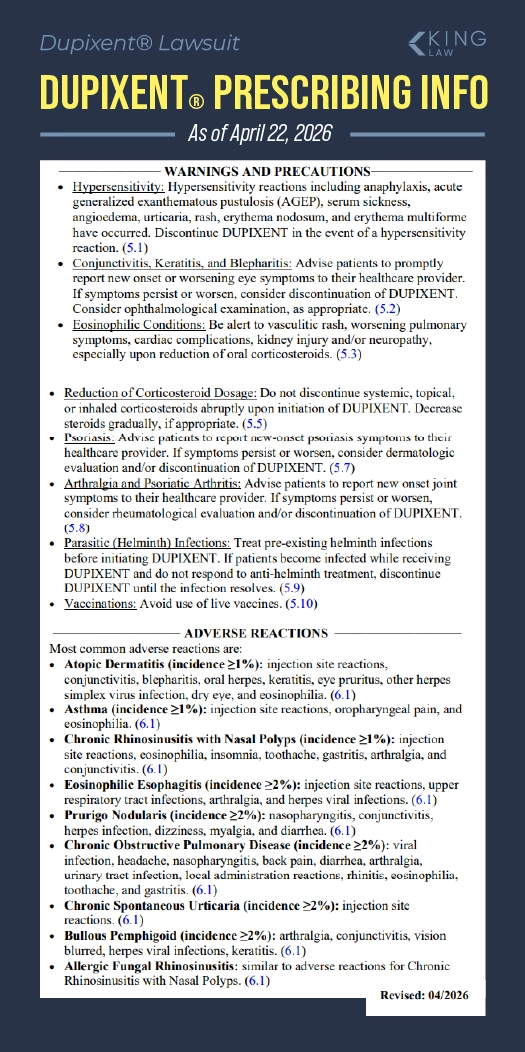
Medical research and safety data show a possible association between Dupixent (dupilumab) use and CTCL and other types of lymphomas, though more research is needed to understand if there is an association. For example, one scientific study found that patients using Dupixent are 4 times more likely to develop CTCL. However, researchers did not determine causality.
CTCL is a rare type of cancer, affecting 8.55 per 1 million people between 2000 and 2018. However, another study has found that Dupixent patients who are taking the medication for atopic dermatitis are 4.59 times more likely to be diagnosed with CTCL than those who have atopic dermatitis and are not on Dupixent.
The data suggest that adult patients are more likely to be diagnosed with CTCL within their first year after starting Dupixent. All of the eczema patients in the control group were over 60 when diagnosed with CTCL. But, only half of the Dupixent eczema patients were 60 or older when diagnosed with CTCL. These data support that taking Dupixent may lead to CTCL at a younger age. However, more research is needed to understand differences among people of different ages.
FDA Alert for Patients Taking Dupixent (Dupilumab)
As of 2026, Dupixent (dupilumab) is listed on the FDA’s list of Potential Signals of Serious Risks/New Safety Information Identified by the FDA Adverse Event Reporting System (FAERS). According to reports, the agency is investigating the risk level of developing CTCL after receiving Dupixent injections. The FDA is evaluating the need for regulatory action.
Studies About Dupixent and T-Cell Lymphoma
Some research has found a possible association between Dupixent use and CTCL in patients with atopic dermatitis (eczema), COPD, and asthma. Some of these studies have explored increased CTCL rates among Dupixent users compared to the general population and those with eczema who have not taken Dupixent. Scientists are still working to understand if there is a possible association between Dupixent and CTL.
Study Highlight: Dupixent and the Risk of Cutaneous T-Cell Lymphoma
Study authors and publish year: Hasan et al., 2024
Study summary: Researchers studied a group of people who were diagnosed with atopic dermatitis (eczema) and prescribed Dupixent. The researchers discovered that those who took Dupixent for their eczema were four times more likely to develop CTCL than those who had eczema and were not given Dupixent. In this study, most of the CTCL diagnoses occurred after the patients had been taking Dupixent for at least a year.
The researchers noted that the study tracked an increased risk of Dupixent patients being diagnosed with CTCL, but they did not look into whether Dupixent causes this type of cancer. Additionally, since they used data from a database, the researchers said misclassifications might be included in their sample. However, the findings add to a body of research showing similar associations between Dupixent and CTCL, and additional investigation is warranted.
Study Highlight: Adverse Events and Severe Side Effects Reported to FDA
Study name: Analysis and mining of Dupilumab adverse events based on FAERS database (FAERS Disproportionality Analysis)
Study authors and publish year: Gao et al., 2025
Study summary: A study of FDA adverse event data showed a possible connection between Dupixent and CTCL. Although the rates of CTCL were low, the researchers noted that it could be a new type of adverse event being reported. The authors encouraged future research into how Dupixent interacts with the immune system and may increase the risk of CTCL.
Study Highlight: The Relationship Between Dupilumab and CTCL
Study name: Case Report: Cutaneous T-cell lymphoma associated with biologic therapy: three cases and a literature review (Case Series & Literature Review)
Study authors and publish year: Li et al., 2025
Study summary: Researchers examined the relationship between Dupixent use and CTCL. The researchers discovered that 27 out of 31 patients with atopic dermatitis who were given Dupixent (dupilumab) developed a form of CTCL thereafter.
The authors noted that atopic dermatitis and early forms of CTCL look very similar in their early stages, so more research is needed to determine the relationship between Dupixent and this type of cancer. Dupixent may alter the immune system in a way that opens the door for CTCL to develop. Similarly, it may unmask the condition in someone who has or is predisposed to have it. Nonetheless, given the strong association between Dupixent and CTCL, the study concludes that caution is warranted in diagnosing and treating eczema patients with Dupixent.
What Is Dupixent (Dupilumab) and How Does It Work?
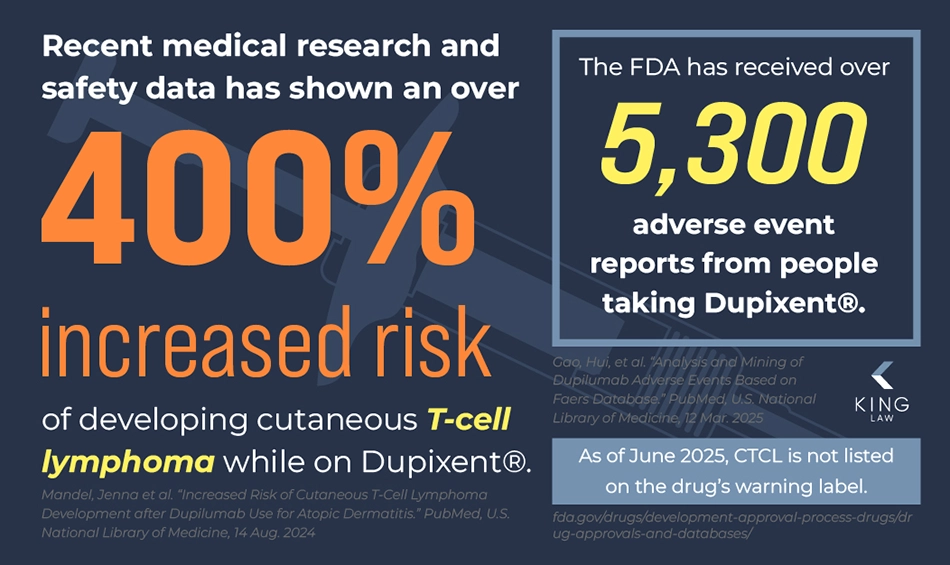
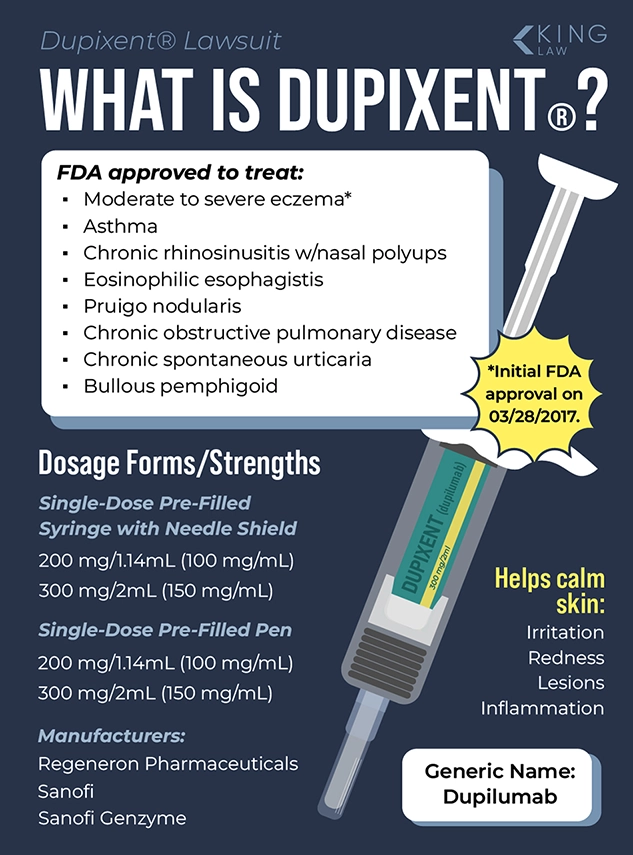
Dupixent (dupilumab) is a prescription drug called a biologic medication. It is given as an injection to treat various skin and respiratory conditions. It acts as an interleukin inhibitor, which means it blocks certain proteins that promote inflammation. It belongs to a class of drugs called monoclonal antibodies. It was originally approved by the FDA in 2017 to treat eczema, but it has been approved for other conditions, including asthma, in 2018.
The FDA has approved Dupixent to treat the following nine conditions:
- Moderate to severe eczema: Approved for moderate to severe chronic atopic dermatitis
- Asthma: Approved as an add-on maintenance treatment for uncontrolled moderate-to-severe eosinophilic or oral steroid-dependent asthma
- Chronic obstructive pulmonary disease (COPD): Approved as an additional treatment for inadequately controlled COPD with high blood eosinophils
- Chronic rhinosinusitis with nasal polyps (CRSwNP): Approved as an add-on maintenance treatment for uncontrolled nasal polyps
- Eosinophilic esophagitis (EOE): Approved to treat an inflamed esophagus caused by too many white blood cells
- Chronic spontaneous urticaria (CSU): Approved for treatment of hives not controlled by H1 antihistamines
- Bullous pemphigoid (BP): Approved to treat a skin condition that causes itchy, fluid-filled blisters
- Prurigo nodularis (PN): Approved to treat a skin condition that causes severe itching
- Allergic fungal rhinosinusitis (AFRS): Approved to treat some nasal symptoms and inflammation
Dupixent changes how your immune system works, with the goal of preventing your body from reacting to substances that are not an actual threat. Specifically, Dupixent turns off the IL-4 and IL-13 protein immune pathways. These proteins tell your body to become inflamed in response to attacks on your immune system. However, in people with conditions like eczema or asthma, the body has an inflammatory response to triggers that are not threats.
Dupixent helps calm down the skin irritation, redness, lesions, and inflammation that people experience when they have eczema that other medications have not helped. Dupixent is also offered to patients with treatment-resistant chronic obstructive pulmonary disease (COPD) or asthma.
While many people have experienced relief when taking Dupixent, some people have developed CTCL after taking the drug. Because of this, patients are filing lawsuits alleging that Dupixent’s manufacturer did not properly warn them of the possible risks associated with the drug.
Overview of Dupixent.
Timeline of FDA Approvals for Dupixent
June 2025: FDA Approves Dupixent to Treat Painful Skin Condition Called BP
Despite some safety concerns, the FDA approved Dupixent for the treatment of bullous pemphigoid (BP) on June 20, 2025. At the time, it was the only targeted treatment available to BP patients in the U.S. The disease causes large fluid-filled blisters to appear on the skin, often near creases in the skin.
April 2025: FDA Approves Dupixent to Treat Skin Condition Called CSU
On April 18, 2025, the FDA approved Dupixent to treat chronic spontaneous urticaria (CSU), the first new treatment for the disease in more than 10 years. CSU is a condition where a person develops chronic hives, with episodes often lasting for 6 weeks or more.
September 2024: FDA Approves Dupixent to Treat COPD
On September 27, 2024, the FDA approved Dupixent to treat certain cases of chronic obstructive pulmonary disease (COPD). The drug is approved as an add-on treatment for adults whose COPD is not adequately controlled and of the eosinophilic phenotype (a subtype of COPD). Dupixent is the first biologic medicine receiving FDA approval for people with COPD.
May 2022: FDA Approves Dupixent as A Treatment for EOE
Another approval is granted to Sanofi and Regeneron for their biologic drug Dupixent. Dupilumab is granted approval to treat eosinophilic esophagitis (EOE) as a first-line treatment for people ages 12 and older. The FDA would grant approval for the drug to be used in children ages 1 and older, as the first and only treatment for children with EOE.
June 2019: FDA Approves Dupixent for Treatment of Chronic Nasal Polyps
On June 26, 2019, the FDA gives their approval for Dupixent to be used as a treatment for chronic rhinosinusitis with nasal polyposis (CRSwNP). This approval is given for adults whose disease is not controlled through other treatments or medications. On September 13, 2024, the FDA would approve Dupixent as the first and only treatment for adolescents with CRSwNP.
March 2019: FDA Approves Dupixent As Treatment for Atopic Dermatitis in Adolescents
The FDA gives approval for adolescents to receive Dupixent injections to treat their moderate-to-severe atopic dermatitis and eczema. This means the drug is approved for administration in patients 12 to 17 years old. The FDA would later grant approval for use in patients 6 to 11 years old. This second approval came in May of 2020.
October 2018: FDA Gives Second Approval to Dupixent for Treating Asthma
On October 19, 2018, Sanofi announced that the FDA approved Dupixent to treat certain types of asthma. The approval is given to Dupixent as an add-on maintenance therapy in patients with moderate-to-severe asthma. It is approved for ages 12 and up and for people with eosinophilic phenotype or oral corticosteroid-dependent asthma. The FDA would later approve the drug for children ages 6 to 11 who have moderate-to-severe asthma.
March 2017: FDA Approves Biologic Drug Called Dupixent (Dupilumab) to Treat Eczema and Atopic Dermatitis (AD)
On March 28, 2017, Regeneron and Sanofi announced the FDA’s approval of their new drug, Dupixent. The initial approval is given for treating moderate-to-severe atopic dermatitis (the most common form of eczema) in adults. It is the targeted biologic therapy for adults with the condition, which is a chronic inflammatory disease of the skin. It can cause debilitating pain and itching. At the time of Dupixent’s approval, Regeneron says it is estimated that 300,000 people are in need of new treatment options for their atopic dermatitis (eczema).
What Damages Could Be Recovered in a Dupixent Lawsuit?
Patients who take Dupixent and develop CTCL may be able to recover compensation for their associated losses. Damages they may be eligible for include:
- Medical costs
- Lost income and earning potential
- Pain and suffering
- Loss of quality of and enjoyment in life
- Wrongful death damages (recoverable by eligible family members if the patient dies because of cutaneous T-cell lymphoma)
Patients can support their claim for damages by presenting medical testing results (like biopsies), treatment records, prescription costs, and work history (including requests for time off for cancer treatments). Surviving family members may also be able to recover funeral and burial expenses, loss of financial and emotional support, mental anguish, and other forms of compensation.
Is There a Deadline to File a Dupixent Lawsuit?
Yes, there is a deadline to file a Dupixent lawsuit. The deadline depends on a variety of criteria, including which state you file your lawsuit in, what state you live in, and other factors. This deadline is called the statute of limitations, and it varies by state and claim type. Typically, the deadline depends on when a person is diagnosed or when they discover the possible association between Dupixent and their CTCL diagnosis.
However, some exceptions can push this deadline forward or backward, and different deadlines apply to wrongful death claims. Swift action is recommended to minimize the risk of missing out on compensation due to missed due dates. Personal injury attorneys can help you determine what your deadline is and help you meet it.
What Are the Estimated Settlement Amounts in a Dupixent Lawsuit?
Dupixent settlement amounts will vary based on the person’s individual circumstances, the applicable state law, and other factors. Speculative Dupixent settlements could range from $50,000 to $500,000, based on similar drug liability lawsuits. However, this is only an estimate based on similar cases filed for other drugs. There is no guaranteed payout amount, and not all people who file lawsuits will qualify for compensation.
King Law Is Investigating Dupixent and T-Cell Lymphoma Claims
King Law and our legal partners are actively accepting and reviewing claims by patients who took Dupixent and developed CTCL. We have extensive experience fighting for consumers who were harmed by dangerous pharmaceutical products they were told would help them. Some of the benefits of working with us include:
- We do not charge upfront legal fees to hire us or book an appointment with us (we take all cases on contingency, meaning you only pay us if and when you win).
- We provide free case evaluations.
- We have a proven track record of helping patients who were hurt by dangerous drugs and medical devices.
- We have a robust network of resources to help us build strong cases.
- We have a dedicated, in-house intake team. You will not be sent to a generic call center.
- We are dedicated to helping people harmed by corporate negligence.
We treat our clients like people, not dollar figures. We take the time to get to know you, your concerns, and what a successful outcome means to you. Our full-service law firm is here to help you pursue justice because of how Dupixent has harmed you.
Contact a Dupixent Lawyer Today
If you took Dupixent and were diagnosed with cutaneous T-cell lymphoma, you may be eligible for a settlement. Contact us today by calling (585) 496-2648 to schedule a free, no-obligation consultation with an experienced attorney who can help. We can work with you to develop an effective case strategy to maximize your chances of winning a fair payout for your losses.
Frequently Asked Questions (FAQs)
Read Other Updates About Dupixent Lawsuits, Research, and Regulatory Events
April 16, 2026: Dupixent’s Drug Warning Label Updated with New Adverse Events
The FDA-approved drug label for Dupixent has been updated to emphasize and clarify possible eye side effects of the drug. The warnings and precautions, adverse reactions, and post-marketing conditions were updated to include possible blindness or vision loss related to conjunctivitis, keratitis, blepharitis, and other eye conditions. The Dupixent label update was posted on the FDA’s Drug Safety-related Labeling Changes database.
April 2, 2026: Illinois Man with Lymphoma Sues Dupixent Manufacturers, Claiming They Failed to Warn Him
A couple in Illinois is suing Regeneron and Sanofi, the companies that make Dupixent. According to their legal complaint about Dupixent, the man developed peripheral T-cell lymphoma after taking Dupixent. He believes that Dupixent’s manufacturers were aware of the possible association between Dupixent and the development of lymphoma but failed to warn them. In their complaint, the couple references several research studies that suggest a connection between a patient taking Dupixent and being diagnosed with peripheral and CTCL.
March 25, 2026: Couple Sues Dupixent’s Manufacturers After Man Develops Lymphoma
A couple from Pennsylvania has filed a lawsuit against Regeneron and Sanofi after the man took Dupixent and was diagnosed with mycosis fungoides, a type of lymphoma. According to their complaint, they believe that the man’s lymphoma was caused or accelerated by his taking Dupixent. His lawsuit accuses Dupixent’s manufacturers of failing to warn him about the studies that suggest a possible connection between taking Dupixent and having an increased risk of developing lymphoma.
March 4, 2026: Florida Woman Files Complaint Against Dupixent Manufacturers After Lymphoma Diagnosis
According to her legal complaint, a woman from Florida was diagnosed with T-cell lymphoma after she took Dupixent. In her lawsuit, she claims that Dupixent’s manufacturer may not have shared all of the possible risks of using the drug. Her lawsuit alleges that she and her doctors should have been told about the possible association between Dupixent and lymphoma and that, if she had been, she would not have taken Dupixent.
February 10, 2026: Former Dupixent Patient and His Wife Sue Regeneron and Sanofi After Lymphoma Diagnosis
A married couple has filed a lawsuit against the companies that made Dupixent, an injectable medication used to treat asthma, eczema, and other medical conditions. According to the legal complaint, the husband received Dupixent injections for about five months and was diagnosed with CTCL. His lawsuit claims that his Dupixent use caused, worsened, or contributed to his developing lymphoma. He also accuses Dupixent’s manufacturers of knowing about the possible association between Dupixent and lymphoma but not warning people about it. Similar claims have been filed by some other Dupixent patients who were also diagnosed with CTCL after receiving Dupixent injections.
February 4, 2026: Florida Man Sues Regeneron and Sanofi Over Lymphoma Allegedly Diagnosed After Dupixent Use
A man in Florida has filed a lawsuit against Regeneron and Sanofi, alleging that Dupixent use is related to the man’s CTCL, a type of non-Hodgkin lymphoma. According to the man’s complaint (lawsuit), he believes that Dupixent caused, worsened, or accelerated the development of his blood cancer. In his case, he referenced several scientific studies suggesting that people who take Dupixent may have a higher chance of being diagnosed with CTCL. He alleges that Dupixent’s manufacturer knew about these risks and should have warned patients taking Dupixent.
February 23, 2026: Dupixent Approved to Treat Allergic Fungal Rhinosinusitis in People Over 6 Years Old
Dupixent has been approved to treat allergic fungal rhinosinusitis in qualifying patients who are at least 6 years old. According to the FDA’s new label for Dupixent, pediatric patients with AFR who have undergone nasal or sinus surgery may be eligible to take Dupixent.
January 21, 2026: Two New Studies Investigating Possible Relationship Between Dupixent and CTCL
Researchers are investigating possible associations between Dupixent (dupilumab) and CTCL. In two papers (published in January 2026), researchers examined the drug’s possible role in causing or unmasking CTCL in some patients. A review article called “Risk of Cutaneous T-Cell Lymphoma Associated with Biologic Therapy for Inflammatory Skin Diseases: A Comprehensive Review” and a research letter titled “Risk of cutaneous T-cell lymphoma in atopic dermatitis patients treated with dupilumab and JAK inhibitors: a TriNetX cohort study” could shed light on how Dupixent may affect the overall health of people with certain inflammatory skin conditions. The findings of these researchers will be important to those who have filed lawsuits against the makers of Dupixent after developing CTCL.
January 8, 2026: Woman Files Dupixent Lawsuit After Developing CTCL
A woman has filed a lawsuit in Georgia courts alleging that she developed CTCL after starting Dupixent. In her lawsuit, she is seeking monetary and non-monetary damages. In her complaint, she alleges that Regeneron, Sanofi, and Genzyme knew about the side effects of Dupixent, yet “Consumers and physicians alike have been misled about the safety and efficacy of Dupixent, and as a result, consumers, including Plaintiff, have developed CTCL.” The plaintiff was taking Dupixent injections to treat her atopic dermatitis.
December 22, 2025: Deadlines Extended in Dupixent Wrongful Death Lawsuit
As of November, the court has extended some deadlines in a wrongful death case filed by a mother whose daughter died of lymphoma after receiving Dupixent shots. The new deadlines will allow the litigants to prepare responses to the complaint and other filings. Sanofi and Regeneron will have until January 7, 2026, to respond to the pleadings. It is common for people to need extensions in complex cases involving potentially harmful drugs, like Dupixent. Patients took Dupixent because their doctor recommended it to treat medical conditions like asthma and eczema. However, Dupixent is associated with a higher-than-expected rate of lymphoma, and patients say they were not told this information. Because of this, Dupixent patients and their surviving loved ones are suing the drug companies that made and sold Dupixent.
December 16, 2025: Woman Files Lymphoma Lawsuit Against Dupixent’s Manufacturers
A woman who took Dupixent has filed a lawsuit against its manufacturers after she developed CTCL, a rare type of cancer. According to her legal complaint, she believes Dupixent may have caused or contributed to her lymphoma diagnosis. Her legal complaint accuses Regeneron and Sanofi of not adequately warning patients that Dupixent use may be associated with an increased chance of developing CTCL. Other Dupixent patients have also filed similar claims against Sanofi and Regeneron.
December 3, 2025: Dupixent Lymphoma Lawsuits Continue, Europe Expands Dupixent Uses
Some studies show Dupixent is associated with an increased rate of lymphoma, a type of lymph node cancer. Patients who were diagnosed with lymphoma and their surviving loved ones have filed lawsuits against Regeneron and Sanofi, the manufacturers of Dupixent. These plaintiffs say that companies were not transparent about the risk of patients developing lymphoma after taking Dupixent. Meanwhile, European officials announced that doctors can prescribe Dupixent to patients older than 12 years who have chronic spontaneous urticaria (persistent hives with no known cause), expanding the eligibility for the drug.
November 14, 2025: Dupixent On Track for Approval to Treat Allergic Fungal Rhinosinusitis
The dermatitis medication Dupixent (also known by its generic form, dupilumab) may soon be approved to treat allergic fungal rhinosinusitis (AFRS). Dupixent reduced the need for steroids in about half of the participants with AFRS. Patients who took Dupixent and were later diagnosed with lymphoma are filing lawsuits, alleging that the drug could be associated with CTCL.
November 4, 2025: Sanofi’s Earnings Tied to Dupixent Sales
Sanofi’s blockbuster drug Dupixent has bolstered the company’s Q3 earnings. Earnings increased by 26.2% in the third quarter, mostly due to Dupixent sales. However, as more people take the drug for allergic reactions and dermatitis, more people are exposed to the side effects of the drug. Some studies found a possible association between taking Dupixent and an increased risk of developing lymphoma, possibly by unmasking an underlying disorder. People have filed lawsuits against Sanofi due to the side effects of Dupixent.
October 17, 2025: Mother Files Wrongful Death Lawsuit Over Dupixent for Loss of her Daughter
A mother in Tennessee has filed a lawsuit on behalf of her daughter’s estate. The lawsuit alleges that Dupixent injections caused her daughter to develop T-cell lymphoma, which ultimately claimed her daughter’s life. The mother is seeking compensation for incurred medical expenses, severe pain, and physical and emotional injuries her daughter suffered. The lawsuit has been filed in U.S. District Courts in Tennessee against defendants Sanofi-Aventis and Regeneron. The mother says these companies did not properly warn her daughter about the risks of Dupixent injections.
October 2, 2025: FDA Still Investigating Possible Associations Between Dupixent and Cutaneous T-Cell Lymphoma
The FDA has received a set of adverse event reports from Dupixent users who were diagnosed with CTCL. Dupixent, also called dupilumab, is used to treat several conditions, including moderate to severe eczema that has not responded to other therapies. The increase in the number of Dupixent patients who developed lymphoma has led the FDA to investigate the connection between them. The FDA is still investigating whether regulatory action will be warranted. Meanwhile, Dupixent patients are filing legal claims against the drug’s manufacturer.
May 2025: One Study Finds FDA Receives Higher-Than-Average Number of Reports About Dupixent
An analysis published in the Journal of Allergy and Clinical Immunology examined FAERS data for Dupixent. FAERS is a reporting system run by the FDA. Doctors and patients use it to report adverse reactions to drugs and medical devices. According to the study, people taking Dupilumab reported adverse events at more than 30 times the rate of the average drug reporting rate. Between January 2017 and the fourth quarter of 2023, there were 181,575 unique reports of adverse events (AEs) associated with Dupixent. Of these, 606 were for neoplasms (cancers). However, this does not mean that Dupixent is the cause of the conditions reported in FAERS.
August 2024: Large Study Finds Atopic Dermatitis Patients Using Dupixent 4.5 Times More Likely to Develop Lymphoma
A study published in the Dermatologic Therapy Retrospective Review looked at two groups of 19,612 patients with atopic dermatitis. The group taking Dupilumab was 4.59 times more likely to be diagnosed with CTCL than the group not taking the drug. About 62% of patients were diagnosed within one year of taking the drug. About 46% of patients diagnosed were under 60 years old.
August 2024: Study Says People Who Use Dupixent for Atopic Dermatitis (Eczema) Four Times More Likely to Get Lymphoma
A retrospective study, published in the Journal of the American Academy of Dermatology, found that patients who received Dupixent injections for eczema were 4.1 times more likely to be diagnosed with CTCL, even after they stopped using the drug. Of the 41 patients diagnosed with CTCL, 27 had been on the drug for more than 1 year.
List of Sources Used in This Article
Here is a list of sources used to create this article. King Law adheres to rigorous editorial standards when creating pages for our readers.
“US Cutaneous T-Cell Lymphoma Incidence Increased from 2000 to 2018.” The American Journal of Managed Care, n.d.
“Dupixent Approved in the US as First and Only Treatment for Adolescents with Chronic Rhinosinusitis with Nasal Polyps.” Drugs.com, 13 Sept. 2024.
“Dupixent (Dupilumab) FDA Approved as First and Only Treatment Indicated for Children Aged 1 Year and Older with Eosinophilic Esophagitis (EoE).” Drugs.com, 25 Jan. 2024.
“DUPIXENT® (Dupilumab).” Dupixent, Sanofi and Regeneron, n.d.
“Dupixent.” European Medicines Agency, European Medicines Agency, n.d.
Ahmed, Areeba, et al. “Risk of Cutaneous T-Cell Lymphoma in Atopic Dermatitis Patients Treated with Dupilumab and JAK Inhibitors: A TriNetX Cohort Study.” Archives of Dermatological Research, vol. 318, article 37, 3 Jan. 2026.
Barrie, Robert. “Dupixent Stirs Sanofi’s Growth as Vaccine Sales Cool.” Pharmaceutical Technology, 24 Oct. 2025.
Espinosa, Maria L., et al. “Progression of Cutaneous T-Cell Lymphoma after Dupilumab: Case Review of 7 Patients.” Journal of the American Academy of Dermatology, vol. 83, no. 1, July 2020, pp. 197–199.
European Medicines Agency. “Dupixent.” European Medicines Agency, n.d.
Frontiers in Medicine. “Dupilumab-Associated Cutaneous T-Cell Lymphoma: Article Record.” Frontiers in Medicine, 2025.
Hasan, Iraj, et al. “Dupilumab Therapy for Atopic Dermatitis Is Associated with Increased Risk of Cutaneous T Cell Lymphoma: A Retrospective Cohort Study.” Journal of the American Academy of Dermatology, vol. 91, no. 2, Aug. 2024, pp. 255–258.
Janssen, R., et al. “Dupilumab in Patients with Chronic Spontaneous Urticaria: Two Randomized, Double-Blind, Placebo-Controlled Phase 3 Trials.” The Journal of Allergy and Clinical Immunology, 2024.
Kim, Yun-mi. “Chong Kun Dang Wins Europe’s 1st Phase 1 Trial Nod for Dupixent Biosimilar.” Korea Biomedical Review, 14 Jan. 2026.
Mandel, Jenna, et al. “Increased Risk of Cutaneous T-Cell Lymphoma Development after Dupilumab Use for Atopic Dermatitis.” Dermatologic Therapy, 2024.
MedlinePlus. “Dupilumab Injection.” MedlinePlus Drug Information, U.S. National Library of Medicine, n.d.
Nature Scientific Reports. “Dupilumab-Related Cutaneous T-Cell Lymphoma Article Record.” Scientific Reports, 2025.
Regeneron Pharmaceuticals, Inc., and Sanofi. “Regeneron and Sanofi Announce FDA Approval of Dupixent® (Dupilumab).” Regeneron Investor Relations, 28 Mar. 2017.
Sanofi. “Dupixent® (Dupilumab) Approved by FDA as the First Biologic Medicine for Children Aged 6 to 11 Years with Moderate-to-Severe Atopic Dermatitis.” Sanofi, 26 May 2020.
Sanofi. “FDA Approves Dupixent® (Dupilumab) as First Treatment for Adults and Children Aged 12 and Older with Eosinophilic Esophagitis.” Sanofi, 20 May 2022.
Sanofi. “Dupixent Approved in the US as the First New Targeted Therapy in over a Decade for Chronic Spontaneous Urticaria.” Sanofi, 18 Apr. 2025.
Sanofi. “Dupixent Approved in the US as the Only Targeted Medicine to Treat Patients with Bullous Pemphigoid.” Sanofi, 20 June 2025.
U.S. Food and Drug Administration. “DUPIXENT (Dupilumab) Injection, for Subcutaneous Use: Prescribing Information.” FDA, 2024.
U.S. Food and Drug Administration. “DUPIXENT (Dupilumab) Injection, for Subcutaneous Use: Prescribing Information.” FDA, Apr. 2026.
U.S. Food and Drug Administration. “DUPIXENT (Dupilumab) Injection, for Subcutaneous Use: Prescribing Information.” FDA, 2026.
U.S. Food and Drug Administration. “Drug Safety-Related Labeling Changes: Dupixent (Dupilumab).” FDA, n.d.
U.S. Food and Drug Administration. “October – December 2024 | Potential Signals of Serious Risks/New Safety Information Identified by the FDA Adverse Event Reporting System (FAERS).” FDA, 6 Mar. 2025.
U.S. Food and Drug Administration. “Prescribing Information: DUPIXENT (Dupilumab).” FDA, 2025.
U.S. National Library of Medicine. “A Study to Compare the Pharmacokinetics, Pharmacodynamic, Immunogenicity, and Safety of CKD-706 With US-Dupixent®, and EU-Dupixent® in Healthy Adult Participants.” ClinicalTrials.gov, 23 Jan. 2026.
United States Judicial Panel on Multidistrict Litigation. “Notice of Hearing Session.” JPML, 16 Apr. 2026.
Various Authors. “Risk of Cutaneous T-Cell Lymphoma Associated with Dupilumab.” International Journal of Dermatology and Venereology, 2026.
Various Authors. “Progression of Cutaneous T-Cell Lymphoma after Dupilumab: Case Review of 7 Patients.” Journal of the American Academy of Dermatology, 2020.
Various Authors. “Dupilumab-Associated Cutaneous T-Cell Lymphoma: Article Record.” PubMed Central, 2022.
Various Authors. “Dupilumab Therapy for Atopic Dermatitis Is Associated with Increased Risk of Cutaneous T Cell Lymphoma: A Retrospective Cohort Study.” Journal of the American Academy of Dermatology, 2024.
Various Authors. “Response to ‘Dupilumab Therapy for Atopic Dermatitis Is Associated with Increased Risk of Cutaneous T Cell Lymphoma: A Retrospective Cohort Study.’” Journal of the American Academy of Dermatology, 2024.
Various Authors. “Commentary or Response Article Record Related to Dupilumab and Cutaneous T-Cell Lymphoma.” Journal of the American Academy of Dermatology, 2024.
“Dupixent Set for Ninth US Approval after Phase III AFRS Success.” Clinical Trials Arena, 10 Nov. 2025.