

YouTube Addiction and Mental Health Lawsuits [2026]
Complete the form below to see if you qualify for a Social Media Addiction Lawsuit

Parents, young adults, and guardians are filing lawsuits against YouTube because they believe the platform may be designed to be addictive and harmful to youth. Those suing YouTube allege that young people are becoming addicted to the app, and it is causing them to experience mental, physical, and financial setbacks.
Some of the lawsuits allege that YouTube and Google (now known as Alphabet, YouTube’s parent company) were aware of these risks and did not warn people about them. Instead, lawsuits allege that the company exploited those addictions. A number of these YouTube mental health lawsuits have been consolidated into a federal MDL and a separate state proceeding in California, which are active and accepting new claims.
This page will cover the basis of lawsuits against YouTube, as well as why young people may compulsively engage with content on the platform, and how it may affect their mental health.
Our firm also represents clients in cases involving other platforms, including TikTok, Instagram, and Facebook. These claims are also part of a larger federal litigation involving YouTube and other platforms. However, each case focuses on how YouTube’s design and content may have harmed individual users.
About the YouTube Lawsuit:
Key Facts for YouTube Mental Health Lawsuits
YouTube Mental Health Lawsuit Update – September 2026
Who Is Filing YouTube Mental Health Lawsuits?
What Makes YouTube Different From Other Social Media Lawsuits?
What Injuries Are Cited in YouTube Lawsuits?
What Are the Allegations Against YouTube in Social Media Lawsuits?
How Much Time Do Young People Spend on YouTube?
Is There a Group Litigation for YouTube Mental Health Claims?
How YouTube’s Design Allegedly Contributes to Addiction
How Can a YouTube Lawyer Help You File a Claim?
What Types of Compensation Can Be Awarded in a YouTube Lawsuit?
Who Is Eligible to File a YouTube Mental Health Lawsuit?
What Evidence Do People Need to File a Mental Health Claim Against YouTube?
Is There a Deadline to File a YouTube Addiction Claim?
What Are the Expected Payouts in YouTube Addiction Lawsuits?
Get a Free Case Review from a Lawyer Focused on YouTube Addiction Cases
Key Facts for YouTube Mental Health Lawsuits
| Name of litigations | MDL #3047 – IN RE: Social Media Adolescent Addiction/Personal Injury Products Liability Litigation and JCCP cases 5255 and 5256 – Social Media Cases and Instagram |
| Defendant | YouTube (owned by Google/Alphabet Inc.) |
| Alleged Injuries | Suicidality, Anxiety, Depression, Eating disorders, Body Dysmorphia, and Self-harmful behavior |
| Core Allegation | YouTube is designed to be addictive to young people, and it failed to warn and protect minors on the platform. |
| Defendant | YouTube (owned by Google/Alphabet Inc.) |
| Potential Compensation | Therapy costs, medical expenses, emotional distress, wrongful death damages (in severe cases) |
| Types of Plaintiffs | Parents (on behalf of teens/minors), school districts, and young adults |
YouTube Mental Health Lawsuit Update – September 2026
The information below gives updates on the mental health lawsuits being filed against YouTube and other social media companies. The timeline also covers regulatory changes, news, scientific research, and other developments related to YouTube and its impact on people’s mental health.
September 10, 2026: New Law Says Children Under 16 May Not Access Addictive Features on YouTube in California
YouTube cannot let children under 16 use addictive features on its platform in California, according to a law signed by California’s governor on September 10, 2026. The law aims to safeguard children’s mental and physical health from the algorithms and features that are designed to encourage them to compulsively use YouTube and other platforms. YouTube and other companies must take steps to determine users’ ages before allowing them to use addictive features like autoplay and addictive feeds.
August 28, 2026: Missouri Family Files Mental Health Lawsuit Against YouTube
A family from Missouri has filed a lawsuit against YouTube and its parent company, Google, alleging that their child has experienced mental health challenges because of an addiction to social media. According to the complaint, the child, D.D., began using YouTube when they were about 12 years old and has suffered from cutting, self-harm, suicidality, depression, and other setbacks. The family’s lawsuit alleges that the child’s mental health challenges were caused or worsened by their use of YouTube and other platforms.
August 21, 2026: Teen’s Mental Health Trial Against YouTube’s Parent Company Will Not Occur
A teen who was suing YouTube’s parent company and at least two other companies has decided not to proceed to trial. Earlier this month, the teen settled their mental health claims against another company in the same lawsuit.
August 10, 2026: Appeals Court Says Section 230 Does Not Give Social Media Companies Blanket Immunity from Lawsuits
An appeals court has said that social media companies can use Section 230 as a defense to liability (where appropriate) but that Section 230 does not make them immune from being sued at all. The ruling came after two social media companies filed separate appeals asking the court to overturn a lower court’s ruling in the federal multidistrict litigation. The appeals court dismissed the appeals because it believed it lacked jurisdiction at this stage of the multidistrict litigation.
August 3, 2026: YouTube and Other Social Media Platforms Accused of Designing Addictive Apps
YouTube (Google) and other social media companies have been sued by a group of parents and young people. According to the legal complaint, the people filing the lawsuit believe YouTube and other platforms were designed to be addictive. The people filing the lawsuit also accuse Google of not doing enough to warn people about the risks of young people using YouTube and being exposed to content on the platform. The MDL about the possible risks of YouTube and other platforms has grown to include 3,137 lawsuits.
June 23, 2026: YouTube Settles Teen’s Social Media Addiction Lawsuit
According to public reports, Google (YouTube’s owner) has entered into a confidential settlement with a teenager who claims he suffered from a social media addiction. The amount of the settlement has not been publicized yet. The man accused YouTube and three other platforms of designing apps that contributed to his social media addiction and mental health challenges as a minor. Three of the platforms he is suing have not yet settled the claims against them, which is set for trial on July 27, 2026
June 19, 2026: Users Under 16 in the U.K. Will Not Be Able to Have a YouTube Account, According to a New Ban
The U.K. government has decided to ban children under 16 from having a YouTube account in the U.K. According to the announcement, the move was taken after a survey of parents in the U.K. suggested public support for the ban. Some messaging apps may still be used. However, the U.K. government is considering restrictions on some features.
May 21, 2026: YouTube to Pay Settlement to Breathitt County School District
YouTube has agreed to pay over $2 million to settle a lawsuit filed against it by the Breathitt County School District in Kentucky. YouTube (owned by Google) was one of several platforms that were sued by the district. As part of the settlement, YouTube has agreed to help the school encourage healthy and productive social media use, including by providing on-site coaches to train teachers and other staff members. The school district had accused YouTube and other social media companies of harming students’ mental health by designing platforms that encouraged excessive screen usage.
May 20, 2026: Spending Too Much Time on YouTube May Lead to Screen Addictions, Other Health Concerns, Report Says
YouTube and several other social media companies are being sued by young people and parents who believe some apps are designed to fuel excessive engagement. The U.S. Surgeon General’s new report underscores those concerns. According to the report, some of the features used by YouTube (e.g., autoplay, infinite scroll, and algorithm-generated feeds) are more likely to cause harm to children and young people than others. The report also warns that high screen use may increase a teenager’s likelihood of being depressed, anxious, or having body image concerns.
May 16, 2026: YouTube Settles School District’s Teen Mental Health Lawsuit Against It
YouTube and several other social media companies have entered into a confidential settlement to resolve a Kentucky school district’s lawsuit. The Breathitt County School District had sued YouTube (and other social media companies), alleging that the companies designed apps that encouraged compulsive use of those platforms. According to the school district’s lawsuit, YouTube and other platforms may have injured children’s mental health by fostering social media addictions and exposing children to harmful or addictive content. The school district’s claim was part of an active federal MDL against YouTube and other social media companies that are accused of creating platforms that harm young people’s mental health.
May 1, 2026: Plaintiffs Join Social Media Addiction Litigation Against YouTube and Others
The federal litigation for people alleging mental health harms from social media use is growing. As of May 1, 2026, there are 2,527 pending lawsuits in the Social Media Addiction MDL, up from 2,465 on April 1, 2026. YouTube is named as a defendant in many of these lawsuits. Alphabet/Google, the owner of YouTube, has been accused of creating a product that purposefully addicts minors, causing mental health harm to many youth.
April 1, 2026: Nearly 2,500 Claims Have Joined the Federal MDL Against YouTube, Other Social Media Companies
There are now 2,465 lawsuits in the pending, active MDL of consolidated claims that social media companies like YouTube designed their apps to be addictive to young people. Many of these lawsuits have been brought by or on behalf of young people who claim they experienced severe setbacks due to an addiction to YouTube and other social media platforms. Some of the allegations include claims that YouTube failed to tell people that its app could cause or contribute to social media addictions. Some of the complaints allege that victims have experienced depression, anxiety, suicidal behaviors, self-harm, and eating disorders that were driven by YouTube use.
March 25, 2026: Court Approves Bellwether Trial Schedule for Federal Social Media Addiction MDL Against YouTube, Others
The judge overseeing the MDL against YouTube and other social media companies has approved a schedule for the upcoming Bellwether trial of a mental health lawsuit filed by the Breathitt County school district and board of education. The bellwether (test) trial is a trial of an individual lawsuit in the MDL. The outcome only directly impacts that individual lawsuit. However, it can guide legal strategies and settlements in the other cases in the MDL. The Bellwether trial in the federal MDL involving YouTube and other companies is scheduled to start on June 12, 2026.
March 25, 2026: LA Jury Orders YouTube’s Developer and One Other Company to Compensate Victim
A jury in Los Angeles determined that Google (YouTube’s developer) and another social media company were liable for a young woman’s social media addiction. According to the woman’s lawsuit, she developed an addiction to YouTube and other social media platforms when she was growing up, and it caused her to struggle with depression, anxiety, self-harm, suicidal thoughts, and body issues. She accused Google and the other companies of designing the apps to be addictive to young people and failing to warn about potential risks. The jury agreed and awarded her $6 million in damages.
October 6, 2022: MDL Created to Consolidate Mental Health Claims Against YouTube and Other Social Media Giants
The United States Judicial Panel on Multidistrict Litigation (JPML) has approved a request to create In Re: Social Media Adolescent Addiction/Personal Injury Products Liability Litigation (MDL No. 3047). The request was filed by someone who had brought a federal lawsuit against YouTube (Google) and several other social media companies. According to the MDL panel’s order, the lawsuits included in the request accused YouTube of designing its platform to “maximize user screen time,” which can lead to young people becoming addicted to the platform. The panel also said the included lawsuits alleged that YouTube failed to warn the public about the potential dangers of young people using YouTube.
April 28, 2025: Young Woman Files Mental Health Lawsuit Against YouTube (Google) and Other Social Media Companies
A young woman (K.G.M.) has filed a lawsuit against Google (YouTube’s creator) and other social media companies. In her lawsuit, she accuses Google of designing YouTube in a way that encourages young people and children to stay on the platform for longer than they intend to. She also credits Google for exposing her to harmful and inappropriate content, such as content that promoted or inspired disordered eating, body image issues, self-harm, and suicide. Her lawsuit was filed in a coordinated proceeding (JCCP) in the California state court system. The coordinated proceeding is separate from the federal MDL that is pending in a California federal district court.
Who Is Filing YouTube Mental Health Lawsuits?
Most of the addiction lawsuits filed against YouTube focus on how YouTube drives engagement with minor users. So, those filing lawsuits are often doing so on behalf of a child or those individuals who recently turned 18. However, public entities have also brought actions against Google, related to the alleged harms caused by YouTube.
People who have filed lawsuits against YouTube include:
- Parents and guardians on behalf of minors
- Young adults who became addicted to YouTube as minors
- School Districts
- State Attorneys General
People are filing lawsuits because they or their children believe they have developed a YouTube addiction that harmed their mental health. States and school districts are also suing because of the alleged harm that YouTube has caused to citizens or students.
Can You Sue YouTube for Addiction or Mental Health Harm?
You may be able to sue YouTube if you believe you became addicted to using YouTube as a minor and it harmed your mental health. For example, you may be eligible to file a claim if you can show that your YouTube use contributed to or worsened your social media addiction. Some parents or legal guardians can file YouTube mental health claims on behalf of their children who developed a YouTube addiction.
What Makes YouTube Different From Other Social Media Lawsuits?
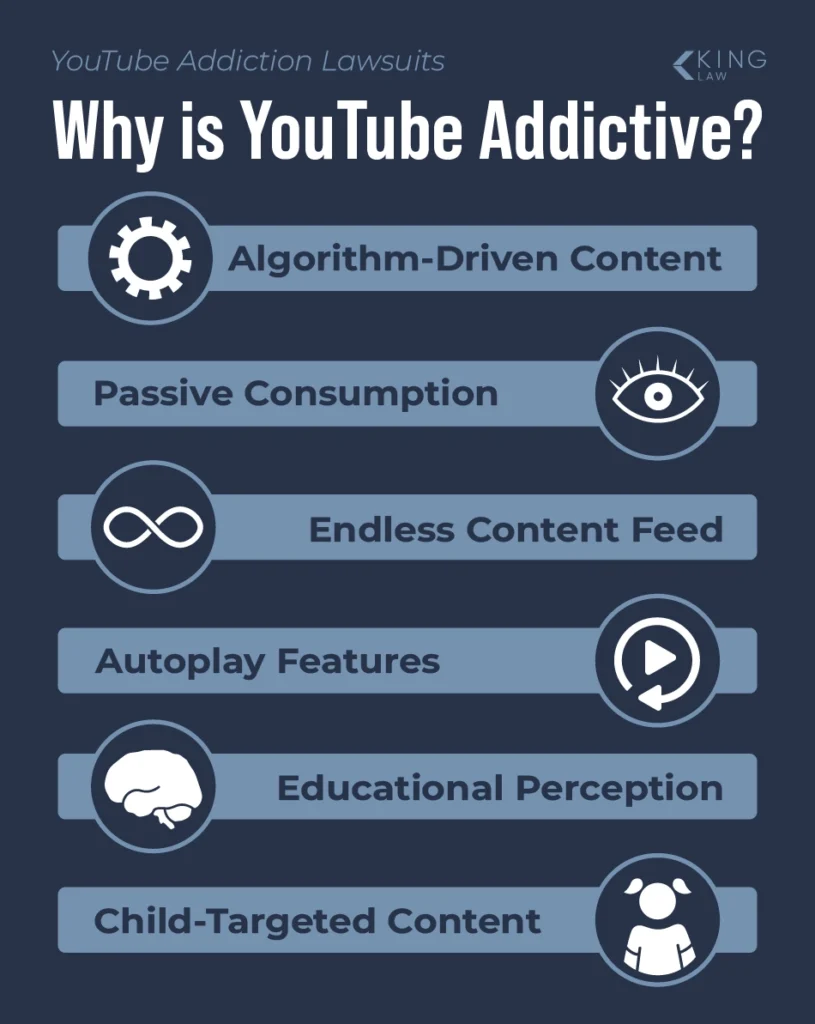
Although many of the allegations against YouTube are similar among social media lawsuits, there are some aspects of YouTube that make the product unique. YouTube’s autoplay format, curated content, and video-based design can make it difficult for kids to disengage with the app.
Here are some of the characteristics of YouTube that can make the platform addictive, especially to young people with developing brains:
- YouTube features algorithm-driven long-form and short-form content.
- YouTube allows for passive consumption, without the need for active posting.
- YouTube uses an “Up Next” autoplay chain, which can lead kids down “rabbit holes.”
- YouTube is sometimes viewed as more educational than other forms of social media, leading parents to be more permissive with the app.
- YouTube Kids is specifically targeted at young children.
These unique characteristics of YouTube can lead children to compulsively view content on YouTube, allegedly leading to mental health harm in some kids.
What Injuries Are Cited in YouTube Lawsuits?
Lawsuits against YouTube say that minors who compulsively used YouTube suffered a range of impacts to their mental health. Some of the alleged injuries are related to over-consumption, and some of the alleged injuries are associated with the specific types of content children engaged with.
Here are some of the injuries plaintiffs in YouTube addiction lawsuits say they experienced:
- Anxiety
- Body Dysmorphia
- Depression
- Eating disorders
- Self-harmful behavior
- Suicidality
Videos that focus on extreme dieting or portray unrealistic body image may have substantial impacts on youth, especially girls. Content creators and algorithms on YouTube are competing for clicks, so some videos target a child’s vulnerabilities.
What Are the Allegations Against YouTube in Social Media Lawsuits?
Allegations in YouTube lawsuits center around how the company designed and marketed the platform to youth. Lawsuits allege that Google knew it was designing and marketing an addictive product to children and profiting from their engagement.
According to the master complaint for the social media MDL, some of the legal complaints filed against YouTube include:
- Design defect
- Failure to warn
- Negligence
- Negligent undertaking
Specific Allegations Against YouTube
Design Defect: Alleges that YouTube’s algorithm and platform are designed to keep users on the platform.
Some complaints accuse YouTube of designing YouTube to “maximize users’ screen time,” which some people claim can make it more likely for young people to become addicted to the platform. Some of the features that have been called out in legal complaints include endless scroll, lack of reliable age verification, user feeds, autoplay, and ways for users to express approval or disapproval (e.g., likes and comments). According to some legal filings, the combination of these and other YouTube features can attract young people to the platform and keep them on for longer than they intended, which can lead to addictions.
Failure to Warn: Accuses YouTube of failing to tell people its platform could lead to addiction and harm.
Some of the lawsuits against YouTube claim that YouTube and its parent company (Google) were aware of the dangers its platform posed to young people but failed to warn the public. Internal records published in legal filings and in public reports suggest that Google knew that YouTube may be addictive to young people, but its developers did not do enough to warn or protect young people.
Negligence: Claims YouTube did not do enough to protect or warn the public about the risks of its platform.
Some lawsuits also accuse YouTube and Google of negligence. Negligence is when someone owes a duty to someone else, but does not honor that duty, which causes another person harm. In the case of YouTube, some complaints allege that YouTube owed a duty to consumers and young users, and the company allegedly caused harm by not taking steps to protect or warn them.
Negligent Undertaking: Seeks to hold YouTube liable for third-party content it hosts and recommends to others.
Some legal complaints ask the court to hold YouTube accountable for harm caused by third-party content posted on YouTube. YouTube has denied these claims, saying it is not responsible for content created and posted by third parties. However, some lawsuits say that YouTube should be held liable because it “undertook” to host and recommend third-party content through its platform and algorithm.
How Has YouTube Responded to These Allegations?
YouTube has responded to these allegations by denying that it is responsible for young people’s mental health or social media addictions. YouTube has said that it is a platform, and it has also said it is not responsible for the alleged harms that were caused by content that other people posted on YouTube’s platform. YouTube has also said that some of the young people in the lawsuits experienced mental health problems that were unrelated to or not caused by content they saw on YouTube.
How Can YouTube Be Held Responsible for Mental Health Injuries?
Some plaintiffs allege that YouTube is liable under product liability law because of the following:
- YouTube may have actively presented consumers with curated content, rather than passively hosting third-party content.
- YouTube may have ignored warnings that young people might be harmed by or become addicted to YouTube content.
- Some of YouTube’s features may be classified as products (instead of a publishing service), which could make YouTube liable under product liability laws.
- YouTube may have unjustly profited from maximizing young people’s engagement and causing them to become addicted to the platform.
The above claims have been asserted in several lawsuits against YouTube, Facebook, TikTok, and Instagram, and at least one jury trial resulted in a verdict in favor of the young person who filed her case.
How Much Time Do Young People Spend on YouTube?
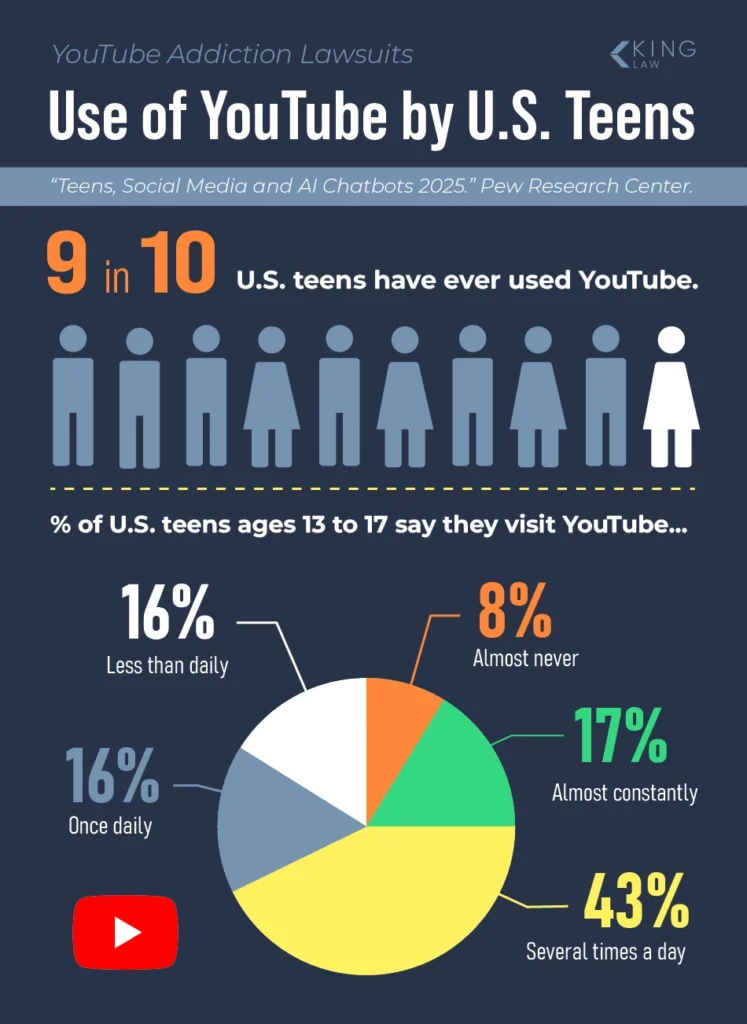
Many parents may not think of YouTube as a social media platform. Although some parents prevent their children, pre-teens, and teens from using social media, they may allow their children to use YouTube. However, many children heavily engage with the algorithmically-driven and hyper-targeted content offered on YouTube and interact with others via comments on the platform.
According to one study, kids ages 9 to 12 spend an average of 1.5 hours per day on social media, with the two most-popular sites being YouTube and TikTok. A 2025 survey conducted by CommonSense Media found that 48% of children ages 0 to 8 have watched short videos on apps like YouTube, with 16% engaging in this activity daily. That same survey found that 5- to 8-year-olds average 32 minutes per day watching longer videos on YouTube. An earlier survey conducted by CommonSense Media found that YouTube was the number one site that tweens and teens said they “wouldn’t want to live without,” with 32% of survey respondents voting for YouTube.
Is There a Group Litigation for YouTube Mental Health Claims?
There are federal and state-level centralized litigations for YouTube mental health claims. Some of the YouTube and social media mental health claims were consolidated into a federal multidistrict litigation (MDL) in a California court on October 6, 2022.
MDL No. 3047 is called In Re: Social Media Adolescent Addiction/Personal Injury Products Liability Litigation. Judge Yvonne Gonzalez Rogers is the judge overseeing the MDL. YouTube is one of several social media companies being sued in the MDL.
Similarly, there is a state-level centralized litigation within California state courts in Los Angeles. The litigation, called Social Media Cases and Instagram, was added to the judicial council coordination proceedings (JCCP) in California on October 21, 2022. The Honorable Carolyn B. Kuhl is currently overseeing this litigation (JCCP cases 5255 and 5256).
In a centralized litigation, multiple plaintiffs coordinate some parts of their cases against one or more defendants. For example, they can coordinate and streamline the evidence collection (discovery) process and expert depositions. However, each plaintiff still has their individual lawsuit and can go to trial or settle their own cases based on their unique situation.
Is There a Class Action Lawsuit for YouTube Addiction Claims?
There is no traditional class action lawsuit for YouTube addiction claims yet. In a class action lawsuit, multiple plaintiffs combine their cases into a single lawsuit against one or more defendants. The plaintiffs do not get to hold a trial over their individual situation, and the outcome of the case affects the entire group in the same way.
How YouTube’s Design Allegedly Contributes to Addiction
Legal complaints against YouTube allege that several of its design features can cause or contribute to social media addictions. For example, the following YouTube features have been credited with allegedly fueling screen addictions in young people:
- Autoplay: Long and short-form videos automatically play without the user having to select or start them.
- Recommendation algorithm (“Up Next”): Up Next feed automatically suggests curated content based on the user’s usage data.
- Infinite scroll: The user is presented with a potentially endless amount of content, which the user does not have to conduct a search to see.
- Playback in Feeds: Videos automatically play as users browse through YouTube.
- Likes and Comments: Users can express approval or disapproval (likes, hearts, etc.), share and receive content, and comment on YouTube content.
Some legal complaints allege that the way YouTube is designed may make it more likely that young users will continuously engage with related content for a long time, leading them into a “rabbithole.” Some of the lawsuits against YouTube claim that the above features create a virtual viewing environment that can maximize user attention and increase their watch time. Those complaints suggest that some of YouTube’s features may help keep users engaged in a steady, potentially frictionless stream of content, with minimal effort required on their part.
Studies Examining YouTube’s Mental Health Impact on Teens
Some studies have suggested that YouTube use and addiction can negatively impact children and young people’s well-being. For example, one study’s results (
According to a study called “The Impact of Social Media on Children’s Mental Health: A Systematic Scoping Review,” using social media apps like YouTube correlates with body-image issues in children. The authors of the study stated YouTube was “significantly associated with decreased body satisfaction and an increased eating pathology among children.”
Signs of YouTube Addiction and Mental Health Problems
Some researchers suggest that the signs that someone may have a social media use disorder include the following:
- The person is unable to control how much they use social media like YouTube.
- The person neglects their school, work, personal life, hygiene, or nutrition because of social media use.
- Withdrawals from or challenging urges to use social media (including YouTube, TikTok, or Instagram).
- Feeling anxious, afraid, or worried that they are missing out on something because they are not on social media at that time
- The person stops engaging in offline activities to make more time for social media use.
- The person prefers communicating over social media so much so that they get overloaded when communicating in person or offline.
Some people, especially children, may not realize how much time they are spending on YouTube. However, Google does track how much time someone watches on YouTube and shares that information with them, via the “Time Watched Profile” function.
The American Psychological Association (APA) has not formally classified YouTube addiction or technology addiction as a behavioral disorder in the Diagnostic and Statistical Manual of Mental Disorders. However, problematic social media and technology use are being studied and discussed by the APA and its members. The above criteria have been proposed by some researchers. However, the list may change over time, and not every potential symptom is included on the above list.
How Can a YouTube Lawyer Help You File a Claim?
A lawyer can help someone file their lawsuit against YouTube (Google) by investigating their claim, gathering evidence, guiding settlement talks, filing a legal complaint, and representing the person during trial. Here are some of the claims that your lawyer may have to prove to help strengthen your YouTube lawsuit:
- Your physical, mental, or financial well-being was harmed by your YouTube addiction.
- YouTube’s algorithm or the platform’s design caused or contributed to your addiction to YouTube.
- YouTube or its parent company knew or should have known that the harm you experienced could happen.
- YouTube or its parent company did not do enough to protect you and other consumers from the harm you experienced.
Your lawyer can use their legal training to uncover and use evidence and laws that support your claim against YouTube.
What Types of Compensation Can Be Awarded in a YouTube Lawsuit?
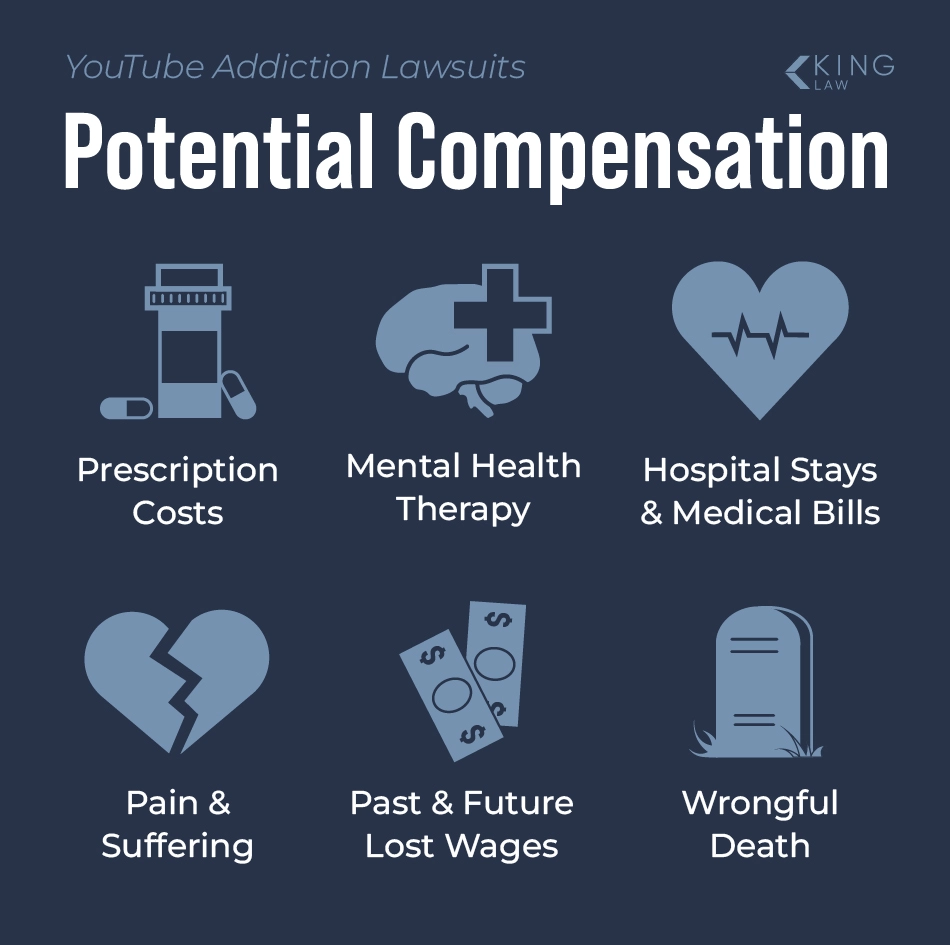
Some of the compensation that may be awarded in lawsuits against YouTube include the following:
- Therapy costs
- Medical expenses
- Prescription costs
- Pain and suffering
- Lost wages
- Wrongful death damages (if applicable)
The person filing the lawsuit may qualify for compensation for damages that are allegedly related to their YouTube addiction and YouTube’s misconduct. Family members may also request compensation if their loved one dies because of a YouTube addiction.
How Do Settlements Work in YouTube Lawsuits?
YouTube lawsuit settlements reflect the circumstances of the case. For example, some people may receive a payout from a trial verdict, which is awarded by a judge or jury after a formal courtroom trial. Compensation packages may also be negotiated out of court, which may result in a settlement. Some settlements may be negotiated individually, while others may be made as part of a group claim. The judge may need to review and approve a YouTube lawsuit settlement before it is finalized and payment is sent. Not everyone who files a lawsuit will receive a settlement.
Who Is Eligible to File a YouTube Mental Health Lawsuit?
Our law firm’s eligibility criteria for filing a YouTube mental health lawsuit include the following (which may change over time):
- The person was under 21 when they developed an addiction to YouTube.
- The person used YouTube for several hours per day.
- The person experienced physical, financial, or mental harm because of their addiction to YouTube or the content they saw on YouTube.
- The person was diagnosed with a condition that their care team believes is related to excessive YouTube use (e.g., suicidal ideation, self-harm, eating disorder, depression, or anxiety)
The above criteria have been used by our law firm and may change as the YouTube lawsuits develop. Talk to us directly to learn whether you qualify to file a YouTube mental health lawsuit.
Does the Claimant Need an Addiction Diagnosis?
The victim does not need to have been formally diagnosed with a YouTube or social media addiction for them or their family to qualify to file a lawsuit. However, they should have medical records that suggest that YouTube or social media use resulted in real-world harm (e.g., a depression or anxiety diagnosis).
Can Adults File a Claim?
Adults may qualify to file a claim against YouTube if they can prove they developed a social media addiction when they were under 21 and they meet the other eligibility criteria. Some states give some people more time to file a claim if they were injured by YouTube or another social media platform when they were a child. However, these are very technical. Adult claimants may benefit from talking to an attorney about whether they qualify to sue YouTube for a social media addiction they developed when they were a child.
Can Parents File YouTube Claims for Their Kids?
Parents and legal guardians may be able to file YouTube claims for their kids. The filing deadline and eligibility criteria depend on several factors, including the applicable state laws. An attorney can help parents and guardians determine if they qualify to file a YouTube addiction lawsuit on behalf of their child.
What Evidence Do People Need to File a Mental Health Claim Against YouTube?
You can strengthen your case against YouTube by locating evidence that proves you used YouTube, were unable to decrease time spent on the app, and were harmed by it. Examples of evidence that you can use to support your mental health claim against YouTube include the following:
- YouTube account records (e.g., login history, watch history, and subscriptions)
- Screen time reports (Apple Screen Time / Android Digital Wellbeing) showing how often you used YouTube and other social media apps
- Data downloads from your Google and YouTube accounts
- Device logs showing how often you used YouTube and how long each login session was
- Evidence that you used YouTube at a young age (especially important for underage plaintiffs)
An attorney can help you identify, retrieve, and use evidence to support your case against YouTube.
Evidence That May Support a Strong YouTube Lawsuit
There are some elements that can strengthen an addiction lawsuit against YouTube. Here are some of the factors that may strengthen a YouTube case:
- You started using YouTube under the age of 18.
- You watched for multiple hours daily.
- The algorithm pushed you harmful content (ED, self-harm, etc.).
- You were diagnosed with depression/anxiety after heavy use.
Is There a Deadline to File a YouTube Addiction Claim?
Yes. The deadline to file a YouTube addiction claim is called the statute of limitations, and it is determined by state law. There are some exceptions that may extend or shorten the time you have to file a lawsuit against YouTube. Talk to a lawyer about your situation and when you would need to file your YouTube mental health lawsuit.
How Long Do Parents Have to File a Lawsuit?
Parents who would like to file a YouTube addiction claim on behalf of their minor children should talk to a qualified attorney about the deadlines that apply in their situation. Some state laws may give underage victims additional time to file lawsuits against YouTube or another social media company. However, these are highly technical. A YouTube addiction attorney is a good resource to help parents understand what deadlines apply in their situation.
What Are the Expected Payouts in YouTube Addiction Lawsuits?
The payouts in YouTube addiction lawsuits may reflect the individual circumstances of each case. Final settlements or verdicts may depend on factors like the severity of the harm caused by the person’s YouTube addiction, the strength of the evidence to support their case, and the applicable compensation laws. The YouTube addiction lawsuits are still in their early stages, and very few settlements have occurred. One plaintiff received a multimillion-dollar payout. However, there is no guarantee that other plaintiffs will receive any or similar compensation.
Get a Free Case Review from a Lawyer Focused on YouTube Addiction Cases
King Law is offering free case evaluations for people who were impacted by a YouTube addiction. Our law firm has been reviewing these cases for many years, and we have vast experience holding large corporations accountable for their actions. We provide personalized, client-forward legal representation to families impacted by YouTube addictions. We take all YouTube mental health cases on a contingency basis, which allows families to hire a lawyer without having to worry about the upfront costs.
Contact Our Team to Learn About Legal Options for Your YouTube Case
If you believe you suffered mental, physical, or financial setbacks because of a YouTube addiction, contact our office today for a free case evaluation. Our intake specialists are ready to take your call and guide you through the onboarding process with one of our seasoned lawyers.
Frequently Asked Questions (FAQs)
People are filing YouTube addiction lawsuits because they believe YouTube is designed to be addictive, and they were not warned about the risks.
Some studies suggest that excessive screen usage may be associated with an increase in mental health issues, including anxiety, body dysmorphia, depression, suicide ideation, and self-harm.
You may be able to sue YouTube or its parent company (Google) if you have proof that you developed a YouTube addiction when you were under 21 and experienced setbacks related to that addiction.
Adults may qualify to sue YouTube if they were diagnosed with mental health conditions related to a YouTube addiction they developed when they were under 21.
Some of the platform features that some people believe make YouTube addictive to youth include endless scroll, autoplay, personalized feeds, Up Next recommendations, and social feedback tools (likes and comments).
Someone may qualify to receive a YouTube mental health settlement if they file a claim on time and successfully prove that they developed and were harmed by a YouTube addiction when they were young.
The potential payouts in YouTube addiction lawsuits depend on the individual circumstances of each person’s lawsuit.
A lawyer can help you understand if you qualify to receive compensation for an alleged addiction to YouTube or another social media platform.
It depends. Some attorneys take YouTube addiction cases on a contingency basis, which means clients do not pay any upfront legal fees for the lawyer to take their case.
It depends on the type of case you are filing and how complex it is. An attorney can help you determine if you are eligible to file a claim and the steps needed to file.
List of Sources Used in This Article
Here is a list of citations used to create this article.
Works Cited
Common Sense Census: Media Use by Tweens and Teens, 2025. Common Sense Media, 2025.
The Common Sense Census: Media Use by Tweens and Teens (Ages 8–18). Common Sense Media, 2019.
In re: Social Media Adolescent Addiction/Personal Injury Products Liability Litigation. United States District Court, Northern District of California, Case No. 4:22-md-03047.
Jury Reaches Verdict in Meta, Google Social Media Addiction Trial. Reuters, 25 Mar. 2026. https://www.reuters.com/legal/litigation/jury-reaches-verdict-meta-google-trial-social-media-addiction-2026-03-25/
Pending MDL Dockets by Actions Pending (April 1, 2026). U.S. Judicial Panel on Multidistrict Litigation, 1 Apr. 2026.
Social Media Addiction and Its Impact on Mental Health. PubMed Central, 2024.
Social Media Use and Adolescent Mental Health Outcomes. PubMed Central, 2024.
Technology Addiction: What Is It?. American Psychiatric Association, 2024.
The Effects of Social Media Addiction on Psychological Well-Being. PubMed Central, 2024.
Understanding Social Media Addiction: Behavioral and Neurological Perspectives. PubMed Central, 2024.