

How to File an Ozempic Lawsuit [2026 Update]
See if You Qualify

Ozempic is a breakthrough type 2 diabetes drug, but research shows it may cause some serious side effects with significant adverse health conditions. Ozempic, the brand name of semaglutide, was originally prescribed to manage type 2 diabetes. It functioned similarly to liraglutide, increasing insulin release and slowing gastric emptying in individuals with diabetes. More recently, it has been used off-label for weight loss.
If you used Ozempic and suffered harm, you may be able to file a lawsuit. However, not all patients on semaglutide or similar medications will be eligible. At King Law, we can help you understand your rights, including the step-by-step process in an Ozempic lawsuit. Our attorneys can help you assess your risks and determine eligibility if you suffered injuries or financial losses after taking Ozempic. Contact our office today to secure a lawyer’s assessment of your case.
On this page:
5 Steps to File an Ozempic Lawsuit
Qualifications for Filing an Ozempic Lawsuit
Ozempic Side Effects and Health Risks
The Process of Filing an Ozempic Lawsuit
Evidence to Gather When Filing the Lawsuit
Identifying the Manufacturer: Novo Nordisk
Recoverable Damages in the Lawsuit
Statute of Limitations for Filing an Ozempic Lawsuit
Reaching a Settlement in the Ozempic Lawsuit
Types of Recoverable Damages in the Ozempic Lawsuit
Average Settlement and Payout Amounts in an Ozempic Lawsuit
5 Steps to File an Ozempic Lawsuit
If you have experienced injuries after taking Ozempic, you may be eligible to file a civil lawsuit against the manufacturer (Novo Nordisk) or another liable party. However, it is important to act quickly as you only have a limited amount of time to file a claim for damages.
Steps for filing an Ozempic lawsuit:
- Consult with an Attorney: The first step in filing an Ozempic lawsuit is to consult with an attorney. An attorney can help determine whether you have a valid claim for damages. They will review your case and discuss all of your legal options.
- Determine Eligibility: Not all patients who took semaglutide will be eligible for compensation. To be eligible, you must have taken Ozempic or another GLP-1 drug (e.g., Wegovy, Mounjaro, Zepbound, Trulicity, Saxenda, or Rybelsus) and have suffered a severe health condition.
- Identify the Manufacturer: Under most circumstances, the lawsuit will be filed against the manufacturer of the drug. An attorney can help identify the manufacturer of the semaglutide you took.
- Secure Evidence: Ozempic lawsuits are based on evidence. Medical records and witness testimony often prove critical in these cases.
- Review Legal Requirements: Your case will have certain legal requirements, such as a statute of limitations, that you must adhere to. Failing to file within the statute of limitations may result in your case being dismissed.
Finally, with the help of a legal representative, you can file a lawsuit. Plaintiffs allege GLP-1 drugs caused serious gastrointestinal injuries and other problems and that manufacturers failed to adequately warn about the severity of these risks.
Qualifications for Filing an Ozempic Lawsuit
To file a lawsuit against Ozempic’s manufacturer, Novo Nordisk, you must meet certain qualifications. In order to be eligible, you must be able to prove that you were taking Ozempic and suffered severe health conditions such as stomach paralysis (gastroparesis), intestinal obstruction, ileus, vision loss, pulmonary embolism, blood clots or another severe condition.
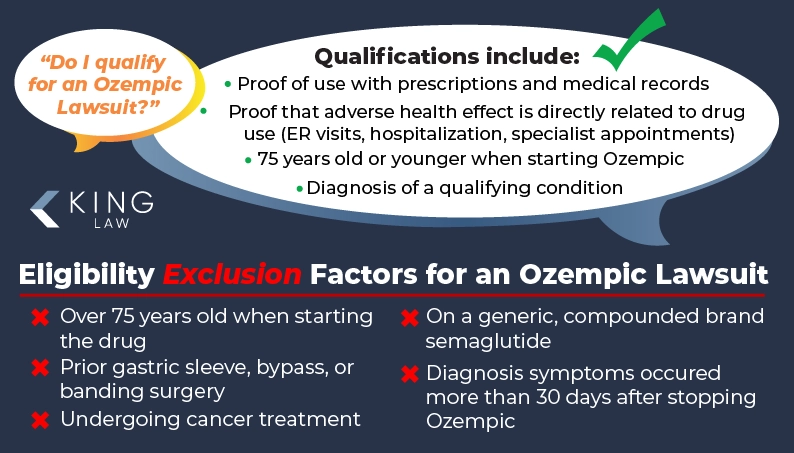
Eligibility requirements for an Ozempic lawsuit with King Law:
- Proof of Use: You must be able to show documentation proving usage of Ozempic, Wegovy, Saxenda, Trulicity, Zepbound, Mounjaro, or Rybelsus, including prescriptions and medical records.
- Age: You must have been 75 years old or younger when you began taking the drug and not currently undergoing chemotherapy.
- Adverse Health Effects: You must be able to prove adverse health effects directly related to Ozempic use, including emergency room visits or hospitalizations. Qualifying conditions may include gastroparesis, ileus, blood clots, vision loss, pancreatic disorders, and gallbladder removal.
- Diagnosis of Qualifying Condition: Not all health conditions will qualify. Cases are mainly focused on individuals experiencing severe gastrointestinal conditions, pancreatitis, vision loss, blood clots, and other conditions. Patients with prior major gastric surgeries or those being treated for cancer may not qualify. The diagnosis or symptoms must have occurred within 60 days of using Ozempic.
It can be challenging to know if you qualify for an Ozempic lawsuit without the help of an experienced attorney. It is strongly recommended that you consult with an attorney as early in the process as possible and retain all healthcare records related to Ozempic usage and adverse health effects.
Exclusions: Disqualifying Factors That Impact Eligibility
Not all individuals who suffered an adverse health condition or other injury after taking Ozempic will qualify. Several factors may impact your eligibility. It is imperative to discuss your case with an attorney to determine if you have a valid claim for damages.
Factors that may impact your eligibility for filing a lawsuit with King Law:
- You were over 75 at the time you began taking the drug
- You had a prior gastric sleeve, bypass, or banding surgery
- You are undergoing cancer treatment
- Your diagnosis or symptoms occurred more than 30 days after you stopped taking Ozempic
- You took a generic drug prescribed by a weight loss clinic that may be a compounded version of semaglutide
The best way to determine if you qualify for an Ozempic lawsuit is by consulting with an attorney. An attorney will help you navigate the legal process, including ensuring your eligibility.
Ozempic Side Effects and Health Risks
The U.S. Food and Drug Administration (FDA) has received numerous adverse event reports from people who have used compounded semaglutide. However, many of these complaints are believed to be linked to dosing errors by compounders. Patients report a number of side effects, including stomach paralysis, chronic vomiting, and gastroparesis.
People who have filed lawsuits have cited the following issues after taking Ozempic and other GLP-1 drugs:
- Acute kidney injury
- Stomach paralysis
- Bowel obstructions
- Chronic vomiting
- Ileus
- Pulmonary aspiration
- Biliary diseases
- Constipation
- Diarrhea
- Gallbladder inflammation
- Gallstones
- Gastroparesis
- Hypoglycemia
- Liver or kidney failure
- Nausea
- Hair loss
- Pancreatitis
- Vision loss
Long-term use or high dosage of Ozempic (especially when used for weight loss) may increase the risk of gallbladder problems. However, Novo Nordisk added a gallbladder warning in March, 2022. Lawsuits may determine whether or not this warning is legally sufficient.
The Process of Filing an Ozempic Lawsuit
The first step of filing an Ozempic lawsuit is to consult with an attorney. An attorney can help you gather evidence and build a strong case against the manufacturer. It is important to keep all of your medical records related to your prescription and adverse health effects. The more documentation you have, the stronger your case will be.
The Timeline for Filing an Ozempic Claim
While each Ozempic claim is different, the length of time it will take to complete your lawsuit depends on the circumstances of your case. More extensive injuries or a more complex case may take longer to resolve.
Ozempic lawsuits are still in their infancy, with additional studies being conducted about the adverse effects of the drug. Injury claims, however, can take a few months to a year or more to complete.
Evidence to Gather When Filing the Lawsuit
Ozempic lawsuits generally rely on evidence to provide. Evidence can help determine eligibility and the amount of recoverable losses.
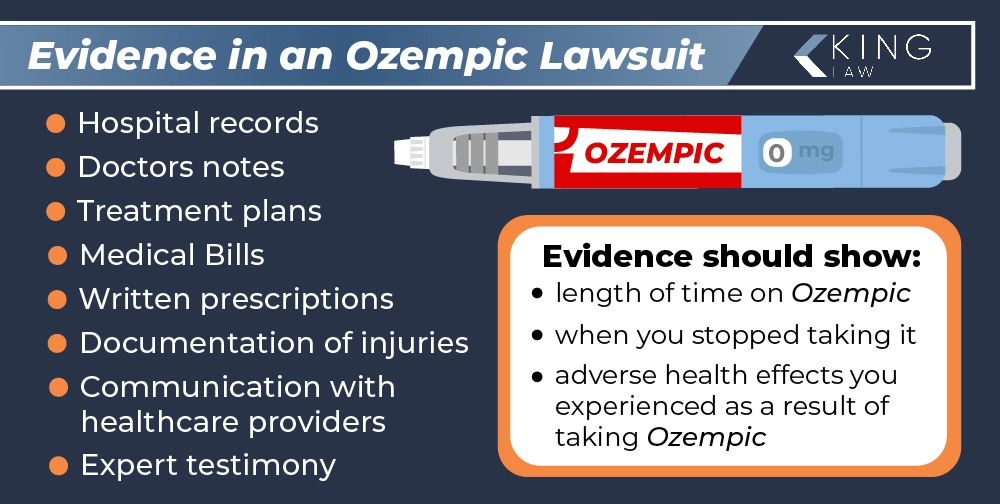
Examples of Evidence to Collect:
- Hospital records
- Doctor’s notes
- Treatment plans
- Medical bills
- Diagnostic tests
- Written prescriptions
- Documentation of injuries
- Expert testimony
- Communication with healthcare providers
In order to prove your case, the evidence must show the length of time that you took Ozempic, when you stopped, and what adverse effects you experienced as a result of its use.
Identifying the Manufacturer: Novo Nordisk
Most Ozempic lawsuits are filed against the manufacturer. Novo Nordisk is the manufacturer of Ozempic and is at the center of most lawsuits. Novo Nordisk is also the manufacturer of Wegovy and Rybelsus. Other manufacturers that may be liable include Eli Lilly, the manufacturer of Mounjaro. If you were prescribed semaglutide by a weight-loss clinic, it may be a generic compounded version not produced by Novo Nordisk.
Recoverable Damages in the Lawsuit
Most Ozempic lawsuits are based on the manufacturer’s alleged failure to warn consumers about the severe side effects associated with the use of the drug, including gastroparesis.
Depending on the circumstances of the case, individuals may be able to obtain compensation for their pain and suffering, healthcare costs, lost wages, and future treatment. Under limited circumstances, an injured party may be able to seek punitive damages for reckless, fraudulent, and wanton acts showing disregard for public safety.
Statute of Limitations for Filing an Ozempic Lawsuit
The legal timeline, known as the statute of limitations, for filing an Ozempic Lawsuit is state-specific but can be as short as one year. It is essential to file within the statute of limitations, or your case may be dismissed.
The timeframe for filing generally begins from the date of the event that caused your injuries or losses; however, for Ozempic cases, it may start from the date when the adverse side effects are first noticed. A lawyer can help determine the legal timelines that may be applicable in your case. There is no uniform national deadline for filing a claim.
Reaching a Settlement in the Ozempic Lawsuit
Several factors may influence when and if a settlement can be reached in your Ozempic lawsuit. Your damages, including the severity of your injuries, may directly impact how long it takes to reach a settlement and the potential payout you may receive.
Average Settlement and Payout Amounts in an Ozempic Lawsuit
Settlements in an Ozempic lawsuit are based on individual damages. There is no standard claim value; however, the estimated range for cases involving serious injuries are between $100,000 and $500,000. However no amount is guaranteed, and some settlements could be much lower or higher.
The amount each person receives if they file a successful Ozempic claim will be based on the severity of their injuries and the specifics of their case.
Speak With an Ozempic Lawyer to File a Claim
Did you suffer adverse health effects after taking Ozempic? Contact King Law’s Ozempic attorneys to discuss your case and learn more about how we can help you. Our legal team can help maximize your potential settlement.
Frequently Asked Questions (FAQs)
Find answers to any major questions you have regarding eligibility in the Ozempic lawsuits below.