
Complete the form below to tell us about your case

Can You Be Arrested for DUI Without Driving?
Yes, someone can be arrested for driving while intoxicated or driving under the influence, even if an officer does not witness that person driving. There are multiple scenarios when officers can assume someone was driving under the influence or intended to do so. In these cases, the officers can seek DWI charges.
At King Law, we aggressively defend those accused of DWI and similar charges. Cases where someone is charged with driving while under the influence when they were not seen driving are especially nuanced. These cases demand an experienced criminal defense attorney who can fight the accusations against you and build a strong case. If you have been charged with DWI even when you were not operating a vehicle, the team at King Law is ready to fight for you.
About the Can You Be Charged With DWI If You Were Not Seen Driving
How Can You Be Charged With DWI If You Were Not Seen Driving?
Scenarios Where You Can Be Charged with DWI Even if You Are Not Driving
What Are the Possible Penalties for a DWI While Not Driving?
How King Law Defends Against These Charges
Accused of DWI While Not Operating a Vehicle? Contact King Law.
How Can You Be Charged With DWI If You Were Not Seen Driving?
Whether or not the prosecution can prove that you operated the motor vehicle is a critical element in DWI investigations. For the overwhelming majority of DWIs, it is easy for an officer to prove you were operating a motor vehicle because you were pulled over while driving that vehicle. In cases where an officer does not see you operating a motor vehicle but finds you intoxicated, things can get more complicated.
In the case of motor vehicle accidents, when the police arrive, one of their first questions will always be whether you were driving the car. Why? They have just checked off the first element of their DWI investigation.
Evidence Police Collect to Establish “Operation” Without a Witness
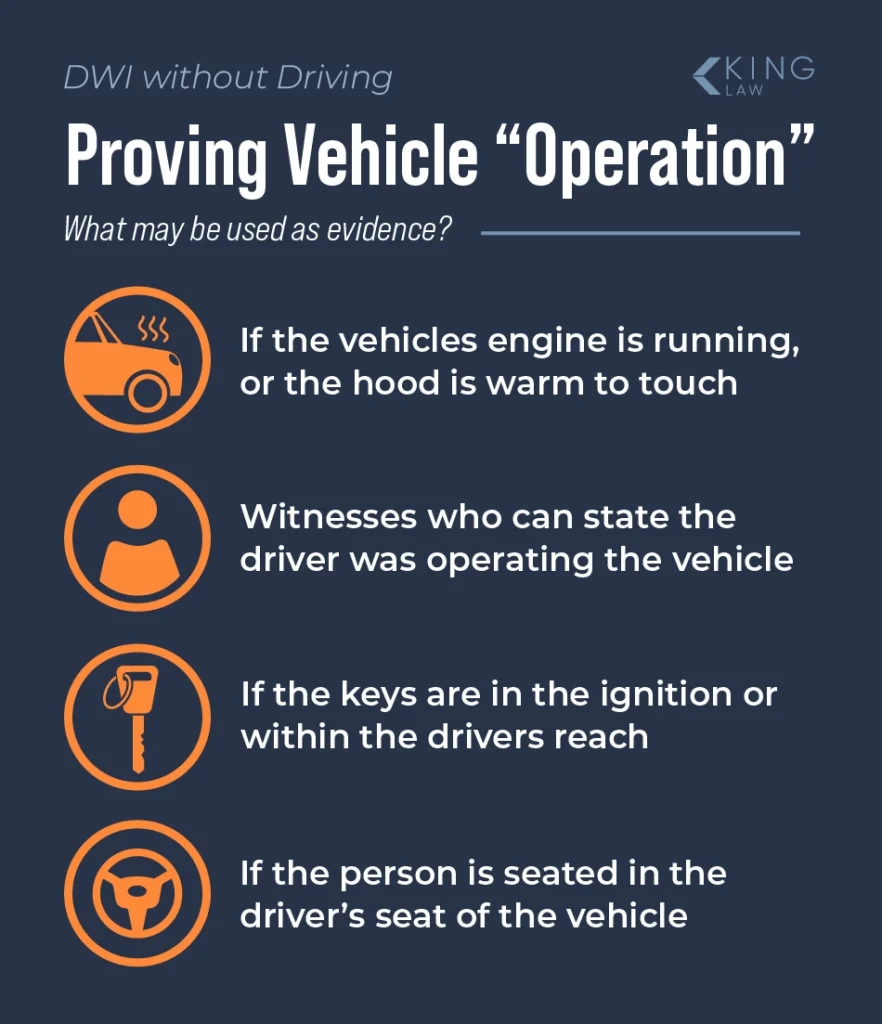
In order to charge someone with a DWI without seeing that person driving, police will try to collect evidence to support those charges. Evidence police will try to uncover to prove someone was operating a motor vehicle includes:
- Whether the keys are in the ignition
- Whether the vehicle’s engine is running
- Whether the hood of the vehicle is warm to touch
- Whether someone is seated in the driver’s seat
- Whether someone has the keys to the vehicle on their person
- Whether there are any witnesses who saw someone driving
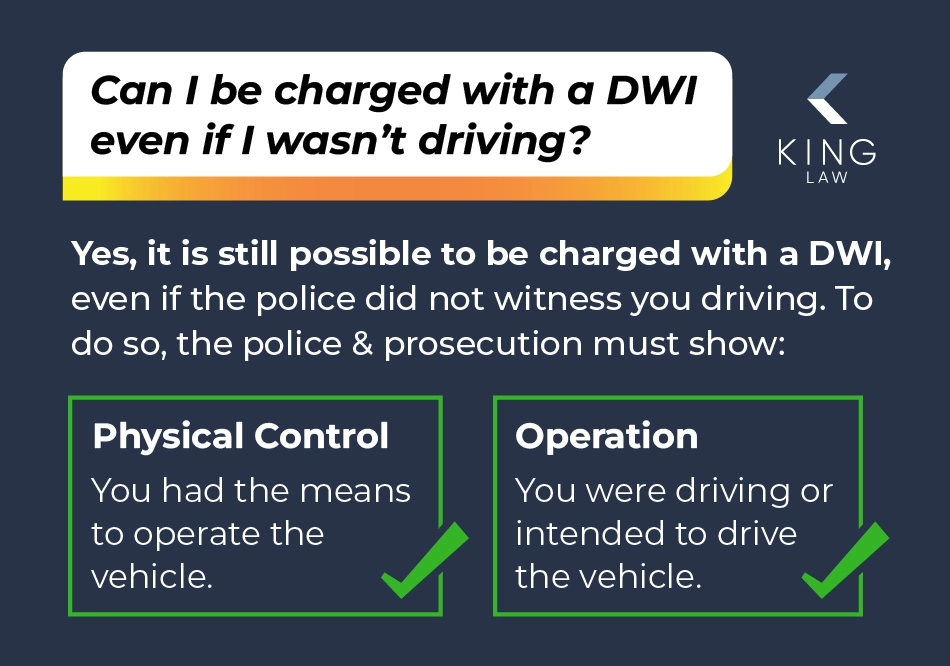
They will use this evidence to try to prove that someone had physical control of a vehicle while they were under the influence of drugs or alcohol.
What Is “Physical Control?”
Under Vehicle and Traffic Law § 113, New York State defines a “driver” as “Every person who operates or drives or is in actual physical control of a vehicle.” Additionally, courts are “not required to ignore common sense or the significance of the conduct alleged,” when considering if someone who was under the influence was operating or planned to operate a vehicle.
This essentially means that courts can weigh evidence that someone was driving or intended to drive a vehicle while under the influence of drugs or alcohol. They can use that evidence to prosecute someone for DWI or DWAI.
Scenarios Where You Can Be Charged with DWI Even if You Are Not Driving
Prosecutors can charge people who were not seen driving while intoxicated with that very crime. Some of the most common scenarios where this happens are cases involving accidents or where individuals are parked in a parking lot.
Here are some of the situations in which someone can be charged with DWI, even if the police do not actually witness them driving the car.
- Leaving the scene of an accident
- Post-accident presence
- Sitting in a parked car
- Sleeping it off
Leaving the Scene of an Accident
Sometimes, people get into accidents and abandon their vehicles. Even if this temporary abandonment is done legally, police may still suspect that the person involved in the crash was under the influence of alcohol or drugs. If the police can prove that someone got in a crash while under the influence, they can be charged with a DWI, even if the police do not see that person driving or are not able to administer a sobriety test.
Post-Accident Presence
If someone is involved in an accident but exits their vehicle, the police can still seek DWI/DWAI charges if they suspect that the person involved in the crash was under the influence. Even if someone is not in their vehicle at the scene of an accident, police can still administer a sobriety test and choose to arrest that person.
Sitting in A Parked Car
In some cases, police arrest someone who is in their parked vehicle while intoxicated. This includes if someone is sitting in their vehicle and listening to music or using their phone. Even if that person is not driving their car, they can still be charged with DWI/DUI, especially if they are sitting in the driver’s seat with the car running.
Sleeping It Off
Some people who are intoxicated try to “sleep it off” and choose to sleep in their car until they are sober enough to drive. These people can still face charges, especially in cases where they have the car running to keep the heat or air conditioning running.
What Are the Possible Penalties for a DWI While Not Driving?
The possible penalties for being convicted of a DWI without being seen behind the wheel are the same penalties that someone who is seen driving while intoxicated faces. The penalties for alcohol or drug-related driving offenses in New York vary depending on the scenario. Penalties include possible fines, jail time, and/or the loss of one’s license. These penalties typically increase if someone is found guilty of driving while intoxicated multiple times, while under 21, or has children in the car with them. Here are some of the penalties for someone convicted of driving under the influence of alcohol or drugs:
- Fines range from $500 to $10,000,
- Jail time ranges from 15 days to 7 years
- License suspension or revocation
How King Law Defends Against These Charges
If you have been charged with a DWI, even if you were not seen driving, King Law is ready to defend your legal rights. We will work tirelessly to uncover key evidence to support your defense. Here are some of the tactics we can use to defend your case:
- Work to establish a timeline to prove you were not operating the vehicle while you were intoxicated
- Work to prove your key was in the ignition only to charge a device, run heat or A/C, or to listen to music
- Work to prove that you had no intent to drive or were not driving prior to being found by police
- Prove that your vehicle was parked in a safe and legal place and that you were not operating or intending to operate it
Proving someone drove while intoxicated can be difficult if that person was not seen driving. In some cases, defendants are falsely accused. In other cases, prosecutors do not paint a full picture of the events surrounding someone’s arrest.
It is our job as defense attorneys to make sure that all evidence is presented and shared before and during a trial. We tend to find details that other attorneys do not—evidence that matters to our clients’ cases. Our knowledge of complex laws and prosecution tactics helps us defend our clients’ legal rights.
Accused of DWI While Not Operating a Vehicle? Contact King Law.
You can trust the DWI attorneys at King Law to fight for your rights and a fair trial. In many cases, we have been able to decrease the charges for those charged with DWI or have the charges dropped. Everyone deserves fair treatment under the law.
Frequently Asked Questions (FAQs)
Yes, you can be charged with DWI even if eye witnesses or police do not see you operating a motor vehicle. Police can collect other evidence and give it to prosecutors to pursue charges against you.
Yes, in some circumstances, you can be charged with a DWI, even if the police never saw you operating a motor vehicle.
Yes, you can be charged with DWI/DWAI/DUI even if you are not given a field sobriety test, a breathalyzer, or a blood test to confirm there are drugs or alcohol in your system. Prosecutors can use other evidence to charge and convict you of driving while intoxicated.
If police suspect that you were driving a motor vehicle while under the influence of alcohol or drugs, they can collect evidence to support their suspicions and charges. Evidence can include your whereabouts, witness statements, evidence from an accident, and other information.
The penalties for DWI and associated charges are the same whether the police actually see you operating a vehicle or not. If they can prove you were operating a vehicle while intoxicated, you face the penalties associated with your charges.
Yes, you can be charged with DWI, even if you were never actually driving a motor vehicle. If the police can prove you were intoxicated and intended to operate that vehicle, they can charge you with a DWI or similar charge.
CASE RESULTS
OUR RESULTS SPEAK FOR THEMSELVES.
Criminal Sale of Controlled Substance
Result - Dismissed
Rape in the First Degree
Result - Dismissed
Pedestrian Accident
Settlement - $105,000