Complete the form below to see if you qualify for a Saxenda Lawsuit
Our firm is currently not evaluating cases of gallbladder complications.
X
Saxenda is an injectable prescription drug used to aid weight loss in adults and teens who suffer from obesity, high BMI, or other weight-related medical problems. The medication has increased significantly in popularity, with demand being so great that it has impacted the availability of the drug.
The medication, however, has serious side effects. Current lawsuits allege the drug may cause gastroparesis and other severe health risks. As of February 2024, many Saxenda lawsuits have been consolidated into multidistrict litigation (MDL 3094). There are over 100 pending cases with litigation ongoing. The number of lawsuits is expected to grow significantly based on the widespread use of these drugs.
Saxenda Lawsuit Overview
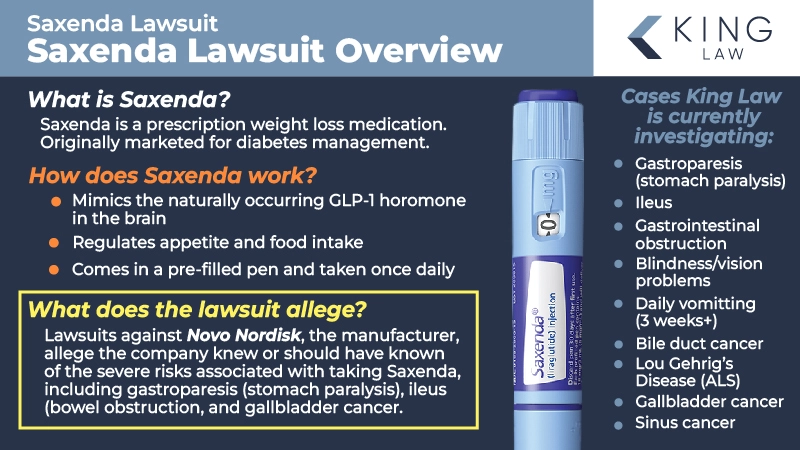
People are filing Saxenda lawsuits after experiencing a range of severe side effects, including stomach and bowel injuries, vision loss, and blood clots. Saxenda, a prescription-only weight-loss medication, is manufactured by Novo Nordisk. Its popularity has been increased substantially by social media campaigns and celebrity endorsements. Originally marketed for diabetes management, the drug is now used for weight loss in teens and adults.
As with other Glucagon-Like Peptide-1 Receptor Agonists (GLP-1 RAS), Saxenda has been linked to serious health conditions, including stomach paralysis or gastroparesis. In some cases, the side effects are so severe that they require hospitalization. Additional accusations against the manufacturer include that the medication may cause pancreatic cancer.
At King Law, our attorneys are reviewing claims linked to Saxenda use. Recent studies and case reports indicate that the weight loss drug may cause serious health risks, including gastroparesis.
Our firm is currently investigating Saxenda lawsuits involving a diagnosis of:
Affected individuals are encouraged to contact our office to discuss their legal options. Consultations are provided free of charge and without obligation to retain our services.
Saxenda Lawsuit – 2026 Update
September 1, 2026: More Cases Added to MDL Involving Saxenda While Court Considers Important Motion
The parties continue to discuss the defendant drug companies’ motions for summary judgment, which ask the judge to rule against plaintiffs on some of their claims without going to trial. The motions claim the defendants included enough information about the gastrointestinal risks of Saxenda and other GLP-1s for providers and patients to know that those side effects could become severe. However, the plaintiffs argue that past labels for Saxenda or similar products did not warn about gastroparesis, ileus, or other severe gastrointestinal risks. The MDL about the gastrointestinal risks of Saxenda and related drugs contains 4,022 lawsuits as of September 1, 2026.
August 3, 2026: More Lawsuits Join the Federal MDL About the Possible Risks of Saxenda, Other GLP-1 Products
The MDL about the possible gastrointestinal risks of taking Saxenda and other GLP-1 products has grown by 80 cases, according to the US Judicial Panel on Multidistrict Litigation. As of August 3, 2026, the JPML reports that there are 3,928 active lawsuits in the MDL.
July 1, 2026: Over 80 Lawsuits About Saxenda, Other GLP-1s Join Multidistrict Litigation
The multidistrict litigation involving Saxenda and other GLP-1 medications has grown to include 3,848 lawsuits, meaning about 85 more cases have joined the MDL since June 1, 2026. The parties are still navigating disagreements over a request to dismiss many of the lawsuits in the MDL and prevent medical experts from testifying in favor of the plaintiffs.
June 1, 2026: As GLP-1 Lawsuits Increase, Novo Nordisk Asks for Dismissal and Exclusions
Saxenda has been the subject of some GLP-1 lawsuits filed as part of an MDL. As of June 1, 2026, there are 3,763 active claims in the centralized litigation against GLP-1 manufacturers. Now, Novo Nordisk has filed a motion asking the judge to exclude expert testimonies and dismiss the lawsuits against the company. Novo Nordisk has asked that testimonies from five experts be excluded from the trial. It has also asked for the lawsuits to be dismissed, claiming that the FDA approved the warning label for Saxenda and its other GLP-1 drugs. This argument is called preemption, and it is a common defense tactic in these types of cases.
May 1, 2026: FDA May Keep Saxenda’s Active Ingredient Off Bulk Drug Compounding List; MDL Grows to Nearly 3,700 Cases
The FDA has said that it may keep Saxenda’s active ingredient (liraglutide) and several others off the list of approved bulk drug compounding substances. According to the announcement, the FDA believes that, because an FDA-approved version of this drug is available, compounding pharmacies may not be clinically needed to make it using bulk drug substances. Some reports suggest that this move could make it harder, or even impossible, for some compounding pharmacies and telehealth providers to offer low-cost versions of liraglutide (Saxenda). Meanwhile, there are now 3,636 lawsuits in the MDL filed by people who took Saxenda and other GLP-1 products and say they may have suffered from severe, unexpected complications.
April 30, 2026: Court Adjusts Schedule for MDL About Complications from Saxenda, Other GLP-1 Drugs
Dozens of patients who took Saxenda or another GLP-1 product have filed lawsuits, accusing Novo Nordisk and its competitor of not warning patients about the risks of taking these drugs. Some of these Saxenda claims were consolidated into a multidistrict litigation (MDL) in federal court for GLP-1 drugs. Some of the Saxenda patients claim that taking Saxenda caused them to develop gastroparesis, ileus, gallbladder cancer, and other complications. The MDL is accepting new claims from eligible patients, and the court recently entered an order adjusting some upcoming deadlines for routine pretrial motions.
April 1, 2026: Companies That Make Saxenda, Similar Drugs Face Almost 3,600 Lawsuits in Federal MDL
Novo Nordisk (Saxenda’s manufacturer) and another drug company are being sued in about 3,546 lawsuits that have been consolidated into a federal MDL, which is accepting new cases. Some of the lawsuits in the MDL allege that Saxenda patients suffered from ileus (bowel obstruction), gastroparesis (slowed or stopped digestion), and other gut-related complications after taking the injectable liraglutide. Many of the lawsuits also accuse Novo Nordisk of not telling Saxenda patients that gastrointestinal complications may occur after they take Saxenda.
March 5, 2026: FDA Calls Out Saxenda’s Novo Nordisk for Systemic Issues with Tracking and Reporting Adverse Drug Experiences
Saxenda’s manufacturer, Novo Nordisk, has been criticized by the FDA for failing to have or use written procedures to receive, monitor, report, and assess adverse drug experiences (ADEs) that patients have after taking GLP-1 drugs. In the letter, the FDA notes that Novo Nordisk’s written ADE reporting policy would not ensure ADEs are reported to the FDA within 15 calendar days. Additionally, the FDA discovered that Novo Nordisk would cancel or reject some ADE reports and not report them to the FDA at all if the company thought the ADE was unrelated to the drug. However, the FDA said the company must report all serious and unexpected adverse events experienced by someone taking Novo Nordisk’s products, even if the ADEs may not be related to Novo Nordisk’s drugs. The FDA also noted that Novo Nordisk and some of its call center vendors invalidated ADE reports when they should not have. The FDA has given Saxenda’s manufacturer 15 calendar days to respond to the letter with practical strategies to fix the issues the FDA discovered.
February 27, 2026: Competitor Launches Generic Saxenda as an Injectable Liraglutide, Pre-Filled Pen
Novo Nordisk’s competitor has launched a generic version of Saxenda, an injectable drug used for weight loss. Like brand-name Saxenda, the generic version’s active ingredient is liraglutide and will be offered in 18-mg prefilled pens. Saxenda has been the subject of several lawsuits accusing Novo Nordisk of failing to disclose severe gastric complications. Some of these lawsuits have been transferred into a multidistrict litigation against Novo Nordisk and other GLP-1 manufacturers.
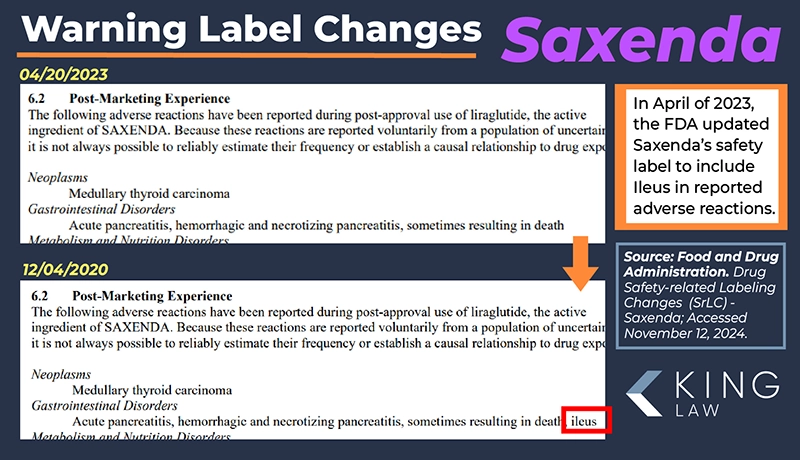
February 25, 2026: Saxenda Label Updated to Include Severe Gastrointestinal Issues, Including Obstructions
The FDA has posted an update to Saxenda’s drug information label to include a reference to post-marketing reports of severe gastrointestinal adverse reactions. Saxenda’s new warning label also includes an expanded list of gastrointestinal post-marketing reports, including intestinal obstruction and severe constipation that can result in fecal impaction. Saxenda’s manufacturer, Novo Nordisk, has been criticized by the FDA for allegedly failing to track and report adverse drug experiences that people who take Saxenda have had. Lawsuits have also been brought against Novo Nordisk by dozens of patients who say they experienced unexpected gastrointestinal complications after taking Saxenda. These lawsuits are ongoing, and the cause of these complications is still being investigated. However, some regulatory agencies and medical professionals have cautioned against prescribing GLP-1 medications (like Saxenda) in high-risk patients.
February 24, 2026: Biocon Secures Approval to Manufacture Generic Version of Saxenda
Biocon has announced it has gained FDA approval to produce a generic version of Novo Nordisk’s weight-loss drug Saxenda. According to the company’s February 24, 2026, press release, Biocon’s Saxenda generic (gSaxenda®) will be available in “18 mg/3 mL (6 mg/mL) single-patient-use prefilled pens.” Liraglutide (the active ingredient in Saxenda) is prescribed to help patients manage their diabetes and weight. Many patients have reported success using Saxenda. However, others have filed lawsuits against Saxenda’s manufacturer because they were hospitalized or had to be treated for severe complications after taking Saxenda. They believe Novo Nordisk was aware of the increased risk of gastroparesis, ileus, pancreatitis, blood clots, and other issues associated with Saxenda and did not warn patients.
February 13, 2026: FDA Asks Saxenda’s Maker to Remove Suicide Warning From Label
The FDA has requested that Saxenda’s manufacturer, Novo Nordisk, remove a warning that taking liraglutide may be associated with a higher risk of suicidal thoughts. The FDA had asked Novo Nordisk and its competitor to include this warning because of reports of a possible increase in suicidal thoughts among people taking older versions of weight loss medications. However, the FDA has now said it has not found evidence that Saxenda and other GLP-1s were linked with “increased rates of suicidal thoughts or behaviors.” According to legal complaints, Saxenda and other GLP-1s are allegedly associated with severe complications like gastroparesis, ileus, and acute pancreatitis. Dozens of lawsuits have been filed over this issue, and a number of these claims have been consolidated into a multidistrict litigation.
February 2, 2026: Multiple Digestive Injuries Alleged in Saxenda and Other GLP-1 Lawsuits
More than 3,000 lawsuits have been filed against GLP-1 drug manufacturers, including Saxenda’s Novo Nordisk. These lawsuits are part of a centralized litigation (MDL) for plaintiffs pursuing damages for alleged GLP-1 drug injuries. A lawyer representing Novo Nordisk offered a breakdown of injuries listed in those federal GLP-1 lawsuits. According to court documents from a January 13, 2026, court hearing, attorney Katie Insogna said that 75% of the lawsuits in the MDL listed gastroparesis/stomach paralysis in the complaint, 18% listed ileus, 8% listed gallbladder complications, and 8% listed other severe gastrointestinal conditions. Novo Nordisk maintains that Saxenda and its other GLP-1 drugs are safe and that the company is complying with the FDA in all regards. People who took Saxenda and developed severe gastrointestinal conditions, or other side effects like vision loss or blood clots, can speak with an attorney about filing a lawsuit.
January 16, 2026: New Litigation Formed for People Who Experienced Vision Loss After Taking Saxenda
People who suffered sudden blindness after taking Saxenda now have the option to file a lawsuit as part of a federal litigation. In December of 2025, the Joint Panel for Multidistrict Litigation (JPML) moved to centralize GLP-1 vision loss lawsuits in a single federal court. With that approval, a multidistrict litigation (MDL) for people with this injury has been formed. The name of the MDL is MDL No. 3163 (IN RE: Glucagon-like Peptide-1 Receptor Agonists (GLP-1 RAs) Non-Arteritic Anterior Ischemic Optic Neuropathy Products Liability Litigation). People who took Saxenda and developed NAION can speak with a lawyer about filing a lawsuit as part of this new litigation.
January 2, 2026: Market for Saxenda, Other GLP-1s Is Expected to Approach $30 Billion by 2030
Saxenda (liraglutide) is a widely popular weight loss drug in the United States, the UK, and elsewhere. Some analysts believe the market for Saxenda and other GLP-1s drugs will reach $29.8 billion by 2030. Although Saxenda has helped patients control their weight, patients have experienced severe, unwanted side effects. For example, some patients have had to be hospitalized because their digestive system stopped working (e.g., conditions like ileus or gastroparesis). Saxenda patients are suing Novo Nordisk because they say the company did not properly warn them that these complications could occur.
December 15, 2025: Biocon Releases Saxenda-Like Medications in the Netherlands, U.S. Lawsuits Forge Onward
Biocon, an Indian pharmaceutical company, has announced that it has developed two new liraglutide-based medications that will be available to patients in the Netherlands. Liraglutide is the active ingredient in Saxenda and serves a dual purpose as a weight-loss tool and a diabetes management aid. However, patients in the United States and in other countries have suffered health complications after taking Saxenda. Lawsuits filed in the United States accuse Saxenda’s manufacturer, Novo Nordisk, of not giving patients a complete picture of the potential side effects of taking Saxenda.
December 2, 2025: WHO Publishes Recommendations for Saxenda Usage, Lawsuits Carry On
The World Health Organization has issued its first set of recommendations for how to take Saxenda, other GLP-1s for weight loss. The new guidelines say that patients can take Saxenda for obesity on a “long-term, continuous basis” if necessary. However, the WHO says patients should not rely solely on Saxenda to meet their weight-loss and health goals. Saxenda patients should also make lifestyle changes to support their overall well-being, such as incorporating physical activity and healthy eating into their daily routine. Saxenda users are experiencing significant side effects, including pancreas problems, gut paralysis, and vision problems. Many of these patients are suing Saxenda’s manufacturers, claiming they failed to give patients enough information about the risks and potential benefits of Saxenda.
November 14, 2025: Saxenda Patent Protections Withdrawn in Brazil, Side Effect Lawsuits Increase
Brazilian courts have withdrawn Novo Nordisk’s patent protection for its liraglutide drug, Saxenda. This means that Novo Nordisk cannot prevent other drug companies from creating the same drug in a generic form at a lower cost while the patent protections are suspended. Saxenda is wildly popular, and its soaring global demand has resulted in shortages. Saxenda patients in the United States are suing Novo Nordisk because they say they were not told about the dangers of this GLP-1 before they relied on it for weight loss and diabetes. Many of these patients have banded together in a federal multidistrict case against Novo Nordisk, and the number of claims in this MDL is growing.
November 3, 2025: Saxenda, Other GLP Use Spurs Uptick in Weight Loss Med Poisoning Reports
Netherlands researchers have found that the number of poisonings from Saxenda and other GLP-1 receptor agonists has doubled in recent years. According to NL Times, these reports to poison control centers often involve stomach issues, intestinal problems, dehydration, vomiting, and nausea. Saxenda patients in the United States are also getting injured after taking Saxenda, and they have banded together in an active, growing multidistrict litigation against Novo Nordisk.
October 16, 2025: Saxenda, Other GLP-1 Drugs May Interfere With PET Scans for Cancer
Saxenda and other GLP-1s for weight loss and diabetes may make it harder for doctors to tell the difference between cancerous and healthy tissue on PET scans, according to a new study. Researchers noted that Saxenda and similar medications may collect in the patient’s muscle and fat tissue, which can look like cancer or swelling on scans. Because of this, doctors may incorrectly diagnose someone with cancer and start them on unnecessary treatments for it. Meanwhile, patients are also experiencing severe complications, like sudden blindness, pancreatitis, kidney issues, and gastroparesis, after taking Saxenda. They are filing lawsuits because they were not told about these risks.
October 1, 2025: TRICARE Affirms Saxenda Coverage While Side Effect Lawsuits Grow in Numbers
TRICARE, an insurance plan for military members, says it continues to cover Saxenda and other GLP-1 drugs. To be eligible for coverage, the person needs to meet criteria, such as having a prior authorization from their doctor saying that they need Saxenda for weight loss. However, Novo Nordisk is facing hundreds of legal claims filed by Saxenda patients who say they were not warned about this drug’s potential complications. There are now 2,809 active lawsuits in the group GLP-1 litigation. Many have been hospitalized or even died because of unwanted and unexpected side effects after taking Saxenda as prescribed.
September 15, 2025: Teva Receives FDA Approval for Generic Saxenda Injection
Teva Pharmaceuticals has become the first company to receive FDA approval for a generic version of Saxenda, a GLP-1 injection for weightloss. More consumers are turning to products like Saxenda to help them achieve their weight loss goals. However, Saxenda and its competitors have caused hundreds of patients to experience pancreatitis, vision loss, gastroparesis, and other complications. Many of these patients and their surviving loved ones are bringing legal claims to hold Novo Nordisk accountable for not telling people about the risks.
September 4, 2025: More Lawsuits Filed Involving Novo Nordisk’s Saxenda
Between August and September 2025, 486 new plaintiffs joined the group lawsuit for people harmed by Saxenda and other GLP-1 drugs. There are now 2,676 active lawsuits against manufacturers like Novo Nordisk. Saxenda has been reported to cause severe gastrointestinal conditions, blood clots, vision loss, and various other side effects. People harmed by Saxenda can still join this litigation.
August 21, 2025: Novo Nordisk May Pay $2 Billion in Damages in Active Lawsuits for Saxenda and othe GLP-1s
According to some estimates, Novo Nordisk may be liable for $2 billion or more in damages to settle legal claims against it. Thousands of patients turned to Saxenda as a supposed miracle drug to help them achieve their weight loss goals. However, a number of patients were struck by terrible complications like gastroparesis (where your gut slows or stops working) and non-arteritic anterior ischemic optic neuropathy (sudden and irreversible vision loss). Nearly 2,200 patients have filed lawsuits related to Saxenda and other GLP-1 drugs, and more are joining the fight each month.
August 19, 2025: Failure to Warn and Other Allegations Against Saxenda Survive Novo Nordisk’s Motion to Dismiss
Patients are suing Saxenda and other brands of GLP-1s, claiming they were tricked into believing Saxenda was safe and had a low chance of causing serious harm to them. Saxenda’s manufacturer, Novo Noridsk has tried to have many of those lawsuits thrown out. However, Judge Marston has allowed many of these allegations (like the failure to warn cases) to move forward. She dismissed some types of claims; however, she provided specific instructions about what plaintiffs need to include in an amended complaint if they want to refile those in the future. This means that many people still have legal options and can join the federal litigation against GLP-1 manufacturers.
August 18, 2025: Gastroparesis Victims Need to Have Gastric Emptying Study Before Suing Saxenda
Patients who experienced gastroparesis after taking the Saxenda brand of GLP-1 injections may qualify to sue Novo Nordisk. However, based on a recent court ruling, they need to have a specific type of test (gastric emptying study) to diagnose this condition. The judge overseeing the group lawsuit against Saxenda has determined that this test is the most reliable method for doctors to diagnose patients with gastroparesis. She also ruled on what expert witness testimonies will be admissible in court. Patients who already had this test can continue with their claim; however, those who did not may not be able to move forward with that allegation unless they have a gastric emptying study that proves they had gastroparesis. The judge’s guidance on this matter is essential for patients and their attorneys to have as they prepare their legal complaints against Novo Nordisk. Having the right evidence to support their claim can help victims develop a strong legal case against Novo Nordisk. Saxenda victims can talk with their lawyers and doctors about whether this is already included in their medical records.
August 15, 2025: UK Woman Experiences Acute Pancreatitis, Other Health Issues After Saxenda Shot
Like many others, Lorna Edgar started Saxenda as a last-ditch effort to lose weight after unsuccessful attempts to do so naturally. About a month into her treatments, she woke up in the middle of the night with extreme stomach pain. She went to the doctor and discovered that she had acute pancreatitis. Since that time, she has also had to have her gall bladder removed, and she now struggles with health problems she strongly believes were caused by Saxenda. Many people who suffered similar side effects have filed lawsuits against Novo Nordisk for not properly warning them of the dangers associated with the drug.
August 1, 2025: People Who Suffer Vision Loss From Saxenda May Have New Group Lawsuit Option
Emerging research suggests Saxenda and other GLP-1 drugs can cause NAION (non-arteritic anterior ischemic optic neuropathy), a type of permanent vision loss. People who took Saxenda and were diagnosed with NAION may soon be able to join a group lawsuit in New Jersey. A request has been filed to create a multicounty litigation (MCL), a type of group lawsuit for people harmed in the same way by the same thing (e.g., blindness caused by NAION). People harmed by Saxenda should discuss their options with a qualified attorney.
July 17, 2025: New Oral GLP-1 May Have Fewer Side Effects than Saxenda, Study Finds
The GLP-1-H25-5 trial has found that an oral version of GLP-1 causes fewer adverse side effects than the injectable version of Saxenda. Lexaria’s oral DehydraTECH-liraglutide is a glucagon-like peptide-1 agonist that helps patients manage diabetes and lose weight. During trials, oral dehydraTECH-liraglutide patients had 31 percent fewer gastrointestinal symptoms than people who took Saxenda shots. Many patients have sued Saxenda’s maker after the shots caused them to suffer severe complications.
July 3, 2025: Woman Files Lawsuit After Experiencing Vision Loss From Saxenda
A woman who was taking Saxenda and Wegovy for weight loss has filed a lawsuit after she developed a type of vision loss called NAION (non-arteritic anterior ischemic optic neuropathy). NAION is characterized by sudden and permanent vision loss. The Massachusetts woman took GLP-1 drugs for about 2 years before she experienced NAION. She is suing Novo Nordisk for her injuries and the long-term implications of her injuries.
June 17, 2025: Canadian Government Predicts Saxenda Shortage in Fall 2025 as US Patients File Lawsuits
Health Canada (part of the Canadian government) has announced an anticipated shortage of Saxenda, the liraglutide injection used for weight loss. The agency expects that Canada’s supply chains will not be able to keep up with demand starting October 2025. The United States experienced similar shortages earlier this year, even as people filed lawsuits because they developed gastroparesis, thyroid tumors, or other complications from taking Saxenda.
June 12, 2025: Saxenda’s Prescribing Label Updated to Strengthen Language Around Gastric and Kidney Issues
Novo Nordisk has updated the drug warning label for its weight-loss drug Saxenda. The label now features stronger warnings for severe side effects like kidney disease and gastric conditions while taking Saxenda. The label also says doctors should be warning patients about the risks of severe volume depletion (loss of fluids) due to gastric upset and be monitoring kidney function levels. This strengthening of warnings for Saxenda comes at a time when more people are filing lawsuits related to the severe side effects of the drug.
June 3, 2025: Attorneys in Saxenda Lawsuits Argue Over Gastroparesis Diagnosis Criteria
Some patients who took Saxena experienced the side effect of severe gastroparesis. Some of those people have joined the group lawsuit for people harmed by GLP-1 drugs, including Saxenda. Now attorneys on both sides of that federal lawsuit cannot come to an agreement on diagnostic criteria for gastroparesis, in relation to this litigation. Defense attorneys want specific testing, which may impose undue difficulties on many plaintiffs. Plaintiffs’ lawyers want to rely on a common medical process called differential diagnosis, which has been commonly accepted by the courts in other litigations. The outcome of this debate will shape the future of the Saxenda litigation.
May 15, 2025: Lawsuits Filed by People Injured By Saxenda Increase in May
There are now 1,809 active lawsuits against Novo Nordisk’s Saxenda and other GLP-1 drug manufacturers. People injured by Saxenda have joined the group litigation against GLP-1 manufacturers. Even as Saxenda touts health benefits like a reduced risk of obesity-related cancers, the serious side effects of the drug remain. These side effects have led to many lawsuits against Novo Nordisk.
May 5, 2025: Saxenda to Become A Preferred Drug For One of Nation’s Largest Pharmacies
On May 1, CVS announced that Saxenda will be a preferred option on its standard formulary, or list of covered drugs. This change is effective July 1, 2025. CVS’ pharmacy benefit manager serves more than 108 Americans and processes billions of pharmacy claims every year. This change could mean more Americans end up taking Saxenda and experiencing severe side effects from the drug. These severe reactions have led to thousands of Americans filing lawsuits after taking Saxenda.
April 16, 2025: Expert Hearing on Gastroparesis Scheduled for May 14th in Saxenda MDL
Experts will be providing key evidence for the May 14, 2025, hearing about gastroparesis and how it is diagnosed. Many people who took Saxenda and other GLP-1 drugs like it experienced gut paralysis—gastroparesis—and were hospitalized or died. The plaintiffs in the GLP-1 lawsuit involving Saxenda are hoping to learn more about the process of diagnosing gastroparesis so they can use this information to continue to build their cases. More people who took Saxenda and were injured by complications can join in this active litigation.
April 2, 2025: More Lawsuits Filed Against Saxenda Maker Novo Nordisk
As of April 1, 2025, there are 1,685 lawsuits pending against Saxenda manufacturer Novo Nordisk and other companies who make GLP-1 drugs. These lawsuits have been filed as a group litigation against pharmaceutical companies that make the popular weight-loss and type 2 diabetes drugs. Some people who take Saxenda continue to experience a range of severe side effects, including gastrointestinal disorders, loss of vision, and blood clots. It is expected more people will join this litigation as the popularity of Saxenda and other similar drugs increases
March 4, 2025: Increase in Saxenda Lawsuits as Trial Preparations Continue
As of March 3, 2025, there are 1,521 lawsuits in the active multidistrict litigation against the companies that made Saxenda and other GLP-1 drugs. Evidence shows that these Glucagon-like Peptide-1 Receptor Agonists can cause severe side effects with potentially fatal consequences. Bellwether (test) trial preparations are underway, and a critical hearing is scheduled for May 14, 2025. At this hearing, the parties will discuss what expert testimony, including whether or not Saxenda caused various injuries, can be included in the first round of test trials. People can still file claims and join in this active MDL if they took Saxenda and experienced digestive disorders and other serious side effects.
February 6, 2025: Lawsuits Filed Against Saxenda Manufacturer Novo Nordisk Increase
As more people take Saxenda (liraglutide) for weight loss, more people are experiencing severe injuries from the drug. Between December and January, 143 new lawsuits were filed against Saxenda’s manufacturer (Novo Nordisk) and other GLP-1 manufacturers. Saxenda is now part of the multidistrict litigation (MDL) for those harmed by GLP-1 drugs. People continue to join the consolidated federal litigation after experiencing severe side effects from Saxenda and other GLP-1 drugs.
January 9, 2024: Saxenda Is Officially Added to GLP-1 Drug Multidistrict Litigation
People who have experienced certain injuries due to Saxenda, the GLP-1 weight-loss drug manufactured by NovoNordisk, can now file lawsuit as part of MDL 3094: Glucagon-like Peptide-1 Receptor Agonists (GLP-1 RAs) Products Liability Litigation. A judge issued an order allowing Saxenda patients to file lawsuits for injuries ranging from gastroparesis, intestinal blockages, pancreatic and gallbladder illnesses, and other injuries.
December 2, 2024: Lawsuits Against Saxenda and GLP-1 Drug Manufacturers Adds More Plaintiffs in November
More plaintiffs joined the consolidated lawsuits against Saxenda manufacturer Novo Nordisk and other GLP-1 manufacturers. As of December 2, 2024, there are now 1,300 pending lawsuits MDL 3094, Glucagon-like Peptide-1 Receptor Agonists (GLP-1 RAs) Products Liability Litigation. More people are expected to join this multidistrict lawsuit after experiencing injuries such as blood clots, vision loss, and gastric issues after taking Saxenda for weight loss.
November 22, 2024: More Research Needed Into Saxenda and Others GLP-1 Drugs and Possible Cancer Risks
According to a recent study, people who take GLP-1 drugs, like Saxenda, may be at an increased risk of developing thyroid cancer. A recent study, called “Glucagon-like peptide 1 receptor agonists and thyroid cancer: is it the time to be concerned?” found that people who took GLP-1 drugs for 1 to 3 years had a 58% increased risk of developing thyroid cancer. The studies authors hope their findings would result in more research into GLP-1 drugs and an increased risk of cancer.
November 7, 2024: Judge in Saxenda MDL Issues Order on Expert Report Timelines
Judge Karen Spencer Marston, the judge in the GLP-1 multidistrict litigation (MDL 3094), issued an order in which timelines were set for submitting expert reports. MDL 3094 includes the manufacturer of Saxenda, Novo Nordisk, as a defendant. In her order, Judge Marston gave the attorneys of plaintiffs until November 18, 2024, to submit reports from their expert witnesses. Novo Nordisk and other defendants have until December 23, 2024, to submit their reports. These expert reports, which contain expert opinions and scientific data, will be used throughout the discovery phase of this litigation.
October 4, 2024: Wave of Lawsuits Against Novo Nordisk Intensifies as Side Effects of Saxenda Cause Harm
As of October 1, 2024, there were 1,090 cases pending in MDL 3092, which includes Novo Nordisk, the maker of Saxenda. From August to September of 2024, there was nearly a 20% increase in the number of lawsuits in the MDL. Thousands more plaintiffs are expected to join this lawsuit as more Americans take GLP-1 drugs, like Saxenda, and experience serious side effects.
October 3, 2024: Saxenda Trial Shows Temporary Weight Loss in Children, Raises Safety Concerns
As the Saxenda lawsuit continues, a new announcement has been made that the drug can be safe for children starting at the age of 6. A trial with 82 children showed that the use of the drug, along with a healthy diet and physical exercise, can lower the child’s BMI by at least 5%. However, after a six-month follow-up, the weight was gained back, indicating that this is not a good long-term solution. During the trial, the children experienced the same side effects as adults—gastrointestinal issues. Eighty percent of the participating children suffered from nausea and vomiting while on the drug. Saxenda has been shown to cause irreversible side effects in adults, such as gastroparesis and eye strokes, raising concerns about the rush to administer this drug to children.
August 2024: A comprehensive analysis examining how semaglutide drugs may lead to blood clots, deep vein thrombosis (DVT), and pulmonary embolisms is gaining new traction. The analysis, published in the Endocrine Journal, saw a 266% increase of DVT in patients taking semaglutide drugs, such as Ozempic and Wegovy. More research will be conducted to see if other GLP-1 agonist drugs, like Saxenda, cause blood clots and DVT.
July 2024: A recent study published in JAMA’s Ophthalmology examined a possible tie between taking semaglutide drugs and suffering vision loss. The study found people taking these drugs had a four times greater likelihood of having an eye stroke. The strokes are called anterior ischemic optic neuropathy (NAION) and can cause vision loss or blindness. Medical professionals will be paying close attention to see if other GLP-1 agonist drugs, like Saxenda, may cause NAION.
June 2024: The MDL is reassigned to Judge Karen Spencer Marston after the unexpected death of the previous presiding judge. There are currently over 100 cases pending in the MDL with the number expected to increase rapidly in the coming months.
February 2024: Lawsuits against Saxenda manufacturer Novo Nordisk are consolidated into multidistrict litigation out of the Eastern District of Pennsylvania (MDL 3094 In Re: Glucagon-like Peptide-1 Receptor Agonists (GLP-1 RAS) Products Liability Litigation).
About the Saxenda Lawsuit:
What Is Saxenda?
Saxenda is a daily injectable prescription medication manufactured by Novo Nordisk. It has the same active ingredient in Victoza, liraglutide, a GLP-1 receptor agonist similar to semaglutide. The mechanism of action of the drug works by mimicking the GLP-1 hormone, targeting the areas of the brain that regulate appetite and food intake.
The drug, following a favorable vote from the Endocrinologic and Metabolic Drugs Advisory Committee, was approved in December 2014 by the U.S. Food and Drug Administration (FDA) for chronic weight management in adults with obesity (BMI of 30 or higher) or overweight (BMI of 27 or higher) and at least one weight-related condition, such as type 2 diabetes, high blood pressure, or high cholesterol. Saxenda was launched to market in the United States on April 22, 2015.
In December 2020, the FDA issued approval for the drug to be used in adolescents as young as 12 years old with a body weight above 132 pounds (60 kg) with obesity. In both instances, the drug was to be used as part of a broader weight management program in conjunction with a reduced-calorie diet and increased physical activity.
How Does Saxenda Work?
Saxenda’s mechanism of action is similar to that of other popular weight loss medications that have recently become more popular. It is a glucagon-like peptide-1 (GLP-1) receptor antagonist, meaning it mimics the GLP-1 hormone in the brain. It is chemically 97% similar to this hormone, making it extremely effective. In essence, it works in the hypothalamus of the brain, interacting with specific neurons that regulate appetite and food intake.
By mimicking the GLP-1 hormone, it helps to lower hunger stimulation, ultimately leading to a reduction in food intake. Additionally, it helps the stomach to digest food more slowly, causing a prolonged feeling of fullness. The medication comes in a liquid solution inside of a prefilled pen. The drug is injected once daily under the skin on the stomach or thigh. Currently, there is no generic available.
Common side effects associated with using Saxenda include nausea, vomiting, diarrhea, constipation, and low blood sugar (hypoglycemia). However, patients report severe health conditions related to taking the medication, including stomach paralysis (gastroparesis) and potential pancreatic cancer. The drug continues to be reviewed for its safety and effectiveness as a result of these alleged severe side effects and potential legal issues.
Saxenda Side Effects and Health Risks
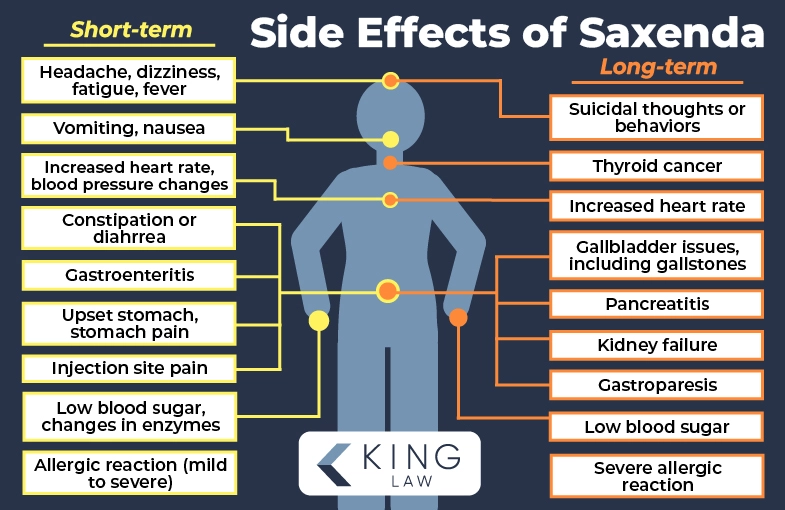
Saxenda is associated with a number of side effects and potential health risks. Similar to other GLP-1 receptor agonists, the active ingredient in the medication, liraglutide, has been linked with several gastrointestinal effects. Due to its mechanism of action regulating appetite and insulin secretion, it may impact multiple systems within the body.
Side effects associated with Saxenda:
- Headache
- Dizziness
- Fatigue
- Fever (common in teens)
- Nausea
- Vomiting
- Diarrhea
- Constipation
- Gastroenteritis (inflammation of the stomach and intestines)
- Upset stomach (dyspepsia)
- Stomach pain
- Low blood sugar (hypoglycemia)
- Change in enzyme (lipase) levels in your blood
- Mild allergic reaction (rash, itching)
- Severe allergic reaction (rare cases)
- Increased heart rate (heart palpitations, chest pain)
- Changes in blood pressure and other cardiovascular issues
- Redness, pain, or swelling at the injection site
Lawsuits allege that Novo Nordisk, the manufacturer of Saxenda, failed to warn of adverse side effects related to the long-term use of the drug, including the potential for gastroparesis. Research indicates that the drug slows down gastric emptying and may adversely affect digestive system functions.
Long-Term Side Effects of Saxenda
Long-term side effects associated with Saxenda include gastroparesis, ileus, pancreatitis, and potential thyroid tumors. Individuals taking Saxenda are encouraged to seek regular checkups and report adverse reactions to their medical provider as soon as possible.
Long-term side effects linked to Saxenda:
- Gastroparesis (stomach paralysis)
- Ileus (intestinal blockages)
- Gallbladder problems, including gallstones (symptoms include severe abdominal pain, diarrhea, pale-colored stool, fever, nausea, vomiting, jaundice)
- Increased heart rate (heart palpitations, chest pain)
- Pancreatitis (sudden upper abdominal pain, persistent severe burning pain in the abdomen, vomiting)
- Suicidal thoughts or behavior (new or worsening depression, thoughts about harming yourself or ending your life, changes in mood or behavior)
- Kidney failure
- Low blood sugar
- Risk of thyroid cancer
- Severe allergic reaction
Saxenda and Vision Loss
A recent study in JAMA’s Ophthalmology found semaglutide drugs could cause a specific sort of eye condition called NAION. Although Saxenda is not a semaglutide drug, it belongs to the same class of drugs as semaglutide. Both semaglutide and liraglutide, the active ingredient in Saxenda, are GLP-1 agonist receptor drugs.
This condition is called nonarteritic anterior ischemic optic neuropathy (NAION), which can cause permanent vision loss or blindness. More studies will be needed to discover if all GLP-1 drugs carry an increased risk of NAION and the associated vision loss. Current information suggests that people who take semaglutide drugs are three times more likely to develop NAION than people who do not.
In December 2025, the Joint Panel on Multidistrict Litigation (JPML) chose to centralize lawsuits filed by people who say Saxenda and other GLP-1 drugs caused them to develop NAION. This litigation is separate from and earlier multidistrict litigation (MDL) formed for people alleging other injuries from GLP-1 drugs. People who experienced NAION after taking Saxenda can talk to a lawyer about filing a lawsuit as part of: MDL No. 3163 (IN RE: Glucagon-like Peptide-1 Receptor Agonists (GLP-1 RAs) Non-Arteritic Anterior Ischemic Optic Neuropathy Products Liability Litigation).
Saxenda and Blood Clots
Some GLP-1 drugs have been shown to increase the risk of blood clots. A study published in the Endocrine Journal studied data from more than 12,000 patients who used semaglutide to treat their diabetes. The data pointed to a 266% increased risk of a certain type of blood clot for people taking semaglutide drugs. The blood clots are called deep vein thrombosis (DVT), and they can lead to severe complications such as pulmonary embolisms.
Although the active ingredient in Saxenda (liraglutide) is different than semaglutide, both drugs belong to the same class—GLP-1 agonist receptors. More research will be needed to determine if other GLP-1, like Saxenda, can increase the risk of blood clots.
Saxenda FDA Approval and Its Black Box Warning
Saxenda received FDA approval on December 23, 2014, for weight loss management in adults with obesity or who are overweight (BMI of 27 kg/m² or higher) with at least one weight-related medical condition. Weight-related medical conditions include but are not limited to high blood pressure, type 2 diabetes, and high cholesterol. Approval was based on clinical trials that involved over 5,000 overweight or obese individuals. In December 2020, approval was granted for pediatric patients ages 12 and older who are obese and weigh 132 pounds or more.
It is recommended that patients using the drug be evaluated after 16 weeks and that the drug is discontinued if less than 4% of the baseline body weight is lost. The medication carries a black box warning, the FDA’s highest level of warning. The black box warning highlights the risk of thyroid cancer and acute pancreatitis. The risk of thyroid cancer is based on animal studies and has not been confirmed in humans. It is, however, contraindicated for individuals with a personal or family history of medullary thyroid carcinoma (MTC) or multiple endocrine neoplasia syndrome type 2 (MEN 2).
Other potentially serious adverse events linked to the use of the drug include acute gallstone disease and thyroid neoplasm. Due to the aforementioned warnings, it is strongly recommended that patients using Suboxone undergo continuous evaluation for thyroid cancer and pancreatitis symptoms.
Saxenda Manufacturer: Novo Nordisk
Novo Nordisk, the manufacturer of Saxenda (liraglutide), is a pharmaceutical company based in Denmark. In July 2023, the company experienced a rapid increase in demand for the drug. As a result of the increase in demand, the manufacturer announced that it anticipated challenges in filling prescriptions for the drug throughout 2023 and beyond. The shortages have caused the company to expand and build new production facilities to meet the demand for Saxenda and other GLP-1 products.
Saxenda launched to market in the U.S. in April 2015. It is alleged that the company planned to use 500 of its nearly 3,000-person sales force to promote the drug. It is estimated that the manufacturer spent $1 billion over a decade in research and marketing.
Despite these efforts, the company has faced numerous controversies and legal issues. In 2010, it was alleged that Novo Nordisk breached the Association of the British Pharmaceutical Industry (ABPI) code by failing to provide information about the drug’s side effects and promoting the medication before it received market authorization. The company was recently suspended from membership.
In 2012, Public Citizen, a nonprofit consumer advocacy organization, petitioned the FDA to remove liraglutide (the active ingredient in Victoza and Saxenda) from the market due to the risks of thyroid cancer and pancreatitis.
In September 2017, the company agreed to pay $58.65 million for failing to comply with the FDA-mandated Risk Evaluation and Mitigation Strategy (REMS) related to illegal marketing and promotion of the Type 2 diabetes medication Victoza (liraglutide) for off-label uses. The company also paid $1.45 million to California and Illinois to settle fraud cases against private commercial health insurers.
Saxenda Active and Inactive Ingredients
The active ingredient in Saxenda is liraglutide. Liraglutide is a GLP-1 receptor agonist that regulates appetite, slows gastric emptying, and enhances insulin secretion in response to meals, aiding in weight management and blood glucose control. The medication contains 6 mg per 1 mL of liraglutide.
Inactive ingredients in Saxenda:
- Disodium Phosphate Dihydrate (1.42 mg per 1 mL): Acts as a buffering agent to maintain the pH and stability of the solution.
- Propylene Glycol (14 mg per 1 mL): Solvent and stabilizer that helps dissolve the active ingredient and ensures consistency.
- Phenol (5.5 mg per 1 mL): Preservative that prevents microbial growth and contamination.
- Water for Injection: Solvent that carries all the ingredients, allowing the medication to be administered via injection.
The medication is taken once daily at any time of day without regard to meals. It is injected subcutaneously in the abdomen, thigh, or upper arm. The injection site can be changed without adjustment to the dose but should not be administered intravenously or intramuscularly.
Saxenda dosage and administration:
- Week 1: 0.6 mg
- Week 2: 1.2 mg
- Week 3: 1.8 mg
- Week 4: 2.4 mg
- Week 5 and onward: 3.0 mg
Before opening, Saxenda should be stored in a refrigerator (2°C to 8°C) and should not be frozen. During use, the drug may be stored at room temperature (below 30°C) or in a refrigerator for up to one month. The prescription should be stored without the needle attached. Each pre-filled pen contains 18 mg of liraglutide per 3 mL, allowing for multiple doses of the medication.
Saxenda and Gastroparesis: Studies Link Liraglutide to Stomach Paralysis
Research, including recent studies, has linked liraglutide to serious gastrointestinal issues, including gastroparesis or paralysis of the stomach. Gastroparesis is a condition in which the stomach muscles do not function properly, causing food to move slowly or unpredictably into the small intestine. Common symptoms include nausea, vomiting, upper abdominal pain, bloating, and feeling full. These problems may affect a person’s quality of life, leading to missed work and increased hospital visits.
Studies indicating risks associated with Saxenda:
Evidence suggests GLP-1 receptor agonists inhibit gastric emptying through parasympathetic (vagal) afferent-mediated central mechanisms. Studies show liraglutide delays gastric emptying at five and 16 weeks of treatment. Patients and healthcare providers should be aware of the potential risk of gastroparesis with Saxenda. Monitoring and appropriate management are crucial for those exhibiting symptoms after starting the medication.
Eligibility Criteria for Filing a Saxenda Lawsuit
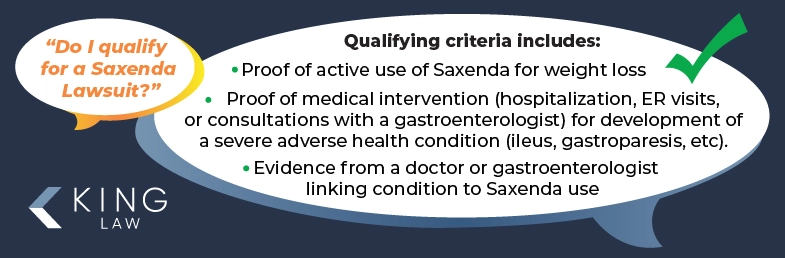
In order to file a lawsuit based on Saxenda-related gastrointestinal issues, you must meet certain eligibility requirements. These requirements include proof of use of the medication and the development of a qualifying condition. It is strongly recommended that Saxenda patients experiencing adverse health conditions seek legal counsel as soon as possible.
Saxenda lawsuit eligibility criteria:
- Proof of Use: Individuals must be actively using Saxenda for weight loss purposes.
- Health complications: Must be able to prove medical intervention (hospitalization, ER visits, or consultations with a gastroenterologist) for the development of ileus, gastroparesis, gastrointestinal blockage, stomach paralysis, or related conditions after taking Saxenda.
- Medical Documentation: Evidence from a doctor or gastroenterologist linking the condition to Saxenda use.
If you believe that you meet these eligibility requirements, it is recommended that you contact a lawyer for a free case evaluation. An attorney can help determine the viability and value of your case. It is important to act fast, as all cases are subject to a state-specific statute of limitations. If the statute of limitations has expired, legal action cannot be taken.
Evidence to Collect Before Filing Your Lawsuit:
- Medical records
- Proof of prescriptions
- Bills and documentation from ER visits or hospitalizations
- Doctor’s notes
- Expert testimony
Statute of Limitations for a Saxenda Lawsuit
The statute of limitations for a Saxenda lawsuit varies by state. In most cases, individuals have between one and three years from the date of diagnosis to file a claim. However, legal deadlines may be extended based on the date of discovery. It is important to consult with an attorney to ensure that your case is filed within the legal timeframe established by state law.
How to File a Saxenda Lawsuit
There are certain steps you should follow to file a Saxenda lawsuit. These steps can help ensure that your claim is filed timely and in accordance with all legal requirements.
A step-by-step guide to filing a Saxenda lawsuit:
- Consult with an attorney: If you suffered adverse health conditions after taking Saxenda, you should contact a lawyer to obtain a free case review. During your initial consultation, the attorney will determine whether you may be eligible to take legal action.
- Collect evidence: Prior to filing, you will want to gather evidence, including your medical records, expert testimony, and any documents related to your case, such as proof of medical expenses, diagnosis, and purchase of Saxenda.
- Filing the lawsuit: Once you have the evidence you need, your attorney will file the lawsuit in the appropriate courthouse, ensuring all state deadlines are met.
- Negotiation and court proceedings: After the case is filed, your claim will move through the legal process, including the discovery phase. During discovery, both sides will exchange information and evidence related to your case. Your attorney will also enter into negotiations to determine if a fair and full settlement can be reached prior to trial. If a settlement cannot be reached, the case will be prepared for trial and presented before a judge and jury.
Saxenda Settlement and Payout Amounts
Saxenda settlement and payout amounts are expected to vary substantially depending on the individual circumstances of the case. There is no standardized settlement amount, however, ranges for serious injuries may be between $400,000 to $700,000. Factors that may influence the value of your case include the extent of your losses and the severity of your injuries.
An experienced attorney can help maximize compensation and negotiate for a fair settlement. Awareness of the full range of damages and required documentation is crucial. Without the assistance of legal counsel, you may end up settling for less than your case is worth.
At King Law, our attorneys have decades of combined experience handling prescription drug-related claims. We are well-versed in navigating these complex lawsuits and will work to ensure you receive the compensation you deserve. If you took Saxenda and suffered gastroparesis or another serious gastrointestinal issue, contact our office to schedule a free consultation. Let us help determine your eligibility and take legal action.
Frequently Asked Questions (FAQs)