

Juvenile Detention Center Sexual Abuse Lawsuit [2026 Update]
Complete the form below to tell us about your case

People who experienced sexual abuse at juvenile detention centers are filing lawsuits and pursuing settlements. Survivors are seeking compensation from the centers who enabled their abuse.
The survivors say the staff and administrators of these institutions knew about the abuse, but did little to stop it. These cases of abuse, sometimes decades old, are coming to light after reforms in many states. Many states have changed or suspended legal filing deadlines. Some of these changes make it easier for adults who survived child sex abuse to pursue justice against youth detention halls.
This page presents updates on juvenile hall lawsuits, reviews prominent cases, discusses allegations and systematic issues, and covers how to file a juvenile hall sexual abuse lawsuit and pursue a settlement.
Juvenile Hall Sexual Abuse Lawsuit – News and Updates
December 18, 2025: Lawsuit Filed in Washington Courts Alleges At Least 15 Children Sexually Abused at Detention Center
A group of 15 adults has filed a lawsuit in Spokane County Courts alleging they were groomed and sexually abused while in detention at the Spokane County Juvenile Justice Center. The lawsuit, filed against Spokane County, alleges the abuse occurred between the 1980s and 2010s. Two of the guards accused of abuse have since died, one by suicide. The guards are alleged to have offered children extra time out of their cells, snacks, and other perks in exchange for sexual acts. The lawsuit alleges gross negligence and a lack of oversight by Spokane County. The plaintiffs are seeking damages related to their alleged abuse.
September 29, 2025: Judge Dismisses 450 Lawsuits Alleging Abuse In NY Detention Centers
A Bronx judge dismissed 450 lawsuits from former juvenile detainees who claim they were sexually assaulted by jail staff. The allegations, which span from the 1960s to 2010s, involve alleged abuse at youth detention centers including Rikers Island, Horizon Juvenile Center, and Spofford Juvenile Detention Center. The lawsuits describe violent acts of sexual abuse, including being forced to perform oral sex. However, many of these cases are outside the statute of limitations for filing a lawsuit. These plaintiffs would need to refile their cases should a proposed bill pass the New York City Council. The current batch of lawsuits was filed under a two-year lookback window, but ambiguous language in the law has led to rulings that shield people and institutions that enabled but did not directly commit the abuse from litigation if the normal statute of limitations has run out.
August 6, 2025: Youth Sexual Assault Survivors Who Received Settlements Push for Criminal Filings
Hundreds of women received settlements from Los Angeles County due to the sexual abuse they experienced during their time in state-run juvenile halls. Now, those women are pushing for criminal charges to be brought against proven abusers. Attorneys representing these women are calling for government-led investigations against perpetrators from county-run youth boot camps.
July 16, 2025: Sexual Abuse Alleged At Chicago Juvenile Detention Centers
Attorneys announce that nearly 1,000 lawsuits alleging sexual and emotional abuse by Cook County juvenile detention facility staff have been filed. Most of the plaintiffs were between 14 and 16 when the abuse occurred, mostly during the early 2000s. The majority are male.
June 27, 2025: Federal Lawsuit Seeks $300 Million For Maryland Youth Detention Center Sexual Abuse Incidents
A federal lawsuit filed by three plaintiffs alleges administrators were aware of a culture of abuse within Maryland juvenile detention facilities and allowed it to continue. The plaintiffs seek $300 million in damages, which exceeds the $400,000 limits imposed on such cases filed in Maryland state courts as of May 31, 2025.
April 30, 2025: Over 30 Former Juvenile Inmates Allege Sexual Abuse At Seattle Area Facilities
King County is named as a defendant in lawsuits filed by 36 former inmates who allege they were sexually abused in detention facilities when they were children. The alleged incidents perpetrated by guards, officers, and other staff at the facility took place between 1968 and 2006.
April 29, 2025: Los Angeles Settles Sex Abuse Claims For $4 Billion
The Los Angeles County Board of Supervisors unanimously agreed to pay out $4 billion to settle over 6,800 sexual abuse claims involving juvenile detention and foster care facilities. The cases go back as far as the 1980s. Most of the claims occurred in the county’s Probation Department juvenile facilities. Prominently named among them is the now-closed MacLaren Children’s Center.
February 16, 2025: San Diego Youth Facilities Implicated In Dozens Of Lawsuits
Dozens of former juvenile inmates filed lawsuits alleging that probation officers in youth detention facilities sexually assaulted them and threatened beatings and extended confinement if they reported the events. The plaintiffs who claim to have reported the abuse say their complaints were ignored. The events took place between 1970 and 2022.
October 23, 2024: Lawsuits Allege Dozens Of Children Sexually Abused In Pennsylvania Facilities
A law firm representing more than 60 plaintiffs alleges that juvenile facilities in Pennsylvania failed to protect the then-underaged inmates from sexual abuse. Facilities named include the Loysville Youth Development Center, the North Central Secure Treatment Unit in Danville, and the South Mountain Secure Treatment Unit near Chambersburg.
About the Juvenile Hall Sexual Abuse Lawsuit:
What Is the Juvenile Hall Sexual Abuse Lawsuit About?
What Are the Common Allegations in Juvenile Detention Center Lawsuits?
Statistics on Sexual Abuse in Juvenile Detention Centers
How Does Sexual Abuse Occur in Juvenile Detention Centers?
How Failures in Federal and State Oversight of Juvenile Halls Allow Sexual Abuse to Persist
Who Can File a Juvenile Hall Lawsuit for Sexual Abuse?
Recoverable Damages Available in a Juvenile Detention Lawsuit
How to File a Juvenile Hall Lawsuit
Is There a Deadline to File a Juvenile Hall Sexual Abuse Lawsuit?
Estimated Juvenile Hall Lawsuit Payout Per Person
Why Choose King Law for a Juvenile Hall Sexual Abuse Case?
What Is the Juvenile Hall Sexual Abuse Lawsuit About?
A juvenile detention center lawsuit is a case filed by a person who was sexually abused while in youth detention. Survivors are filing lawsuits to obtain compensation and accountability from the institutions that failed to protect them.
The lawsuits allege that correctional institutions were negligent in their duties to protect underage inmates from sexual abuse by staff or other inmates. In many cases, the plaintiffs also describe being threatened with retaliation if they made formal complaints. The institutions implicated in lawsuits include state and county facilities, as well as privately owned juvenile detention centers.
Lawsuits against juvenile detention facilities allege that centers failed to:
- Protect minor inmates from sexual assault committed by other minors and staff
- Take complaints of sexual abuse seriously and conduct internal investigations
- Discipline youth and adult abusers
- Report the abuse to law enforcement
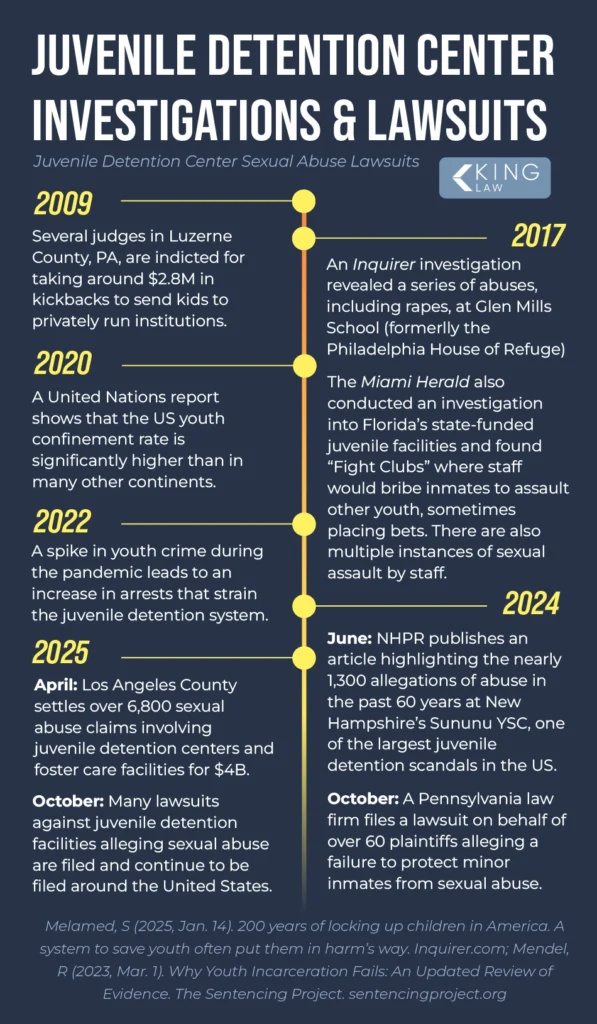
In recent years, more lawsuits have been filed against youth detention facilities because many states changed laws about how long survivors had to file lawsuits. The recent volume of juvenile hall sexual abuse lawsuits comes as states have opened lookback windows. A lookback window allows individuals to file civil suits even if the statute of limitations on their cases had previously expired.
Additionally, many states have recently changed laws that prevent people from filing civil lawsuits against state-run institutions. This has allowed more survivors to pursue compensation and justice for abuse that happened years ago. Such lawsuits can also drive systemic reforms.
Is There a Juvenile Hall Class Action Lawsuit?
Several sex abuse lawsuits naming juvenile halls have been filed as class actions. For example, one such class action was filed against the Maryland Department of Juvenile Services in January 2024. Some survivors have the option to join a class action, but it is not common. Most survivors would need to file individual civil lawsuits against the juvenile detention institution that enabled their abuse.
Class actions, which seek systemic relief on behalf of a “class” of victims, are just one type of mass action. In other cases, individual lawsuits may be aggregated into other types of group complaints.
What Are the Common Allegations in Juvenile Detention Center Lawsuits?
While each lawsuit has its own unique details, the allegations in most juvenile detention center cases are similar and establish patterns of systemic failure. The minor inmates, despite having been charged with crimes, were in the custody of an institution charged with maintaining their safety. The lawsuits allege that many of these institutions had developed cultures in which sexual abuse of inmates was common and tolerated.
Specific allegations against the institutions include that officials and administrators at juvenile detention facilities allowed sexual abuse of inmates, including:
- Direct, forced sexual abuse by staff, including rape
- Direct, forced sexual abuse by other inmates, including rape
- Coerced sexual acts by staff through threats or promises of better treatment
- Grooming behavior
- Lack of intervention in sexual abuse involving other inmates
- Retaliation against whistleblowers
- Failed to provide medical or mental health services to victims after sexual abuse incidents
- Failed to adequately screen staff before and during employment
- Allowed suspected predators to continue having access to children
Allegations against juvenile halls are similar to allegations against churches and school districts. Many lawsuits have been filed against the Catholic Church, Southern Baptist churches, and private and public schools. All of these organizations were supposed to protect the children in the care and failed to do so. Instead, many of these institutions chose to protect finances, employees, and reputations instead of the children and teens in their care.
What Constitutes Sexual Abuse While in Juvenile Detention?
Children in juvenile detention centers experience many forms of sexual abuse. Although some people think of sexual abuse as forced sex, this sexual abuse can take many forms. Some of the types of abuse perpetrated against juvenile inmates include contact and non-contact abuse such as:
- Making a minor view a sex act
- Making a minor view or show sex organs
- Offering favors or treats for sexual engagement
- Engaging in inappropriate sexual talk or coercion
- Forced sexual touching between inmates
- Any sexual touching between an adult and a detained minor
- Making children perform a sex act with another child
- Exploitation
- Making a minor view or create pornography
- Child prostitution
- Sexual bribery
Statistics on Sexual Abuse in Juvenile Detention Centers
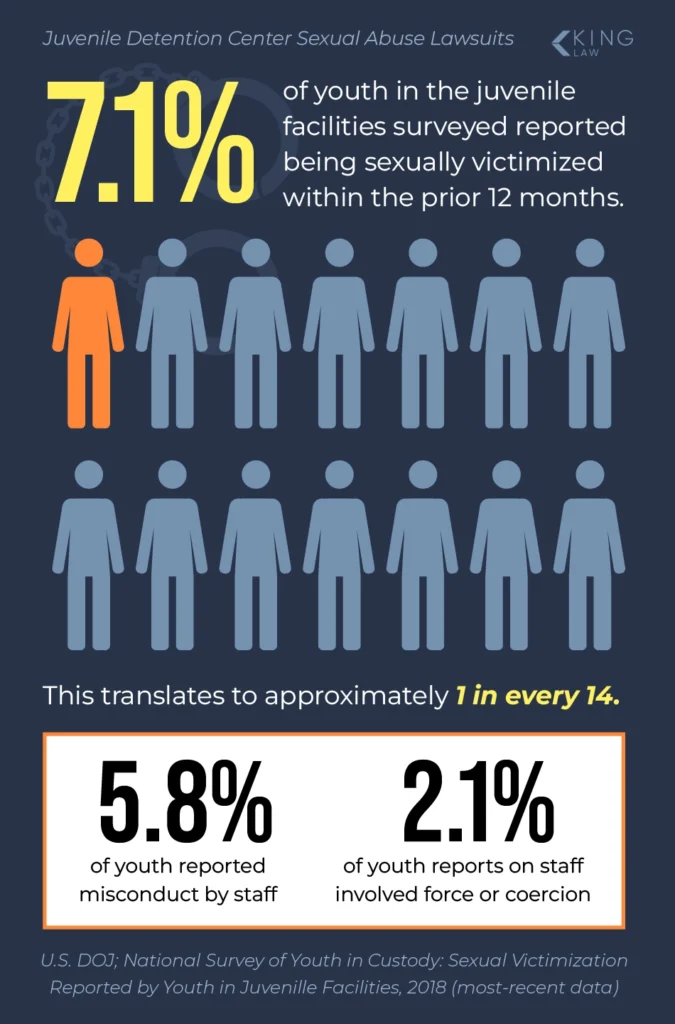
Sexual abuse tends to be underreported in general. Victims of sexual abuse in juvenile detention centers. In particular, minors in detention are less likely to be believed and face more institutional pushback when reporting incidents. If the perpetrator is a staff member, that staff member may have disciplinary authority over the minor. This could leave that child especially vulnerable to retaliation and coercion.
The most recent
- 5.8% of youth inmates reported sexual misconduct by staff.
- 2.1% of juvenile inmates reported sexual misconduct that involved force or coercion.
- 1.9% reported sexual victimization by another youth inmate.
A report released in 2023 by the U.S. Bureau of Justice Statistics examined substantiated sexual abuse incidents in juvenile justice facilities from 2013 to 2018. The government report, titled
- 73% of youth-on-youth perpetrators were male.
- 63% of youth-on-youth victims were male.
- Female staff comprised 29% of reported sexual harassment perpetrators and 61% of sexual misconduct perpetrators.
How Does Sexual Abuse Occur in Juvenile Detention Centers?
Sexual abuse can occur almost anywhere in a juvenile detention center. While perpetrators may attempt to take advantage of poorly monitored areas like closets or areas with little camera or staff coverage. The 2023 BJS report found that:
- 62% of youth-on-youth incidents occurred in an area under video surveillance in state facilities. For local and private facilities, the rate was 51%.
- 40% of staff sexual misconduct occurred in the victim’s cell, 19% in a program area, and 19% in workshops.
There are several mechanisms that allow the continued sexual assault of minors in youth detention facilities. For example, staff members often groom children or promise rewards or punishment to promote compliance.
Additionally, abusers, whether staff or other inmates, often target socially vulnerable victims such as kids with developmental disabilities, LGBTQ+ inmates, inmates with a history of sexual abuse, or those on youth suicide watch.
How Failures in Federal and State Oversight of Juvenile Halls Allow Sexual Abuse to Persist
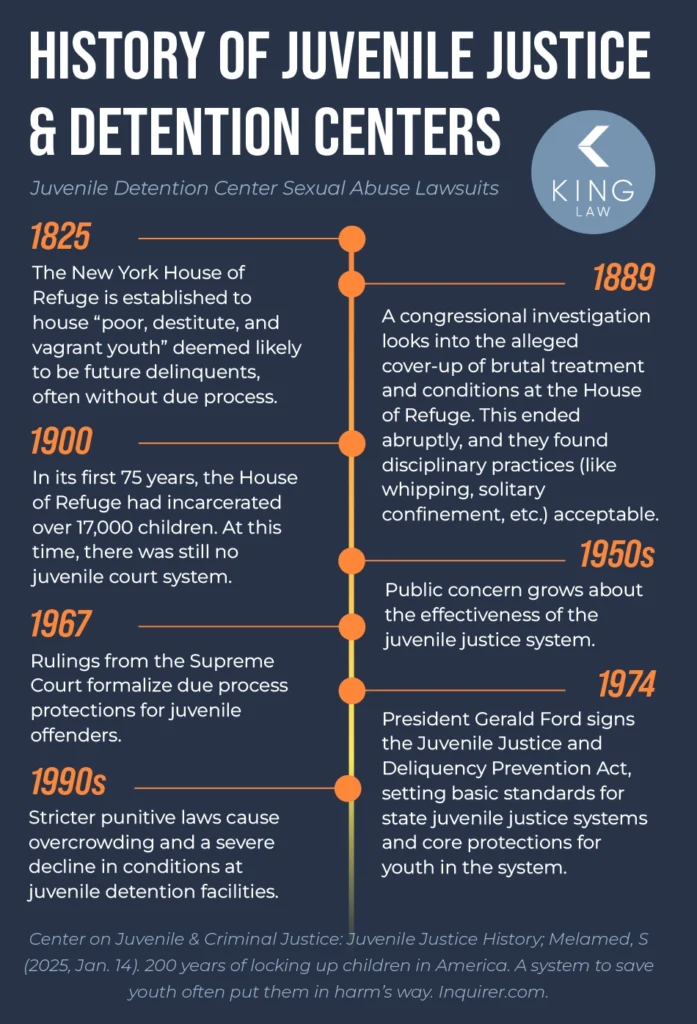
The Prison Rape Elimination Act (PREA), passed in 2003, established standards intended to prevent sexual abuse within the carceral system. It establishes reporting guidelines and best practices, such as maintaining a 1:8 staff-to-inmate ratio during waking hours and 1:16 during sleeping hours, screening staff, and avoiding intergender strip searches.
However, real-world compliance with PREA guidelines is often lacking. Budget issues may affect staffing ratios or camera coverage. Similarly, a lack of independent oversight can often lead to institutional guarding, where the reputation of the center is put ahead of the safety of its inmates.
Another confounding factor is that facilities that report more sexual abuse may, in some instances, actually be more compliant with PREA since they have better reporting mechanisms.
Who Can File a Juvenile Hall Lawsuit for Sexual Abuse?
People can sue juvenile detention centers if they experienced sexual abuse at a center. However, they must meet certain eligibility requirements. Anyone who experienced sexual abuse at a juvenile detention center should speak with a qualified attorney to understand their legal options. Factors that affect lawsuit eligibility for a juvenile hall lawsuit include:
- How old the survivor was at the time of the abuse
- When the abuse occurred/how long ago the abuse happened
- The age of the victim when they file the lawsuit
- When the survivor realized how the abuse impacted their life (i.e., the discovery rule)
- What state the abuse occurred in
- What state the survivor resides in
- State laws about filing deadlines for civil sexual abuse lawsuits
- Current business status of the institution where the abuse occurred
Eligibility and filing requirements for lawsuits involving child sexual assault are highly complex. Our attorneys at King Law and our legal partners understand the statutes and filing requirements that affect each case. Our knowledgeable team can help you understand your present and future legal options.
Recoverable Damages Available in a Juvenile Detention Lawsuit
Survivors of sexual abuse in juvenile detention centers may be eligible for compensation for their injuries. Compensation could be awarded to cover costs associated with:
- Medical expenses related to sexual abuse
- Therapy and psychiatric care
- Educational or vocational support
- Pain and suffering
- Loss of enjoyment of life
- Punitive damages against defendants (depending on jurisdiction)
For each of these categories, providing evidence of harm will strengthen the case. For economic damages, for example, producing bills and receipts can strengthen a case. For non-economic damages, witness testimonies and diagnoses may serve as evidence.
How to File a Juvenile Hall Lawsuit
Filing a juvenile hall lawsuit is a multi-step process. Working with an experienced attorney can help ensure that you submit all the necessary materials within your jurisdiction’s deadlines. They can also represent you in settlement negotiations and trials.
Here are the basic steps to file a lawsuit related to sexual abuse experienced at a juvenile detention center:
- Consult with an attorney experienced in sexual abuse cases involving institutions. The consultation can help evaluate your case, set expectations, and outline deadlines. You can then hire the attorney if you wish to move forward.
- Gather evidence. The strength of your case will depend greatly on the amount and quality of evidence you’re able to gather. Evidence includes detention center records, witness testimonies, and diagnoses.
- File your case within your state’s statute of limitations. Your attorney will help draft the paperwork necessary to formally submit your complaint.
- Pre-trial procedures. This step includes discovery, interrogations, and negotiations. If a settlement can be reached in this step, there will be no need for a trial.
- Settlement offer or trial. If a settlement cannot be reached, your case will go to trial. A jury or judge will determine what, if any, damages are awarded.
- Collect settlement or award. If a settlement has been negotiated or you have been awarded damages at trial, you will receive them in the final step.
Who Is the Defendant in a Civil Lawsuit Related to Abuse at a Juvenile Facility?
If you experienced sexual abuse at a juvenile detention center, you can pursue a civil lawsuit against that detention center. Unlike a criminal lawsuit against a specific abuser, you would be filing a lawsuit against the institution that failed to protect you.
If I File a Lawsuit Against a Juvenile Hall, Will My Identity Be Protected?
If you choose to pursue a lawsuit against a juvenile detention facility, you may be able to file under a pseudonym like Jane or John Doe. Often, in cases of child sexual abuse, courts protect the identities of minor victims. However, each case is unique, and you should discuss your concerns with your attorney.
Is There a Deadline to File a Juvenile Hall Sexual Abuse Lawsuit?
The filing deadlines for lawsuits involving sexual abuse of minors at youth detention centers vary by state and circumstances.
Each state’s statute of limitations (SoL) determines your deadline for filing a juvenile hall sexual abuse lawsuit. The length of this window varies greatly by jurisdiction, and can be anywhere from a few years to decades. Some jurisdictions may not have a statute of limitations at all for specific kinds of sexual abuse.
For example, Vermont allows survivors to file civil lawsuits at any time. Other states, like New York and California, give survivors unlimited time to file civil lawsuits, if the abuse happened after a certain date.
Other states have discovery rules that allow survivors to file lawsuits when they discover how the abuse affected their lives, even if they make this discovery well into their adulthood.
Complicating matters is the existence of revival (or lookback) windows in some states. These are temporary exemptions to statutes of limitations that allow individuals whose SoLs have expired to file civil suits. For example, Arkansas is opening a revival window for some civil lawsuits against entities that entered bankruptcy. Texas passed a new law (SB 2798) giving survivors until age 38 to file a lawsuit, if the abuse happened after August 2025.
The laws about filing a lawsuit related to sexual abuse as a minor are very complex. Survivors should consult with an attorney to get a better idea of what their deadlines are.
Estimated Juvenile Hall Lawsuit Payout Per Person
Payouts in juvenile hall sex lawsuits may vary depending on the circumstances of the case. King Law estimates the typical payout per person could be between $500,000 to $2 million, though some people may receive substantially less or more than that amount.
A confidential case review can give you a better idea of how much your case may settle for. Factors that may affect payout amount include:
- Severity of the abuse
- Duration of the abuse
- Quality of evidence
- Witness corroboration
- Economic and non-economic impact on the survivor
- The number of defendants involved
- Caps on damages in your jurisdiction
- Attorney fees
- The amount of institutional wrongdoing involved
Each case is unique, and there is no guarantee that a survivor will receive compensation. Survivors should work with an attorney experienced in lawsuits involving institutional sexual abuse of minors.
What Is the Juvenile Hall Lawsuit Payout Date?
The payout date for each juvenile hall lawsuit can also vary greatly from case to case. Cases typically take 1 year or more to settle. For example, packed court calendars can delay the process. Individual settlements generally take significantly less time than cases that go to trial. The complexity of the investigation is also a factor, as is the nature of the entity being sued. Complex cases involving public entities often take longer due to their approval and budgeting processes.
Why Choose King Law for a Juvenile Hall Sexual Abuse Case?
King Law has decades of experience holding institutions accountable for failing to protect minors in their care from sexual abuse. Robert King spent many years of his career as a prosecutor for criminal sexual assault lawsuits. Mr. King worked for the special victims unit, where he prosecuted those who sexually assaulted children. His career has been focused on helping people who have been wronged by institutions and companies who claimed to be helping people.
Our attorneys and legal partners understand the sensitive nature of sexual abuse cases and take a trauma-informed approach to helping our clients seek justice. We offer free consultations with no obligation and will work on contingency. That means we only get paid if you do.
Contact a Juvenile Hall Lawyer Today
Revival windows and reform efforts are making it easier for survivors of juvenile hall sexual abuse to file lawsuits, even if the abuse happened decades ago. Early outreach to an experienced lawyer will help ensure that you can meet all necessary deadlines in time. Contact King Law at (585) 496-2648 for a free consultation today.