

What Are the Long-Term Side Effects of Nitrous Oxide? [2026 Update]
Complete the form below to see if you qualify for a Whip-It Lawsuit

Recreational use of nitrous oxide, while often perceived as harmless, carries a long list of possible long-term side effects. Chronic use of the drug can lead to debilitating long-term conditions. Because nitrous oxide interferes with the body’s ability to absorb vitamin B-12, users can experience long-term side effects like paralysis, nerve damage, blood cell damage, and an inability to regulate their metabolism.
This article will cover the risks of long-term N2O inhalation, as well as legal options for individuals who have been injured by nitrous oxide retail products.
About the Nitrous Oxide Side Effects
Does Nitrous Oxide Have Long-Term Side Effects?
Neurological Damage From Nitrous Oxide
Mental Health Effects From Nitrous Oxide
Physical Health Effects From Nitrous Oxide
Have You Experienced Severe Side Effects From Nitrous Oxide?
King Law Is Investigating Nitrous Oxide Side Effect Claims
Does Nitrous Oxide Have Long-Term Side Effects?
Extended misuse of nitrous oxide can have serious long-term side effects, particularly in vulnerable individuals. While the gas does have legitimate medical and culinary applications, inhaling undiluted nitrous oxide, such as from a tank or charger, can damage many of the body’s systems. Huffing nitrous oxide or whippets can cause long-term damage to the following parts of the body:
- The nervous system (including spinal cord degeneration)
- The brain (motor functions, memory, cognitive ability)
- Cardiovascular system (megaloblastic anemia, blood vessel dysfunction, arterial thrombosis)
- Reproductive system (reduced fertility in both men and women, increased risk of miscarriage and birth defects)
Neurological Damage From Nitrous Oxide
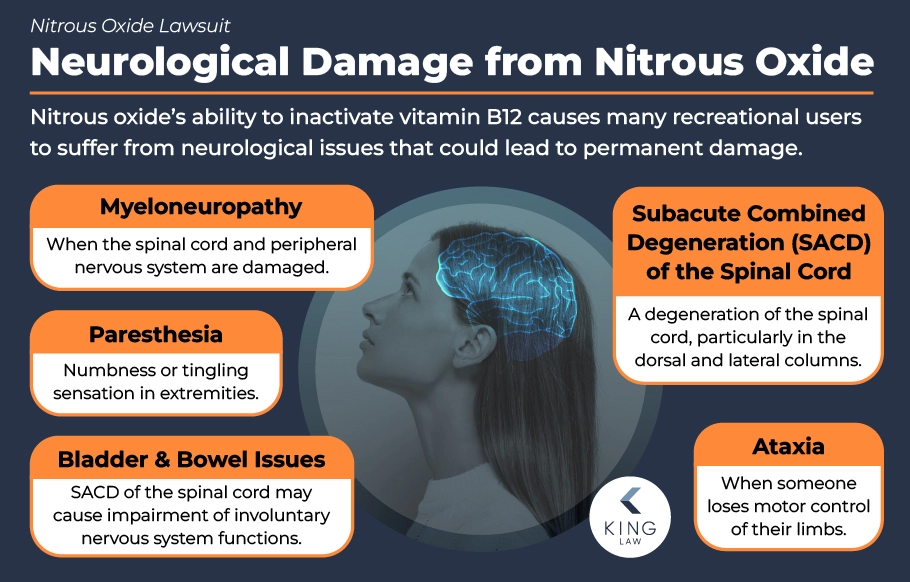
Neurological problems are among the most widely reported complications of nitrous oxide use. These issues largely stem from nitrous oxide’s ability to inactivate vitamin B-12. It does this by oxidizing the vitamin’s cobalt atom. The inactivated B-12 then becomes unavailable to the body. The body needs B-12 to produce myelin proteins that protect the nervous system. Without their protective coating, the brain, spinal cord, and peripheral nerves are vulnerable to damage.
As is the case with many vitamin-deficiency diseases, symptoms may initially be subtle but worsen over time.
Nerve Damage (Myeloneuropathy)
When the body cannot properly access vitamin B-12, it can lead to a condition called myeloneuropathy. This happens when B-12 is unavailable for use in generating and maintaining myelin (the protective coating on nerves). The resulting demyelination (loss of myelin) can result in damage to the spinal cord and peripheral nervous system, which is called myeloneuropathy. Symptoms of myeloneuropathy may vary between individuals but often include weakness, numbness, or tingling sensations in one’s extremities. Recreational nitrous oxide use can lead to B-12 deficiency and the inability to properly use the vitamin.
The type of myeloneuropathy caused by nitrous oxide is considered “subacute.” This means the condition typically develops over a period of weeks or months. If it is not recognized and treated early, the nerve damage may become irreversible.
Numbness and Tingling in Hands and Feet (Paresthesia)
A common symptom of nerve damage is numbness or tingling in the extremities. This classic “pins and needles” sensation is called paresthesia. Although paresthesia can have many different causes, it can be an early warning sign of nerve damage caused by demyelination in nitrous oxide users. Initially, these bouts of paresthesia may be brief, but they often become more persistent over time.
Subacute Combined Degeneration (SACD) of the Spinal Cord
The central nervous system is also at risk of damage from demyelination caused by long-term nitrous oxide use. This damage may present as a condition called subacute combined degeneration (SACD) of the spinal cord. Symptoms of SACD may include an inability to sense vibrations, loss of coordination, weakness, and sensory difficulties.
Lower Limb Weakness and Difficulty Walking (Ataxia)
Heavy long-term nitrous oxide users often present with ataxia, which is the medical term for losing control of one’s limbs. People with ataxia may develop an ataxic gait. This is the term for an abnormal walking pattern. The condition is typically associated with cerebellar disease and SACD of the spinal cord. It is characterized by difficulty walking heel-to-toe in a straight line, instability, and clumsy movements. Individuals with ataxia may be more prone to falls. Ataxia is specifically a motor coordination issue rather than a cognitive one. This means someone with the condition can describe and process a physical task, but they struggle to carry it out.
Bladder and Bowel Problems
Another long-term symptom associated with spinal cord degeneration caused by nitrous oxide use is impairment of autonomic (involuntary) nervous system functions. This means huffing nitrous can cause incontinence, the loss of control of bladder and bowel functions. These symptoms are usually signs of advanced damage from nitrous oxide poisoning.
Mental Health Effects From Nitrous Oxide
Nitrous oxide can also affect brain function, including cognition and perception. In fact, recreational nitrous oxide users are often drawn to the euphoric effects of “laughing gas.” However, inhaling nitrous oxide can also lead to long-term psychological problems, similar to other substance abuse disorders. Some of these effects may cease if an individual stops using nitrous oxide, but chronic misuse can cause lasting psychological changes.
Psychiatric Symptoms and Mood Disorders
Nitrous oxide users may also present with psychiatric symptoms as a result of the demyelination of brain cells. Additionally, N2O is a noncompetitive NMDA antagonist, which means it behaves like an instant antidepressant. Some studies have shown it has effects similar to ketamine. This quality could potentially also play a role in long-term psychiatric symptoms. Long-term psychiatric symptoms of long-term nitrous oxide use may include:
- Psychotic episodes (psychosis)
- Hallucinations
- Paranoia
- Delusions
As is the case with the other vitamin B-12 deficiency diseases on this list, stopping nitrous oxide use and medically supervised B-12 supplementation can potentially reverse symptoms if caught early.
Cognitive Decline and Behavioral Changes
Long-term nitrous oxide usage may cause cognitive issues like memory issues, brain fog, decreased attention span, and executive functioning problems. These issues may result from damage related to vitamin B-12 deficiency, damage from hypoxia (lack of oxygen), or behavioral patterns often seen in various types of psychological addiction.
Physical Health Effects From Nitrous Oxide
Using nitrous oxide recreationally can harm one’s physical health in a number of ways. Vitamin B-12 is critical in DNA formation, so many of the body’s functions may be impaired by nitrous oxide use. A B-12 deficiency can lead to cardiovascular dysfunction, immune system weakness, reproductive issues, and other problems. It is also worth noting that recreational use carries the risk of immediate injuries as well. Inhaling from a canister can cause tissue damage from pressure or frostbite, though these risks are due to the delivery system rather than properties of nitrous oxide itself.
Vitamin B₁₂ Deficiency and Blood Disorders
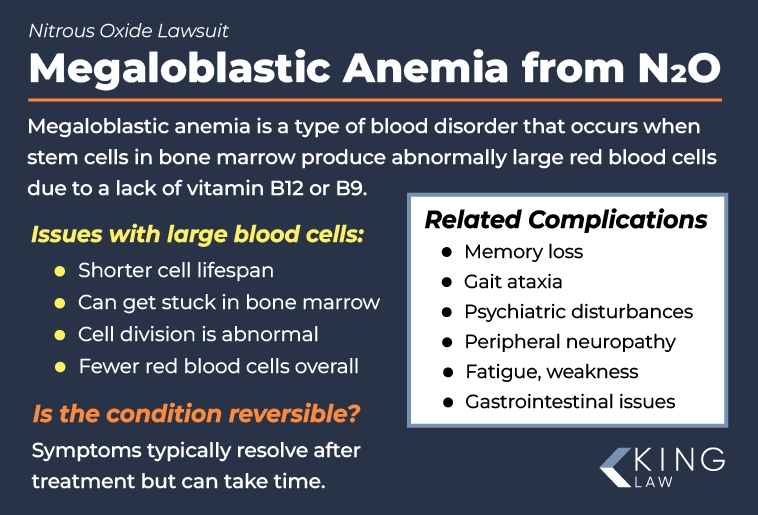
Vitamin B-12 plays a critical role in DNA formation and stability. This includes the formation of stem cells, including those that eventually differentiate into red blood cells. Individuals with a B-12 deficiency may produce abnormally large red blood cells, a condition known as megaloblastic anemia.
These large cells have the following dysfunctions:
- They do not live as long.
- They can get stuck in your bone marrow.
- They do not divide like normal blood cells.
These defects lead to fewer and less effective red blood cells. This can lead to fatigue and weakness. Megaloblastic anemia is also associated with gastrointestinal diseases, including cancer.
These effects generally resolve when the vitamin deficiency is treated, but it may take time.
Cardiovascular Effects and Thrombotic Risks
Using nitrous oxide can impact the heart and cardiovascular system. Low vitamin B-12 levels are linked to a condition called hyperhomocysteinemia, which is characterized by elevated blood levels of the amino acid homocysteine. Hyperhomocysteinemia is associated with a higher risk of developing cardiovascular diseases like atherosclerosis and deep vein thrombosis (DVT). DVTs are a type of blood clot that can move and cause deadly blood clots in the brain or lungs. In rare cases, related illnesses like stroke have been observed in young nitrous oxide users.
Rapid blood pressure changes and hypoxia (low oxygen levels) due to nitrous oxide inhalation may also put stress on the cardiovascular system.
Gastrointestinal and Nutritional Issues
Vitamin B-12 deficiency is also associated with digestive system problems. One common symptom is glossitis, a painful inflammation of the tongue. Additionally, the nervous system impacts of B-12 deficiency can have downstream effects on digestive system function, causing nausea.
While B-12 is the main vitamin of concern in nitrous oxide users, the gas may also interfere with the absorption of folate (Vitamin B-9). Correcting nutritional imbalances in users is often an important part of rehabilitation.
Reproductive Health Effects
Occupational and animal studies suggest nitrous oxide abuse comes with reproductive risks, some of which may be related to how nitrous oxide interacts with folate in pregnant women. Possible reproductive harms caused by nitrous oxide abuse include:
- Congenital defects (particularly neural tube defects)
- Spontaneous abortion
- Reduced fertility
Neurological Overflow to Physical Function
Nitrous oxide’s effects on the nervous system can lead to dysfunction in physical functions, even if the symptoms may not immediately be recognized as neurological. Incontinence, for example, can be caused by nerve damage, as can muscle weakness or loss of coordination.
Other Organ System Effects
Although nitrous oxide is not directly toxic to most organs, recreational use may cause stress or trauma to the body’s systems. Not all risks are long-term. Inhaling from pressurized tanks can immediately injure or collapse the lungs, causing trauma-related conditions like pneumothorax, pneumomediastinum, or diffuse alveolar injury.
Another potential source of tissue damage comes in the form of frostbite. Nitrous oxide is sold in pressurized canisters. The condensed gas is well below freezing and can quickly “burn” tissue upon contact with the gas or a cold canister.
Have You Experienced Severe Side Effects From Nitrous Oxide?
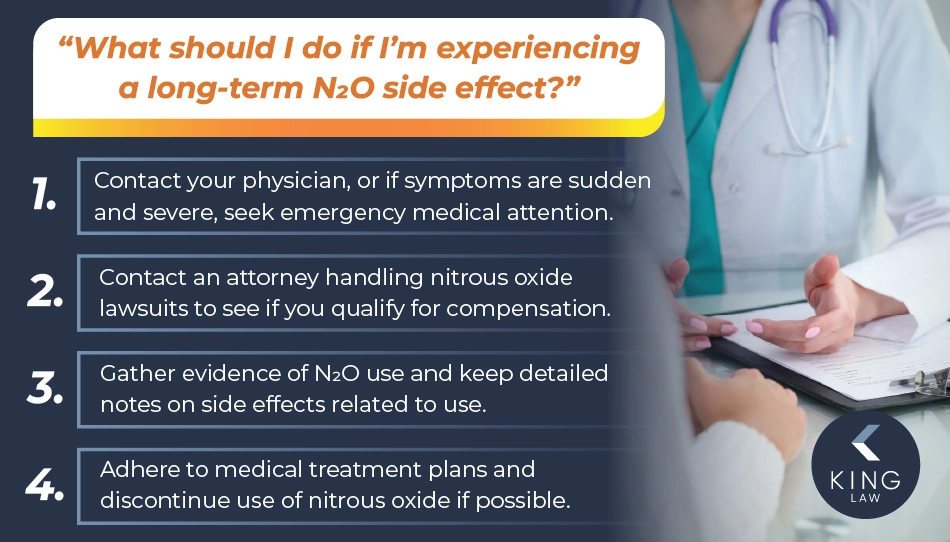
If you have experienced any of these symptoms and are a recreational nitrous oxide user, you may be experiencing the long-term side effects of nitrous oxide. You should speak with a medical professional as soon as possible. If caught early, many of the side effects are reversible with vitamin B-12 supplementation and cessation of recreational usage.
If your symptoms are the result of using certain nitrous oxide products, you may be eligible to file a lawsuit related to your injuries from nitrous oxide.
King Law Is Investigating Nitrous Oxide Side Effect Claims
King Law is currently reviewing cases involving serious injury and disability caused by the misuse of nitrous oxide products, including Galaxy Gas or Whip-Its! If you have experienced any of the following side effects of nitrous oxide abuse, you may be eligible to file a claim:
- Asphyxiation (resulting in death)
- Blood clots (resulting in death)
- Impaired bowel or bladder function
- Loss of consciousness
- Heart palpitations
- Paralysis
- Death (wrongful death lawsuit)
These cases must be filed within your state’s statute of limitations, so it is important to act quickly if you believe you or a loved one has been harmed by a nitrous oxide product.
Contact a Nitrous Oxide Lawyer Today
Injured nitrous oxide users or their loved ones may be eligible for compensation from nitrous oxide companies. King Law has decades of experience holding corporations accountable. Contact us today at (585) 496-2648 for a free case evaluation with no obligation. Our legal partners work on a contingency-fee, meaning you only owe us money if we get money for you.