

Enfamil Lawsuit – September 2026 Update
Complete the form below to see if you qualify for a NEC Baby Formula Lawsuit

Lawsuits against Enfamil baby formulas say that Enfamil products led some premature babies to develop a condition called necrotizing enterocolitis (NEC), which can be fatal.
Lawsuits filed by parents allege that the makers of Enfamil preterm infant formulas (Mead Johnson and Reckitt Benckiser) did not properly warn parents about the dangers associated with cow-milk-based formulas.
Many preterm babies who were fed Enfamil formulas and nutritional boosters developed NEC and suffered severe or fatal complications. Now, after experiencing profound losses, the parents of those children are filing Enfamil lawsuits to gain compensation and hold the formula maker accountable.
Enfamil Lawsuit Updates [September 2026]
August 31, 2026: Enfamil Manufacturer Secures Verdict After Illinois NEC Trial
A jury decided there was not enough evidence to show that Enfamil’s manufacturer was liable for an infant’s case of necrotizing enterocolitis. The mother who filed the lawsuit may ask another court to review and overturn the verdict. The remaining lawsuits in the federal MDL about Enfamil and one other brand of infant formula are still pending.
August 17, 2026: Bellwether Trial About Enfamil Formula Begins Today
Mead Johnson (Reckitt) is heading to trial about whether its specialty Enfamil premature formula may have caused a premature baby to develop necrotizing enterocolitis and die from complications. The baby’s mother filed her lawsuit in the federal multidistrict litigation about the alleged association between some cow’s milk-based formulas, such as Enfamil, and necrotizing enterocolitis. According to the legal complaint, the infant was born prematurely and fed Enfamil cow’s milk-based formula for premature babies. Shortly afterward, the complaint alleges, the baby developed necrotizing enterocolitis, and doctors were unable to save the baby’s life after surgical treatment.
June 23, 2026: Missouri Appeals Court Rejects Abbott’s Request for Missouri Supreme Court to Hear Appeal
Abbott’s request for the Missouri Appeals court to send Abbott’s appeal to the Missouri Supreme Court has been denied. Abbott had filed the application after the Missouri Appeals Court affirmed a $495 million NEC verdict against it. Abbott says it intends to file an appeal with the Missouri Supreme Court.
June 22, 2026: Colorado Mom Files Necrotizing Enterocolitis Lawsuit Against Enfamil’s Mead Johnson
A Colorado mother has filed a legal complaint against Enfamil’s manufacturer, Mead Johnson. In her lawsuit, she accuses the company of failing to warn about the possible increased risks of a baby developing necrotizing enterocolitis if they are fed cow’s milk-based formula (such as Enfamil). Her legal filings reference several medical studies that suggest a potential association between products like Enfamil and necrotizing enterocolitis in preterm infants.
June 16, 2026: Illinois Appeals Court Orders New Trial in NEC Case Due to Incorrect Jury Instructions
An appeals court in Illinois granted Mead Johnson’s request for a new trial after it was ordered to pay $60 million to a family whose baby was fed Enfamil formula and died after developing necrotizing enterocolitis. According to public reports, the appeals court believed the way the law was explained to the jury during the original trial was incorrect. While this is a setback for the baby’s family, they still have a chance to secure compensation in the new trial against Enfamil’s manufacturer, Mead Johnson. Additionally, our attorneys believe the Illinois court’s ruling may help future families strengthen their NEC lawsuit strategies.
June 1, 2026: Almost 800 Claims Remain in MDL for NEC Baby Formula Lawsuits
There are currently 798 pending claims in the MDL for lawsuits involving NEC, which allege that Mead Johnson and another formula maker failed to warn parents and hospitals about the serious condition. Lawsuits against Mead Johnson involving failure to warn about NEC are moving forward. For example, the judge has allowed a lawsuit filed by a mother who lost her pre-term baby to NEC. The infant was fed breast milk that was fortified with an Enfamil milk fortifier. Mead Johnson had tried to have the lawsuit dismissed, but Judge Pallmeyer is allowing the lawsuit to proceed.
May 1, 2026: More Necrotizing Enterocolitis Lawsuits Join MDL Against Enfamil, Other Infant Formula Brands
There are now 797 lawsuits in the federally based baby formula MDL involving Enfamil (owned by Mead Johnson) and one other infant formula manufacturer. Some of these lawsuits were filed by parents who claim their babies developed necrotizing enterocolitis because they were fed Enfamil’s cow’s milk-based formula or fortifiers while in the hospital. Some studies suggest that babies who are fed cow’s milk-based formulas may be more likely to develop necrotizing enterocolitis. At least one trial in the Enfamil MDL resulted in a verdict in favor of the parents who filed the lawsuit.
April 9, 2026: Mother Sues Mead Johnson After Baby Is Fed Enfamil Formula in Hospital and Develops NEC
A Florida mother has filed a complaint against Mead Johnson, the company that makes Enfamil baby formula fortifiers. According to her complaint, her baby was fed a cow’s milk-based Enfamil fortifier in the hospital and developed necrotizing enterocolitis shortly thereafter. The baby had to have life-saving surgery to treat the NEC and will experience lifelong disabilities. The mom’s lawsuit accuses Mead Johnson of failing to warn her that the Enfamil fortifier may be associated with an increased risk of a baby developing NEC.
April 1, 2026: Necrotizing Enterocolitis Claims Against Enfamil, Other Formula Companies Approach 800
About 782 lawsuits have been consolidated into the federal MDL against Mead Johnson (Enfamil’s manufacturer) and other formula makers. According to some of the legal claims, babies who were fed Enfamil formula in the hospital may have developed necrotizing enterocolitis, which can be fatal or require urgent medical treatment. Some of the lawsuits allege that cow’s milk-based formula, like Enfamil, can increase an infant’s likelihood of developing necrotizing enterocolitis. Some parents believe they should have been warned about the potential association between Enfamil formula and necrotizing enterocolitis.
March 10, 2026: Illinois Mother Claims Enfamil Formula Caused Baby to Develop Necrotizing Enterocolitis
An Illinois mother has filed a lawsuit against Mead Johnson, claiming her newborn baby developed necrotizing enterocolitis after being fed Enfamil in the hospital. Her legal complaint says that her baby was born prematurely and given cow’s milk-based Enfamil formula, which Mead Johnson manufactures, while in the hospital. According to documents filed in the mother’s case, the mother believes that Mead Johnson’s Enfamil formula caused her baby to develop NEC. Her lawsuit also says that Mead Johnson should have told parents that some studies have shown an association between cow’s milk-based formula (like Enfamil) and increased rates of necrotizing enterocolitis in preterm babies.
March 3, 2026: NEC Lawsuits March Onward as Consumer Reports Study Shows Some Enfamil Formulas Contain Lead and Arsenic
Many parents have filed legal claims against Mead Johnson after their babies developed necrotizing enterocolitis. As of March 2, 2026, there are 779 pending lawsuits in the MDL 3026, which represents parents making NEC claims. According to the legal complaints, the parents believe that Enfamil’s cow milk-based premie infant formulas and fortifiers may have caused or contributed to their babies’ NEC diagnoses. Meanwhile, Consumer Reports, a reputable advocacy group, has published an updated report showing that some of the Enfamil baby formulas that the group tested contained unsafe levels of inorganic arsenic and lead.
February 2, 2026: Nearly 800 NEC Claims Are Pending in MDL Against Enfamil and Other Preemie Formula Brands
Enfamil’s manufacturer, Mead Johnson (Reckitt), and other baby formula brands are facing 775 lawsuits filed by parents whose children developed necrotizing enterocolitis. Some studies have shown that feeding a premature baby a cow’s milk-based formula or fortifier (like Enfamil) is associated with a higher chance of the baby developing necrotizing enterocolitis. Parents filing these lawsuits believe that they and their medical team should have been warned about this risk so they could have made more informed decisions that could have saved their baby from NEC and its related complications.
December 19, 2025: Connecticut Baby Dies of NEC Injuries After Hospital Feeds It Enfamil-Like Fortifier
The parents of Aries-Reign Peterson were awarded $32 million in a recent NEC trial. Aries-Reign died within months after the hospital fed him a human milk fortifier that was made using cow’s milk-based formula, without the parents’ permission. Enfamil’s human milk fortifiers are also made using cow’s milk-based formulas. Aries-Reign was born prematurely and was fed in the hospital. His parents were adamant that Aries-Reign only be fed breast milk. However, the hospital gave Aries-Reign a human milk fortifier (which was made from cow’s milk-based formula) without the parents’ consent. The hospital had asked the parents if it could feed Aries-Reign a human milk fortifier along with the breast milk, but did not tell them it was not made from human breast milk. Human breast milk-based fortifiers are available, but the hospital chose not to keep them in stock or transfer Aries-Reign to a hospital that did. Sadly, Aries-Reign developed necrotizing enterocolitis after being fed this fortifier, and he died from complications. When the parents found out that the hospital had given Aries-Reign a cow’s milk-based formula without their permission, they filed this lawsuit. This is one of the first NEC lawsuits that was filed exclusively against the hospital. Prior cases like this were lodged against Mead Johnson (Enfamil) or another infant formula manufacturer.
December 3, 2025: Study Investigates New Treatment for NEC
Necrotizing enterocolitis (NEC) affects 2 to 5% of premature babies and can be deadly. The intestinal disease had been linked to certain properties in formula products made from cow’s milk, like those made by Enfamil. Now, scientists are investigating a new NEC treatment involving stem-cell therapy. A study was conducted in mice, but it demonstrated improved outcomes for the mice and could be effective in humans. The findings were published in the journal Nature.
November 5, 2025: Formula Maker Found Not Liable for Death Caused by NEC
Abbott, a fellow formula maker of Mead Johnson, was found not liable for causing a pre-term infant’s death from necrotizing enterocolitis (NEC). Although the jury understood that cow’s milk products made by the defendant contributed to the NEC diagnosis, they also decided there was not a safer alternative available. Similarly, they decided the benefits of the formula products outweighed the risks. This trial was the third in the federal group lawsuit representing families affected by NEC. Plaintiffs are hopeful for different outcomes in subsequent trials.
October 17, 2025: Enfamil’s Maker Considers “Exiting” Nutrition Sector, Necrotizing Enterocolitis Claims Grow
Enfamil’s manufacturer, Reckitt Benckiser, is considering a departure from the infant nutrition sector. In 2017, Reckitt purchased Mead Johnson, which was the original owner of the Enfamil brand. However, the business move has been less than profitable, primarily due to a growing number of lawsuits. Parents and guardians are filing legal complaints claiming that Enfamil caused their newborn babies to develop necrotizing enterocolitis. The complaints point to a large body of scientific evidence to support their claims. They believe Enfamil’s makers should have told them and their babies’ care teams about the dangers of cow’s milk-based preterm infant formulas and fortifiers.
October 3, 2025: Necrotizing Enterocolitis Claims Climb as Enfamil’s Manufacturer Ushers in 120 Years of Infant Formula Service
For 120 years, Mead Johnson has been involved in the infant formula and nutrition field. However, Mead Johnson, which manufactures the popular Enfamil brand of baby formula, is under fire by parents, medical professionals, and advocates for not warning the public about the dangers of its formula. Studies have shown that pre-term infants who are fed Enfamil’s cow’s milk-based formulas are significantly more likely to develop necrotizing enterocolitis. Public reports and court filings show that Mead Johnson had credible evidence about this connection, but it did not take steps to notify the public about the dangers. Parents and guardians are filing lawsuits against Enfamil’s manufacturer, seeking to hold it accountable for its misconduct.
September 17, 2025: Group Lawsuit Against Mead Johnson For NEC & Enfamil Formula Gains More Cases
There are 760 claims in the active multidistrict litigation against Mead Johnson (Enfamil) and another top infant formula manufacturer. Enfamil’s cow’s milk-based formula is a popular choice for preterm infants in hospitals; however, research shows a startling increase in the risk of necrotizing enterocolitis if a baby is fed this type of formula. Parents whose babies got sick with or died from complications involving necrotizing enterocolitis believe Mead Johnson should have warned them of the risks. They are filing legal claims in growing numbers, hoping to seek compensation and much-needed change.
September 3, 2025: Judge Dismisses NEC Lawsuit in Defendant’s Favor
Mead Johnson is part of a group lawsuit related to formula products causing NEC. One of the test trials (bellwether trials) in that litigation was set to take place in August 2025. However, U.S. District Judge Rebecca Pallmeyer dismissed the lawsuit before it went to trial. She did this because she said expert witnesses for the plaintiff failed to connect the formula maker’s decisions to a specific NEC diagnosis. Although this decision is sad news for the mother who filed the lawsuit and others, there are still more test trials scheduled in 2026. Parents whose children were diagnosed with NEC should speak to a lawyer to understand what filing option might be the best for their families.
August 1, 2025: Mother Sues Mead Johnson Over Her Baby’s Enfamil-Related Necrotizing Enterocolitis
New mother Kadejah Brown filed a lawsuit against Enfamil’s manufacturer, Mead Johnson, after her newborn baby developed necrotizing enterocolitis. Her daughter was born prematurely and given Enfamil’s cow’s milk-based formula and fortifier in the hospital. Shortly afterward, Elizabeth developed necrotizing enterocolitis and had to undergo life-saving surgeries. While the baby survived, she may have lifelong disabilities because of the treatments she underwent to treat her necrotizing enterocolitis. Parents whose children developed NEC after being fed Enfamil are still able to pursue lawsuits against Mead Johnson.
July 17, 2025: Enfamil Investor Suing Manufacturer for Failing to Tell Him About Necrotizing Enterocolitis Risk
Enfamil’s manufacturer, Reckitt Benckiser (Mead Johnson), is under fire from one of its investors. The investor accuses Reckitt of not telling shareholders that Enfamil increases the risk of infants developing necrotizing enterocolitis. The man invites other shareholders to join a class action investor lawsuit against Reckitt. Reckitt is also facing dozens of lawsuits from parents whose babies were injured or died from necrotizing enterocolitis complications after eating Enfamil formula.
July 2, 2025: Parties Ordered to Finalize Bellwether Trial Picks in Enfamil NEC Lawsuit
Parents are suing Mead Johnson, the company that manufactures Enfamil baby formula, because their babies developed necrotizing enterocolitis (NEC) after eating the formula. Many studies have shown a compelling link between infant formula and necrotizing enterocolitis in preterm babies. The parents’ legal teams are working with Mead Johnson’s lawyers to determine the timing of the upcoming trials of NEC cases. The parents seek justice after suffering unimaginable losses.
June 17, 2025: Researchers Develop New Device to Test for NEC
A team of researchers at MIT have created a new testing device for doctors to diagnose necrotizing enterocolitis (NEC). This condition, which is frequently fatal, affects preterm babies who have been fed formula products containing cow’s milk, like those made by Enfamil. The new device requires much less of a baby’s blood and gives results faster than other tests on the market. A faster diagnosis and less blood loss could save many babies’ lives.
June 3, 2025: Health Secretary Orders FDA Review of Enfamil and Other Formula Products
Health Secretary Robert Kennedy, Jr. has announced an initiative to review the nutritional value and wholesomeness of formulas sold in the U.S., including Enfamil. The initiative, named “Operation Stork Speed,” is an order to the FDA to review the regulations for infant formulas sold in the U.S. This announcement comes at a time when Enfamil and other formula manufacturers already face lawsuits about the safety of their products. Many parents have filed Enfamil lawsuits after their preterm infants developed a serious condition called NEC, which has been linked to ingredients in Enfamil’s products.
May 13, 2025: More Than 700 Lawsuits Against Enfamil’s Makers, Reckitt and Mead, and Other Baby Formula Companies
There are now more than 700 lawsuits in MDL-3026: IN RE: Abbott Laboratories, et al., Preterm Infant Nutrition Products Liability Litigation, the group lawsuit representing preterm infants who developed NEC. Since 2019, more parents have joined in this fight for justice after their babies developed necrotizing enterocolitis after eating cow’s-milk-based formula. As of May 1, 2025, the total number of claims in this federal multidistrict litigation is 710. Parents continue to file new lawsuits to seek compensation and accountability from Enfamil’s makers.
March 14, 2025: Missouri Judge Awards New Trial in Whitfield Family’s Enfamil Lawsuit
A judge in Missouri has allowed Kaine Whitfield’s family to have a new trial in their case against Reckitt Benckiser, Mead Johnson, and Abbott Laboratories. Kaine was born after 28 weeks of gestation, and he was fed Enfamil formula specifically designed for premature infants. He developed necrotizing enterocolitis and had to undergo several surgeries to save his life. Kaine will have lifelong disabilities because of NEC. His parents believe his NEC was caused by the Enfamil and other formulas. Previously, a jury ruled in favor of the baby formula companies. However, a Missouri judge has overturned this verdict because of substantial misconduct by the defense attorneys. Kaine’s family will get to have a fresh trial, which they hope will lead to a favorable outcome.
July 26, 2024: Another Lawsuit Confirms Link Between NEC and Baby Formulas like Enfamil
Robynn Davis’ mother, Margo Gill, received a $495 million judgment in a baby formula lawsuit. Robynn was born prematurely, and her doctors gave her formula, which is marketed as safe and designed to treat infants like Robynn. Robynn developed a life-threatening condition, necrotizing enterocolitis, and, while she survived, she will have permanent neurological damage because of the experience. Mead Johnson’s Enfamil products have also faced scrutiny because of the increased chance of a baby developing NEC when fed Enfamil formula.
July 7, 2024: Family Receives $60 Million Verdict After Chance Dean’s Enfamil-Related Death
Chance Dean’s family was awarded a $60 million verdict against Mead Johnson and Reckitt Benckiser, which manufactured Enfamil products. Chance and his twin brother Chase were born prematurely and were given Enfamil formula mixed with fortified breast milk. Tragically, Chance developed necrotizing enterocolitis and died just a week after the switch from breast milk to the formula and breast milk combination. The jury believed Mead Johnson and its parent company, Reckitt Benckiser, were aware of the increased risk of necrotizing enterocolitis when babies are fed Enfamil formula. The jury delivered a verdict in Chance’s family’s favor, finding that Enfamil’s makers should have, but failed to, warn Chance’s family about the dangers of Enfamil formula.
September 24, 2012: Study Discovers Mechanism for Why Formula Like Enfamil Increases NEC Risk in Premature Babies
A new study has uncovered a possible mechanism for why formula increases the risk of necrotizing enterocolitis. The researchers found that infant formula that has been digested by a baby may have unbound free fatty acids that can cause a baby’s intestinal tissue to die. The authors noted that digested fresh human milk did not have the same level of unbound free fatty acids. The researchers indicated that baby formula should be adjusted to help limit the amount of these substances, which may reduce the risk of necrotizing enterocolitis.
About the Enfamil Lawsuit:
What Is the Enfamil Lawsuit About?
What Is NEC From Enfamil Baby Formula?
Enfamil Ingredients Causing NEC in Premature Babies
What Are the NEC Symptoms From Enfamil Baby Formula?
Studies Link Enfamil to NEC in Premature Babies
Enfamil Manufacturer Response to NEC Baby Formula Lawsuits
Other Lawsuits Involving Enfamil and Mead Johnson
Who Qualifies to File an Enfamil NEC Lawsuit?
How to File an Enfamil Lawsuit
Deadline to File an Enfamil Lawsuit
Enfamil Lawsuit Settlements and Payout Amounts
What Is the Enfamil Lawsuit About?
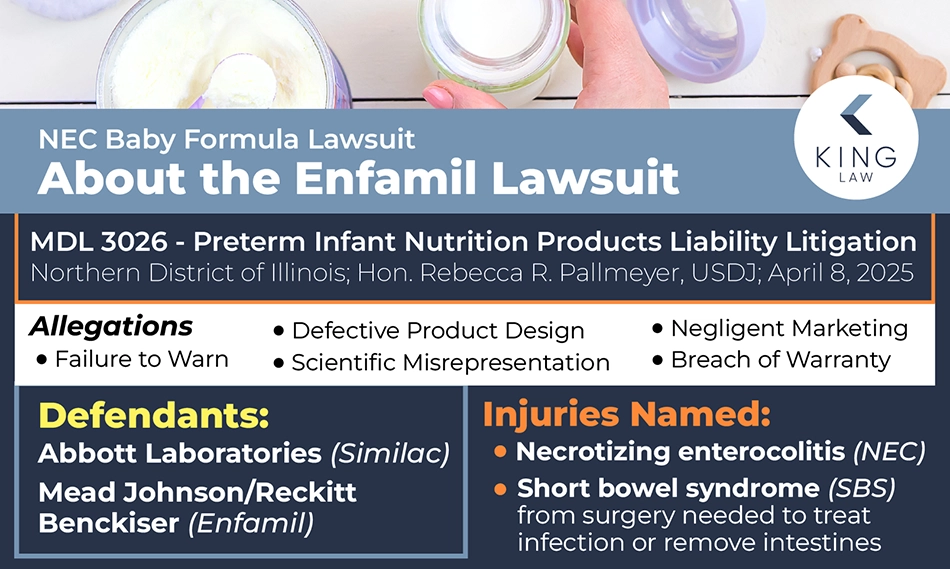
Parents are suing because they believe Enfamil, a cow’s-milk-based formula, increased their premature baby’s chances of developing necrotizing enterocolitis (NEC). For many years, scientists have noted that formula-fed babies have a higher risk of developing NEC compared to their breast-milk-fed peers. Despite the increased risk of NEC, Mead Johnson did not pass this knowledge on to parents and medical providers. Families are suing to recover financial settlements for their immense physical, economic, and psychological losses.
Enfamil Baby Formulas Involved in the NEC Lawsuit
Over a dozen Enfamil baby formulas are accused of causing infants to develop necrotizing enterocolitis, including:
- Enfamil 24 Calorie Formula
- Enfamil Premature 24 Cal
- Enfamil Premature 30 Cal
- Enfamil Premature Infant Formula 24 Cal
- Enfamil Premature Infant Formula 30 Cal with Iron
- Enfamil Premature Infant Iron Formula 20 Cal
- Enfamil DHA-In-Sol
- Enfamil Enspire
- Enfamil NeuroPro EnfaCare Premature Baby Formula
- Enfamil NeuroPro Gentlease
- Enfamil Nutramigen
- Enfamil Human Milk Fortifier Acidified Liquid
- Enfamil Human Milk Fortifier Powder (HCPM)
- Enfamil Liquid Human Milk Fortifier Standard Protein
Many of these formulas and fortifiers are explicitly marketed for premature or at-risk babies. However, these products may be putting these already vulnerable children in harm’s way. Some preterm infants’ underdeveloped intestines are not able to properly break down the milk-based formula.
What Is NEC From Enfamil Baby Formula?
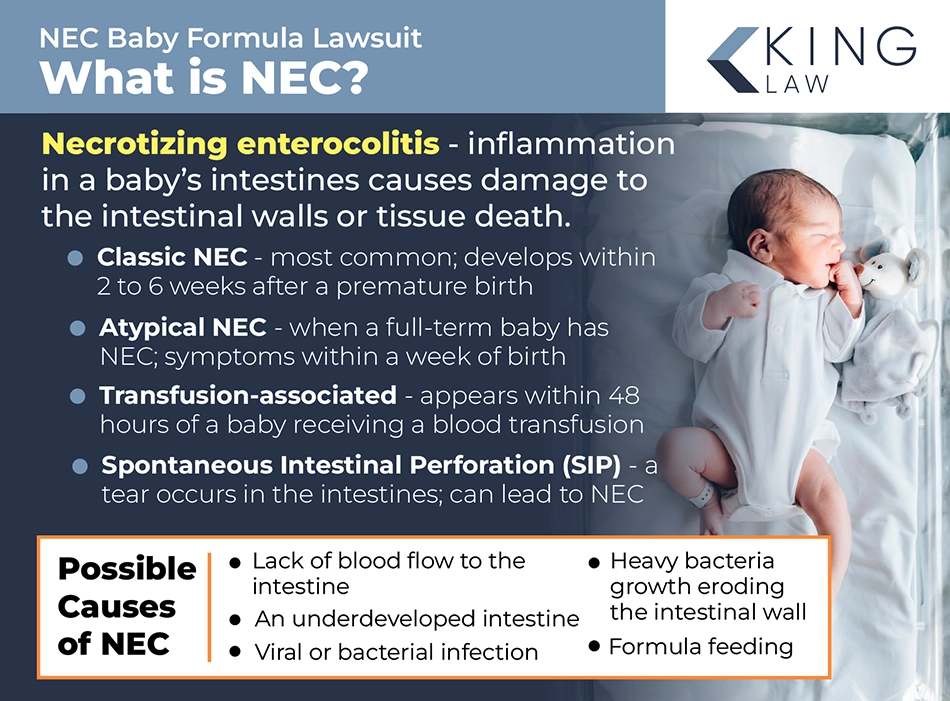
Necrotizing enterocolitis is a life-threatening gastrointestinal condition where a baby’s intestinal tissue becomes inflamed, falls off, or dies. The baby may experience significant abdominal pain and discomfort, an inability to feed or keep food down, a torn intestinal wall, or other serious or life-threatening symptoms. Premature babies who are fed cow’s-milk-based formula are more at risk of developing this condition than full-term babies or those fed only human milk.
Premature babies have a higher chance of developing this condition in the first couple of weeks after birth. The treatment for necrotizing enterocolitis can include helping the child breathe or maintain open airways, surgery to remove the infected tissue, and antibiotics.
How Does Enfamil Cause NEC?
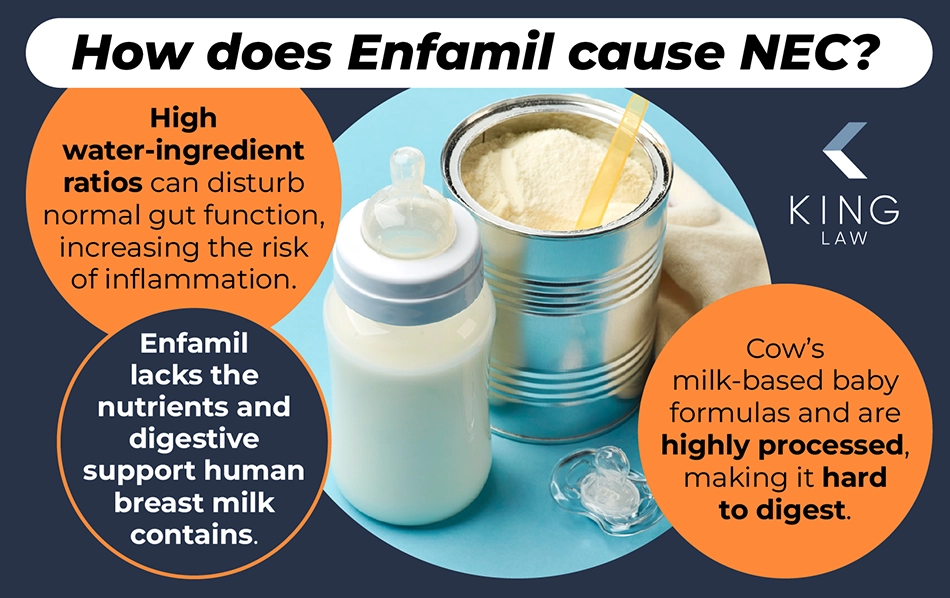
Scientists are still researching the exact chain of events that causes a baby to develop necrotizing enterocolitis. However, being born prematurely and being fed baby formula, like those made by Enfamil, are known triggers of this severe condition. Researchers believe the imbalanced proteins in cow’s-milk-based formulas made by Enfamil may lead some preterm babies to develop necrotizing enterocolitis.
Premature babies have an underdeveloped gut, which can make it harder for them to digest different ingredients. Cow’s-milk-based formulas contain proteins (like whey and casein) in higher amounts than in human breast milk. Formulas like Enfamil can overload a baby’s system and disrupt the delicate balance of bacteria in their gut, leading to inflammation or a tear in their intestinal walls. As a result, the infants may develop necrotizing enterocolitis.
Enfamil Ingredients Causing NEC in Premature Babies
Some of the ingredients in Enfamil’s formulas that scientists believe are associated with necrotizing enterocolitis include the following:
- Whey protein
- Casein protein
- Additives (like carbohydrates and minerals) that increase the formula’s concentration
The level of whey and casein protein in cow’s milk formula is much higher than in breast milk, which may strain the premature baby’s system. Additionally, studies have confirmed that even formulas or fortifiers made for premature infants do not have some of the protective, healthy bacteria that breast milk contains. The resulting imbalance in the Enfamil formula can increase inflammation, infections, and other complications that can lead to necrotizing enterocolitis.
What Are the NEC Symptoms From Enfamil Baby Formula?
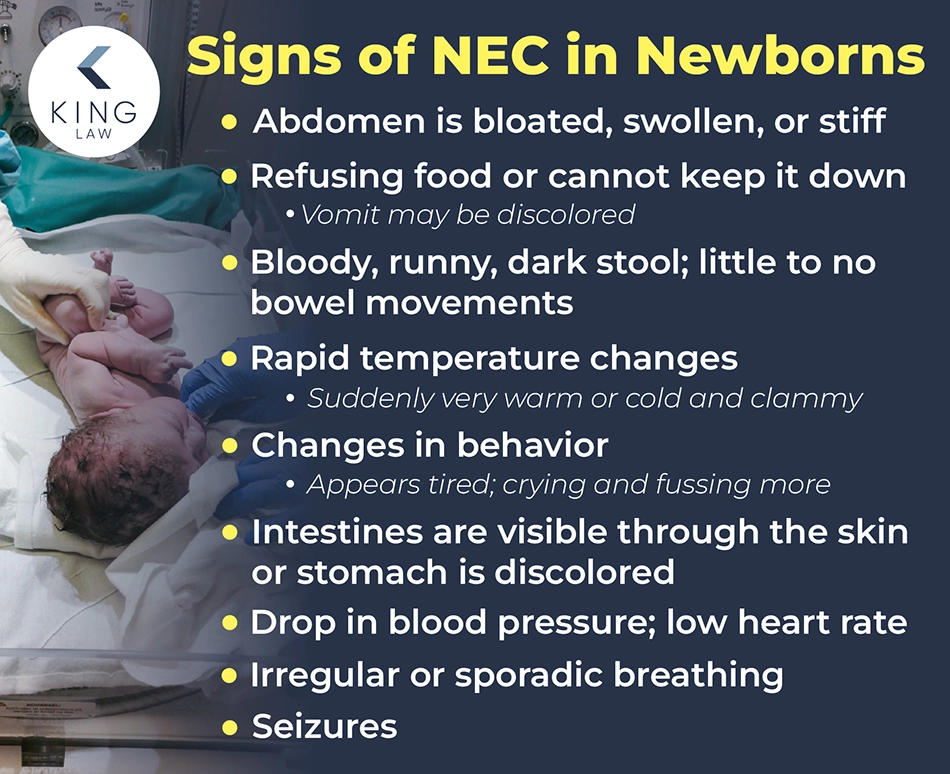
The symptoms of necrotizing enterocolitis can come on suddenly and be life-threatening. Symptoms tend to arise within the first three weeks of life, and they can become severe very quickly. Some of the signs that a baby has necrotizing enterocolitis include:
- Swollen or tender abdomen
- Inability to eat or keep food down
- Vomiting, especially if it is green or contains lots of bile
- Bloody or black diarrhea or stools
- Suddenly high or low heart or breathing rate
- Being really tired or “fussy” without an apparent reason
Necrotizing enterocolitis is life-threatening and is a medical emergency. Medical teams have to act quickly to help manage symptoms and keep the baby stable.
Studies Link Enfamil to NEC in Premature Babies
Enfamil and other cow’s-milk-based formulas are a confirmed risk factor for a baby developing necrotizing enterocolitis. Research on the connection between necrotizing enterocolitis and cow’s-milk-based formula began as early as the 1990s. Despite this knowledge, Enfamil’s manufacturers continued to market their premature infant formula as safe, effective, and even preferred over breast milk.
NEC Study: Breast milk and neonatal necrotising enterocolitis
In Breast milk and neonatal necrotising enterocolitis, researchers discovered that formula-fed premature babies were up to 20 times more likely to develop necrotizing enterocolitis. The study surveyed 926 preterm infants, and 51 of those infants developed necrotizing enterocolitis. Babies fed only formula were 6 to 10 times more likely to have necrotizing enterocolitis than those fed exclusively breast milk. Babies born after 30 weeks of gestation were 20 times more likely to develop necrotizing enterocolitis if they were only fed formula compared to those fed breast milk.
NEC Study: An Exclusively Human Milk-Based Diet Is Associated with a Lower Rate of Necrotizing Enterocolitis than a Diet of Human Milk and Bovine Milk-Based Products
An Exclusively Human Milk-Based Diet Is Associated with a Lower Rate of Necrotizing Enterocolitis than a Diet of Human Milk and Bovine Milk-Based Products explored the rates of necrotizing enterocolitis in a group of extremely premature infants who were fed breast milk versus cow’s-milk-based formula. The study looked at a group of 207 infants who were fed breast milk, fortified breast milk, or cow’s-milk-based formula like Enfamil. The group who were just given formula to eat had a “significantly lower rates of NEC and surgical NEC.”
NEC Study: Mother’s Own Milk Compared With Formula Milk for Feeding Preterm or Low Birth Weight Infants: Systematic Review and Meta-analysis
Mother’s Own Milk Compared With Formula Milk for Feeding Preterm or Low Birth Weight Infants: Systematic Review and Meta-analysis examined the differences in health outcomes for premature babies fed formula versus their mother’s milk. The researchers looked at results for 89,638 preterm babies who were only fed formula or only fed their mother’s milk. The authors discovered that babies who were only given formula were 2.99 times more likely to develop necrotizing enterocolitis. Moreover, being fed formula did not improve the baby’s growth, neurodevelopment, mortality rates, or likelihood of getting an infection.
Enfamil Manufacturer Response to NEC Baby Formula Lawsuits
Mead Johnson and its parent company, Reckitt Benckiser, deny all liability for their formula allegedly causing premature babies to develop necrotizing enterocolitis. Mead Johnson and Abbott (which makes Similac) continue to claim their formulas are a safe and standard practice to help preterm infants, especially if the mother cannot provide enough breast milk.
Mead Johnson and other companies maintain that their products contain a mix of essential and preferred ingredients to give premature babies the boost they need. They also claim necrotizing enterocolitis can be caused by many different factors, and they believe being fed formula, if it is connected to necrotizing enterocolitis, has a small impact on a baby’s risk.
Mead Johnson and Abbott have lost several cases involving their cow’s-milk-based formulas. One case that ended in the formula company’s favor was overturned because of attorney misconduct on the defense side and procedural errors. In that lawsuit, Mead Johnson and Abbott will face a new trial. Meanwhile, Mead Johnson and Reckitt Benckiser continue to defend their products and fight the allegations.
Other Lawsuits Involving Enfamil and Mead Johnson
Mead Johnson and Reckitt Benckiser have faced other legal actions because of their formula. For example, in February 2023, two batches of Enfamil’s Prosobee plant-based formula were recalled because of potential contamination with the Cronobacter sakazakii bacteria, which can be fatal. A year later, Mead Johnson recalled another 657,000 cans of Nutramigen Hypoallergenic Infant Formula Powder because they may have also been contaminated with Cronobacter sakazakii bacteria. Now, Mead Johnson is being called to answer allegations over Enfamil’s connection with necrotizing enterocolitis. In 2022, several Enfamil products were part of another formula contamination recall.
Who Qualifies to File an Enfamil NEC Lawsuit?
Parents may qualify to sue Enfamil’s manufacturers, Mead Johnson and Reckitt Benckiser, if their child was born premature, was fed cow’s-milk-based formula, and developed necrotizing enterocolitis. The baby must have been born prematurely on or after January 1, 2006, and been diagnosed with necrotizing enterocolitis or short bowel syndrome after surgery to remove infected intestines.
If parents are not sure if their infant was fed cow’s-milk-based formula or fortifiers, they may still be able to seek compensation. It is common for the baby’s medical team not to fully disclose what they are feeding the baby or what type of formula is being used. A product liability lawyer can help parents understand if they have the right to sue for damages related to NEC.
How to File an Enfamil Lawsuit
If you believe your baby’s necrotizing enterocolitis was due to the cow’s-milk-based formula they were given in the hospital, you may be entitled to compensation. Some of the formal steps you can follow to seek a settlement include:
- Schedule a consultation with a law firm to determine if you are eligible for damages.
- Work with the lawyer to gather evidence to support your claim.
- Your attorney fills out and files the legal complaint with the proper court.
- Your attorney submits discovery (fact-gathering) requests to Enfamil’s manufacturers.
- Your lawyer and Enfamil’s defense attorneys try to negotiate a settlement.
King Law’s reputable team has helped dozens of clients through the legal process of suing a large company like Mead Johnson. We are prepared to assist you through these steps and complete the technical procedures on your behalf.
Deadline to File an Enfamil Lawsuit
You need to make sure that you file your Enfamil lawsuit before the legal deadline expires. States have laws in place that set time limits on when someone must file a claim against another person or business. These laws, called the statute of limitations, give people a set amount of time to file suit; however, exceptions can make this timeline longer or shorter. Consulting with a lawyer early on can give you an opportunity to identify and meet your deadline so you do not miss out on the chance to seek justice from Enfamil’s producers.
Enfamil Lawsuit Settlements and Payout Amounts
Some parents who bring a successful Enfamil claim may receive a settlement of up to $45,000 to $600,000, or more. That said, each person’s individual payout depends on many different factors, including the severity of the baby’s condition and the medical costs involved in treating the baby’s necrotizing enterocolitis.
Additionally, parents of babies who passed away or will experience permanent losses because of developing necrotizing enterocolitis may receive a higher compensation package. However, no amount of money can truly compensate a parent for the fear and profound loss involved when their baby has necrotizing enterocolitis.
Contact an Enfamil NEC Baby Formula Lawyer Today
Growing evidence shows that Enfamil’s manufacturers, Mead Johnson and Reckitt Benckiser, were aware of the increased risk of babies developing necrotizing enterocolitis after being fed this cow’s-milk-based formula. However, these companies may have chosen not to disclose this to the public, potentially endangering the lives of millions of infants throughout the United States and overseas.
If your baby was born prematurely and fed Enfamil or another cow’s-milk-based formula, you may qualify for compensation. Contact our office today by calling (585) 496-2648 to schedule a no-obligation consultation to talk about your legal rights. King Law’s intake specialists and seasoned lawyers stand ready to take your call and help you find answers.